
Hear from Our Customers
You step outside at 2 PM and it’s actually comfortable. The glare’s gone, the temperature dropped 15 degrees, and you can see your phone screen without squinting.
Your patio furniture stops fading. The cushions you spent good money on stay vibrant because 94% of UV rays never touch them. Same goes for the wood deck that was starting to crack.
Your AC stops running nonstop. When you block solar heat gain before it hits the windows, your system doesn’t fight a losing battle all afternoon. Most homeowners see energy bills drop 20-30% during peak summer months. That’s real money back every month, not someday down the road.
And you actually use the space you paid for. Morning coffee, afternoon work calls, evening dinners—all possible again without timing your life around the sun’s position.
A Plus Shutters & Shades brings over 10 years of construction experience to every installation in Santa Rita Ranch, TX. We’re a branch of A Plus Home Remodel, and we’ve seen what works in Central Texas heat and what fails after one summer.
We use Texas-made products because they’re built for this climate. When you’re facing a 257% increase in days over 107°F in the next 30 years, you need materials engineered for extreme conditions, not generic solutions shipped from somewhere that doesn’t understand what “hot” really means.
You’re not getting a crew that learned from YouTube. Our installers have done hundreds of exterior shade projects across Liberty Hill, Georgetown, and surrounding areas. We know the wind patterns, the sun angles, and exactly how to mount systems that stay functional through Texas storms.

First, we come to your home and measure the exact spaces you want shaded. We look at sun exposure throughout the day, wind direction, and how you actually use your outdoor areas. This isn’t a quick in-and-out—we need to understand what you’re dealing with.
Then we walk through fabric options and operation styles. Motorized systems let you adjust shades from inside with one button or voice command. Manual options work great too if you prefer simplicity. We explain what blocks the most heat, what gives you privacy while keeping the view, and what holds up best in weather.
Once you approve everything, we custom-build your shades and schedule installation. Our crew shows up on time, mounts everything with construction-grade precision, and tests the full range of motion. We don’t leave until you know exactly how to operate them and they’re working perfectly.
The whole process typically takes 2-3 weeks from first visit to finished installation. You’re not waiting months, and you’re not dealing with constant follow-ups or change orders.

Ready to get started?
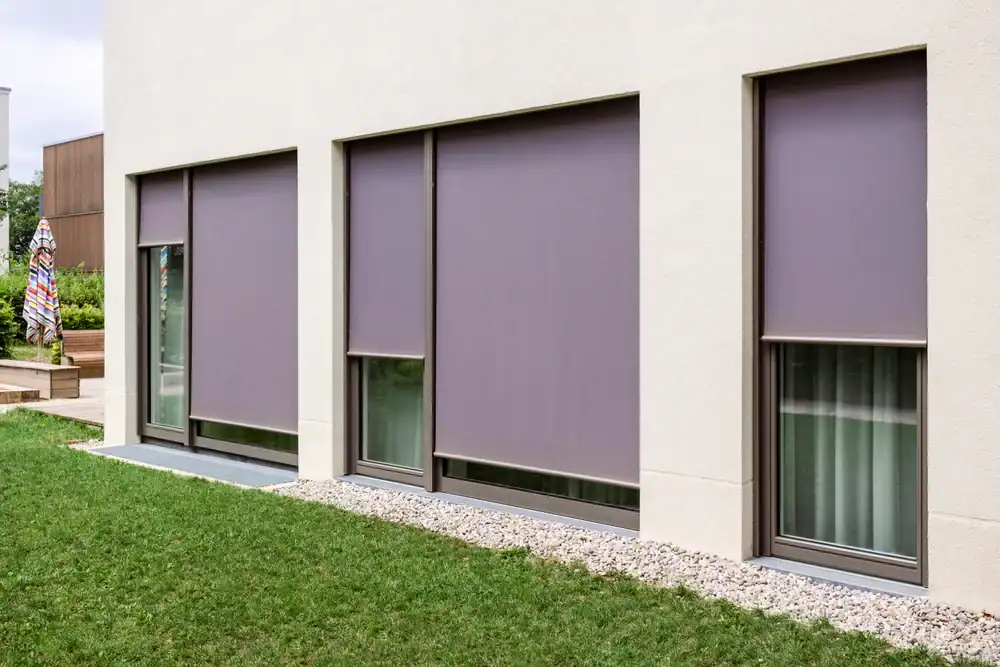
Every exterior roller shade system includes commercial-grade components designed for Texas weather. The headboxes are heavy-duty aluminum that won’t warp in 107°F heat. Guide wires keep fabric stable during wind events—and with 77% severe wind risk in this area, that’s not optional.
The fabrics block 90-94% of UV rays while still letting you see outside. You’re not sitting behind a blackout curtain unless that’s what you specifically want. Solar shades filter light like sunglasses for your patio. If you need full privacy or complete darkness, we have blackout options that seal tight.
Motorized systems integrate with smart home setups you already use. Google Assistant, Amazon Alexa, or dedicated remotes—whatever makes sense for how you live. The motors are weather-rated and whisper-quiet. You won’t hear them running.
We handle everything: permits if needed, mounting to brick or wood or stucco, electrical work for motorized systems, and cleanup. When we’re done, you have a finished installation that looks like it was always part of your home. No exposed wiring, no mismatched colors, no gaps where sun sneaks through.

Expect a 15-20 degree temperature drop in the shaded area. That’s not marketing talk—it’s what happens when you block 90%+ of solar heat before it radiates off concrete and stucco.
Here’s why exterior shades work better than interior blinds: they stop heat outside, before it penetrates the glass and turns your patio into a convection oven. Interior shades trap heat between the fabric and window, which just makes the problem worse.
On a 105°F afternoon in Santa Rita Ranch, TX, your covered patio might sit at 85-88°F instead of matching the outdoor temp. Still warm, but usable. You can sit out there without feeling like you’re melting, and your AC isn’t fighting to cool the rooms adjacent to those windows.
Yes. Solar shades work like sunglasses for your windows—they filter light and block UV without eliminating your view.
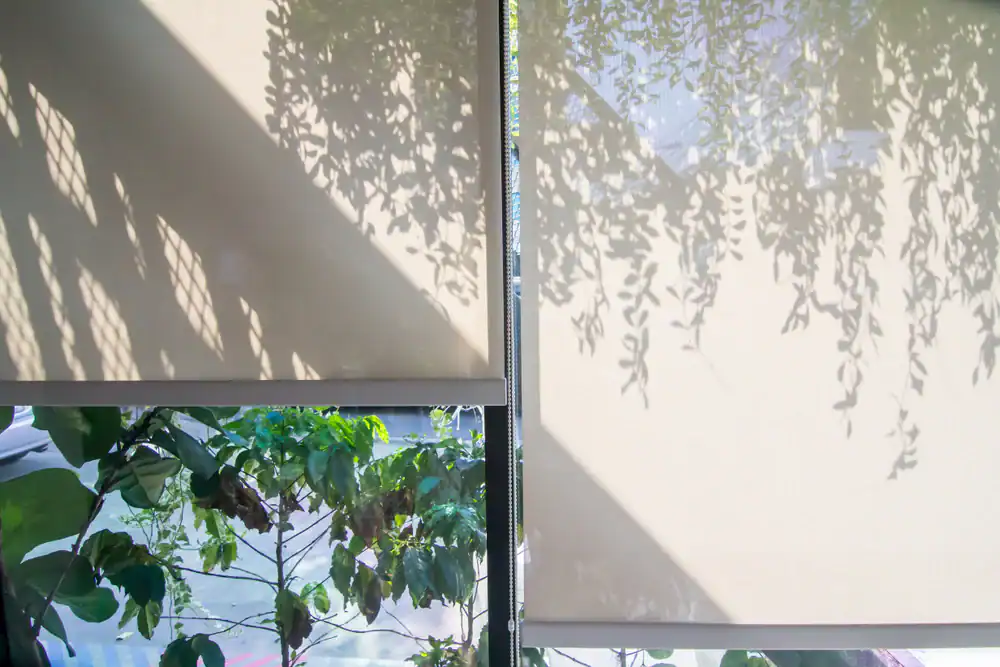
The openness factor determines how much you see through. A 5% openness fabric blocks more light but reduces visibility slightly. A 10% openness gives you a clearer view while still cutting heat and glare significantly. From inside looking out during the day, you’ll see your yard clearly. From outside looking in, people see much less, especially when it’s brighter outside than inside.
If you want zero visibility or complete darkness, that’s when you’d choose blackout roller shades instead. Those seal completely and block 100% of light. Most people use solar shades for living areas where they want protection plus a view, and save blackout options for bedrooms or media rooms.
Quality exterior shades last 10-15 years with minimal maintenance in Central Texas conditions. Cheap ones fail in 2-3 years.
The difference is materials. Commercial-grade fabrics are solution-dyed, meaning color goes all the way through the fiber. They don’t fade when UV hammers them daily. The stitching is reinforced, the hems are weighted, and the coatings resist mildew in humid conditions.
Hardware matters just as much. Aluminum headboxes won’t crack in extreme heat like plastic components do. Stainless steel guide wires won’t rust during storms. Weather-rated motors have sealed housings that keep dust and moisture out. We only install systems built for climates like Santa Rita Ranch, TX, where you’re dealing with severe heat, wind, and occasional hail. If a component isn’t rated for outdoor exposure, it doesn’t go on your home.
Most homeowners see 20-30% reduction in cooling costs during summer months. On a $300 summer electric bill, that’s $60-90 back in your pocket every month from June through September.
The savings come from blocking solar heat gain before it enters your home. Windows are thermal weak points—even good ones. When sun hits glass, it creates a greenhouse effect that forces your AC to run constantly. Exterior roller shades intercept that heat outside, dropping the temperature of the glass itself by 15-20 degrees.
Your AC cycles less frequently, runs shorter periods, and doesn’t strain to hit the thermostat setting. That’s easier on the equipment too, which means fewer repairs and longer system life. Over a 10-year period, between energy savings and reduced HVAC maintenance, quality exterior shades typically pay for themselves and then keep saving you money.
Properly installed commercial-grade systems handle normal Texas wind without issues. Severe storms are a different situation.
Our installations use guide wires or tracks on both sides of the fabric. These keep the shade stable during wind gusts instead of letting it whip around and tear. The mounting brackets go into studs or solid masonry, not just surface-screwed into siding. When wind hits, the whole system stays anchored.
That said, if a tornado warning or severe thunderstorm with 60+ mph winds is coming, retract motorized shades or roll up manual ones. The fabric can handle a lot, but it’s not a hurricane shutter. Think of exterior shades as daily-use climate control, not storm protection. For the 95% of the year when you’re dealing with normal weather and brutal sun in Santa Rita Ranch, TX, they perform exactly as needed without any babysitting.
Motorized makes sense if you have multiple shades, want smart home integration, or adjust them frequently throughout the day. Manual works fine if you’re covering one or two areas and don’t mind pulling a cord.
Motorized systems let you control everything from one remote or your phone. When the sun shifts and starts blasting your west-facing patio at 4 PM, you tap a button from inside. No walking outside in the heat. You can also set schedules—shades lower automatically at 11 AM and retract at sunset. If you’re integrating with Alexa or Google Assistant, voice commands handle everything.
Manual shades cost less upfront and have zero electrical requirements. They’re dead simple: pull the cord, shade rolls down. Nothing to program, no batteries to replace in remotes, no troubleshooting connectivity. For a single patio door or one outdoor area, manual operation is perfectly practical. The choice really comes down to convenience versus budget and how many shades you’re installing across your home.