
Blackout Drapes Tarrant County TX

Sleep Better, Save More, Stay Comfortable
Custom blackout drapes that actually block light, cut your cooling costs, and give you complete privacy. Measured, built, and installed right the first time for homes across Tarrant County.
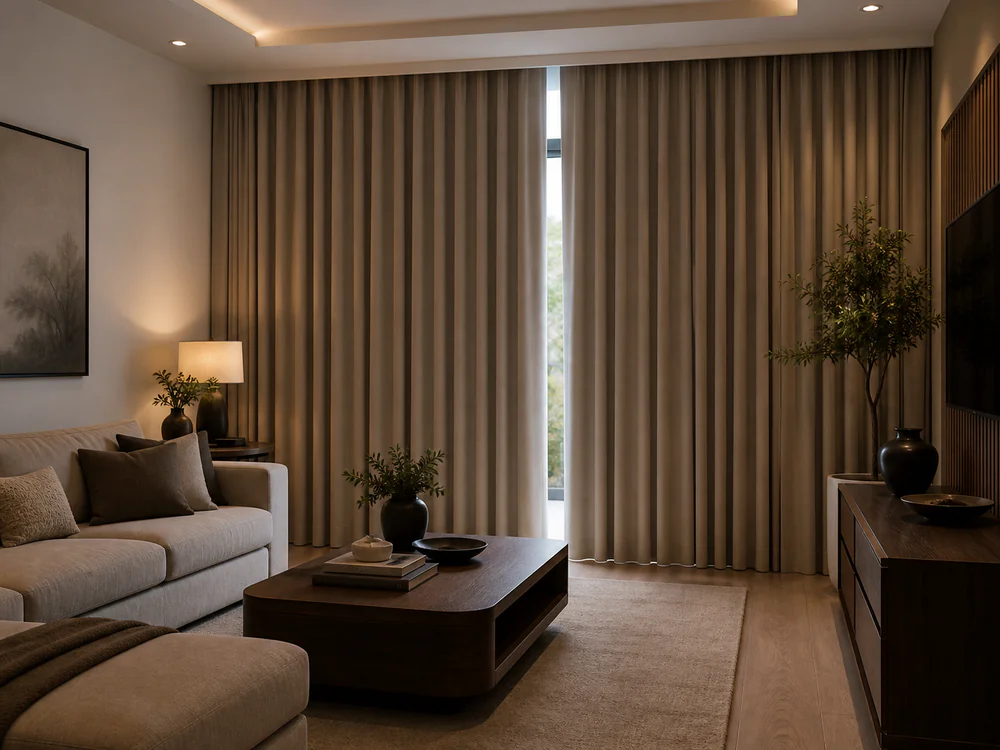
A modern living room with beige curtains, a light sofa, a wooden coffee table, potted plants, soft lighting, a TV on a console, and neutral decor creating a cozy, elegant atmosphere.

Custom Blackout Curtains Tarrant County

What Blackout Drapes Actually Do for You

Blackout drapes aren’t just thick curtains. They’re engineered window treatments designed to block 95 to 100 percent of incoming light while insulating your windows against Texas heat. The difference between blackout drapes and room darkening curtains matters—room darkening blocks maybe 70 to 80 percent of light. Blackout means total darkness when you need it. They work by using dense, multi-layered fabric or specialized backing that prevents light penetration. When properly installed with enough coverage around your window frame, they create a barrier that stops sun, street lights, and headlights from entering your room. That makes them essential for bedrooms, nurseries, home theaters, or any space where light control directly affects your comfort and sleep quality.

Light Blocking Curtains Benefits

What Changes When You Install Them

You’re not just covering windows. You’re fixing problems that have been costing you sleep, money, and comfort for years.

Texas-Made Products

We use products manufactured in Texas, designed to handle our extreme heat, humidity, and sun exposure without warping or fading.

Precise Custom Fit

Professional measurements eliminate light gaps around edges. Your drapes fit perfectly, blocking light where off-the-shelf options fail.

Over a Decade Local

We've served Tarrant County for more than ten years. We understand your windows, your climate, and what actually works here.

Complete Installation Service

From consultation to final install, we handle everything. No guesswork, no gaps, no light leaks—just drapes that work.

A modern bedroom with a large bed, beige bedding, tufted headboard, bench, two nightstands with lamps, framed art, a rug, and floor-to-ceiling beige curtains covering the windows.

Blackout Drapes for Bedroom

Why Bedrooms Need Real Blackout Coverage

Your body produces melatonin in darkness. That’s the hormone that regulates your sleep cycle and helps you stay asleep. Even small amounts of light—from street lamps, security lights, or early sunrise—disrupt melatonin production and fragment your sleep. You wake up feeling unrested even if you were in bed for eight hours. Blackout drapes for bedroom windows solve this by creating complete darkness. Not dim light. Not filtered light. Actual darkness that lets your body do what it’s supposed to do. That’s especially critical if you work night shifts, have young children who need daytime naps, or you’re just sensitive to light when you sleep. The difference shows up fast. You fall asleep easier. You stay asleep longer. You wake up when you’re actually ready, not when the sun decides for you. In Tarrant County, where summer sun starts hitting east-facing windows by six in the morning, that control matters.

Blackout Curtains for Living Room

How They Cut Your Cooling Costs

Windows account for 25 to 30 percent of your home’s heating and cooling energy loss. In Texas, that’s mostly cooling. When sunlight hits your windows, it doesn’t just make the room brighter—it heats everything it touches. Your AC has to work harder to compensate, running longer cycles and driving your energy bill up. Custom blackout curtains block that solar heat gain before it enters your home. Studies show they can reduce heat gain by up to 33 percent in summer and cut overall energy bills by 25 percent when used correctly. That’s not marketing talk—that’s thermal performance data from the Department of Energy. The key is proper installation. Ready-made drapes leave gaps around the edges where heat and light leak through. Custom-fitted blackout drapes cover your windows completely, extending several inches beyond the frame on all sides. That complete coverage is what creates the insulation barrier that actually saves you money month after month.
A cozy nursery with a crib, armchair, shelves with stuffed animals, a potted plant, framed wall art, beige curtains, and soft lighting creating a warm and inviting atmosphere.

Experience the A Plus Difference

See firsthand why we're Arlington's preferred choice for custom shutters and shades. Schedule your free consultation today and let's create something beautiful together.

Experience the A Plus Difference

See firsthand why we're Arlington's preferred choice for custom shutters and shades. Schedule your free consultation today and let's create something beautiful together.

Blackout Drapes FAQs

Common questions about Blackout Drapes

True blackout drapes block 95 to 100 percent of light when properly installed. The exact percentage depends on the fabric density, the backing material, and how well the drapes cover your window frame. Lighter colored fabrics with blackout backing can still achieve 95 to 99 percent light blocking, while darker fabrics typically hit 100 percent. The critical factor is eliminating gaps around the edges. Custom-fitted drapes extend beyond your window frame on all sides—usually 8 inches or more—to prevent light from sneaking in around the perimeter. That’s where ready-made curtains fail. They don’t account for your specific window size, so light leaks through the gaps even if the fabric itself blocks light perfectly. When we install your drapes, we’re positioning them to create a complete seal that delivers actual darkness, not just dimness.
Yes, and the impact is measurable. Blackout drapes can reduce solar heat gain through windows by up to 33 percent during summer months. Windows are responsible for 25 to 30 percent of residential cooling energy use, so blocking that heat before it enters your home makes a real difference. In Tarrant County, where we regularly hit 100-plus degrees and your AC runs constantly, that translates to lower monthly bills. The energy savings come from the drapes’ insulating properties. The dense fabric and backing create a barrier that reflects or absorbs heat instead of letting it radiate into your room. West-facing windows benefit the most because they take direct afternoon sun when temperatures peak. Installing blackout drapes on those windows stops your rooms from turning into ovens by three or four in the afternoon. Over time, the energy savings offset the initial investment, especially if you’re currently running your AC harder to compensate for heat gain through uncovered or poorly covered windows.
The difference is light blocking percentage and fabric construction. Room darkening curtains block about 70 to 90 percent of light. They dim the room significantly but still allow some brightness to filter through. Blackout drapes block 95 to 100 percent of light using denser fabrics, specialized backings, or multi-layer construction that prevents light penetration. If you hold a flashlight behind room darkening fabric, you’ll see some glow. Behind blackout fabric, you’ll see nothing. That distinction matters depending on what you need. Room darkening works fine for living rooms or dining areas where you want to reduce glare and heat but don’t need total darkness. Blackout is essential for bedrooms, nurseries, or home theaters where any light disrupts sleep or viewing. Many people assume they need to choose dark colored curtains to get blackout performance, but that’s not true. Light colored blackout drapes with proper backing achieve the same light blocking as dark ones. The backing material determines performance, not the decorative fabric color.
Absolutely. Blackout drapes are available in virtually any color, pattern, and fabric style you want. The blackout function comes from the backing or liner, not the decorative fabric you see from inside your room. You can choose white, cream, beige, pastels, or any color that matches your décor and still get complete light blocking. The fabric options include linen, velvet, faux silk, cotton blends, and textured weaves. Some homeowners prefer the elegant drape of heavier fabrics like velvet, while others want the lighter appearance of linen or cotton. Both can deliver blackout performance when paired with the right backing. The key is working with someone who understands fabric construction and can show you samples that combine your aesthetic preferences with functional light control. During your consultation, we bring fabric samples so you can see and feel the options in your actual space, with your lighting and existing décor. That way you’re choosing based on what actually works in your home, not guessing from online photos.
They do provide noise reduction, though they’re not the same as soundproofing. The dense, multi-layered fabric construction that blocks light also dampens sound waves coming through your windows. You’ll notice a reduction in traffic noise, barking dogs, lawn equipment, and other outdoor sounds. The thicker and heavier the fabric, the better the sound dampening effect. Velvet and multi-layer blackout drapes perform best for noise control. The improvement is most noticeable if you currently have thin curtains or no window coverings at all. Blackout drapes won’t eliminate all noise—windows themselves transmit sound—but they create a noticeably quieter indoor environment. That’s valuable if you live on a busy street, near a school or park, or in a neighborhood where outdoor activity creates constant background noise. The combination of light blocking and noise reduction makes blackout drapes particularly effective for bedrooms where you need both darkness and quiet for quality sleep.
The complete process from consultation to installation typically takes six to eight weeks. That includes time for your in-home consultation, custom manufacturing at our local facility, and scheduling your installation. The consultation itself takes about an hour. We measure your windows, discuss your needs, show you fabric samples, and answer your questions. Once you select your fabrics and approve the quote, we send your specifications to manufacturing. The drapes are built to your exact measurements using the materials you chose. When they’re ready, we schedule installation at a time that works for you. The actual installation usually takes four to six hours depending on how many windows we’re covering. We don’t rush the process because precision matters. Every drape is custom-built for your specific windows, and we take time during installation to ensure proper positioning, complete coverage, and smooth operation. That attention to detail is what delivers the light blocking and energy performance you’re paying for.

Free In-Home Consultation

We come to your home, measure your windows, discuss your light control needs, and show you fabric options that work for your space.

Custom Manufacturing

Your blackout drapes are built to your exact window measurements using quality fabrics designed for Texas conditions and proper light blocking.

Professional Installation

We install your drapes with precise positioning and hardware that ensures complete coverage, no light gaps, and smooth daily operation.