
Sound-Reducing Drapes Tarrant County TX

Finally Sleep Through the Traffic Noise
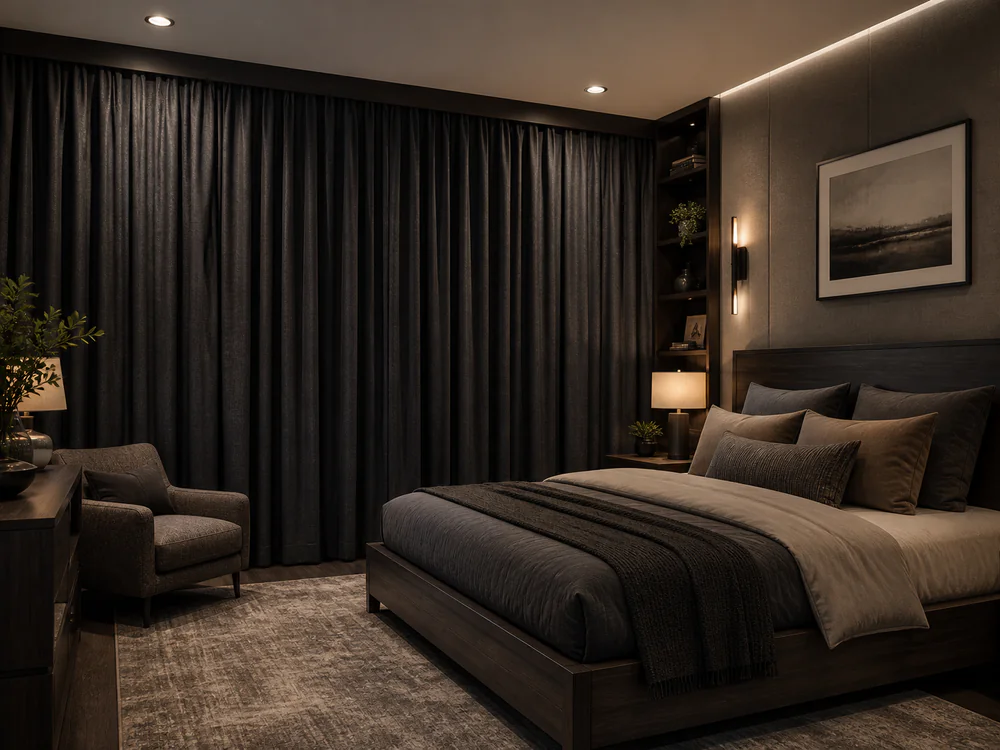
You shouldn’t need earplugs in your own bedroom. Custom sound-reducing drapes cut outside noise by up to 15 decibels while blocking light and lowering your energy bills—all without tearing into your walls.
A modern bedroom features a dark color scheme, with a large bed, dark bedding, armchair, tall black curtains, soft lighting, shelves, and framed wall art, creating a cozy and sophisticated atmosphere.

Noise Reducing Curtains Fort Worth

What Sound-Reducing Drapes Actually Do

Sound-reducing drapes use multi-layer construction with dense, heavy fabrics to absorb and block noise before it enters your space. The outer layer soaks up sound energy, the core provides mass to stop transmission, and backing layers deflect what’s left. It’s material science, not magic. These aren’t regular curtains hung on a decorative rod. Proper noise dampening curtains extend beyond your window frame, cover wall-to-wall, and hang floor-to-ceiling to create an acoustic seal. When installed correctly, they reduce mid-to-high frequency sounds—traffic, voices, sirens, construction—that disrupt your sleep and concentration. The same density that blocks noise also insulates against heat. In Tarrant County’s climate, that means your AC works less in summer and your heater cycles less in winter. You’re not just buying quiet. You’re buying comfort and lower utility bills.

Noise Cancelling Drapes Tarrant County

What Changes When the Noise Stops

You’ll notice the difference the first night. Less outside interference means deeper sleep, better focus during the day, and an actual sense of privacy in your own home.

Texas-Made Quality Materials

We source triple-weave fabrics engineered specifically for noise absorption, not thin decorator curtains marketed as soundproof. Dense materials that actually perform.

Custom Fit Installation

Gaps kill performance. We measure, fit, and install floor-to-ceiling coverage that seals your windows properly—no sound leaks around the edges.

Over 10 Years Experience

Our construction background means we understand acoustics and proper installation. We've solved noise problems for hundreds of Tarrant County homes.

Multi-Functional Investment

You get noise reduction, blackout light control, thermal insulation, and UV protection in one window treatment. Four problems solved with one solution.

A dining room with a wooden table, beige upholstered chairs, blue curtains with white sheer panels, a brass chandelier, a painting on the wall, and a sideboard with decorative items and a vase of greenery.

Curtains To Block Sound Arlington

Why Fabric and Fit Matter More Than You Think

Not all heavy curtains reduce noise. Standard blackout curtains might block light, but unless they’re engineered with multiple dense layers and proper coverage, they won’t touch your noise problem. The difference comes down to material density, weave construction, and how much wall space they actually cover. Triple-weave polyester, velvet, and suede perform better than single-layer cotton or linen. Why? Because sound waves need mass to stop them. Thin fabric just vibrates when noise hits it. Dense, layered fabric absorbs that energy and converts it to heat—basically swallowing the sound before it reaches your ears. Then there’s installation. Even the best fabric fails if there are gaps. Sound sneaks around edges, through spaces between panels, under hems that don’t reach the floor. We install noise reducing curtains that extend 6-10 inches past your window frame on each side and hang all the way to the floor. That coverage creates the seal you need for actual noise reduction, not just decoration.

Noise Dampening Curtains Fort Worth TX

What You Get Beyond Noise Control

Sound-reducing drapes pull double duty in Texas heat. The same multi-layer construction that dampens traffic noise also blocks solar heat gain through your windows. You’re essentially adding insulation that you can open and close based on the time of day. In summer, closed drapes keep afternoon sun from turning your west-facing rooms into ovens. In winter, they trap heat inside instead of letting it escape through glass. That temperature regulation means your HVAC system doesn’t have to work as hard, which shows up as lower monthly bills. You also get complete light control. Most sound-dampening fabrics block 85-100% of light, which matters if you work night shifts, have young kids who need dark rooms for naps, or just want your bedroom pitch black for better sleep. And because these curtains to block sound are custom-fit to your windows, there’s no light bleeding around the edges like you get with standard curtains.
Bright living room with beige curtains, a white sofa, neutral decor, a wooden coffee table with plants, a woven rug, framed art on the wall, and large window letting in natural light with greenery visible outside.

Experience the A Plus Difference

See firsthand why we're Arlington's preferred choice for custom shutters and shades. Schedule your free consultation today and let's create something beautiful together.

Experience the A Plus Difference

See firsthand why we're Arlington's preferred choice for custom shutters and shades. Schedule your free consultation today and let's create something beautiful together.

Sound-Reducing Drapes FAQs

Common questions about Sound-Reducing Drapes

Quality sound-reducing drapes typically reduce noise by 7-15 decibels when properly installed, with some professional-grade options achieving up to 21 decibels of reduction. To put that in perspective, a reduction of 7 decibels means the sound intensity is cut by about 75%. That’s the difference between hearing every car that drives by and hearing muffled background noise you can ignore. The effectiveness depends on the fabric density, number of layers, and how well the drapes seal around your windows. High-frequency sounds like traffic, voices, and sirens are reduced more effectively than low-frequency sounds like bass or heavy machinery. For homes near I-20, I-30, or I-35W in Fort Worth and Arlington, most customers notice an immediate improvement in sleep quality and daytime peace once the drapes are installed.
Yes, but set realistic expectations. Sound-reducing drapes are most effective against mid-to-high frequency noise—the kind produced by traffic, airplane approach noise, conversations, and construction equipment. They won’t create complete silence, but they will significantly dampen the sharpness and volume of those sounds. If you’re near a major highway or flight path, you’ll still hear some noise, but it becomes background hum instead of intrusive disruption. Many of our Tarrant County clients near Alliance Airport or along major corridors report that they can finally sleep with windows closed and drapes drawn without being startled awake by every passing vehicle or overhead aircraft. For maximum effectiveness near highways, we recommend pairing sound-reducing drapes with proper window sealing and weatherstripping to eliminate air gaps where sound travels.
Absolutely. The same dense, multi-layer fabric that blocks sound also provides thermal insulation. In Fort Worth’s climate, that means your drapes act as a barrier against solar heat gain during brutal summer afternoons and prevent heat loss through windows during winter. The temperature difference can be 9-12 degrees Fahrenheit between a room with properly installed sound-reducing drapes and one without. That translates to your AC and heating system cycling less frequently, which directly lowers your monthly energy bills. The thermal properties also make rooms more comfortable—no more hot spots near west-facing windows in the afternoon or cold drafts near windows on winter mornings. You’re essentially getting soundproofing and insulation in one window treatment, which makes the investment pay for itself over time through energy savings.
You can install them yourself if you’re handy and understand the importance of proper coverage, but professional installation ensures maximum noise reduction. The challenge isn’t just hanging curtains on a rod—it’s creating an acoustic seal. Sound leaks through any gap, so the drapes need to extend well beyond the window frame, hang floor-to-ceiling without space underneath, and overlap properly in the center. The hardware also matters because noise cancelling drapes are heavy—sometimes 15-20 pounds per panel—and standard curtain rods can sag or pull away from the wall. We use heavy-duty mounting systems anchored to studs, not just drywall. If you choose DIY installation, make sure you’re using curtains at least 2.5 to 3 times the width of your window for proper pleating, extending the rod 6-10 inches past the frame on each side, and using hardware rated for the weight.
Sound-reducing drapes are significantly more affordable and less invasive than replacing windows, though they don’t provide quite the same level of noise reduction as double-pane or laminated acoustic glass. New soundproof windows can cost $800-$1,200 per window installed, while quality sound-reducing drapes typically run $200-$500 per window depending on size and fabric. The drapes also offer flexibility—you can open them during the day for natural light and views, then close them at night for quiet and darkness. Replacement windows are permanent and don’t give you that control. For renters or anyone not ready to invest in window replacement, sound-reducing drapes are the best option. Many homeowners also use both solutions together—upgrading to better windows and adding drapes for maximum noise reduction in particularly loud areas like bedrooms facing busy streets.
Regular blackout curtains are designed primarily to block light, not sound. They’re usually made from a single layer of tightly woven fabric or have a thin blackout lining sewn to the back. Sound-reducing drapes, on the other hand, are engineered with multiple layers of dense, heavy materials specifically chosen for acoustic absorption—typically triple-weave polyester, velvet, or suede with sound-dampening core layers. The weight difference is noticeable: standard blackout curtains might weigh 5-8 pounds per panel, while noise reducing drapes can weigh 15-20 pounds. That extra mass is what stops sound waves. Some sound-reducing drapes also provide blackout capabilities, giving you both benefits. If you’re shopping online and see “soundproof” curtains that feel lightweight or don’t specify fabric density and NRC ratings, they’re likely just heavy blackout curtains with marketing hype. Real sound-dampening drapes will have technical specifications about their acoustic performance.

In-Home Consultation and Measurement

We come to your home, assess your noise situation, measure your windows, and show you fabric samples so you can see and feel the difference in materials.

Custom Fabrication

Your drapes are built to your exact specifications with professional-grade sound-dampening fabrics, proper lining, and hardware designed to support the weight.

Professional Installation

We install floor-to-ceiling coverage with proper overlap and sealing, test the operation, and walk you through care so your drapes perform for years.