
Panel Track Blinds Tarrant County, TX

Large Windows That Finally Work Right
You’ve got sliding doors or wide windows that deserve better than those broken vertical blinds. Custom panel track blinds give you smooth operation, clean lines, and light control that actually works—built specifically for Tarrant County homes with large glass expanses.
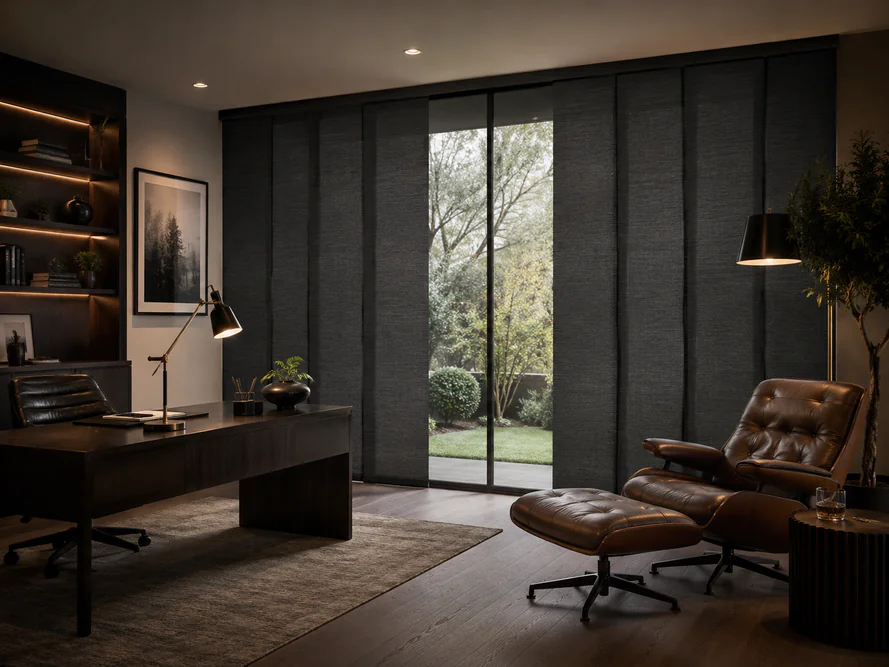
A modern home office with a large desk, leather chair and ottoman, bookshelf, and floor lamp. Floor-to-ceiling dark blinds partly cover glass doors, revealing a green garden outside.

Custom Panel Track Blinds

Modern Coverage for Doors and Wide Windows

Panel track blinds are wide fabric panels that slide horizontally along a track system, designed specifically for large windows, sliding glass doors, and patio doors. Unlike traditional vertical blinds with narrow slats that break and tangle, these panels glide smoothly and stack neatly when open. They’re the go-to solution when you have floor-to-ceiling glass, wide picture windows, or sliding doors that need coverage without the bulk. The panels can be configured to slide left, right, or split from center, giving you full access to your doors while maintaining the clean aesthetic that makes modern homes work. Available in hundreds of fabric options from sheer to blackout, panel tracks let you control exactly how much light enters while coordinating with the rest of your window treatments. They also work as room dividers or closet door alternatives in open floor plans.

Sliding Panel Track Blinds Benefits

What You Actually Get

These aren’t just window coverings. They’re the solution to problems you’ve been dealing with every time you walk past those sliding doors.

Custom Built in Texas

Every panel track system is measured, manufactured, and installed locally in Tarrant County. No mass-produced imports that don't quite fit your windows.

Construction-Grade Installation

A decade of construction experience means your panels are mounted correctly the first time, with hardware positioned to handle daily use and Texas weather.

Owner-Managed Process

You work directly with the owner from consultation through installation. No handoffs between sales reps, manufacturers, and installers who don't communicate.

Commercial-Grade Materials

We use solution-dyed fabrics and heavy-duty track systems designed for high-traffic doors, not lightweight residential-grade components that fail within a year.

A bright living room with beige panel track blinds covering large glass doors, neutral sofas, a wooden coffee table with plants, and greenery visible outside through the window.

Vertical Panel Blinds for Large Openings

Why Panel Tracks Work Better Than Vertical Blinds

Vertical blinds were the default for sliding doors for years. Then people realized they look dated, break constantly, and create more problems than they solve. The individual slats get tangled. The chains snap. The mechanism stops working. And they never quite block light the way you need them to. Panel track blinds solve all of that. Instead of dozens of narrow slats, you get wide fabric panels that move independently along a track. When you want them open, they stack neatly to one side—taking up minimal space and giving you full access to your door. When closed, they overlap just enough to control light and privacy without gaps. The track system is engineered for smooth operation even on large openings. You’re not fighting resistance or worrying about whether the whole thing will come off the wall. And because the panels are wider, you see clean lines instead of the busy, cluttered look that vertical blinds create. It’s a more modern aesthetic that actually improves how the room feels, not just how it functions.

Custom Fabric Sliding Panel Blinds

Materials That Handle Texas Heat and Daily Use

Not all panel track blinds are built the same. The difference comes down to fabric quality and hardware strength. Cheap systems use lightweight materials that fade under UV exposure, sag over time, and require replacement within a few years. We use solution-dyed fabrics that won’t discolor even with constant sun exposure, and commercial-grade track systems designed to handle the weight and movement of large panels. You can choose from solar screen fabrics that block heat while preserving your view, woven wood materials that add texture and warmth, or blackout options for complete privacy and light control. Each material is selected based on how it performs in Tarrant County’s climate—extreme heat in summer, temperature swings, and the kind of UV intensity that destroys inferior window treatments. The track hardware is mounted into studs or concrete, not surface-mounted to trim that can’t support the weight. Panels are tensioned properly so they don’t sag or drag. And if you want motorization, the systems integrate with smart home controls or operate via remote, wall switch, or app. It’s built to work every single day without maintenance headaches or performance issues.
Modern dining room with a wooden table, four upholstered chairs, a rug, and a large sliding glass door covered by beige fabric panels, overlooking a patio and garden with greenery and trees outside.

Experience the A Plus Difference

See firsthand why we're Arlington's preferred choice for custom shutters and shades. Schedule your free consultation today and let's create something beautiful together.

Experience the A Plus Difference

See firsthand why we're Arlington's preferred choice for custom shutters and shades. Schedule your free consultation today and let's create something beautiful together.

Panel Track Blinds FAQs

Common questions about Panel Track Blinds

Panel track blinds use wide fabric panels that slide along a track, while vertical blinds have narrow individual slats that rotate and traverse. The main differences are aesthetic and functional. Panel tracks offer a cleaner, more modern look with fewer moving parts that can break. The wide panels create a streamlined appearance instead of the busy, cluttered look of vertical slats. Operationally, panel tracks glide more smoothly and don’t tangle or get stuck like vertical blind slats often do. They’re also easier to clean since you’re wiping down large flat panels instead of dozens of individual slats. For large windows and sliding doors in contemporary homes, panel tracks are the preferred choice because they look better and last longer with less maintenance.
Yes, sliding glass doors are actually the most common application for panel track blinds. They’re specifically designed to handle wide openings where you need window coverage that doesn’t interfere with door operation. The panels stack neatly to one side when you open the door, giving you full access without having to move or adjust multiple components. You can configure them to stack left, right, or split from center depending on your door layout and which direction you typically enter and exit. The track system is built to handle frequent use since sliding doors see more traffic than regular windows. We use commercial-grade hardware that won’t wear out from daily operation, and the panels are weighted properly so they don’t swing or move when you walk past them.
Panel track blinds are easier to maintain than most window treatments because you’re dealing with large flat surfaces instead of individual slats or pleats. For regular cleaning, use a vacuum with a brush attachment to remove dust from the fabric panels, or wipe them down with a microfiber cloth. Most fabrics can handle light spot cleaning with a damp cloth if you get a stain, though you should test any cleaning solution on an inconspicuous area first. The track system itself needs minimal maintenance—occasionally wipe down the rails to remove any dust buildup that might affect smooth operation. Unlike vertical blinds where the mechanism breaks down over time, panel track systems are built with fewer moving parts, so there’s less that can go wrong. If you notice any resistance when sliding the panels, it usually just means the track needs a quick cleaning or the panels need minor tension adjustment, which takes about five minutes.
You have hundreds of fabric options depending on how much light control and privacy you need. Solar screen fabrics block heat and UV rays while maintaining visibility to the outside—these work well for rooms where you want to reduce glare without losing your view. Light-filtering fabrics soften incoming light and provide daytime privacy while still allowing natural light to enter. Blackout materials give you complete darkness and privacy, which is ideal for bedrooms or media rooms. Woven wood options add natural texture and warmth with materials like bamboo, jute, or grasses. Each fabric type comes in multiple colors and patterns so you can match your existing décor. We’ll show you samples during the consultation so you can see how they look in your actual lighting conditions, not just under showroom lights. The key is choosing a fabric that balances your functional needs with the aesthetic you want, and we help you figure out which option makes the most sense for each specific window or door.
Cost depends on the size of your opening, fabric choice, and whether you add features like motorization or decorative valances. For a standard sliding glass door, you’re typically looking at a few hundred dollars for basic materials up to over a thousand for premium fabrics with motorization. Larger openings or floor-to-ceiling windows cost more because they require more fabric and stronger hardware to support the additional weight. Woven wood and specialty fabrics generally run higher than standard solar screen or light-filtering options. Motorization adds to the cost but provides convenience that many people find worth it, especially for hard-to-reach windows or if you’re integrating with a smart home system. We provide exact pricing during the consultation after measuring your specific openings and discussing which options you want. The investment is higher than off-the-shelf vertical blinds, but you’re getting custom-built window treatments that last significantly longer and actually improve your home’s appearance and function.
Yes, panel track blinds can reduce energy costs by blocking heat before it enters through your windows. This is especially important in Tarrant County where summer temperatures regularly exceed 100 degrees and afternoon sun can turn rooms with large windows into ovens. Solar screen fabrics are designed specifically to reject heat and UV rays while still allowing you to see outside. When properly installed and closed during peak sun hours, they can significantly reduce the load on your air conditioning system. Thicker fabrics like woven wood or blackout materials also provide insulation that helps in winter by creating an air barrier between the cold glass and your interior space. The key is choosing the right fabric for your specific windows based on which direction they face and how much direct sun exposure they get. West-facing windows benefit most from heat-blocking fabrics since they take the brunt of afternoon sun, while north-facing windows might do fine with lighter materials that just reduce glare without blocking as much heat.

On-Site Consultation and Measurement

We come to your home, measure your windows or doors, and show you fabric samples. You see exactly what you're getting before any manufacturing starts.

Custom Manufacturing in Texas

Your panel tracks are built to exact specifications at our local facility. No overseas shipping or waiting on back-ordered parts from another state.

Professional Installation and Testing

Our crew installs your system with proper mounting, tensioning, and final adjustments. We test every panel before we leave to ensure smooth operation.