
Hear from Our Customers
You didn’t move to a community with 186 acres of green space just to stay inside all summer. But when temps hit 105 and your covered patio feels like an oven, what choice do you have?
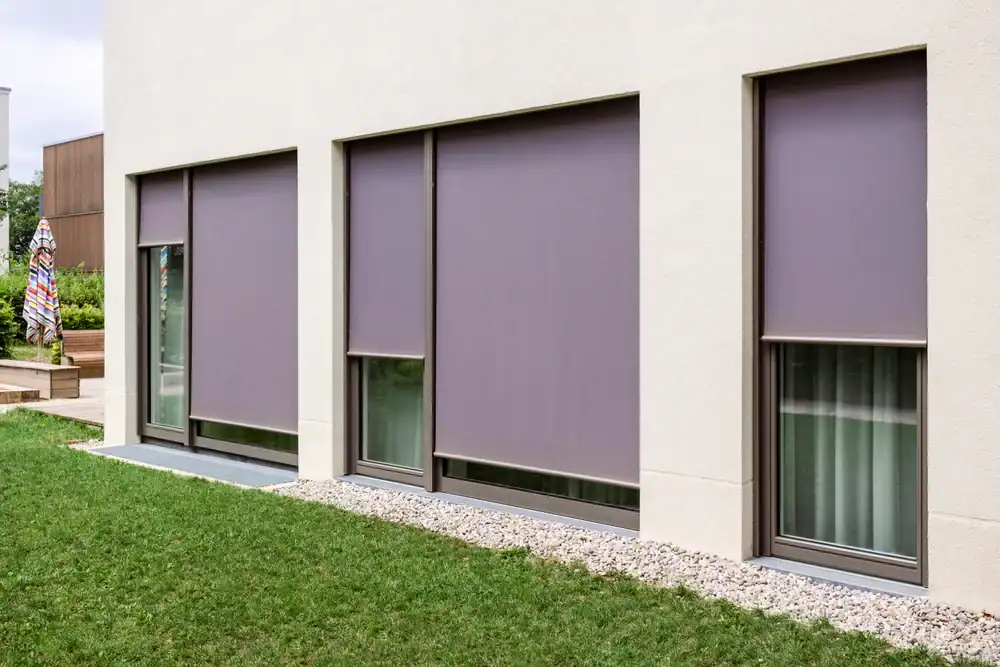
Exterior roller shades change that. They block the direct sun before it heats up your outdoor furniture, your floors, and the air around you. You get shade that actually works—the kind that drops surface temperatures by 15 to 20 degrees and makes your space usable during the hottest parts of the day.
Your AC stops fighting a losing battle against heat pouring through glass doors. Your energy bills drop 20 to 30 percent because you’re not cooling air that’s being reheated by the sun. And your outdoor furniture stops fading and cracking under constant UV exposure.
This isn’t about making your patio look nice. It’s about making it functional when you actually want to use it.
We’ve been installing shutters and shades across the Arlington area for over a decade. We know what holds up in Texas heat and what doesn’t. We know what homebuilders are putting in new Colton homes, and we know how to work with those spaces.
You’re building or moving into a brand-new home in one of the state’s most thoughtfully designed communities. You want outdoor shade solutions that match that quality—not something that’ll fade, jam, or fall apart in two years.
That’s why we use Texas-made products built for this climate. That’s why our installers have years of experience getting measurements right the first time. And that’s why we’re still here after ten years—because we do the work correctly and people remember that.

First, we come to your home for a free consultation. We measure your space, look at sun angles, talk about how you use your patio, and show you fabric samples so you can see openness levels and colors in real light.
Then we walk you through options. Motorized or manual. What openness percentage makes sense for your exposure. Whether you need one shade or several to cover different areas. We’re not there to upsell—we’re there to figure out what actually solves your problem.
Once you decide, we custom-build your outdoor roller shades to your exact measurements. Installation happens on your schedule. We mount everything, test the operation, show you how to use it, and clean up completely.
If it’s motorized, you’ll have one-touch control. If it’s manual, it’ll operate smoothly without fighting you. Either way, you’ll have shade that works the day we leave.

Ready to get started?
You’re getting exterior-grade solar shade fabric that’s built to resist mold, mildew, fading, and the kind of weather Texas throws at it. This isn’t indoor fabric hung outside—it’s designed for sun, heat, and storms.
You’re getting custom sizing that fits your exact openings. No gaps where light pours through. No sagging because someone guessed at measurements. It’s built for your space specifically.
If you go motorized, you’re getting quiet, reliable motors with simple controls. Adjust your shades with a button press when the sun shifts or when you want more airflow. If you choose manual operation, you’re getting smooth, easy-to-use mechanisms that don’t require wrestling.
And you’re getting this installed by people who’ve done it hundreds of times in homes across the DFW area. We’ve worked in new construction. We’ve retrofitted older homes. We know how to handle different mounting surfaces and tricky angles. You’re not our first rodeo, and it shows in how the finished product looks and operates.

You can expect surface temperatures to drop 15 to 20 degrees on average. That’s the difference between touching a metal chair that’s been in direct sun and one that’s been shaded all afternoon.
The exact number depends on your shade’s openness factor, the direction your patio faces, and how much direct sun it gets. A 3% openness fabric blocks more heat than a 10% openness, but it also blocks more view and airflow. Most Colton homeowners dealing with western or southern exposure go with 5% openness—it’s the sweet spot for heat blocking while keeping some visibility and breeze.
The bigger impact is on your indoor temperature. When you block sun before it hits your glass doors and windows, your AC doesn’t have to fight that radiant heat. That’s where you see the 20 to 30 percent energy savings—your system isn’t running constantly to offset heat gain from unshaded glass.
Yes, if they’re installed correctly and you retract them during severe weather. These are built for outdoor use—the fabric resists wind, rain, and UV exposure without falling apart. But they’re not hurricane shutters.
For normal Texas weather—heat, sun, occasional rain, moderate wind—they’ll handle it fine while deployed. The fabric is designed to get wet and dry without mildewing or stretching. The hardware is corrosion-resistant.
During severe storms with high winds, you should retract them. If you have motorized shades, that’s a button press. If they’re manual, it takes 30 seconds. Think of it like patio furniture—quality pieces can handle weather, but you wouldn’t leave cushions out during a severe thunderstorm. Same logic applies here. Retract during bad weather, and your shades will last 10+ years without issues.
The percentage refers to how much of the fabric is open weave versus solid material. Lower percentages block more light and heat but also reduce your view and airflow.
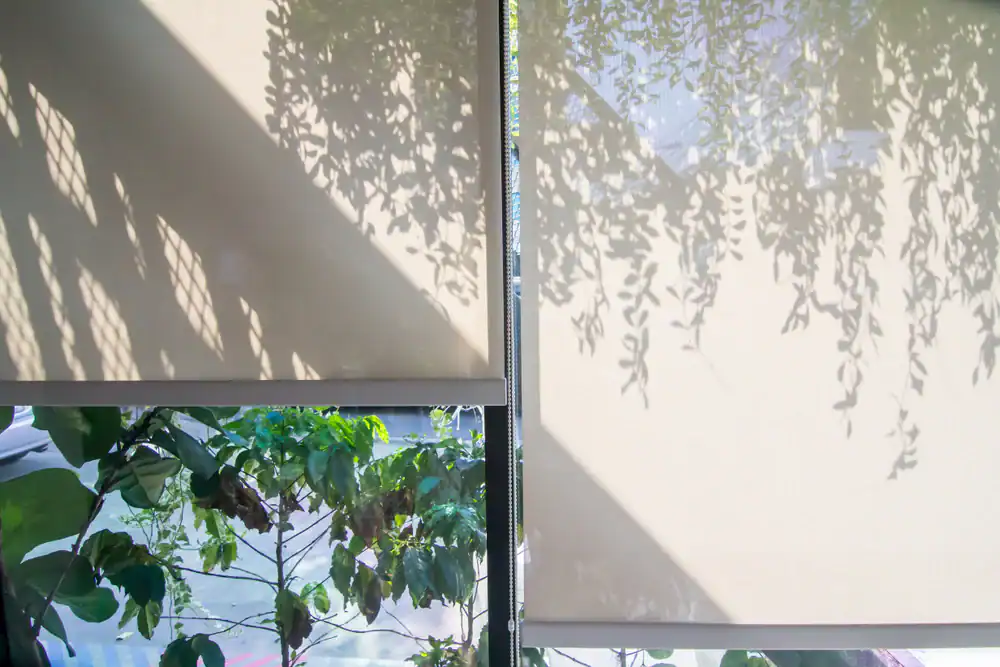
3% openness blocks about 97% of light and gives you the most heat rejection and daytime privacy. You can see shapes and movement outside, but not details. It’s almost like a blackout roller shade for outdoor use. Good for western exposures that get hammered by afternoon sun.
5% openness blocks about 95% of light. You maintain a decent view—you can see your yard and what’s happening outside—while still getting serious heat and UV protection. This is what most people choose because it balances all the factors well.
10% openness blocks about 90% of light and gives you the clearest view and best airflow, but less heat rejection. Better for areas with partial shade or northern exposures that don’t get direct sun all day.
We bring samples to your consultation so you can hold them up and see the actual difference in your lighting conditions.
Motorized systems typically add $200 to $400 per shade depending on size and the control system you choose. That covers the motor, wiring or battery setup, and the remote or wall switch.
Is it worth it? Depends on how you’ll use them. If you’re adjusting your shades multiple times a day as the sun moves—which most people do in Texas—motorization pays for itself in convenience. One button press beats walking outside to crank down three or four manual shades.
If you have high or hard-to-reach installations, motorization isn’t optional—it’s the only practical choice. And if you want to integrate your shades with a smart home system or set them on timers, you need motors.
Manual operation works fine if you have one or two shades in easy-to-reach spots and you don’t mind the 30 seconds it takes to lower or raise them. There’s nothing wrong with manual—it’s reliable, there’s nothing to break electronically, and it costs less upfront. Just be honest about whether you’ll actually use them if it requires effort.
Yes. That’s what the openness factor controls. A 5% or 10% openness fabric lets you maintain visibility while blocking heat and UV rays.
You’re not looking through a clear window—it’s more like looking through a screen door. You can see your yard, watch kids or pets outside, notice when someone walks up. But the view is filtered, not crystal clear.
The tradeoff is this: the more you can see out, the less heat and light you’re blocking. If your priority is keeping your patio cool and protecting furniture from sun damage, go with lower openness. If you want to preserve your view and you’re okay with slightly less heat rejection, go higher.
Most people find 5% openness gives them enough view to feel connected to their outdoor space while still solving the heat problem. But everyone’s different—that’s why we show you samples in your actual space during the consultation.
For most residential installations, we’re done in half a day. A typical setup with two to four shades takes about three to four hours from start to finish.
That includes mounting the hardware, hanging the shades, testing operation, making any minor adjustments, and walking you through how to use everything. If you’re getting motorized shades, we handle all the wiring or battery setup as part of that time.
Larger projects with multiple outdoor areas or complex mounting situations might take a full day. We’ll give you an accurate time estimate when we measure your space—we’ve done enough of these to know exactly how long your specific setup will take.
The actual construction time before installation is usually two to three weeks. That’s how long it takes to custom-build your shades to your exact measurements and specifications. We’re not pulling something off a shelf—we’re making it specifically for your home.