
Hear from Our Customers
Your patio stops being that space you avoid from noon until sunset. You can sit outside without feeling like you’re under a heat lamp. Your furniture stops fading. Your AC stops running nonstop trying to cool rooms that face west.
Outdoor roller shades drop surface temperatures by around 15 degrees and can reduce the heat in covered areas by up to 30 degrees in summer. That’s the difference between unbearable and comfortable. Between an energy bill that makes you wince and one that feels reasonable.
You get privacy without turning your porch into a cave. The right fabric blocks 99% of UV rays while still letting you see out. You control when you want shade and when you want sun. Morning coffee with a view, afternoon protection from the glare. It’s that simple.
Georgetown gets over 300 days of sunshine a year. That’s not a selling point when you’re trying to use your outdoor space. These shades handle what Central Texas throws at them—the UV exposure, the temperature swings, the occasional storm—and they keep working.
A Plus Shutters & Shades is family-owned and based in Austin. We’ve spent nearly three decades installing outdoor shade solutions across Central Texas, which means we know exactly what holds up in this climate and what doesn’t.
Our team lives here. We work with Georgetown HOAs, including Sun City. We understand the specific challenges of this market—the explosive growth, the mix of new construction and established homes, the expectations that come with a community where the median household income sits above $91,000.
We’re bonded and insured. Every installation comes with a 5-year warranty. The fabrics carry a 10-year warranty, and if you go motorized, the motors are covered for 7 years. We measure, we custom-build to your exact specs, and we install it right the first time.

You reach out, and we schedule a time to come measure your space. This isn’t a sales pitch disguised as a consultation. We measure accurately because exterior roller shades need to fit precisely to work correctly—especially motorized systems that have to handle wind load and daily use.
We talk through fabric options based on how you actually use the space. If you need blackout coverage for a west-facing patio that gets hammered all afternoon, we’ll tell you that. If you want to keep the view but cut the glare, there’s a different fabric for that. If bugs are an issue in the evenings, we discuss side track systems that seal tight.
Once you approve the quote, we custom-build your shades. These aren’t off-the-shelf products we’re adapting to fit. They’re made for your measurements, your mounting surface, your specific application.
Installation day, we show up on time. We mount the system, test it, make sure the operation is smooth, and walk you through how to use it. If it’s motorized, we integrate it with your smart home setup if you want that. Then we clean up and leave you with a space that actually works the way you need it to.

Ready to get started?
Every shade system is built to your exact dimensions. We’re talking about the width of your patio, the height of your pergola, the specific mounting challenges of your home. You’re not working around a standard size—the shade works around your space.
You choose the fabric based on function, not just looks. Some fabrics block 95% of UV and still let you see through them. Others are full blackout if you’re trying to create a dark, cool space. The weave, the color, the opacity—it all affects how much heat gets through and how much privacy you get.
Motorized options mean you’re not manually cranking these up and down, which matters when you’re dealing with larger spans. You can control them from your phone, set them on timers, or integrate them with Alexa or Google Home. In Georgetown, where afternoon sun is predictable, automation makes sense.
The side track systems we install keep the fabric taut and help with bug control. Central Texas evenings bring mosquitoes and moths. A properly sealed shade system cuts down on that significantly while also improving wind resistance.
You’re also getting installation by people who’ve done this hundreds of times in conditions exactly like yours. We know how to mount to brick, to wood, to metal pergolas. We know how to handle the engineering requirements for motorized systems that need to withstand wind and daily operation.

Studies show exterior shading can cut your AC runtime by 3 to 5 hours daily during peak summer months. That translates to roughly 25% off your cooling costs if your home has significant sun exposure on patios or large windows.
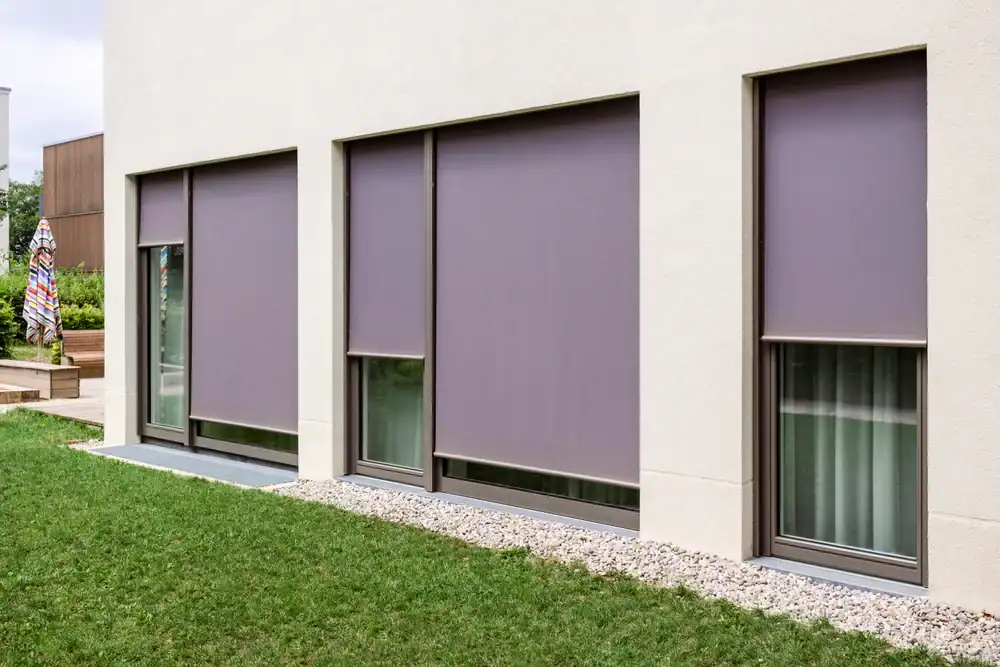
The key word is “exterior.” These shades stop heat before it hits your windows or heats up your covered patio, which then radiates into your home. Interior blinds can’t do that—they’re blocking light after the heat is already inside.
In Georgetown, where we’re over 300 days of sunshine and summer temps regularly hit the high 90s, that difference compounds fast. Your AC isn’t fighting a losing battle against radiant heat. It’s maintaining a temperature instead of constantly trying to catch up.
If they’re built right and installed correctly, yes. The fabrics we use are engineered specifically for UV exposure and temperature extremes. They’re not going to fade, crack, or fall apart after two summers like cheaper materials will.
The 10-year fabric warranty isn’t just marketing. These materials are designed to handle what Central Texas dishes out. The motorized components carry a 7-year warranty because they’re built for daily use in outdoor conditions.
The bigger issue is installation quality. Exterior shades take wind load, especially if you’re covering a large span. The mounting has to be solid, and the system has to be engineered properly. That’s why we don’t cut corners on the install—it’s the difference between a shade that lasts a decade and one that needs repairs in two years.
Absolutely. Solar screen fabrics are designed exactly for that. They block 90-95% of UV rays and significantly reduce heat, but they’re woven in a way that lets you see through them from the inside.
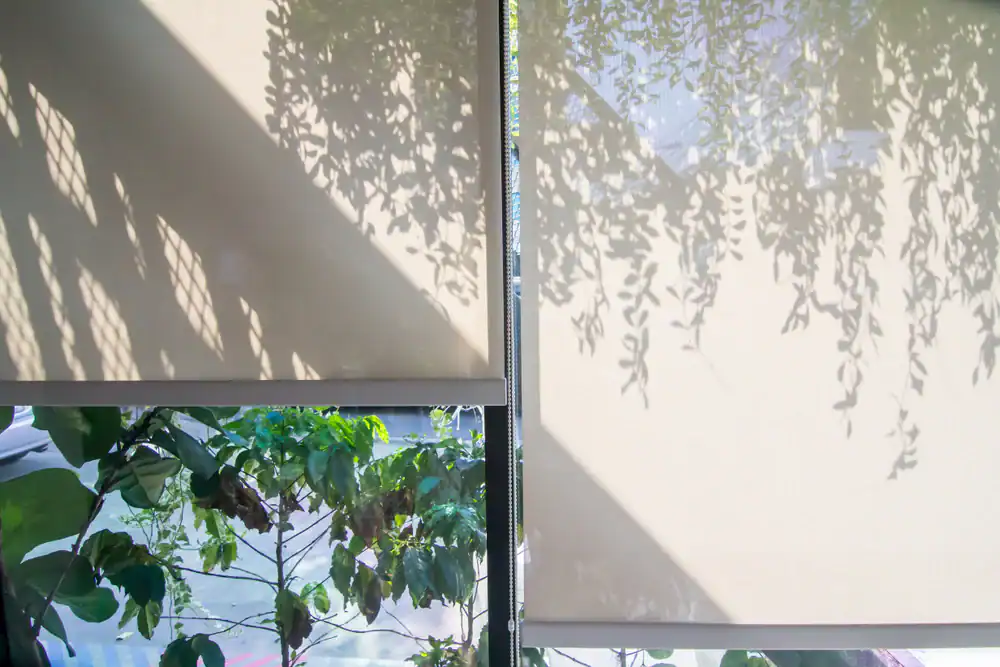
You lose some clarity compared to an unobstructed view, but you’re not staring at a solid wall. It’s similar to looking through a window screen—you can see your yard, the street, whatever’s outside, just with a slight texture to it.
The tradeoff is privacy works one way. During the day, people outside can’t see in well because of the light differential. At night, if you have lights on inside, they’ll be able to see in more easily. If nighttime privacy is critical, you’d want a tighter weave or a blackout option.
Most motorized systems we install can integrate with Alexa, Google Home, or dedicated smart home platforms. You control them through an app on your phone, with voice commands, or by setting schedules and automation rules.
The practical benefit in Georgetown is automation based on sun position and temperature. You can program your shades to lower automatically when the afternoon sun hits, then raise in the evening when it cools off. You don’t have to think about it.
If you’re home, you can override with your phone or voice. If you’re traveling, you can still control them remotely. Some systems even integrate with weather sensors, so they’ll retract automatically if wind speeds get too high. It’s not just convenience—it’s protecting your investment.
Roller shades mount vertically and roll up and down. Awnings extend horizontally out from the building. Both block sun, but they do it differently and work better in different applications.
Roller shades are better for enclosing a space—like dropping them down on the open sides of a pergola or patio. They give you wind protection, bug control with side tracks, and more complete coverage. They’re also generally more durable in high-wind situations because they’re secured on multiple sides when deployed.
Awnings are better for covering a large horizontal area, like shading a deck or patio from above. They’re great for rain protection. But they catch wind more easily, and they don’t give you the same enclosed, protected feeling that roller shades do.
In Georgetown, where wind can pick up quickly and afternoon sun comes from a low angle in summer, roller shades often make more sense for patio enclosures. But it depends on your specific setup and what you’re trying to accomplish.
You need professional installation, especially for motorized systems or larger spans. The engineering matters more than people realize. These shades have to handle wind load, daily operation, and UV exposure while staying aligned and functional.
Mounting to different surfaces—brick, stucco, wood, metal—requires specific hardware and techniques. If the brackets aren’t installed correctly, you’ll have problems within months. If a motorized system isn’t wired and programmed properly, it won’t work reliably.
We also carry insurance and warranties that cover the installation. If something goes wrong, we fix it. If you install it yourself and something fails, you’re on your own for repairs and you’ve likely voided any product warranties. For something you’re expecting to last 10+ years and that costs what a quality shade system costs, professional installation isn’t optional—it’s protecting your investment.