
Hear from Our Customers
Your patio becomes usable again. Not just in the morning or late evening, but during the afternoon when the Texas sun turns outdoor spaces into ovens.
Exterior roller shades drop the temperature where you’re sitting by up to 30 degrees. That’s the difference between cutting your time outside short and actually enjoying your lakefront investment. The UV protection also stops your outdoor furniture from fading and cracking, which means you’re not replacing cushions and décor every few years.
You get privacy without walls. The tinted fabric lets you see out toward Lake LBJ, but neighbors and boaters can’t see in. And if you go with motorized outdoor patio blinds, you control it all from your phone or with a voice command. No cranks, no pulling, no hassle.
The shades handle wind and rain without tearing or losing tension. They’re built for the Hill Country climate, not just decorated for it. When a storm rolls in, you’re not scrambling to take anything down.
A Plus Shutters & Shades started as part of A Plus Home Remodel, and we’ve spent more than 10 years working on homes across the Hill Country. We’re not a national franchise that showed up last year. We know what Lake LBJ weather does to outdoor installations, and we know what Horseshoe Bay homeowners expect.
Our showroom is local. Our installers are experienced. We measure your space in person, show you fabric samples you can actually touch, and walk you through how motorization integrates with your existing setup if you’ve already got smart home devices running.
We’re not here to oversell you on features you won’t use. Plenty of people in Horseshoe Bay want simple, durable outdoor roller shades that work every time. Others want full automation with sensors and schedules. We fit the system to how you’ll actually use your patio, not the other way around.

You start with a free consultation at your property. We measure the openings where you want shade coverage, whether that’s a covered patio, pergola, balcony, or a row of windows facing the lake. We talk through your goals: temperature control, privacy, bug protection, or all three.
We bring fabric samples so you can see the difference between light filtering and blackout roller shades. Some people want to keep the breeze and the view but lose the glare. Others want full dark-out blinds for afternoon naps or movie setups. The fabric you choose changes how much heat and light gets through.
Once you pick your setup, we custom-build the shades to fit your exact measurements. These aren’t off-the-shelf sizes that leave gaps. When they arrive, our installers mount them to your structure with hardware that’s rated for outdoor use and wind load. If you’re adding motorization, we integrate the controls with your Wi-Fi and pair them with your phone, Alexa, or Google Assistant.
After install, we test every shade to make sure it raises and lowers smoothly. You get a walkthrough on how to operate everything, and we leave you with care instructions that take about five minutes twice a year.

Ready to get started?
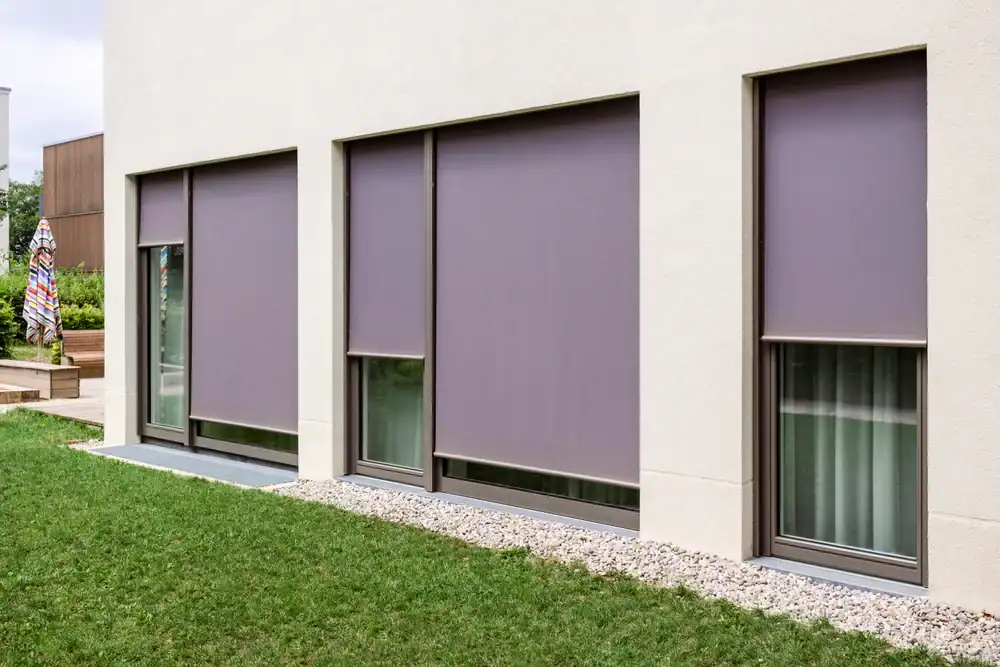
Every exterior roller shade system we install is custom-measured and built for your openings. That means no light gaps on the sides and no sagging in the middle. The fabric is rated for outdoor use, which means it resists mildew, holds up in humidity, and doesn’t break down under constant sun exposure like indoor materials do.
You can choose manual operation with a crank or go fully motorized. Motorized systems come with remote controls, and most integrate with smart home platforms. If you’ve got Alexa or Google Assistant, you can raise and lower your outdoor shade blinds with your voice. Some homeowners in Horseshoe Bay set schedules so the shades drop automatically when the sun hits a certain angle in the afternoon.
The frames and mounting hardware are powder-coated aluminum or stainless steel. They don’t rust, warp, or need repainting. In a lakefront environment where moisture is constant, that matters more than people realize.
We also offer different fabric opacities. If you want blackout roller shades for a sleeping porch or media area, we’ve got options that block 99% of light. If you just want to cut glare and heat but keep your view of the lake, we use solar mesh that you can see through from the inside but provides privacy from the outside.

Cost depends on the size of the opening, the fabric you choose, and whether you add motorization. A standard 10-foot-wide patio shade with manual operation typically starts around $800 to $1,200 per shade. Add motorization and you’re looking at $1,500 to $2,500 per unit depending on the control system.
Larger openings or custom shapes cost more because they require reinforced hardware and wider fabric rolls. If you’re covering a pergola or a wraparound patio, we usually quote by the project, not per shade, because the installation complexity changes.
The upfront cost is higher than basic outdoor curtains or manual roll-up screens, but you’re getting a system that lasts 10 to 15 years without fabric replacement and doesn’t need constant adjustment. For most Horseshoe Bay homeowners, that beats replacing cheaper options every few years.
Yes, but only if they’re installed correctly and rated for wind load. We use tension systems and reinforced mounting brackets that keep the fabric tight even when wind picks up. Most of our outdoor roller shades are rated for winds up to 30 to 40 mph when fully extended.
That said, if a storm is coming through with sustained high winds, it’s smarter to retract the shades. Motorized systems make that easy since you can raise them from inside with a remote or phone app. Leaving any shade down in 50+ mph gusts risks damage to the fabric or the mounting hardware.
We also recommend side channels for exposed areas. These are tracks that run along the edges of the shade and keep the fabric from whipping or pulling away from the frame. They add stability and are especially useful on lakefront properties where wind direction changes throughout the day.
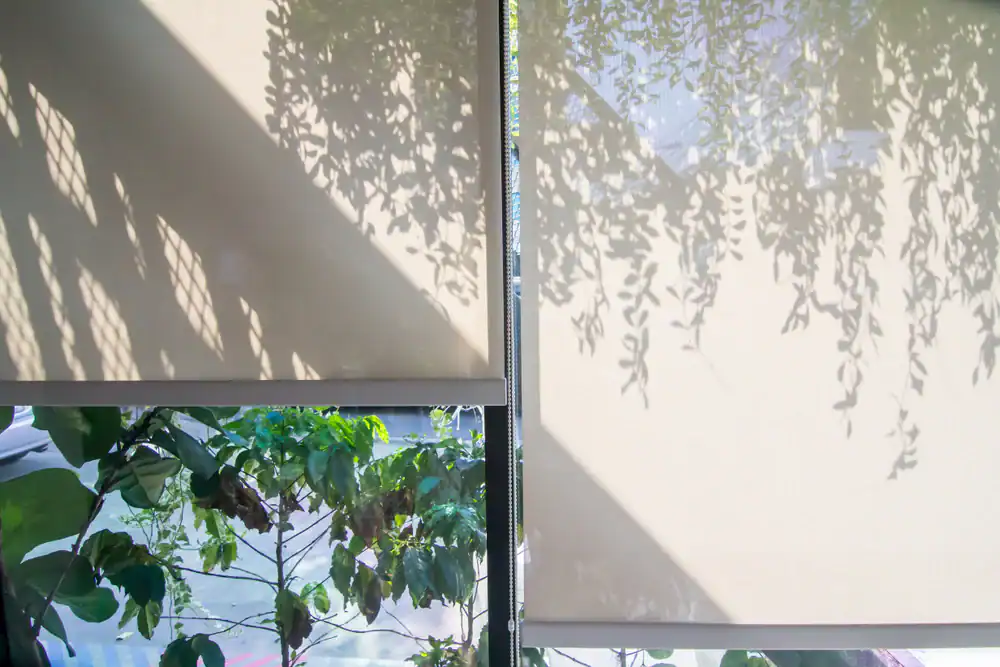
Solar shades are made from mesh fabric that blocks heat and UV rays but still lets you see through them. They’re designed to reduce glare and keep your patio cooler without completely blocking your view of the lake. Most solar fabrics block 90% to 95% of UV rays and cut heat by 20 to 30 degrees, but light still filters through.
Blackout roller shades use a denser, opaque fabric that blocks 99% of light and UV rays. You can’t see through them, and they create a much darker, more private space. People use blackout shades for outdoor sleeping areas, covered patios where they watch TV during the day, or spaces where they want total privacy from neighbors.
The choice comes down to how you use the space. If you’re out there during the day and want to keep the view, go solar. If you want to control light completely or create a room-like environment, go blackout. Some Horseshoe Bay homeowners install both types in different areas depending on the function of each patio or balcony.
Yes, especially if your patio doors or windows face west or south. When exterior roller shades block the sun before it hits the glass, they stop heat from building up inside your home. That reduces how hard your AC has to work during the hottest part of the day.
The Department of Energy estimates that exterior shading can cut cooling costs by up to 30% compared to interior blinds or no shading at all. Interior blinds still let heat through the glass and into your home. Exterior shades stop it outside, which is far more effective.
In Horseshoe Bay, where summer temperatures regularly hit the mid-90s and your AC runs for months straight, that adds up. Homeowners with large sliding glass doors or floor-to-ceiling windows see the biggest impact. The shades essentially create a buffer zone that keeps the interior cooler without cranking the thermostat down.
Most outdoor roller shades only need cleaning twice a year. You can hose them down while they’re extended to remove dust, pollen, and lake debris. For tougher spots, use a soft brush and mild soap mixed with water. Avoid pressure washers because the high pressure can damage the fabric weave or coating.
Let the shades dry completely before retracting them. Rolling up damp fabric can cause mildew or leave water marks, especially in humid climates like the Hill Country. If you get a surprise rainstorm and the shades are wet, extend them again once the weather clears and let them air out.
The mechanical parts need even less attention. Check the mounting brackets once a year to make sure nothing’s loose, and wipe down the roller tube if dust builds up. Motorized systems should be tested every few months to make sure the motor responds smoothly. If it starts hesitating or making noise, that’s usually a sign the motor needs lubrication or the battery in the remote needs replacing.
Yes, if you choose motorized outdoor roller shades with smart home integration. Most motorized systems we install connect to Wi-Fi and pair with apps that let you raise or lower the shades from anywhere. You can also integrate them with Amazon Alexa, Google Assistant, or Apple HomeKit for voice control.
Some homeowners set schedules so the shades automatically lower when the sun hits a certain angle in the afternoon, then raise again in the evening. Others tie them into their home automation system so the shades respond to temperature sensors or time of day without any manual input.
The setup process is straightforward. During installation, we connect the motor to your Wi-Fi network and pair it with your phone. If you’ve already got smart home devices running, we can usually integrate the shades into your existing setup. If you’re new to smart home tech, the app is simple enough that you’ll have it figured out in a few minutes.