
Hear from Our Customers
Right now, your outdoor space sits empty most of the year. Too hot in summer, too bright for screens, too exposed for privacy. You paid good money for that patio, and you’re not using it.
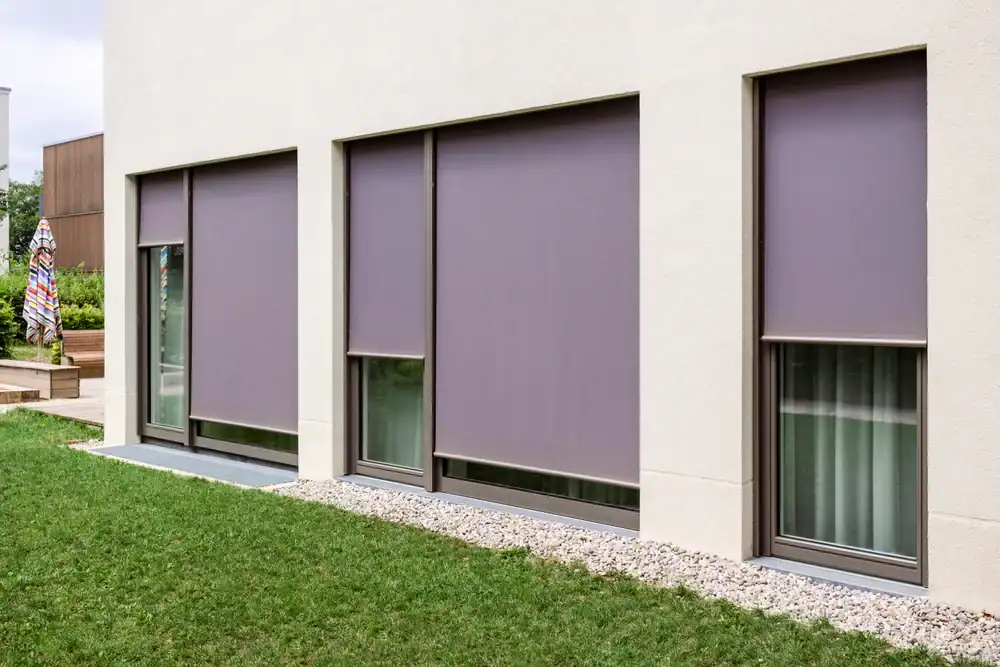
Exterior roller shades change that. They drop the temperature under your covered areas by 15-20 degrees, which means you can actually sit outside without feeling like you’re in an oven. They block up to 95% of UV rays, so your furniture stops fading and your family stops squinting. And because they mount on the outside of your structure, they stop heat before it even reaches your windows or doors—which is why homes with outdoor shade blinds see cooling costs drop by up to 30%.
You keep your view. You get your patio back. And your AC doesn’t have to work overtime every time the sun hits that west-facing wall.
A Plus Shutters & Shades started as part of A Plus Home Remodel, a construction company that’s been working in the DFW area for more than 10 years. We know how homes are built here, and we know what holds up in Texas weather.
We’re not a franchise. We’re local to Arlington and we serve Picadilly Ridge, Pflugerville, and the surrounding communities with the same approach: measure right, install right, and use materials that last. Most of what we install is Texas-made, which means it’s built for the heat, the storms, and the sun exposure you deal with year-round.
When you call us, you’re talking to the people who’ll actually show up at your house. No middleman, no call center, no runaround.

We start with a free consultation at your home. We’ll measure your space, look at your structure, and talk through what you’re trying to solve—whether that’s heat, glare, privacy, or all three. We bring samples so you can see the fabric options, opacity levels, and colors in real light.
Once you pick what works, we custom-build your outdoor roller shades to fit your exact measurements. No guessing, no adjustments on-site. Everything’s made to spec before we show up to install.
Installation usually takes a few hours depending on how many shades you’re adding. We mount them to your patio cover, pergola, or exterior structure, run the motorized controls if you want them, and test everything before we leave. You’ll know how to operate them, and you’ll have a product that’s built to handle wind, rain, and years of Texas sun.
If something doesn’t look right or fit right, we fix it then and there. You’re not waiting on a callback.

Ready to get started?
Every exterior roller shade we install is custom-measured and built for your space. You’re not buying something off a shelf. You pick the fabric—solar screens that let light through but block heat, or blackout roller shades that give you full coverage and privacy.
You also choose how you want to control them. Manual operation works fine if you don’t mind pulling a cord. Motorized outdoor shades let you raise and lower them with a remote or wall switch, which is helpful if you’ve got multiple shades or high mounting points. Some customers tie them into smart home systems so they adjust automatically based on time of day or temperature.
In Picadilly Ridge and the rest of Pflugerville, most homes we work with are dealing with west or south-facing patios that get hammered by afternoon sun. That’s where these shades make the biggest difference. You’re not just blocking light—you’re stopping radiant heat before it turns your outdoor furniture into a griddle. And because the fabric is UV-resistant and weather-treated, it holds up through storms, pollen season, and the kind of summer heat that makes your neighbors retreat indoors by noon.

Most homeowners see a temperature drop of 15-20 degrees under their patio cover once exterior roller shades are installed. That’s not a marketing claim—it’s what happens when you block radiant heat before it reaches your seating area.
The key is that these shades mount on the outside of your structure, not inside. So the sun hits the fabric first, and most of that heat gets reflected or absorbed before it ever enters your space. Compare that to interior blinds, which let the heat in and then try to manage it. By that point, your AC is already fighting a losing battle.
If you’ve got a west-facing patio in Picadilly Ridge, you know what it feels like at 5 p.m. in July. The shade from your roof helps, but it doesn’t stop the low-angle sun from blasting through the sides. That’s where outdoor shade blinds make the difference. You can actually sit outside without sweating through your shirt.
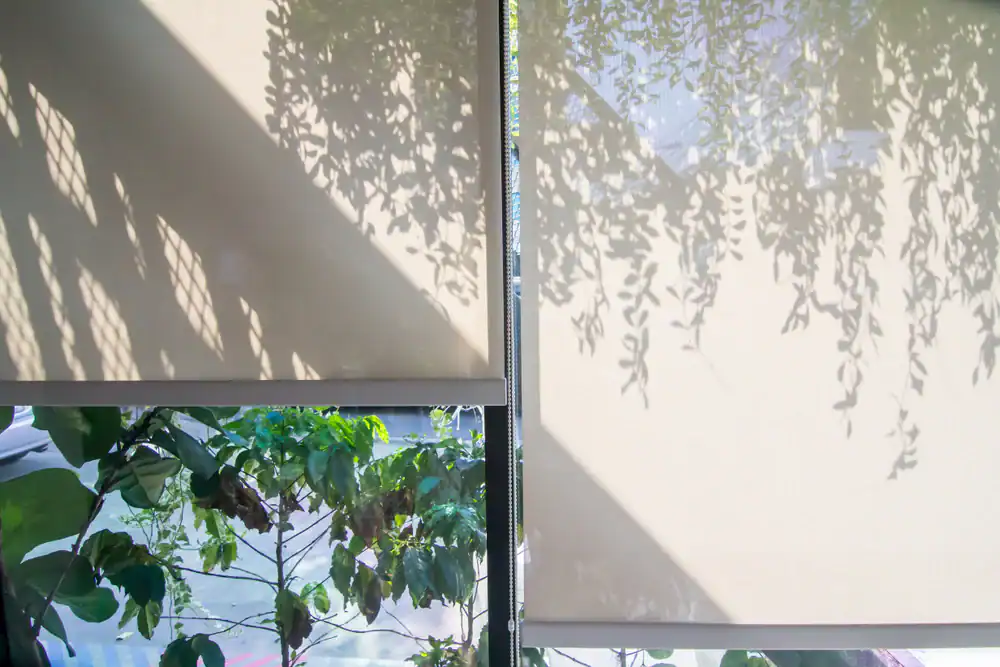
Yes. Solar screen fabric blocks heat and UV rays, but it doesn’t block your view. Most of the fabrics we install maintain 80-95% visibility, so you can still see your yard, your kids playing, or whatever’s happening outside.
The way it works is simple: the tighter the weave, the more heat and light you block, but the less you see through it. A 90% solar screen blocks more sun than a 95% screen, but it also cuts down visibility a bit more. We bring samples to your consultation so you can hold them up and see exactly what you’re getting.
If you want full privacy or total light blocking, that’s when you’d go with blackout roller shades instead. Those are solid fabric, no visibility, but they’re great for spaces where you want complete coverage—like a screened porch that faces a neighbor’s yard or a patio where you want to watch a projector at night.
They hold up fine as long as they’re installed correctly and built with weather-resistant components. The motors we use are designed for outdoor use, which means they’re sealed against moisture, dust, and temperature swings.
The bigger concern isn’t the motor—it’s the fabric and the mounting. Cheap outdoor roller shades will fade, tear, or sag after a year or two of Texas sun and wind. The shades we install use UV-treated, weather-resistant fabric that’s built to last. We also make sure the mounting brackets are secured into solid structure, not just trim or fascia, so they don’t rip loose during a storm.
Most motorized systems come with a remote, and some can integrate with your phone or smart home setup. If the power goes out, there’s usually a manual override so you’re not stuck with the shades down. And if something does go wrong with the motor, it’s a straightforward fix—not a full replacement.
Exterior roller shades mount vertically and roll up or down to cover openings like patio sides, pergola gaps, or large door and window areas. Retractable awnings extend horizontally from a wall or roofline to create overhead shade. Both work, but they solve different problems.
If your patio already has a roof or cover, you don’t need an awning—you need side protection from low-angle sun, wind, or rain. That’s where outdoor roller shades make sense. They block heat and light coming in from the sides, and they give you privacy without closing off airflow completely.
Awnings are better if you’ve got an uncovered deck or concrete pad and you need overhead shade. But they’re also more expensive, harder to install, and more vulnerable to wind damage. In Picadilly Ridge, where most homes have covered patios or pergolas already, exterior window blinds are usually the simpler and more cost-effective option.
You can try, but most people who go the DIY route end up calling us to fix it. The problem isn’t the concept—it’s the execution. If your measurements are off by even half an inch, the shade won’t fit right. If your mounting brackets aren’t level or aren’t anchored into solid structure, the whole thing will sag or pull loose the first time the wind picks up.
Motorized outdoor shades add another layer of complexity. You’ve got wiring to run, motors to mount, and controls to program. If you’ve never done it before, it’s easy to make a mistake that costs more to fix than it would’ve cost to hire someone in the first place.
We’ve been installing these for years, and we know what works in Texas conditions. We measure everything twice, we use the right anchors for your specific structure, and we test the operation before we leave. If something goes wrong after we install it, we come back and make it right. That’s not something you get with a DIY kit from a big-box store.
It depends on the size of your space, the fabric you choose, and whether you want manual or motorized operation. A single standard-sized shade for a patio opening usually starts around a few hundred dollars for basic manual operation. Larger spaces, motorized controls, or blackout fabric will cost more.
The best way to get an accurate number is to have us come out and measure. We’ll look at your patio, talk through what you’re trying to accomplish, and give you a quote based on your actual space—not a generic estimate. There’s no charge for the consultation, and you’re not locked into anything.
What most people don’t realize is that exterior roller shades pay for themselves over time. If you’re spending an extra $100-$200 a month on cooling because your AC is fighting the sun all day, and these shades cut that by 30%, you’re looking at real savings. Add in the fact that your furniture isn’t fading and your patio is actually usable, and the math makes sense pretty quickly.