
Hear from Our Customers
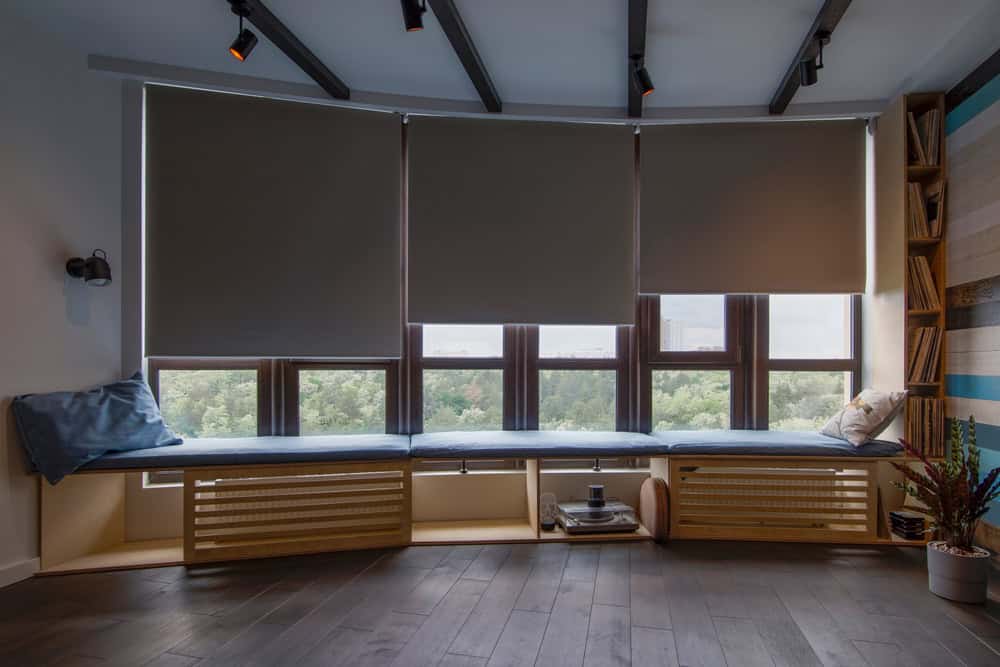
Your bedroom stays dark enough to sleep past sunrise. That’s what blackout roller shades do when they’re measured and installed correctly – no light leaks around the edges, no gaps at the top.
Your cooling bills drop because you’re not fighting the Texas sun all afternoon. Roller shade blinds with the right fabric block heat before it gets through the glass. Your AC runs less, and rooms that used to bake by 3 PM stay comfortable.
Furniture stops fading. Carpets keep their color. UV protection isn’t just a feature – it’s what keeps your investment in your home from degrading every time the sun comes through the window. Interior roller shades give you control over how much light gets in, which means you decide what your space looks like and how it feels, morning to night.
A Plus Shutters & Shades started as part of A Plus Home Remodel over 10 years ago. We’ve worked in enough Rosedale homes to know what matters here – homes with big windows, high ceilings, and homeowners who want things done right the first time.
We’re based in Arlington and serve the entire DFW area. That means we understand Texas heat, how it affects your windows, and what kind of roller blinds for windows actually hold up. We’re not a franchise following a script – we’re a local team that measures, builds, and installs custom window treatments.
You’ll meet with someone who knows the product, not a salesperson reading off a brochure. We’ll measure your windows, show you fabric samples, talk through your options, and give you a straight answer about what will work best for your home.
We start with a free consultation at your home. You show us the windows, tell us what’s not working – too much light, too much heat, privacy issues, whatever it is. We measure every window that needs covering and talk through fabric options, blackout vs. light filtering, motorized vs. manual.
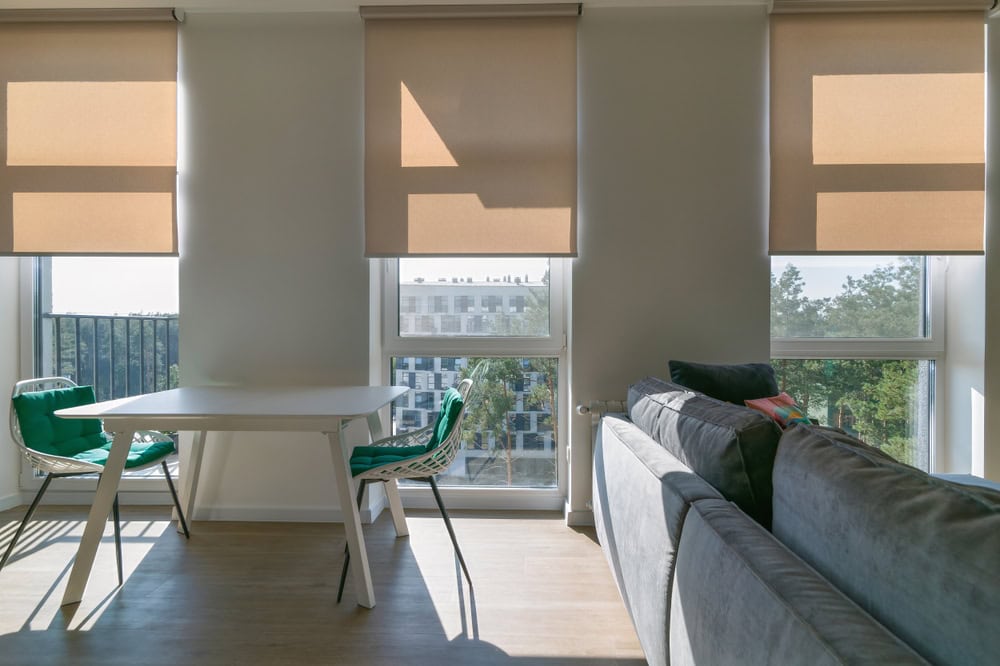
You’ll see samples of different roller shade materials. We’ll explain what works best for your situation – blackout blinds for windows in bedrooms, light-filtering for living areas, solar shades for rooms that get direct sun. We’ll also talk about operating systems: cordless, continuous loop, motorized with remote or app control.
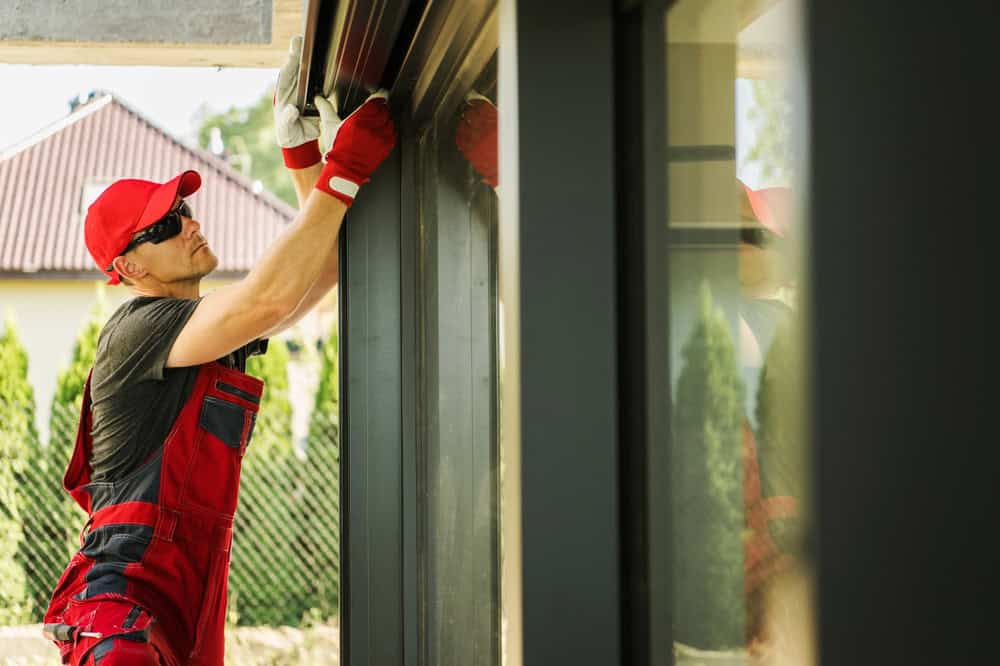
Once you decide, we build your custom roller shades. This takes a few weeks – we’re not pulling something off a shelf. When they’re ready, our installers come back and mount them. They’ll make sure everything operates smoothly, the fit is tight, and you know how to use them. If something’s not right, we fix it before we leave.
Ready to get started?
Every roller shade we install is built to your exact window measurements. That’s not marketing talk – it’s how we avoid the gaps and light leaks that come with stock sizes. We measure width, height, and depth, then account for mounting location and any obstacles like window cranks or handles.
You choose from fabrics that range from sheer to complete blackout. If you need dark out blinds for a bedroom, we’ll show you fabrics that block 100% of light when properly installed. For living areas, you might want something that filters light but still gives you a view. We’ll explain the difference and show you samples so you know exactly what you’re getting.
In Rosedale, where summer temperatures regularly hit the high 90s and energy costs keep climbing, the insulation factor matters. Roller shade blinds with thermal backing help keep heat out in summer and warmth in during winter. It’s a measurable difference – rooms stay more comfortable, and your HVAC system doesn’t work as hard.
Motorization is an option worth considering if you have hard-to-reach windows or just want the convenience of controlling your blackout window blinds from your phone. We install systems that integrate with smart home setups or work standalone with a remote. No cords, no climbing on furniture, no hassle.

Blackout roller shades block 100% of light when installed correctly. The fabric is thick, often with a backing layer, and when combined with proper mounting, you get complete darkness. This matters for bedrooms where you need to sleep, nurseries, or home theaters.
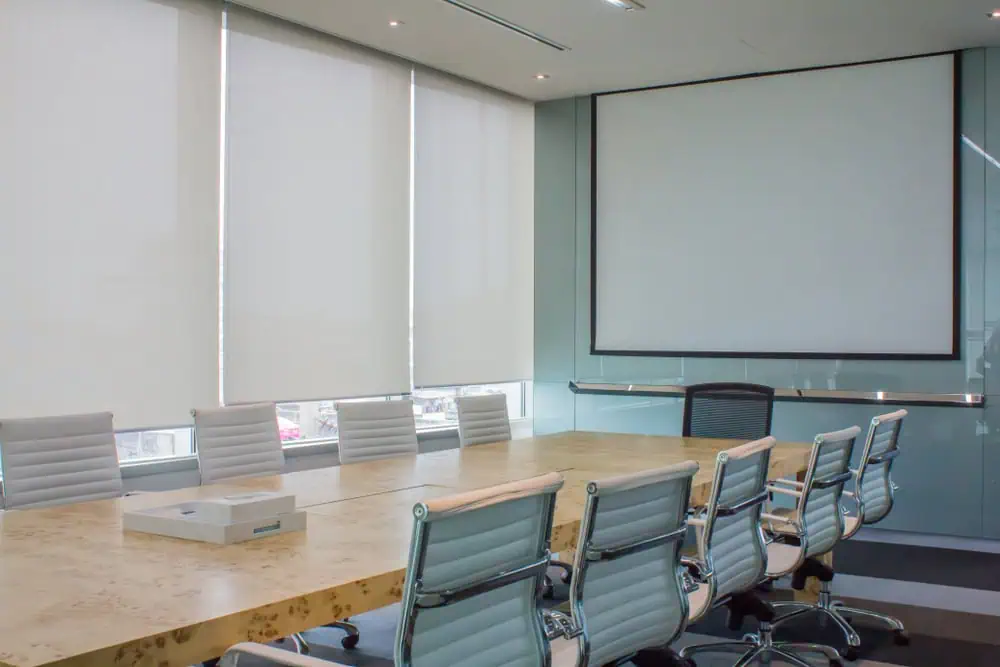
Light-filtering roller shades let some light through while still giving you privacy. You can see shapes and movement outside, but people can’t see in clearly. These work well in living rooms, kitchens, or offices where you want natural light without the glare.
The choice depends on the room and what you’re trying to accomplish. Most homes use a mix – blackout blinds for windows in bedrooms, light-filtering in common areas. We’ll walk you through options based on which windows get direct sun, what time of day, and how you use each space.
Roller shade blinds with thermal or blackout fabric can reduce heat gain by up to 33% on windows that get direct sun. In Texas, where cooling costs make up the biggest chunk of summer energy bills, that’s a real difference.
Here’s how it works: the sun heats your windows, which radiates into your home. Your AC kicks on to compensate. Interior roller shades block that heat before it gets through the glass. Rooms stay cooler naturally, your system runs less, and you use less energy.
The savings depend on your windows, how much sun exposure you get, and what kind of shades you install. South and west-facing windows benefit most because they take the hardest hit from afternoon sun. We can show you which windows will give you the biggest return and what fabric options make sense for your situation.
Motorized roller shades make sense in specific situations. If you have tall windows or windows above furniture, motorization means you’re not climbing or stretching every time you want to adjust them. If you’re integrating smart home systems, motorized blackout roller shades can be programmed to close when the sun hits or open at sunrise.
The cost difference is real – motorization adds to the price per window. But the convenience is also real, especially if you have multiple windows or a schedule where you’re adjusting shades throughout the day.
Battery-powered systems are simpler to install because there’s no wiring. Hardwired systems are cleaner looking and you never change batteries. We’ll explain both options and help you decide if the investment makes sense for how you live. Some people do motorized on hard-to-reach windows and manual on the rest – that’s a practical middle ground.
From consultation to installation, plan on 3-4 weeks. That includes the time it takes to manufacture your custom roller shade blinds to exact specifications.
The process breaks down like this: we measure and you choose your fabrics and options. That’s usually one visit, about an hour depending on how many windows. Then we order materials and build your shades, which takes 2-3 weeks. Once they’re ready, we schedule installation, which takes a few hours for a typical home.
If you need something faster, tell us upfront. We can sometimes expedite orders, but custom work takes time to do right. The alternative is buying stock sizes that don’t fit properly, and that’s where you get gaps, light leaks, and problems down the road. We’d rather do it right than do it fast.
Roller shades work on most standard windows – single hung, double hung, casement, picture windows. The mounting method changes based on window type and how much depth you have for an inside mount.
Inside mount means the roller shade sits inside the window frame. This looks cleaner and blocks more light because the fabric is closer to the glass. Outside mount means the shade mounts on the wall or trim above the window. This works when you don’t have enough depth for an inside mount or when you want to cover the entire frame.
Some windows have challenges – arched tops, angles, or obstacles like cranks. We’ll measure and tell you what’s possible. In most cases, there’s a solution that works. Occasionally, a different window treatment makes more sense, and we’ll be straight with you about that. The goal is to find what actually works for your windows, not force a product that doesn’t fit.
True blackout roller shades block all light that comes through the fabric itself. But light leaks happen around the edges if the installation isn’t done right or if there are gaps between the shade and the window frame.
That’s why custom sizing matters. We measure for the tightest fit possible and use mounting techniques that minimize gaps. For people who need complete darkness – shift workers, light-sensitive sleepers, anyone with specific sleep requirements – we’ll talk through options like side channels that eliminate edge gaps entirely.
The fabric quality also matters. Cheap blackout material can have pinholes or thin spots. We use fabrics that are actually rated for 100% light blockage. When someone tells us blackout didn’t work for them in the past, it’s usually because the shades weren’t truly blackout grade or they weren’t installed correctly. We handle both parts – the right product and the right installation.