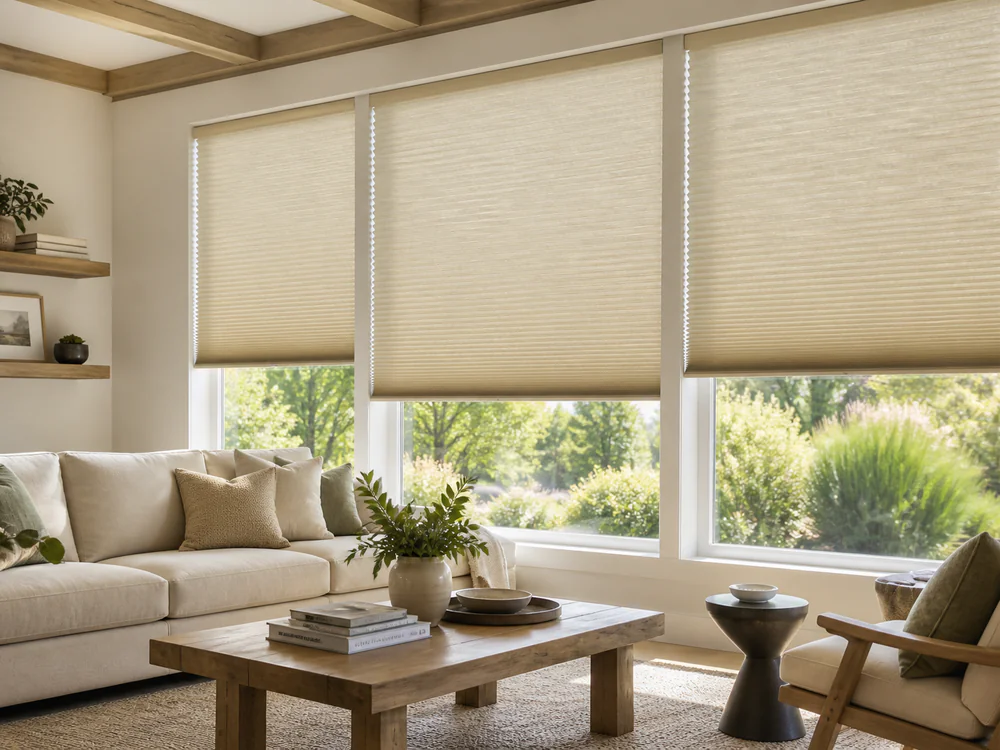
Choosing between shutters, blinds, and shades doesn't have to be overwhelming. This guide breaks down the differences to help you decide what works for your home.
Share:
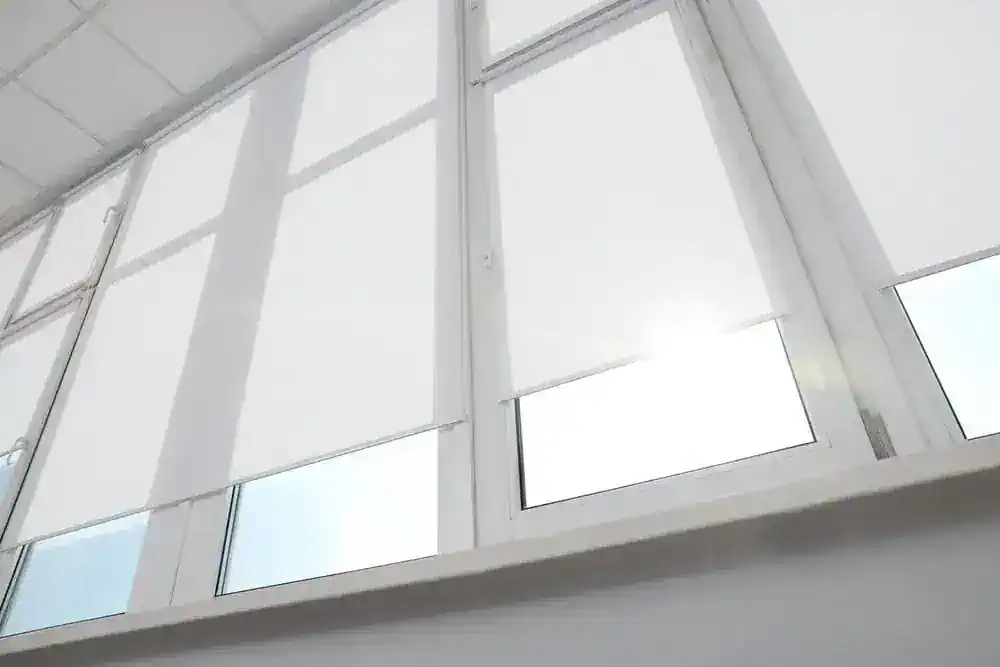
Before comparing features, let’s clear up what each window treatment actually is. People often use these terms interchangeably, but they’re distinct products with different structures and functions.
Plantation shutters are solid window coverings with a frame and horizontal slats called louvers. They’re permanently mounted to your window frame and tilt open or closed using a tilt bar. Think of them as built-in furniture for your windows—they become part of the room’s architecture.
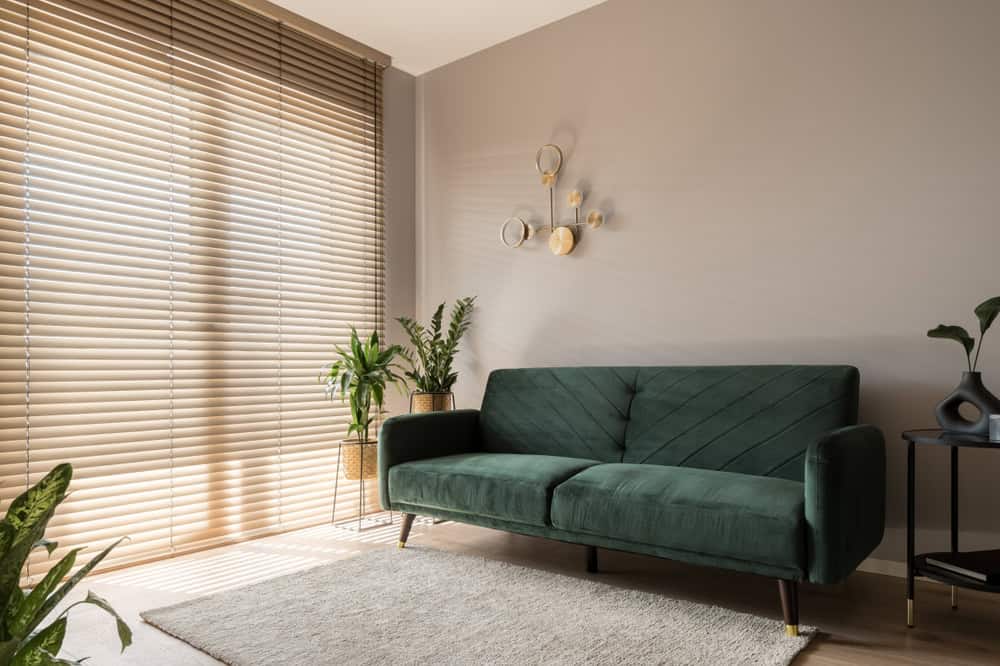
Window blinds consist of horizontal or vertical slats attached with cords or fabric. You can raise, lower, and tilt the slats to control light and privacy. They’re typically made from wood, faux wood, aluminum, or vinyl and mount inside or outside your window frame.
Roller shades are single pieces of fabric that roll up and down on a mechanism. Unlike shutters and blinds, they don’t have slats. Instead, you control light by raising or lowering the entire shade. They come in various fabric options—light filtering, blackout, or solar—depending on your needs.
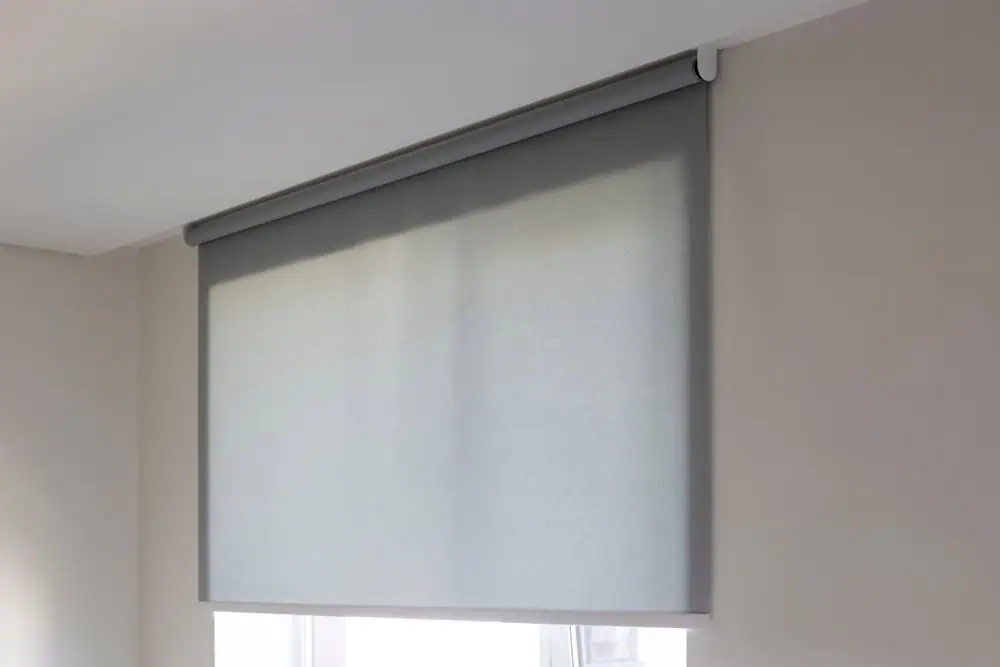
Light control is where these three window treatments really show their differences. It’s not just about blocking sun—it’s about how precisely you can adjust the amount and angle of light entering your space.
Shutters and blinds give you the most flexibility. You can tilt the slats to specific angles, letting in soft filtered light while maintaining privacy. Want to see outside but prevent neighbors from seeing in? Tilt the slats downward. Need to reduce glare on your TV screen without darkening the whole room? Adjust them to deflect direct sunlight. This level of control makes them ideal for living rooms, home offices, and any space where lighting needs change throughout the day.
Shades operate differently. Most work on an “all or nothing” principle—they’re either up or down. When they’re down, the fabric determines how much light filters through. Light-filtering shades soften harsh sunlight and create a warm glow. Blackout shades block nearly 100% of light, perfect for bedrooms or media rooms. Solar shades reduce glare and UV rays while maintaining your view to the outdoors, making them popular in sunny Texas homes.
The trade-off? Shades don’t offer the same mid-range adjustability as shutters or blinds. You can’t angle them to redirect light. But if you need complete room darkening—something that’s hard to achieve with slatted treatments—blackout roller shades are your best bet. Small gaps where louvers meet the frame on shutters and blinds can allow some light through, even when closed.
For Tarrant County homes dealing with intense afternoon sun, this matters. East- and west-facing windows are especially susceptible to heat gain and glare. Shutters and blinds let you angle slats to minimize direct exposure without losing all natural light. Shades with solar fabrics block up to 90% of UV rays while preserving your view, protecting furniture and floors from fading without turning your room into a cave.
The bottom line: if you want pinpoint control over lighting throughout the day, shutters or blinds make sense. If you prioritize complete darkness or maximum UV protection, shades—especially blackout or solar options—deliver better results.
Light control is where these three window treatments really show their differences. It’s not just about blocking sun—it’s about how precisely you can adjust the amount and angle of light entering your space.
Shutters and blinds give you the most flexibility. You can tilt the slats to specific angles, letting in soft filtered light while maintaining privacy. Want to see outside but prevent neighbors from seeing in? Tilt the slats downward. Need to reduce glare on your TV screen without darkening the whole room? Adjust them to deflect direct sunlight. This level of control makes them ideal for living rooms, home offices, and any space where lighting needs change throughout the day.
Shades operate differently. Most work on an “all or nothing” principle—they’re either up or down. When they’re down, the fabric determines how much light filters through. Light-filtering shades soften harsh sunlight and create a warm glow. Blackout shades block nearly 100% of light, perfect for bedrooms or media rooms. Solar shades reduce glare and UV rays while maintaining your view to the outdoors, making them popular in sunny Texas homes.
The trade-off? Shades don’t offer the same mid-range adjustability as shutters or blinds. You can’t angle them to redirect light. But if you need complete room darkening—something that’s hard to achieve with slatted treatments—blackout roller shades are your best bet. Small gaps where louvers meet the frame on shutters and blinds can allow some light through, even when closed.
For Tarrant County homes dealing with intense afternoon sun, this matters. East- and west-facing windows are especially susceptible to heat gain and glare. Shutters and blinds let you angle slats to minimize direct exposure without losing all natural light. Shades with solar fabrics block up to 90% of UV rays while preserving your view, protecting furniture and floors from fading without turning your room into a cave.
The bottom line: if you want pinpoint control over lighting throughout the day, shutters or blinds make sense. If you prioritize complete darkness or maximum UV protection, shades—especially blackout or solar options—deliver better results.
Window treatments are an investment. Understanding maintenance requirements and lifespan helps you calculate true cost over time, not just upfront price.
Shutters require the least maintenance. Wide louvers are easy to dust with a cloth or duster—no intricate slats to navigate. Their solid construction resists damage from pets, kids, and daily wear. With proper care, plantation shutters can last 20+ years or more. They’re also the only window treatment that can be included in a home appraisal, potentially increasing your property value. Think of them as permanent fixtures rather than replacements you’ll make every decade.
Blinds fall in the middle for maintenance and durability. Slats attract dust and require regular cleaning. Narrow slats mean more surface area to wipe down, which takes time and patience. Faux wood and vinyl blinds resist moisture and warping better than real wood, making them practical for Texas humidity and high-moisture rooms like kitchens and bathrooms. Quality blinds typically last 5-6 years, though this varies based on material and usage. They’re more susceptible to damage—broken slats, tangled cords, or bent pieces—especially in high-traffic areas or homes with children and pets.
Shades sit somewhere between shutters and blinds for longevity. On average, homeowners can expect shades to last 7-10 years. Maintenance depends on fabric type. Most require occasional spot cleaning or gentle vacuuming. Fabric shades can retain odors and may fade with sun exposure, particularly in south- or west-facing windows. Roller mechanisms are generally reliable, though repeated daily use can wear them down faster than shutters’ simple tilt systems.
In Tarrant County, where summer temperatures regularly exceed 90°F, window treatments aren’t just decorative—they’re functional tools for managing energy costs. The right choice can reduce your cooling bills by 10-30%, according to energy efficiency studies.
Shutters provide the best insulation among the three options. When closed, they create a solid barrier between your window and room, trapping air and reducing heat transfer. This is especially valuable for Texas homes where air conditioning runs constantly from May through September. Faux wood and composite shutters offer superior performance in humid climates because they resist moisture and maintain their insulating properties better than real wood. The permanent installation and tight fit within the window frame minimize air leakage, a common source of energy loss.
Cellular shades (also called honeycomb shades) are the top performers for thermal insulation among shade options. Their unique honeycomb structure traps air in pockets, creating a buffer against heat. They’re particularly effective for rooms that need temperature control, like bedrooms or sunrooms. Blackout shades also provide insulation benefits by blocking heat along with light. Standard roller shades offer moderate insulation, better than nothing but less effective than shutters or cellular options.
Blinds offer some insulation but generally less than shutters or cellular shades. Faux wood blinds perform better than aluminum or vinyl because they have lower thermal conductivity. The gaps between slats and around the edges allow more air transfer than solid shutters. However, blinds are still more energy-efficient than bare windows, and their adjustability lets you manage heat gain throughout the day by angling slats to deflect direct sunlight.
For Texas homeowners, this translates to real savings. Windows are responsible for 30-40% of your energy bill. Thermal window treatments can reduce this by up to 25% or more. If you’re spending $200-300 monthly on cooling during summer, that’s $50-75 in potential monthly savings, or $600-900 annually. Over a shutter’s 20-year lifespan, that’s $12,000-18,000 in energy savings—far exceeding the initial investment.
The orientation of your windows matters too. South-facing windows capture passive solar heat in winter but can lead to overheating in Texas summers without proper shading. East- and west-facing windows are most susceptible to heat gain from morning and afternoon sun. Using shutters, blinds with UV-blocking slats, or solar shades on these windows provides the biggest energy impact. North-facing windows receive less direct sun and may not need the same level of heat control.
Material choice affects performance. In Texas humidity, faux wood shutters and vinyl blinds resist warping and maintain their energy-efficient properties longer than real wood, which can expand and contract with moisture changes. Solar shades with low openness factors (1-3%) block more heat while maintaining outward visibility, making them ideal for rooms where you want to preserve your view without turning your space into a greenhouse.
Price is often the deciding factor, but understanding cost means looking beyond the initial purchase. Installation, longevity, maintenance, and energy savings all factor into true value.
Shades are typically the most budget-friendly upfront. Standard roller shades cost $75-250 per window, depending on fabric quality and features. Basic options start even lower, around $50 for simple light-filtering styles. Motorized shades increase costs to $300-1,000+ per window, but they add convenience for hard-to-reach windows or smart home integration. Cellular shades fall in the $150-500 range, with double-cell designs (better insulation) costing more than single-cell options. Installation is usually straightforward, taking 30-40 minutes per window, which keeps labor costs down.
Blinds fall in the middle of the price spectrum. Standard options range from $140-600 per window, depending on material and customization. Aluminum and vinyl blinds are most affordable, often $50-150 for basic styles. Faux wood blinds typically cost $150-400, offering the look of wood with better moisture resistance—a smart choice for Texas humidity. Real wood blinds command premium prices, $200-600 per window, due to natural materials and careful finishing. Custom features like decorative tapes, specialty finishes, or motorization add to the cost. Labor runs $15-50 per window, and most installations complete within an hour or two.
Shutters represent the highest upfront investment at $200-700 per window. Premium real wood shutters can reach $300-700, while composite or faux wood options typically cost $200-550. Custom configurations for specialty windows—arched, angled, or bay windows—add 25-100% to base pricing. Installation is more complex than blinds or shades, requiring precise measurement and mounting, which is included in most quotes. Manufacturing takes 6-8 weeks compared to 2-3 weeks for blinds and shades, so plan ahead if you’re on a timeline.
Here’s where long-term value changes the equation. Shutters lasting 20+ years cost $200-700 once. Shades lasting 7-10 years at $75-250 may need replacement 2-3 times over the same period, totaling $150-750. Blinds lasting 5-6 years at $140-600 could require replacement 3-4 times, totaling $420-2,400. Add energy savings—shutters can save $600-900 annually in cooling costs—and the financial picture shifts dramatically.
For budget-conscious homeowners in Tarrant County, consider a mixed approach. Install shutters on front-facing windows for curb appeal and long-term value. Use blinds in secondary rooms for affordability and flexibility. Choose shades for bedrooms where blackout capabilities matter most. This strategy balances upfront costs with long-term performance.
Financing and warranties also affect value. Quality window treatment companies offer warranties on both products and installation, protecting your investment. Professional installation ensures proper fit and function, reducing the likelihood of early replacement due to poor mounting or measurement errors. Trying to save money with DIY installation on complex treatments like shutters can cost more in the long run if mistakes require professional correction.
Choosing between shutters, blinds, and shades comes down to matching your priorities with each option’s strengths. There’s no wrong choice—just the right fit for your specific situation.
If you value long-term investment, minimal maintenance, and maximum energy efficiency, shutters make sense. They’re ideal for living rooms, dining rooms, and front-facing windows where curb appeal matters. Their durability and timeless look mean you’ll install them once and enjoy them for decades.
If you want affordability, versatility, and precise light control, blinds offer the best balance. They work in virtually any room and come in materials suited for every budget and moisture level. Faux wood blinds are particularly practical for Texas homes, handling humidity without warping.
If you need complete room darkening, streamlined style, or the most budget-friendly option, shades deliver. They’re perfect for bedrooms, media rooms, and modern spaces where clean lines matter. Solar shades excel in sunny Texas rooms where you want to preserve views while blocking heat and UV damage.
Many Tarrant County homeowners mix treatments throughout their homes, using each type where it performs best. That approach gives you the benefits of all three without overspending in areas where premium features aren’t necessary.
When you’re ready to move forward, we specialize in custom window treatments designed for Tarrant County homes. At A Plus Shutters & Shades, we offer Texas-made products and a decade of construction expertise to ensure your investment performs exactly as expected.
Article details:
Share:
Continue learning: