Trying to figure out what rolling hurricane shutters actually cost in North Texas? Here's what the numbers look like — and what moves them up or down.
Share:
If you’ve started looking into rolling hurricane shutters, you’ve probably noticed that pricing online is all over the place. One source says a few hundred dollars. Another says several thousand. And most of what you find is written for Florida homeowners, not for someone in Fort Worth or Arlington dealing with golf-ball hail and 80 mph spring storms.
We’ve written this guide specifically for Tarrant County homeowners. We’ll walk you through what rolling hurricane shutters actually cost in 2026, what drives the price up or down, and how to make sure you’re getting real protection — not just a number that sounds good on paper.
The most commonly cited range for rolling hurricane shutters is $25 to $60 per square foot for manual systems, with motorized installations running $50 to $175 per square foot depending on the size of the opening and the complexity of the electrical work involved. For a full home project, total costs typically fall somewhere between $1,500 and $6,000 based on 2026 industry data.
Those numbers are a starting point, not a finish line. The real cost depends on how many windows and doors you’re covering, what material the shutters are made from, whether you need motorization, and how accessible your openings are for installation. A single standard window is a very different job than a wide garage door opening or a second-story window that requires additional rigging.
What matters most is understanding what’s included in the quote you receive — and what isn’t.
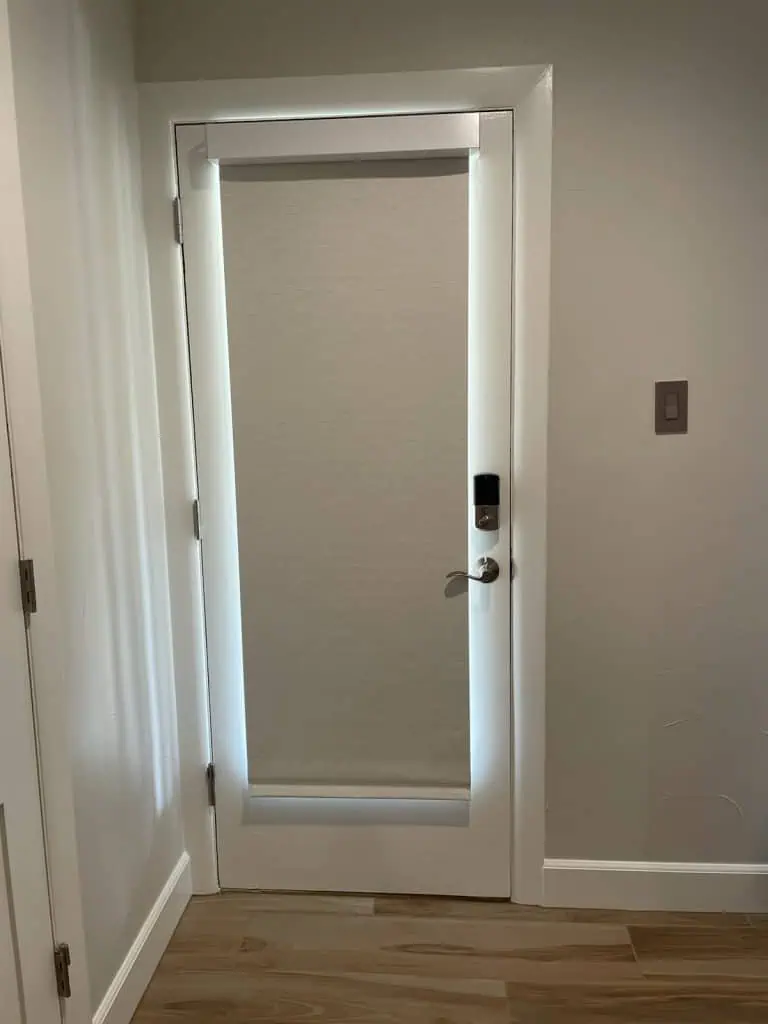
Material is one of the biggest cost drivers. Most rolling shutters use extruded aluminum slats, which are durable, weather-resistant, and mid-range in price. Polycarbonate or clear slats cost more but allow natural light through even when the shutter is closed — a feature some homeowners in Southlake or Colleyville prefer for aesthetic reasons. Fabric or screen-style rolls sit at the lower end of the cost spectrum but offer lighter protection, better suited for wind and debris than true impact events.
Window and door size matters more than most people expect. Rolling shutters are priced per square foot, so a large picture window or a wide patio door will cost significantly more than a standard bedroom window. The housing box — the coil box that sits above or below the opening and stores the shutter when it’s retracted — also adds to the overall footprint and installation complexity.
Installation conditions play a real role too. Ground-floor windows on a standard wood-frame home are the most straightforward to work with. Second-story openings, brick or stucco facades, and tight clearances around the opening all add time and labor to the job. A good installer will assess these conditions during the estimate rather than discovering them on installation day — which is exactly where hidden costs tend to appear.
Finally, the operating system you choose — manual crank, strap, or motorized — affects both the upfront cost and the long-term maintenance picture. Manual systems are mechanically simple and cost less. Motorized systems add a motor, wiring, and controls, which increases the installation cost but also adds convenience, especially for large openings or homeowners who want to deploy shutters quickly when a storm is approaching.
We provide itemized estimates that break all of this out clearly before any work begins, so you know exactly what you’re committing to.
Roll up hurricane shutters — also called roll-down shutters, rolling shutters, or exterior rolling shutters — all refer to the same product. The slats coil into a housing box when open and unroll to cover the window or door when you need protection. The terminology varies, but the mechanism is the same.
Where the cost splits is in how the shutter operates. Manual systems use a crank handle or pull strap to raise and lower the shutter. They’re reliable, require no electrical work, and offer the same structural protection as their motorized counterparts. For a single window or a small cluster of openings, a manual system is often the smarter financial choice — you’re not paying for convenience you don’t need.
Motorized systems add a tubular motor inside the housing box, wiring to a power source, and a control interface — either a wall switch, a remote, or a smart home integration. The motor itself adds cost, and depending on where your openings are located, the electrical work can add to the total as well. For large openings, second-story windows, or homeowners who want to close everything down in under two minutes before a storm rolls in from the west, that added cost has real value.
One thing worth knowing: most motorized rolling shutters include a manual override. If the power goes out during a storm — which happens regularly in Tarrant County during severe weather — you can still operate the shutter manually. That’s an important detail that doesn’t always come up in sales conversations but matters a lot when you actually need it.
The honest answer on which system to choose is that it depends on your home, your openings, and how you plan to use the shutters. That’s a conversation worth having before you commit to either option, which is why we offer free in-home consultations throughout Tarrant County — to help you figure out the right system for your specific situation, not the most expensive one.
This is the question most North Texas homeowners ask, because the rolling shutter conversation is usually framed around Florida hurricanes — and that framing doesn’t feel relevant when you’re in Arlington or Burleson.
Here’s the more accurate framing: Tarrant County sits in the middle of Hail Alley. The DFW area sees some of the most frequent and severe hail in the United States, with spring storms regularly producing golf ball-sized hailstones. A single hailstorm can shatter multiple windows, allow water into the home, and trigger a five-figure insurance claim. Rolling shutters close in seconds and create a physical barrier that plywood cannot match — and unlike plywood, they don’t require you to scramble to a hardware store the night before a storm.
The financial case is real. Most installations pay for themselves within five to ten years when you factor in avoided damage costs and potential insurance savings.
This is one of the most common questions we hear, and the honest answer is: they can, but it depends on your insurer and the certification status of the products you install.
Texas homeowners insurance premiums have risen sharply in recent years, driven largely by the frequency of hail and wind claims across the DFW area. Insurers are paying attention to storm protection upgrades, and many do offer wind mitigation credits for certified shutter installations. The key word is certified. Products that meet ASTM E1886 and E1996 testing standards — the national benchmark for impact and wind resistance — and that carry Texas Department of Insurance (TDI) approval are the ones most likely to qualify for a discount.
The process typically involves a wind mitigation inspection by a licensed inspector, who documents the protection installed on your home and submits a report to your insurer. A well-documented installation — one where the contractor provides the necessary paperwork — makes that process straightforward. One where documentation is missing or incomplete can leave the discount on the table.
We make sure every installation we complete comes with the documentation you need for that conversation with your insurance company. It’s not an afterthought — it’s part of how we do the job.
The gap between a quote that looks reasonable and a final invoice that doesn’t is one of the most common complaints in this industry. It’s worth knowing where those surprises tend to come from before you sign anything.
Electrical work is the most frequent add-on that doesn’t make it into initial quotes for motorized systems. Running wiring from a motor to a power source — especially on second-story openings or exterior walls — can add meaningful labor cost to a job. If a quote for a motorized system doesn’t mention electrical work, ask about it directly.
Structural modifications are another area where costs can surface unexpectedly. If the wall surface around your opening isn’t compatible with standard mounting hardware — certain brick facades, stucco with unusual depth, or older construction with non-standard framing — additional work may be needed to mount the housing box securely. This is something a thorough pre-installation assessment should catch, not something you should discover on installation day.
Permit requirements vary by municipality across Tarrant County. Fort Worth, Arlington, Mansfield, and the smaller surrounding cities each have their own building department requirements. Some rolling shutter installations require a permit; some don’t. A contractor who doesn’t mention permits isn’t necessarily cutting corners, but it’s worth asking whether your specific project requires one and who’s responsible for pulling it.
Finally, disposal and cleanup costs occasionally appear as line items in final invoices when they weren’t mentioned upfront. It’s a small thing, but it’s worth confirming what the quote includes.
Our estimates are comprehensive and itemized. If something affects the cost of your project, you’ll see it in writing before we start — not after.
Rolling hurricane shutters are a real investment — and in a market like Tarrant County, where spring storm season brings genuine risk every year, they’re one that tends to hold its value. The key is going in with a clear understanding of what drives the cost, what to look for in a quote, and what questions to ask before you commit.
The short version: manual systems run $25–$60 per square foot installed; motorized systems run $50–$175. Total project costs typically land between $1,500 and $6,000 depending on the scope. Certified products can qualify you for insurance credits. And a transparent, itemized estimate is the clearest sign that a contractor knows what they’re doing.
If you’re in Arlington, Fort Worth, Mansfield, Burleson, Colleyville, or anywhere else across Tarrant County and want a straight answer on what this would actually cost for your home, reach out to us. We offer free in-home consultations and will give you a clear picture of your options — no pressure, no surprises.
Article details:
Share:
Continue learning: