Just moved into a new Tarrant County home with bare windows? Here's what builders leave out, what actually works against Texas heat, and what it costs.
Share:

You close on your new home in Mansfield, Keller, or Crowley, the builder hands you the keys, and everything looks perfect — until the afternoon sun hits your west-facing great room at 3 p.m. in June. The AC kicks on and doesn’t stop. Your floors are baking. You’re squinting at the TV. And you realize: there’s not a single window covering in the entire house.
This is the moment most new Tarrant County homeowners discover the gap their builder left behind. We’ve seen it hundreds of times. Here’s what you need to know — about the builders, the products, and what to budget before that first summer electric bill lands.
Tarrant County gets roughly 229 sunny days a year. The average July high in Fort Worth clears 96°F, and stretches above 100°F are common from June through August. For a new construction home with large windows and an open floor plan — which describes most of what’s being built right now in communities like Crowley, Burleson, and North Richland Hills — that solar exposure isn’t just uncomfortable. It’s expensive.
Windows account for 25 to 40 percent of a home’s annual heating and cooling costs. Up to 20 percent of the air your system conditions escapes through the glass entirely. The right window coverings don’t just soften the light — they actively reduce the load on your HVAC system from the first day you move in. That’s the part most buyers don’t think about until they’re already living with the consequences.

Not all window coverings perform the same, and the difference isn’t subtle. Standard horizontal blinds — the kind builders sometimes include as an upgrade — reduce heat gain by around 22 percent. That sounds okay until you compare it to what else is available.
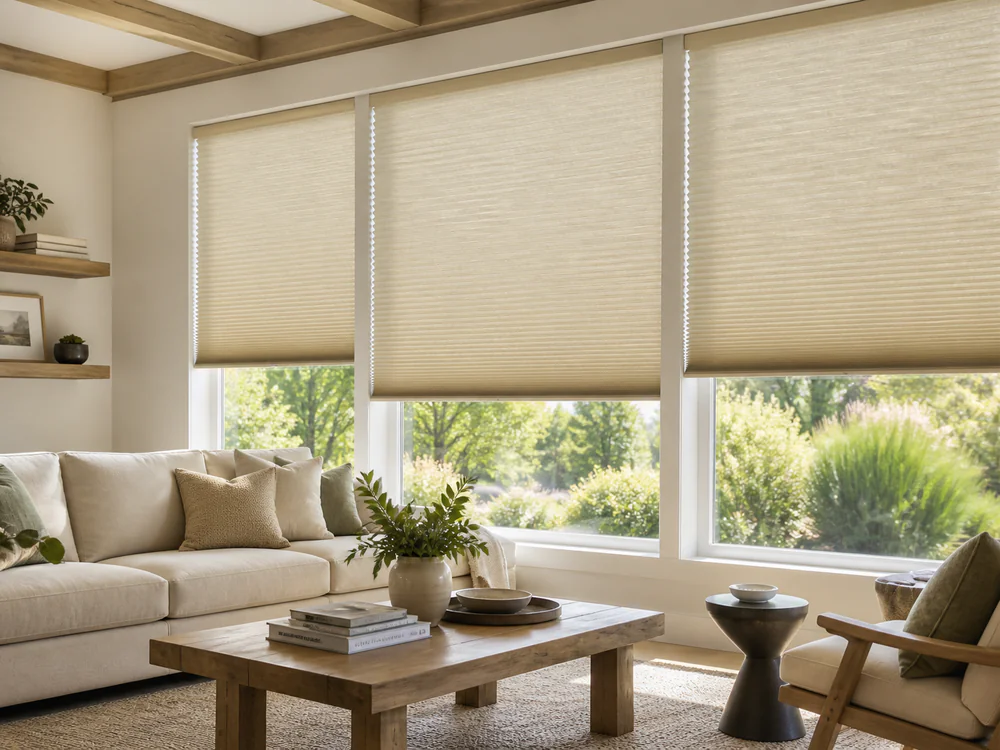
Cellular shades, also called honeycomb shades, are the most effective insulating interior option. Their air-pocket construction creates a thermal buffer between the glass and your living space, and DOE field studies show they can reduce heat gain by up to 80 percent. On the heating side, they can cut heating costs by up to 20 percent. For a home in Tarrant County running the AC hard for five months straight, that kind of reduction adds up fast.
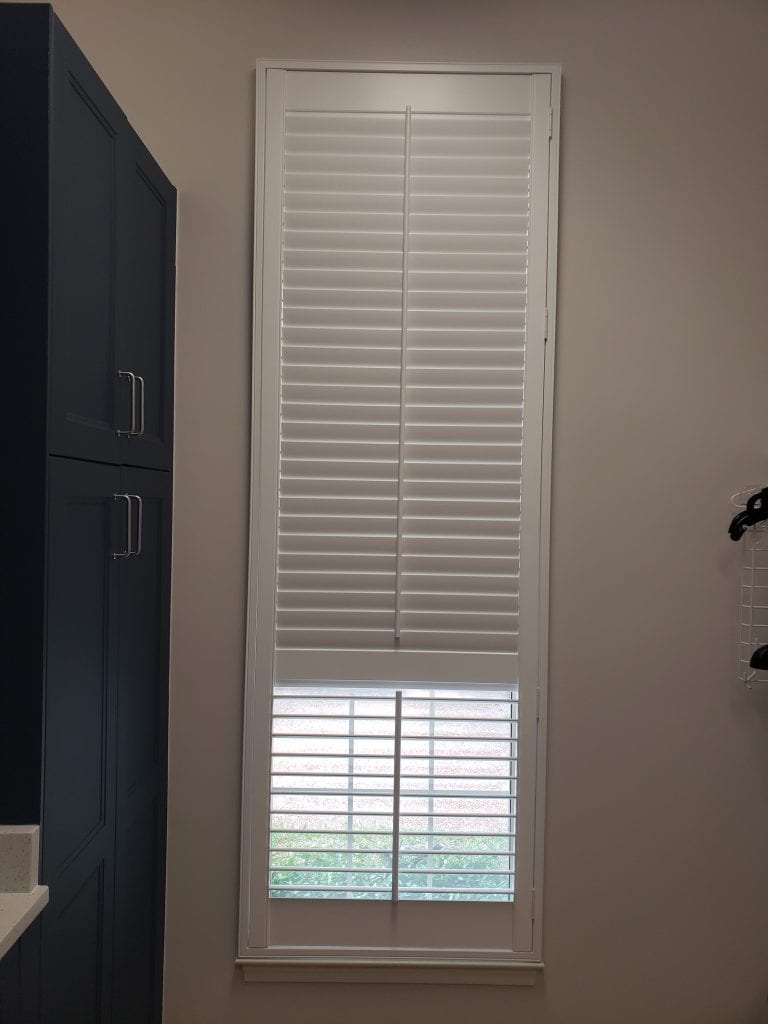
plantation shutters are another strong performer. They can reduce heat loss through windows by up to 51 percent — more than double what standard blinds offer and well above what curtains deliver (around 14 percent). They’re also the only window covering classified as a permanent fixture, which means they add resale value in a market where DFW buyers notice them.
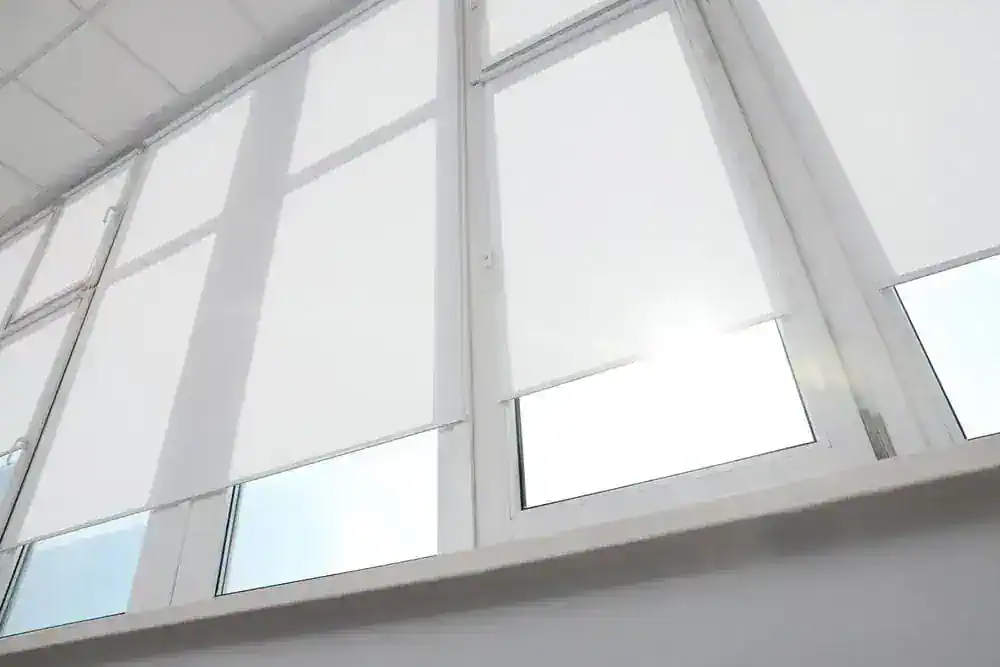
But here’s the option most people have never heard of, and the one that makes the most difference for south- and west-facing windows: exterior roller shades. Interior shades manage heat that has already come through the glass. Exterior shades stop solar radiation before it ever reaches the window. For the rooms in your new Tarrant County home that take the hardest afternoon sun — and in communities like Southlake or Grand Prairie, that can be intense — exterior shades are the more effective solution by a significant margin. We offer both interior and exterior options, which most local providers don’t.
When you’re shopping, look for products carrying AERC certification — the Attachments Energy Rating Council is the independent body that verifies energy performance claims. ENERGY STAR expanded its program to include certified window attachments in 2024, so there’s now a second layer of verification available. These ratings matter because they’re tested, not just claimed.
This is the question almost nobody asks during the builder process — and then everybody asks after move-in. Window treatments are rarely discussed during construction, which means most buyers reach closing without a number in their head. Then they get quotes and feel blindsided.
Here’s a realistic picture based on current market data. Basic faux wood blinds run roughly $55 to $150 per window for the product, plus $50 to $100 per window for professional installation. They’re a functional starting point, but they provide minimal insulation and often don’t fit correctly in the larger or non-standard window configurations common in newer Tarrant County homes.
Cellular shades and interior solar shades run higher — typically $100 to $400 per window depending on cell construction, fabric, and sizing. For a mid-range new construction home with 15 to 20 windows, a full-house installation in this category generally falls somewhere between $3,000 and $8,000 installed. Plantation shutters and motorized systems push that range higher, often $6,000 to $15,000 or more for a whole house, depending on the scope.
The smartest move is to plan for this cost before closing — not after. Some buyers fold it into their financing or set it aside from closing reserves. Either way, going into your new home with a realistic budget means you’re not living with bare windows through your first Texas summer while you figure it out. We offer free in-home consultations and can work around your move-in timeline, including scheduling measurements from builder plans before you close so installation can happen on day one.
DFW is one of the most active new construction markets in the country, and Tarrant County sits at the center of it. Communities are going up across the southern and western corridors — Burleson, Crowley, Mansfield, Benbrook — and across the northern suburbs in Keller, North Richland Hills, and Grapevine. The builders driving that growth are a mix of national production builders and Texas-based regional names, and almost none of them include window treatments as a standard feature.
Understanding which builders are active in your area — and what they typically do and don’t include — helps you plan ahead rather than scramble after move-in.
D.R. Horton is the largest production builder in the country and has an extensive presence throughout Tarrant County, with active communities in Mansfield, Crowley, Keller, and North Richland Hills. Their homes are entry to mid-range in price and move quickly. Window treatments are not standard, and their upgrade packages, when offered, typically include basic blinds that won’t address energy performance or large window configurations.
Meritage Homes is worth noting specifically because they build to ENERGY STAR certification standards — their homes are designed with energy efficiency in mind. But even Meritage doesn’t include window coverings. The irony is that a Meritage buyer who invests in energy-efficient construction and then leaves the windows bare is leaving a significant portion of their efficiency gains on the table.
Highland Homes and Perry Homes are both Texas-based builders with strong DFW presences and reputations for customization. They attract buyers who are more invested in finishes and details — exactly the buyer who will notice the difference between basic blinds and a well-fitted cellular shade or plantation shutter. Lennar operates in the county with their “Everything’s Included” model, though window treatments are a consistent exception to that promise.
On the higher end, Toll Brothers is active in Southlake and Colleyville — markets where homes have larger footprints, more complex window configurations, and buyers who expect premium finishes throughout. Ashton Woods and David Weekley Homes serve the mid to upper-mid range across multiple Tarrant County communities, and both attract buyers who are making deliberate decisions about every element of their home. Bloomfield Homes, Coventry Homes, Impression Homes, and Antares Homes round out the regional builder landscape with active projects across the county’s growth corridors.
Century Communities has been expanding in the county’s more affordable submarkets, which is where the gap between builder-included options and what actually performs tends to be widest. Buyers in those communities are often first-time new construction owners who don’t realize the window treatment gap exists until they’re already moved in.
Some builders do offer window treatments as an upgrade during the selection process. It sounds convenient — bundle it into the mortgage, get it done before move-in, check it off the list. The problem is what you actually get.
Builder upgrade packages almost universally consist of standard 2-inch faux wood blinds. They’re sized to fit standard window dimensions, which means non-standard openings — floor-to-ceiling windows, wide horizontal windows, sliding glass doors, bay windows — either don’t get covered or get a poor fit with visible gaps on the sides. Those gaps aren’t just an aesthetic issue. They’re the exact spots where heat transfers in and conditioned air leaks out, which defeats the purpose of having a window covering at all.
Beyond the fit problem, standard faux wood blinds carry essentially no insulating value. Their R-value is close to zero. They’ll give you privacy and some light control, but they won’t meaningfully reduce your cooling load during a Tarrant County summer. For a homeowner who just paid for a Meritage or Highland home with upgraded windows and spray foam insulation, putting basic builder blinds on the windows is the equivalent of insulating your attic and leaving the front door open.
The other issue is durability in the Texas climate. Standard blinds — particularly cheaper vinyl or composite options — warp in direct sun and intense heat. South- and west-facing windows in a home along I-35W in Burleson or off US-287 in Mansfield get brutal afternoon exposure from May through September. Products that aren’t rated for that kind of sustained heat exposure don’t last, and replacing them two years after move-in ends up costing more than doing it right the first time.
When you’re planning your new construction budget, it’s worth having a real conversation about what your windows actually need — by orientation, by room, by how you use the space. That’s exactly what our free in-home consultation is designed to do.
The window treatment gap in new construction is one of those things that seems minor until it isn’t. One summer of running the AC against bare south-facing windows in a Tarrant County home has a way of making it feel urgent fast.
The good news is that the right products — properly measured, properly installed, and matched to your specific windows and exposures — make a real difference. Not a marginal one. Cellular shades, exterior roller shades for your hardest-hit windows, and plantation shutters that actually fit your openings are the difference between managing your energy costs and just paying them.
If you’re closing on a new home in Tarrant County or already moved in and realizing the gap, A Plus Shutters & Shades offers free in-home consultations and can work around your timeline. Reach out and we’ll come to you.
Article details:
Share:
Continue learning: