Running your AC from April through October gets expensive fast. Here's how the right window coverings can take real pressure off your cooling system.
Share:

If you live in Fort Worth, Arlington, Mansfield, or anywhere else in Tarrant County, you already know what summer feels like. The AC kicks on in April and doesn’t stop until October. Your west-facing living room is unbearable by 3 PM. And somewhere in the back of your mind, you’re doing the math on last month’s electric bill.
Window treatments don’t always come to mind as a fix for that. But they should. The right home window treatment can meaningfully reduce the heat coming through your glass — before your AC ever has to deal with it. Here’s how it actually works, and which options make the most sense for a Tarrant County climate.
Most people think of window treatments as a décor decision. But the physics behind them is straightforward: windows are the weakest thermal point in most homes, and solar heat pours through unprotected glass all day long. The U.S. Department of Energy estimates that heat gain and loss through windows is responsible for 25–30% of residential energy use for heating and cooling.
In Tarrant County — where summers run long, the sun hits hard from the south and west, and electricity costs climb steeply from June through August — that percentage translates into real money. The right window covering intercepts that heat before your AC system has to compensate for it. The wrong one does almost nothing.

Not all window coverings perform equally when it comes to heat reduction, and the difference between the best and worst options is dramatic. Understanding the three main categories — cellular shades, solar shades, and exterior roller shades — makes it much easier to figure out what your home actually needs.
Cellular shades, sometimes called honeycomb shades, work by trapping air inside their fabric pockets. That trapped air acts as insulation. According to the Department of Energy, well-fitted cellular shades can block up to 60% of incoming solar heat in summer and reduce heat loss through windows by up to 40% in winter. Lawrence Berkeley National Laboratory simulations found that cellular shades outperform every other type of shading device for energy savings — a meaningful distinction when you’re comparing options.
For Tarrant County homeowners, that dual-season performance matters: the same shade that keeps July heat out also helps hold warmth in during a January cold snap.
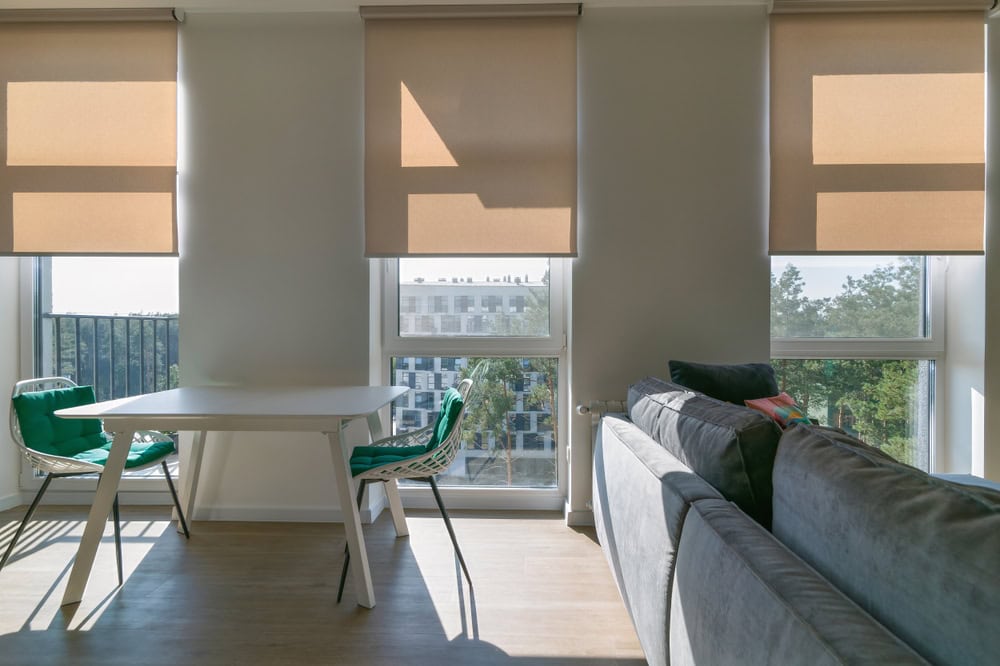
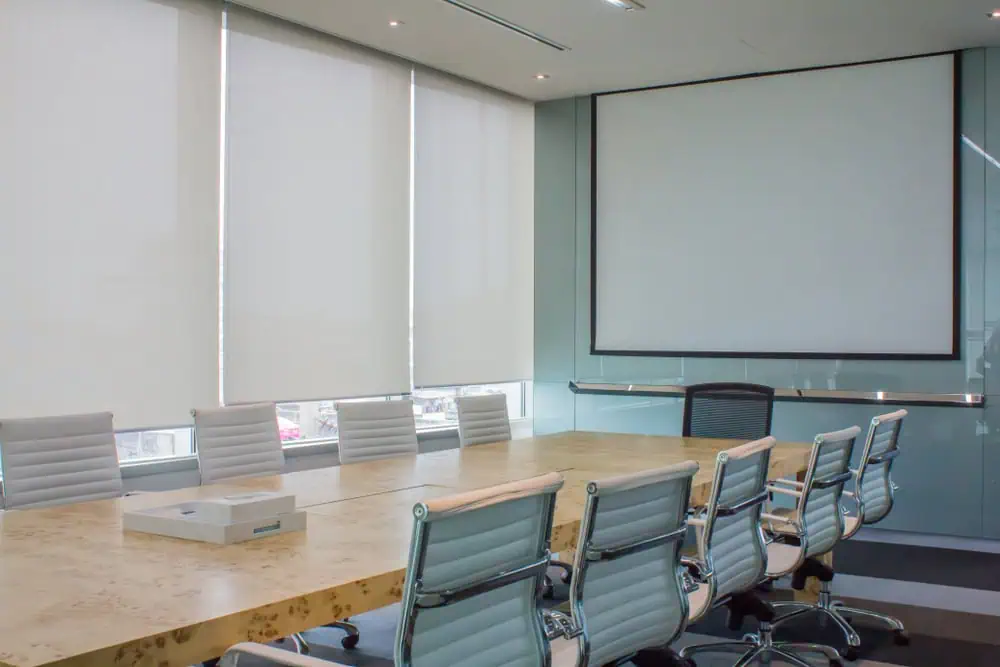
Solar shades take a different approach. Instead of insulating, they filter. A solar shade is made from a semi-transparent mesh fabric that reduces glare, blocks UV rays, and limits solar heat gain while still allowing a view to the outside. The key variable is the openness factor — the percentage of the fabric that’s open. For south- and west-facing windows in Fort Worth, Arlington, and across Tarrant County, a 1%–3% openness factor is typically the right call. It cuts the heat significantly without making the room feel closed in.
If you’ve ever worked at a desk next to a west-facing window in the afternoon and felt like you were sitting under a heat lamp, a solar shade with the right openness factor is the most direct fix available.
Exterior roller shades go a step further. They stop solar heat before it ever reaches the glass. Interior shades — no matter how well-made — are managing heat that has already entered the room. Exterior shades intercept it at the source, and the performance difference is significant: exterior treatments on south- and west-facing windows can reduce heat gain by up to 77%. That’s not a small margin.
For rooms with large windows or sliding glass doors that face the afternoon sun, exterior roller shades are often the highest-impact option available. It’s also a product most local competitors don’t offer — which means most homeowners in Tarrant County haven’t even been told it’s an option.
The orientation of your windows matters more than most people realize. In Tarrant County’s grid-pattern suburban neighborhoods — the kind you find across Arlington, Mansfield, Keller, and North Richland Hills — a significant number of homes have their primary living areas facing west or southwest. That puts the great room, the kitchen, and the home office directly in the path of the afternoon sun from roughly 2 PM until sunset.
This isn’t a minor inconvenience. A west-facing room with untreated windows absorbs hours of direct solar radiation every afternoon, heating the space faster than the AC can cool it and driving up energy consumption in the process. Newer construction homes in the area often compound the problem with large, open floor plan windows and two-story glass features that look stunning in a listing photo but create serious heat gain challenges in practice.
The solution isn’t always the same for every window. A south-facing bedroom window might need a solar shade with a 3% openness factor to balance heat reduction with natural light. A west-facing great room with a sliding glass door might be a better candidate for an exterior roller shade that stops the heat entirely. A home office with a west-facing window might benefit from a motorized solar shade that can be scheduled to close automatically at noon — before the worst of the afternoon sun arrives — and open again in the evening.
This is exactly why a free in-home consultation is worth more than browsing product pages online. The right recommendation depends on your window’s orientation, the room’s use, and how much natural light you want to preserve. Getting that assessment done properly — with someone who actually looks at your windows — is what separates a treatment that genuinely reduces your cooling costs from one that just looks nice.
Here’s something most national guides on window treatments don’t account for: the payback math is fundamentally different in Tarrant County. Our region sees more than 70 days above 90°F every year, and the AC season runs from April through October — seven months. In northern markets, the cooling season might last three or four months. That means the same window treatment that pays for itself in four or five years in Minnesota pays for itself considerably faster here.
Cellular shades typically generate savings of $50–$150 per window per year. Solar screens and solar shades run $30–$100 annually per window. Most energy-saving window treatments reach their break-even point within two to five years through energy savings alone — and that estimate is based on national averages, not a Tarrant County-length cooling season.
Energy savings are the most obvious financial argument for window treatments, but they’re not the only one. Unfiltered Texas sun does something else over time: it destroys interiors. Hardwood floors fade. Leather furniture bleaches. Area rugs lose their color. Artwork that took years to collect starts to look washed out.
UV damage is cumulative and largely invisible until it’s already done. By the time you notice that your hardwood floors look dull or your sofa has faded near the window, you’re looking at a refinishing or replacement cost that runs well into the thousands. Solar shades that block 95–99% of UV rays prevent that damage from accumulating in the first place.
For homeowners in Southlake, Colleyville, Keller, and throughout Tarrant County — where home finishes represent a meaningful investment — that protection has real financial weight. Think of window treatments not just as a utility cost reduction tool, but as a preservation strategy for everything inside your home. The sun that’s driving up your electric bill is also quietly degrading the things you’ve spent money on. Addressing both problems with the same product is a more complete way to evaluate the cost.
Motorized solar shades with smart home integration can be connected to Alexa, Google Assistant, a wall switch, a remote, or a smartphone app. More practically, they can be scheduled — set to close automatically before the afternoon sun peaks and open again in the evening. That means your shades are doing their job even when you’re at work, which is exactly when most of the solar heat gain happens.
Pricing is one of the first questions people have, and it’s a fair one. The honest answer is that cost varies depending on the product type, the size of your windows, and whether you’re going with standard or custom sizing.
For window blinds, the average cost ranges from $120 to $550. Custom solar shades, cellular shades, and exterior roller shades will vary based on window dimensions and product specifications — which is why a free in-home consultation is the most reliable way to get an accurate number for your specific situation. What we can tell you is that custom-made window treatments are fabricated to the exact dimensions of your windows, not the closest standard size that’s within an inch or two. That difference matters more than it sounds. A blind that doesn’t seat properly in its bracket, or a shade with a small light gap on either side, isn’t performing the energy-saving function you paid for.
One thing worth knowing: Oncor Electric Delivery, which serves most of Tarrant County and the broader DFW area, offers energy efficiency programs under their “Take a Load Off Texas” initiative. Window treatments are not currently a listed rebate category, but the program is worth checking directly with Oncor, as eligibility and offerings can change. It’s also worth asking your installer what other efficiency upgrades might qualify — especially if you’re considering a broader home improvement project.
The bigger picture on cost is this: the question isn’t really what window treatments cost upfront. It’s what the next five years of unchecked heat gain costs you — in electricity, in comfort, and in wear on everything inside your home. When you frame it that way, the math usually comes out clearly in favor of doing something.
Tarrant County summers aren’t getting shorter. If your current window coverings aren’t doing anything meaningful to reduce heat gain — or if you’re still running standard blinds from a big-box store — you’re leaving real money on the table every month the AC is running.
The right energy saving window treatment depends on which direction your windows face, how you use each room, and what you’re trying to accomplish. There’s no single answer that works for every home, which is why the consultation step matters. Getting eyes on your actual windows — not just a product description — is what leads to a recommendation that performs.
If you’re in Fort Worth, Arlington, Mansfield, Southlake, or anywhere else in Tarrant County and want to understand what’s actually worth doing for your home, we at A Plus Shutters & Shades offer free in-home consultations. No pressure, no guesswork — just a clear look at what your windows need and what it will take to make them work for you instead of against you.
Article details:
Share:
Continue learning: