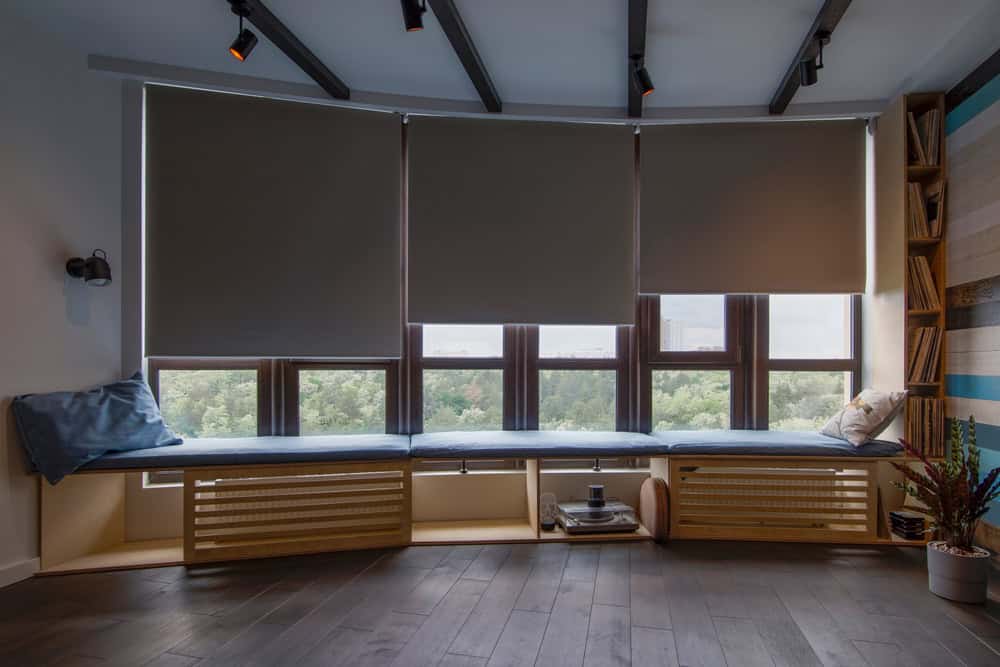
Not all solar shades work the same way. Here's what the openness factor actually means for your home — and why installation matters more than most people realize.
Share:
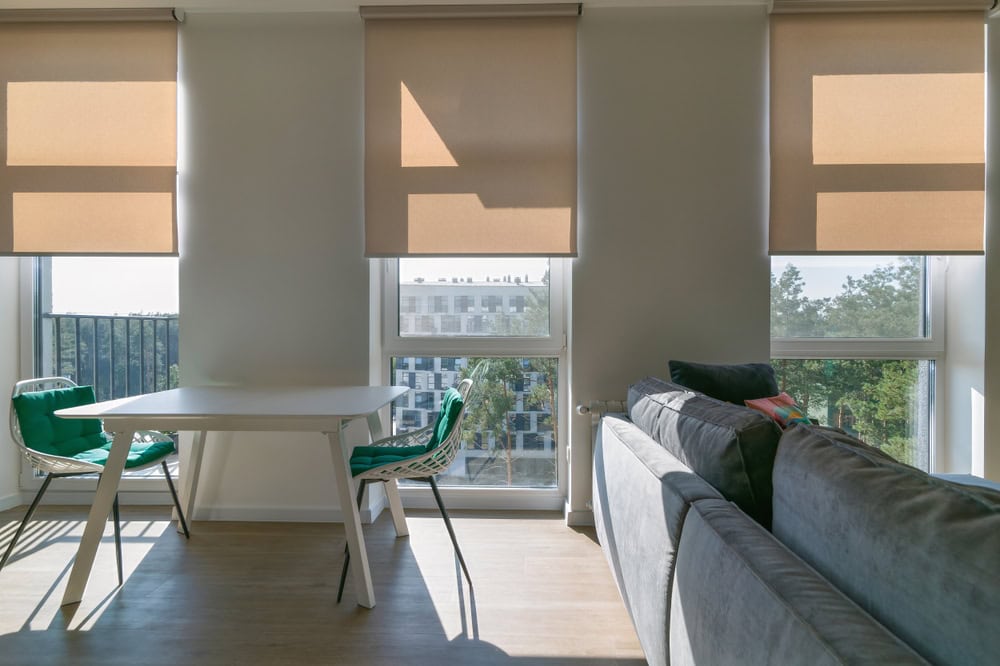
If your west-facing rooms turn into an oven every afternoon from May through September, you already know the problem. What you might not know is whether solar shades will actually fix it — or which ones, or what percentage, or whether interior shades are even the right call for your situation. There’s a lot of noise in this category, and most of it comes from companies trying to sell you something before you understand what you’re buying.
We’re going to walk through what solar shades actually do, how the openness factor works, and what professional installation looks like when it’s done right. If you’re in Tarrant County dealing with Texas heat and afternoon sun, this matters more than you might think.
The openness factor is the single most important number on a solar shade spec sheet — and the one most companies don’t explain well enough. It refers to how tightly or loosely the fabric weave is constructed, expressed as a percentage. A 1% openness shade has a very tight weave. A 10% openness shade has a much more open one. That number controls how much light enters the room, how much glare is reduced, how clearly you can see outside, and how much heat the shade actually blocks.
Here’s the part that trips people up: a higher percentage does not mean better performance. It means more openness — more light transmission, a clearer outward view, but less heat and glare control. A lower percentage means tighter weave, stronger solar protection, and less view-through. Neither is universally right. It depends entirely on which direction your window faces, how much sun it gets, and how you use the room.

This is where most buyers get stuck, and honestly, it’s where a lot of online orders go wrong. Let’s go through each level plainly.
A 1% openness shade has the tightest weave in the standard residential range. It blocks the most glare, rejects the most solar heat, and offers the strongest daytime privacy. You can still see outside, but the view is noticeably filtered. For rooms that take a hard hit from afternoon sun — think a west-facing living room in a newer Fort Worth subdivision with large windows and no architectural overhang — this is often the right call. The tradeoff is that the room will feel slightly darker on overcast days.
A 3% openness shade is the sweet spot for most south- and west-facing rooms across Tarrant County. You get strong heat and glare control without the room feeling closed in. It’s the choice we most commonly recommend for rooms that get direct afternoon sun from around 2 PM onward — which describes a significant percentage of homes in the region, given how many newer builds in areas like Keller, Mansfield, and the Alliance corridor are oriented with large glass facing west or southwest.
A 5% openness shade is the most common all-around residential choice. It balances light filtering, outward view, and heat reduction well for rooms that get moderate sun — east-facing bedrooms, north-facing offices, or spaces where glare is the main issue rather than intense heat gain. It’s a solid default, but it’s not the right choice for every window.
A 10% openness shade lets in the most natural light and gives you the clearest view to the outside. It provides some UV filtering and mild glare reduction, but it’s the least effective option for heat control. If your priority is preserving a view with minimal light disruption — a shaded north-facing room, for example — 10% makes sense. For a room that gets blasted by Texas afternoon sun, it won’t do much.
The U.S. Department of Energy’s guidance on energy-efficient window coverings confirms what most experienced installers already know: greater openness reduces protection against both glare and solar heat gain. That’s not a knock on higher-percentage fabrics — it’s just the physics of how the weave works. Getting this choice right before the shades are fabricated is exactly why an in-home consultation matters more than a quick online order.
These three shade types get compared constantly, and it makes sense — they’re all roller-style window coverings, they all manage light in some way, and they’re all popular in homes throughout Tarrant County. But they’re built for different jobs.
Sheer shades, sometimes called sheer shadings or light-filtering shades, use a soft fabric face that diffuses light as it enters the room. They always filter light — they never fully block it. The effect is a warm, softened glow rather than direct sunlight. They’re a good fit for rooms where you want a bright, airy feel without harsh glare, like a dining room or a front-facing bedroom. What they don’t do well is block heat or UV in any meaningful, measurable way. They’re a decorative light solution, not a thermal one.
Zebra shades — also called dual shades or transitional shades — alternate between sheer and opaque fabric bands. When the bands are aligned, light filters through the sheer sections. When you shift them so the opaque bands overlap, the shade closes down significantly. This gives you a kind of on-off control between filtered and blocked that’s genuinely useful in rooms where you want flexibility throughout the day. They’re popular in bedrooms and home offices. But like sheers, they’re not engineered for solar heat rejection — they manage light and privacy, not thermal performance.
Solar shades are a different category entirely. The fabric is engineered specifically to intercept solar radiation — UV rays, infrared heat, and direct glare — while still allowing you to see outside. That’s the key distinction. You’re not closing off the window; you’re filtering what comes through it. The openness factor determines how aggressively the fabric does that job. For Tarrant County homeowners dealing with a five-month cooling season and afternoon sun that can push heat index values above 105°F, solar shades are the window treatment category specifically designed for this problem. Sheers and zebras are not.
If you’re comparing all three and trying to decide, the honest answer is: it depends on what you’re trying to solve. If it’s heat, glare, and UV protection with a preserved view, solar shades are the right tool. If it’s decorative light diffusion or flexible privacy, sheers or zebras might be a better fit. Sometimes both belong in the same home, just in different rooms.
Here’s something worth understanding before you commit to a solar shade installation: where the shade is installed — inside or outside the window — changes how effective it is at managing heat. Most companies only offer interior solar shades. That’s the familiar roller shade mounted inside the window frame. It reduces heat and glare, blocks UV, and preserves your view. For a lot of windows, it’s the right solution.
But interior solar shades intercept solar radiation after it has already passed through the glass. The heat is already inside the building envelope by the time the shade does its job. Exterior solar shades stop heat before it reaches the glass — which is a fundamentally more effective thermal strategy. We offer both, and we’ll tell you honestly which one makes more sense for your specific windows.

Exterior roller shades can reflect up to 94% of solar heat before it reaches your glass. That’s not a small difference from interior shades — it’s a different mechanism entirely. When you stop heat at the exterior, your glass stays cooler, your interior temperature stays more stable, and your AC doesn’t have to work as hard to compensate for what’s already gotten through.
In Tarrant County, this matters more than it might in a milder climate. Fort Worth averages over 229 sunny days per year, and the summer cooling season runs effectively from May through September. West-facing windows — common in the newer subdivisions spreading across the outer ring of the county — take the hardest hit. The afternoon sun angle from around 2 PM onward hits west-facing glass almost directly, and in neighborhoods like those off SH-170 in North Fort Worth or along US-287 toward Mansfield, homes are often built with large windows and minimal architectural shading. There’s no mature tree canopy to buffer it. There’s no deep overhang to block it. The sun just comes in.
Exterior solar shades also block up to 99% of UV rays, which protects flooring, furniture, and fabrics from the kind of fading that happens gradually and then all at once. And for homeowners who’ve invested in outdoor living spaces — a covered patio, an outdoor kitchen — exterior roller shades can turn a space that’s unusable from June through August into somewhere you can actually spend time. That’s a quality-of-life return that’s hard to put a number on but easy to feel.
One practical consideration for Tarrant County homeowners: many subdivisions have HOAs with exterior appearance standards. Exterior roller shades need to meet those guidelines in terms of color and visible profile. When we install exterior shades, we account for this — it’s part of the consultation, not an afterthought.
The installation process matters as much as the product — and this is where a lot of homeowners have been burned before. They order shades online, measure themselves, get the sizing slightly wrong, and end up with gaps, light leaks, or shades that don’t operate cleanly. Or they find a company that sells product but hands off installation to a third party. Neither scenario ends well.
Here’s how we handle it, and why the process is set up the way it is.
It starts with an in-home consultation. We come to you, we look at the actual windows, and we talk through what you’re trying to solve — sun exposure, heat, privacy, motorization, whether certain windows are hard to reach, how you use each room. This isn’t a sales visit. It’s a diagnostic. The openness factor we recommend for your west-facing living room might be different from what we recommend for your bedroom, and we won’t know that without seeing both.
From there, we take exact measurements. Not estimates — actual dimensions for every window being treated. Every shade we install is custom-fabricated to those measurements. No stock sizing, no adjusting a close-enough product to fit. Custom fabrication takes 7 to 10 business days. From consultation to installation, the typical timeline is 2 to 3 weeks, though expedited options are available if you need to move faster.
On installation day, we’re typically looking at around 30 minutes per window. We handle the mounting hardware, account for the specific surface and wall construction, and make sure everything operates correctly before we leave. We test every shade, clean up completely, and walk you through how to use and care for what’s been installed. If something isn’t right, we fix it before we leave — not after you call us back.
This process comes out of more than a decade of construction experience. A Plus Shutters & Shades grew out of A Plus Home Remodel, which means we understand how Texas homes are actually built — the wall compositions, the mounting surfaces, the structural nuances that a pure retail dealer might not think about. That background shows up in the quality of the installation, even when it’s invisible to the eye.
Solar shades are one of the more effective things you can do for a hot Texas home — but only if you choose the right openness factor for your windows, understand whether interior or exterior placement makes more sense for your situation, and have them installed by someone who measures correctly and owns the result.
If you’ve been putting this off because the options felt confusing or the process felt uncertain, that’s a reasonable place to be. The category has a lot of noise and not enough straight answers. Hopefully this helped cut through some of it.
When you’re ready to take the next step, A Plus Shutters & Shades is based right here in Arlington and serves homeowners throughout Tarrant County. Reach out and we’ll start with a conversation — no pressure, no pitch, just a real look at what your windows need.
Article details:
Share:
Continue learning: