Not sure whether to go with shades or blinds? The honest answer is: it depends on the room you're standing in. Here's how to think it through.
Share:
Here’s the honest answer: shades are not universally better than blinds, and blinds are not universally better than shades. The right choice depends on which room you’re standing in, how much light you want to control, and what your windows are actually up against.
In Tarrant County, that last part matters more than most people realize. A west-facing living room in Fort Worth at 3 PM in July is a different problem than a bedroom that needs total darkness or a kitchen where grease and humidity are the real enemies. The product that solves one of those problems well doesn’t always solve the others. That’s what this guide is for.
The confusion between blinds and shades is understandable — they’re both window coverings, they both hang on a window, and they’re often sold side by side. But they work differently, and that difference matters when you’re trying to solve a real problem.
Blinds are made from rigid slats — wood, faux wood, vinyl, or aluminum — that tilt open and closed to control how much light enters and at what angle. That tilting mechanism is their defining feature. You can let in diffused light without losing privacy, or close them completely for full coverage. Shades, on the other hand, are made from a single continuous piece of fabric or material that raises and lowers as a unit. No slats, no tilting — just a clean, unbroken surface that either covers the window or doesn’t.
That distinction shapes everything: how they look, how they clean, how much light they actually block, and how well they insulate against heat.

This is where the room-by-room answer really starts to take shape, because “light control” means different things depending on what you need.
Blinds give you precision. By adjusting the angle of the slats, you can let in a soft, diffused glow while still maintaining privacy — something that’s genuinely useful in a home office or living room where you want natural light without glare on a screen. That fine-tuned control is one of the reasons blinds have stayed popular for decades despite the rise of fabric alternatives.
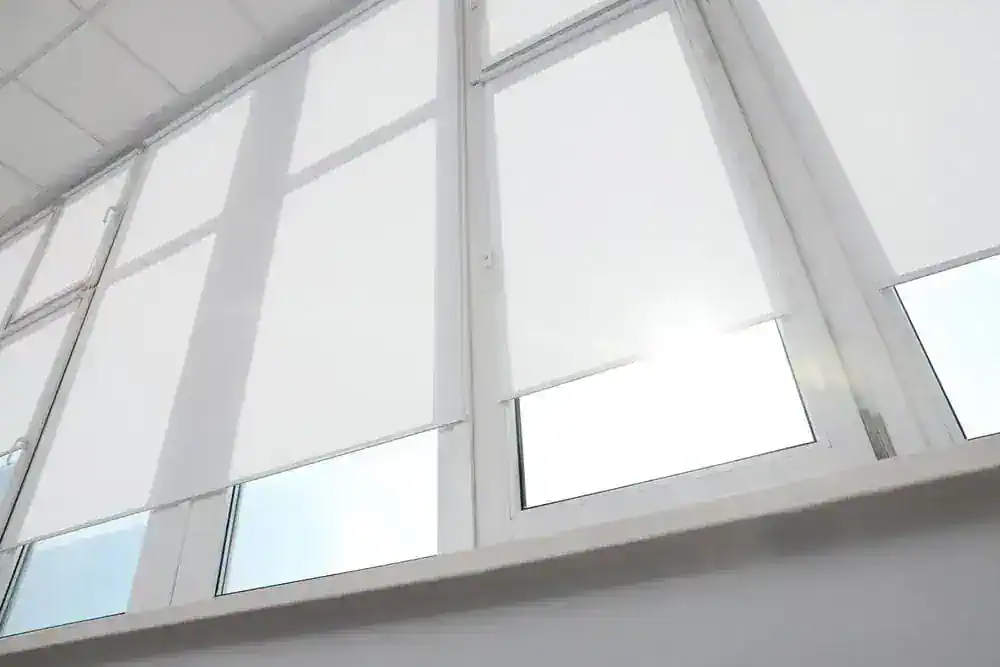
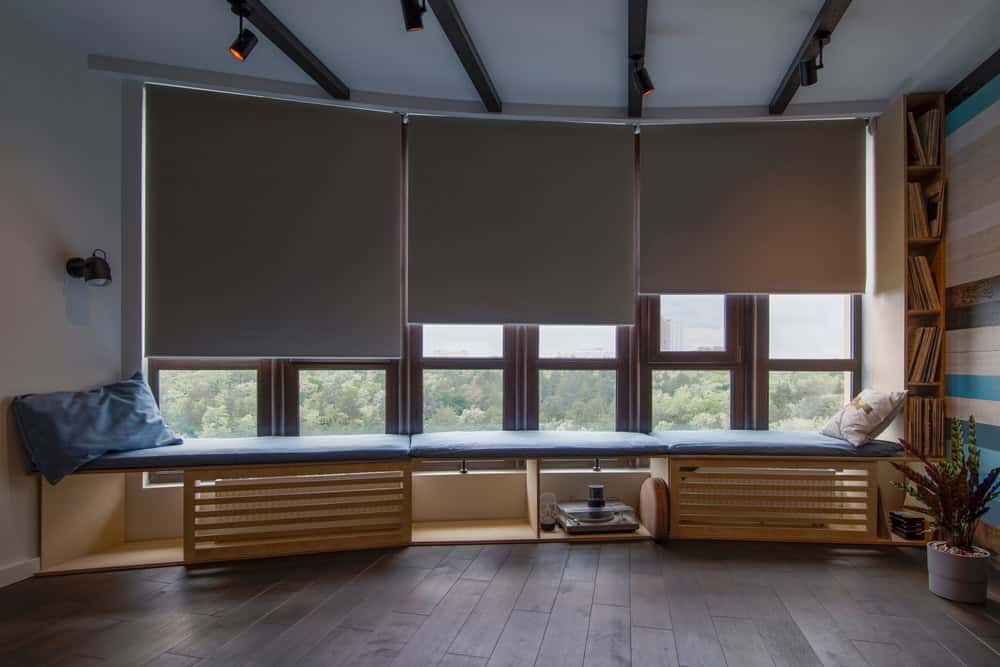
Shades give you coverage. Because they’re a single piece of material, there are no gaps between slats for light to sneak through. A blackout roller shade in a bedroom will block more light than a set of blinds closed all the way — and that’s not a small difference if you’re a light sleeper or you work nights. Blackout roller shades with UV-resistant fabric can block up to 95% of solar heat, which in a Tarrant County summer is as much a comfort and energy issue as it is a sleep issue.
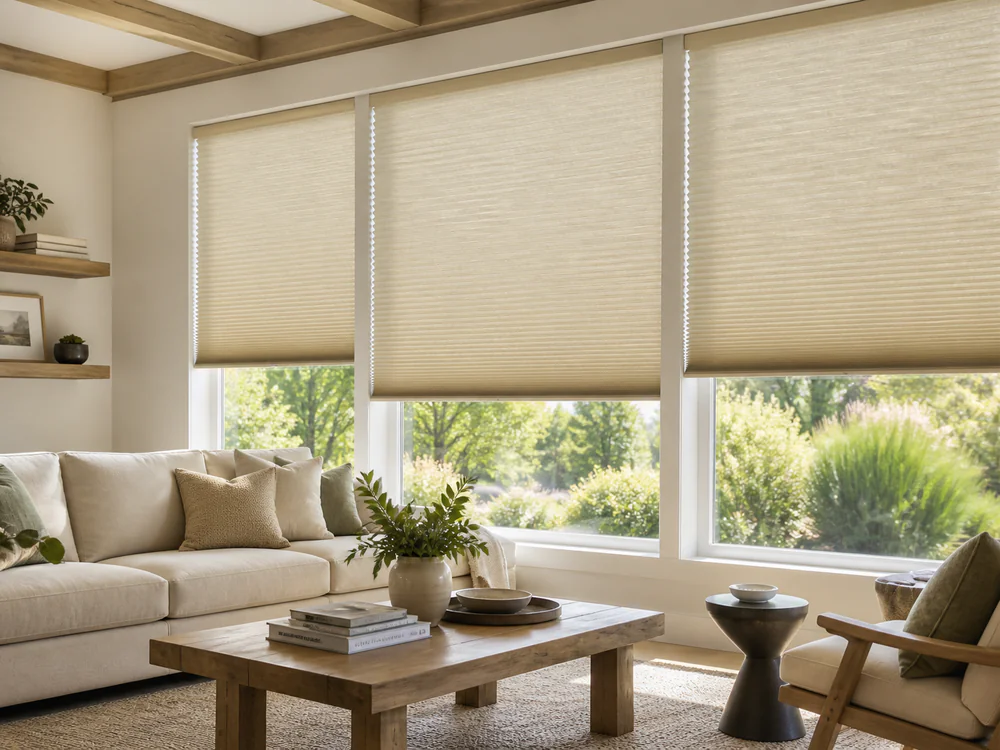
Solar shades occupy their own interesting middle ground. They’re designed to filter UV rays and reduce glare without blocking the view entirely — think of them as sunglasses for your window. They won’t give you a dark room, but they’ll protect your furniture from fading and take the edge off afternoon heat coming through south- or west-facing glass. Standard roller shades without UV-rated material still block somewhere in the 70–80% range, which is meaningful but not the same as a purpose-built solar fabric.
The practical takeaway: if you need precise, adjustable light throughout the day, blinds are the more flexible tool. If you need full coverage — especially in a bedroom or a room that gets hammered by afternoon sun — shades do it better.
Curtains and drapes often get left out of the shades-vs-blinds conversation, which is a mistake — because for a lot of rooms, the real answer isn’t blinds or shades. It’s blinds or shades plus curtains.
Layering is one of the most underused strategies in window treatment decisions. A solar shade paired with a sheer linen curtain gives you UV protection during the day and a softer, warmer look in the evening when the shade is raised. A set of faux wood blinds in a kitchen with a simple cotton panel on either side adds warmth without sacrificing the easy-clean practicality that makes blinds the right call near a stove.
Curtains on their own have limitations. They don’t seal the edges of a window the way a fitted shade or blind does, which means they’re weaker on both privacy and insulation. But they add texture, warmth, and a finished look that hard-material blinds and even fabric shades can struggle to replicate on their own. In a bedroom, blackout curtains layered over a roller shade give you redundancy — useful in a room where any light at all is a problem.
The honest version of the blinds-vs-shades question, then, is really a three-way comparison. Blinds for precision and durability. Shades for coverage, insulation, and cleaner aesthetics. Curtains for warmth, softness, and layering. Most rooms benefit from at least two of those three, and the right combination depends entirely on what the room demands.
There’s a growing segment of homeowners who arrive at the shades-vs-blinds question and end up somewhere else entirely: motorized. And once you understand what motorized window treatments actually do, it’s easy to see why.
Motorised roller blinds — and motorized shades more broadly — are controlled by a remote, a smartphone app, or a voice assistant like Alexa or Google Home. They can be programmed to open and close on a schedule, which means your west-facing windows can start blocking heat before you’ve even sat down for lunch. That kind of automated control isn’t just convenient. It’s measurable — motorized systems can deliver 10–30% energy savings by managing solar heat gain precisely throughout the day.

Electric Venetian blinds take everything that makes traditional horizontal blinds useful — that fine-tuned, slat-by-slat light control — and remove the one thing that makes them tedious: having to adjust them manually every time the sun moves.
In a home office or a living room with changing sun angles throughout the day, that matters. The sun hitting a west-facing window in Arlington at noon is a different problem than the same window at 4 PM. With electric Venetian blinds, you can program different slat positions for different times of day, or adjust from your phone without getting up. It sounds like a convenience feature, and it is — but it’s also a practical energy management tool in a climate where afternoon solar gain can push an air conditioner to its limits.
Electric Venetian blinds are also one of the cleaner answers to the child safety question. Corded blinds have long been flagged as a hazard in homes with young children, and new federal safety standards are progressively eliminating corded systems from the market. Motorized blinds have no accessible cords by design, which removes the risk entirely without requiring you to give up the light control precision that makes Venetian blinds worth having in the first place.
For homeowners in Tarrant County who are outfitting a new build in Keller or Southlake — or replacing aging builder-grade blinds in an established neighborhood — electric Venetian blinds represent a meaningful upgrade over what most big-box stores carry. The gap between a standard corded blind and a motorized system isn’t just technological. It’s functional, daily, and in a Texas summer, financial.
The most common skepticism about motorized blinds and shades is the same one that follows any technology upgrade in the home: is it actually worth it, or is it just a feature you’ll stop using after a month?
In most climates, that’s a fair question. In Tarrant County, the calculus is different. When your electric bill climbs past $300 in June and keeps going through September, window treatments stop being a décor decision and start being an energy management decision. A motorized roller shade that automatically closes before the afternoon sun peaks on a south-facing window is doing real work — not just looking clean on the wall.
The numbers behind the market reflect what individual homeowners are figuring out. The US electric blinds market sat at $320 million in 2024 and is projected to reach $2.5 billion by 2034. That’s not a niche trend. That’s a broad shift in how homeowners think about their windows. Motorized roller blinds are currently the dominant product in the automated window treatment segment, and smart blinds are growing at a 7.39% annual rate — the fastest uptake among any window covering category.
We offer PowerView motorization — Hunter Douglas’s proprietary smart home system — which integrates with Alexa, Google Home, and Apple HomeKit. It’s not a generic motorized hardware solution. It’s a premium system with a track record, built to work reliably over time. For homeowners who already have a smart home setup, it connects cleanly. For homeowners who are just starting to think about automation, it’s a straightforward entry point that doesn’t require a full home overhaul to use.
The honest answer to whether it’s worth it: for a single bedroom window, weigh it carefully. For a living room with three west-facing windows that turn your home into a greenhouse every July afternoon, the energy savings alone start to close the gap on cost — and the daily convenience is just a bonus.
The shades-vs-blinds question doesn’t have a universal answer, but it does have a right answer for every room in your home — and that answer depends on the light, the function, and what your windows are actually dealing with in a North Texas climate.
Blinds for rooms where you want precise, adjustable light. Shades for rooms where coverage, insulation, or aesthetics matter most. Curtains when you want warmth, texture, or a layered look. And motorized systems when you want all of that working for you automatically, especially in a summer where every west-facing window is a heat problem waiting to happen.
If you’re not sure which combination makes sense for your home, that’s exactly what a free in-home consultation is for. A Plus Shutters & Shades serves homeowners throughout Tarrant County — from Arlington and Fort Worth to Southlake, Keller, and Mansfield — with custom window treatments that are measured, built, and installed to fit your home and your climate, not a generic floor plan.
Article details:
Share:
Continue learning: