Not sure whether zebra blinds or cellular shades are the right call? This guide breaks down what each actually does — and which one belongs in which room.
Share:
If you’ve been going back and forth between zebra blinds and cellular shades, you’re not alone — and you’re not overthinking it. These are two genuinely different products that get lumped together because they’re both “modern shades,” but they solve different problems. One gives you flexible, stylish light control throughout the day. The other is built to insulate, darken, and keep your energy costs from climbing. In Tarrant County, where west-facing windows can turn a living room into a greenhouse by 3pm in July, that distinction matters more than most comparison guides will tell you. Here’s what you actually need to know.
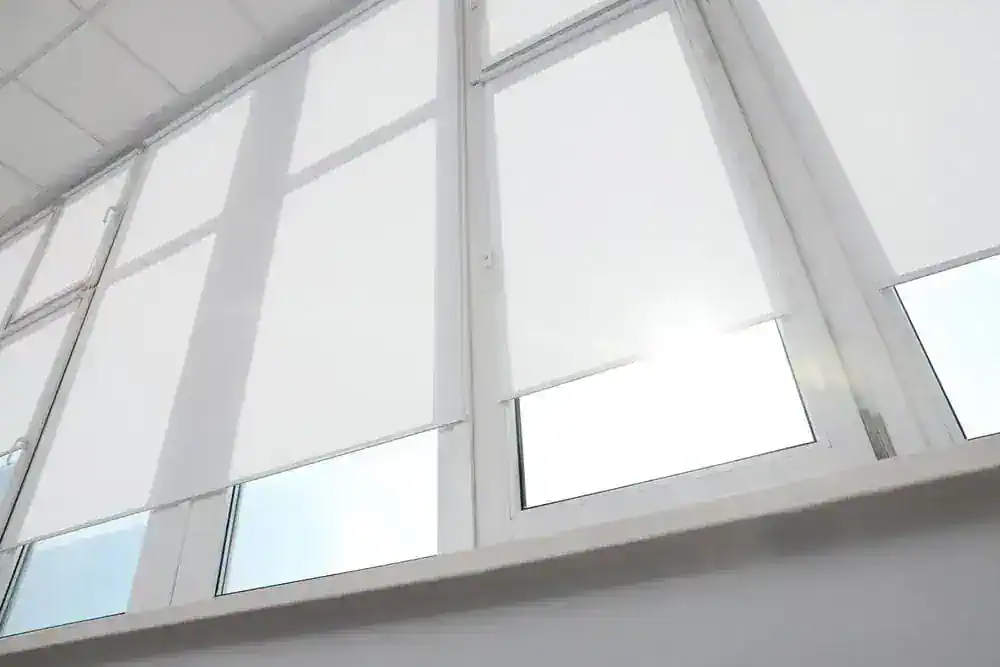
Before you can make a good decision, it helps to clear up a common point of confusion. Sheer shades and zebra shades are not the same thing, even though they’re sometimes used interchangeably in showrooms and online listings. Sheer shades are a single layer of translucent fabric — they soften light beautifully, but they’re always translucent. There’s no adjustability beyond raising or lowering the shade itself.
Zebra shades are something different. They use two layers of fabric — alternating bands of sheer and solid material — that slide past each other as you adjust the shade. When the sheer bands line up, light filters through softly. When the solid bands align, you get more privacy and more light block. It’s a genuinely clever design, and it gives you real daytime control that a standard sheer shade simply can’t match.

Zebra shades shine in rooms where you want to manage light throughout the day without losing your view or making the space feel closed off. Think living rooms, dining rooms, home offices, and open-plan areas where the goal is flexibility — some privacy during the day, a softer look in the evening, and a contemporary style that doesn’t feel heavy or dated.
The adjustable band system means you’re not stuck choosing between fully open and fully closed. You can dial in exactly how much light you want, which makes them particularly useful in rooms with changing light conditions — a south-facing living room in Arlington that gets soft morning light and then direct afternoon glare is a good example. You raise the shade, shift the bands, and manage both without pulling a curtain or reaching for a separate layer.
What zebra shades are not, however, is a blackout solution. Because of the dual-layer fabric design, zebra shades don’t achieve complete darkness — light still passes through the sheer sections, and gaps at the sides can let in more than you’d expect. At night, with interior lights on, the situation reverses: people outside can often see in more than you’d like. That’s not a flaw in the product — it’s just how the physics of layered sheer fabric works. It means zebra shades are the wrong call for bedrooms, nurseries, or any space where you genuinely need a dark room.
The style factor is real, though. Zebra shades have a clean, architectural look that works well in newer homes and open-concept spaces — which describes a significant portion of Tarrant County’s housing stock, particularly in newer developments in Mansfield, Keller, and the growing corridors around Arlington. If you want a window treatment that looks intentional and modern without feeling heavy, zebra shades are a strong contender for the right rooms.
The two most common complaints we hear about zebra shades come down to light bleed and nighttime privacy. Both are predictable if you know what the product is designed to do — and both are solvable if you plan for them upfront rather than discovering them after installation.
Light bleed at the sides happens when the shade doesn’t sit flush against the window frame. This is largely an installation issue, not a product issue. A properly measured, inside-mounted zebra shade with minimal side gaps performs significantly better than one that’s been ordered incorrectly or installed without accounting for the window’s specific dimensions. Professional measurement matters — not as an upsell, but because a shade that doesn’t fit right doesn’t work right.
Nighttime privacy is a different problem. When interior lights are on after dark, the sheer bands in a zebra shade allow visibility from outside, similar to a net curtain effect. For a bedroom or bathroom, that’s a dealbreaker. For a living room where you’re comfortable with the level of visibility, it may not bother you at all. Know your room and your comfort level before you commit.
If you need both the daytime flexibility of a zebra shade and genuine nighttime privacy or darkness, the most practical solution is layering — a zebra shade paired with a room-darkening panel or a separate blackout liner for the windows where it matters most. We work with homeowners across Tarrant County on exactly this kind of setup, particularly in bedrooms that face east or west and catch direct sun at the worst times of day.
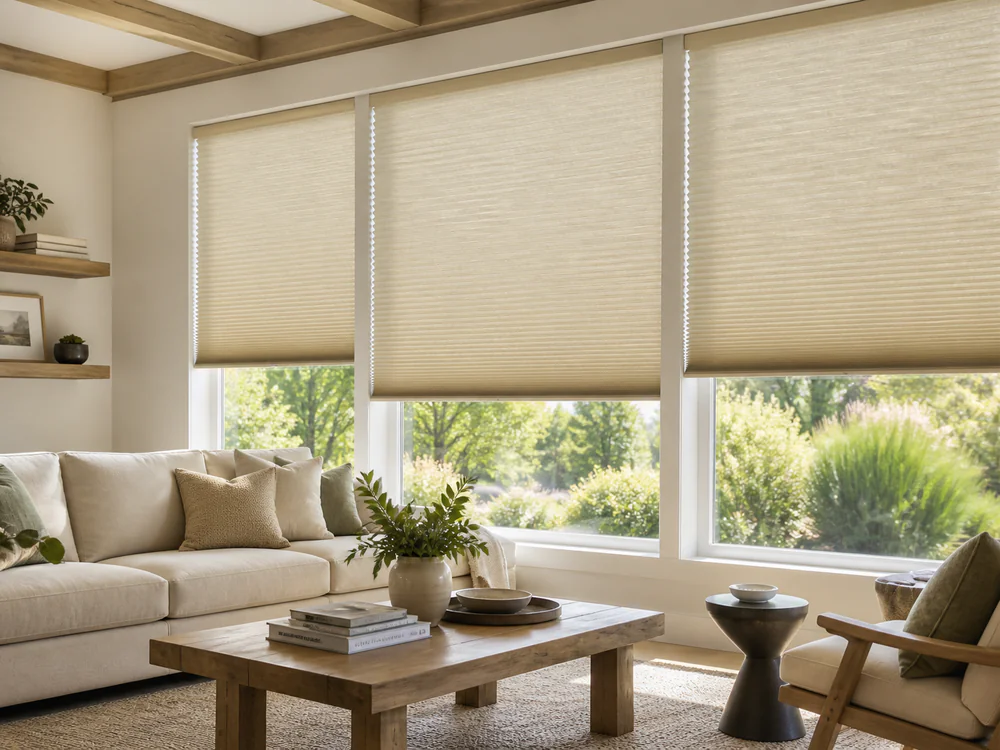
Cellular shades — also called honeycomb shades — occupy a different part of the spectrum entirely. They’re not primarily a style product. They’re an insulation product that also happens to control light, and in Texas, that distinction is worth understanding before you make any window treatment decision.
The name comes from the structure: the fabric is formed into small air pockets, or cells, that trap air between the shade and the glass. That trapped air acts as a thermal buffer, reducing the amount of heat that transfers through the window in either direction. In summer, that means less solar heat gain pushing into your living space. In winter, it means less heat escaping through the glass.
This is the question that matters most for homeowners in Tarrant County, and the answer is more concrete than most people expect. The U.S. Department of Energy has documented that tightly installed cellular shades can reduce unwanted solar heat gain by up to 80% during the cooling season and reduce heat loss through windows by more than 40% in winter.
To put that in context: windows can account for anywhere from 10% to 25% of a home’s total heating bill. That’s not a small number, and it’s before you factor in cooling costs — which in Tarrant County run from April through October, a six-plus month stretch where afternoon temperatures regularly exceed 95°F. West-facing windows in Fort Worth, Arlington, and Mansfield are catching direct sun from early afternoon until sunset, and without a proper thermal barrier, that heat load goes straight into your home and straight onto your electricity bill.
The thermal performance of a cellular shade is measured by its R-value — a number that indicates resistance to heat transfer. Standard horizontal blinds typically reach around R-2.5. Single-cell honeycomb shades can reach R-2 on their own; double-cell constructions push that to R-3 or higher. The higher the R-value, the more the shade is working to buffer your home from the temperature outside. In a Tarrant County summer, that buffer is doing real, measurable work every single day.
R-value performance depends heavily on installation quality. A cellular shade that doesn’t fit the window properly — with gaps at the sides or top — loses much of its thermal advantage. This is one area where the difference between a carefully measured custom installation and a generic off-the-shelf product becomes genuinely significant, not just in appearance but in function.
Cellular shades come in a range of light control options, and this is where buyers sometimes get confused by terminology. Room darkening and blackout are not the same thing, and the difference matters depending on how sensitive you are to light when you sleep or work.
Blackout shades block up to 99% of incoming light, creating near-total darkness when properly installed. The fabric itself has a backing — often a mylar or blackout liner — that prevents light from passing through. This is the right choice for bedrooms where any light at all disrupts sleep, nurseries, media rooms, or spaces used by shift workers who need to sleep during daylight hours.
Room darkening shades block roughly 95–98% of light. That sounds close to blackout, and in most conditions it is — but a small amount of light still filters through, and you may see a soft glow around the edges of the shade depending on how it’s mounted. For most bedrooms, room darkening is sufficient and often preferred because it doesn’t create the complete cave effect that some people find disorienting. For genuinely light-sensitive situations, blackout is the right call.
In Tarrant County, where summer mornings get bright early and east-facing bedroom windows can flood a room with light well before 7am, this distinction comes up constantly. We see it especially in newer homes with large windows and open layouts — beautiful in the daytime, but challenging for anyone trying to sleep past sunrise. Cellular shades in both room darkening and blackout configurations are available in cordless and motorized versions, which makes them safer for households with children and easier to operate on large or high windows. With motorization, you can program your shades to close before peak afternoon heat and open after sunset — a simple automation that pays for itself over a Tarrant County summer.
The honest answer is that most homes in Tarrant County benefit from both — just in different rooms. Zebra shades belong in living rooms, dining rooms, and home offices where flexible daytime light control and a clean modern look are the priority. Cellular shades belong in bedrooms, nurseries, and any room where energy performance, genuine darkness, or both are what you’re actually after.
The mistake most buyers make is trying to find one product that does everything. It doesn’t exist. What does exist is a thoughtful room-by-room plan that puts the right shade in the right place — and that’s a conversation worth having before you order anything.
We offer free in-home consultations where we bring samples, take measurements, and help you figure out exactly what makes sense for each room in your Tarrant County home — no guesswork, no pressure, and no expensive surprises after the fact.
Article details:
Share:
Continue learning: