Fall in DFW brings shifting light, shorter days, and holiday prep. Here's how to choose the right window treatment styles before the rush hits.
Share:
Here’s something most Tarrant County homeowners don’t realize until it catches them off guard: the window treatments that worked perfectly all summer may stop working the moment fall arrives. As the sun drops to a lower angle in September and October, west- and south-facing rooms that your roofline shaded all summer suddenly get hit with direct afternoon glare again. Different rooms, different times of day, different problems.
Fall is also when the holiday prep starts. You want your home to feel pulled together before family shows up. We’ve put together this guide to cover the window treatment styles worth considering — and which rooms to prioritize first.
The bedroom is usually the first room people want to fix — and for good reason. As days get shorter and mornings get cooler, the way light enters your bedroom changes fast. Early sunrise light that wasn’t a problem in July starts cutting through thin curtains by late September. And if your room faces west, that lower afternoon sun can make the space uncomfortably warm well into October.
What you need in a bedroom isn’t just something that looks good. It’s something that gives you real control — over light, over heat, and over privacy — without requiring you to get up and fiddle with it every morning.
For the master bedroom specifically, the conversation usually comes down to three things: how dark you need it, how well it insulates, and how much you want to interact with it every day.
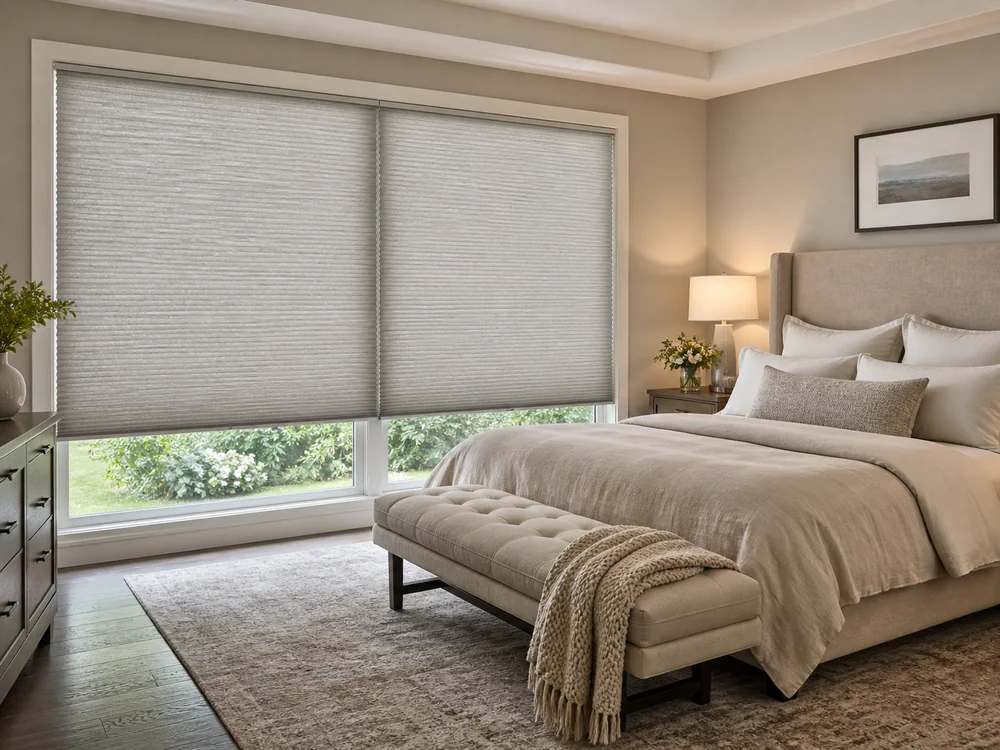
Cellular shades — sometimes called honeycomb shades — are one of the strongest performers here. Their layered construction traps air inside the cells, which creates a genuine insulating effect between the glass and your room. The U.S. Department of Energy has documented that windows account for roughly 25 to 30 percent of the energy used for heating and cooling in a typical home. In a Tarrant County house where your AC runs hard through October and your heat kicks on by November, that number matters. Cellular shades directly address it.
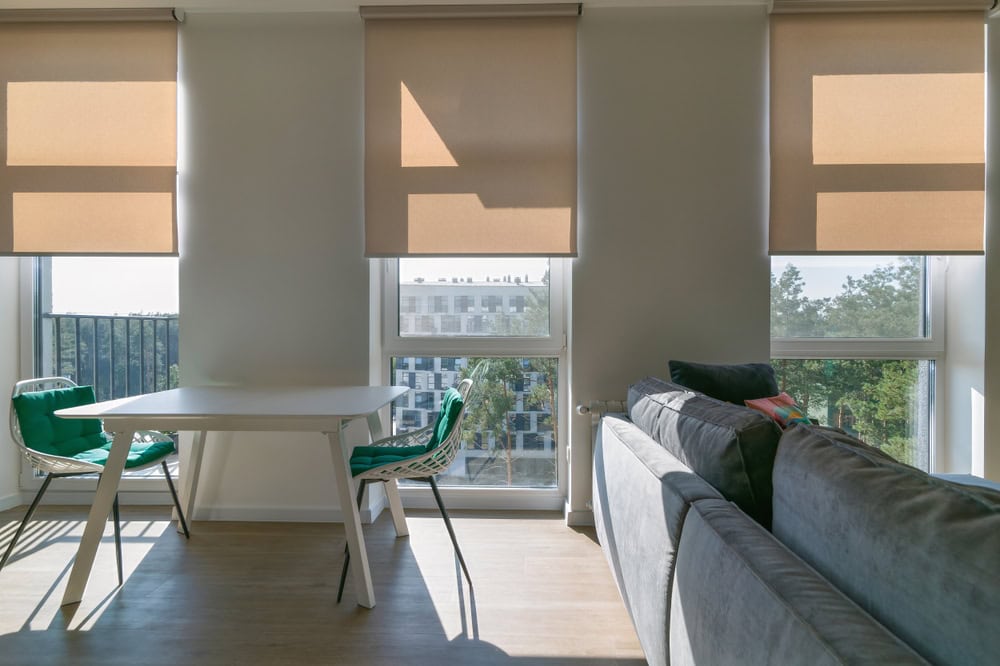
If blackout is the priority — and for a lot of people it is — room-darkening roller shades give you a clean, modern look with serious light-blocking capability. They sit flat against the window, don’t collect dust the way fabric drapes do, and come in a range of opacities so you can dial in exactly how dark you want the room.
Motorization is worth a real conversation here, not just a passing mention. PowerView motorization means your shades can open and close on a schedule, respond to a remote or an app, or integrate with a smart home system. On a cool fall morning when you don’t want to get out of bed to let in the light, being able to tap your phone matters more than it sounds. It’s also a meaningful convenience for rooms with high or hard-to-reach windows — something that comes up often in the taller new builds along Chisholm Trail Parkway and in the Walsh Ranch area.
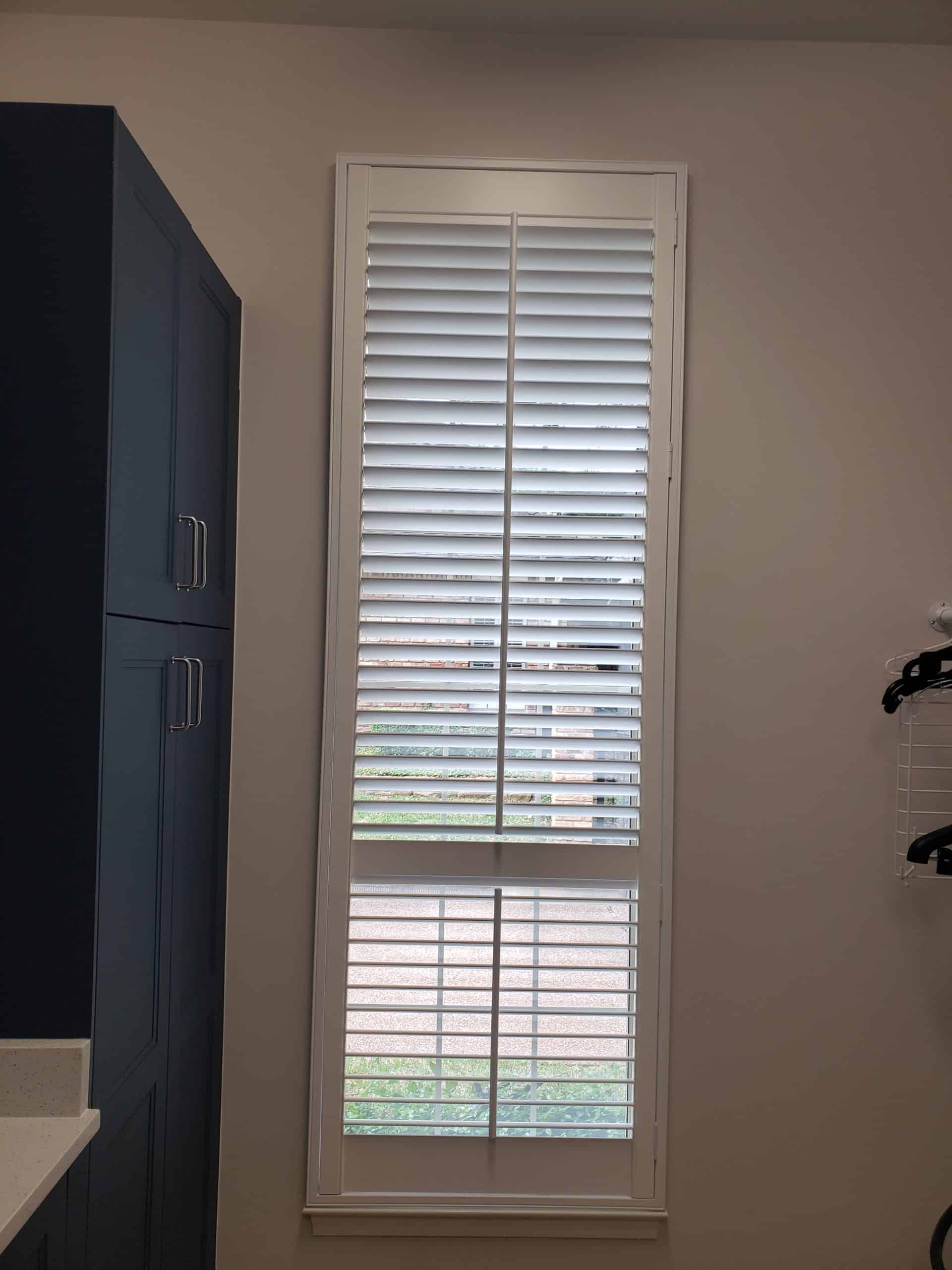
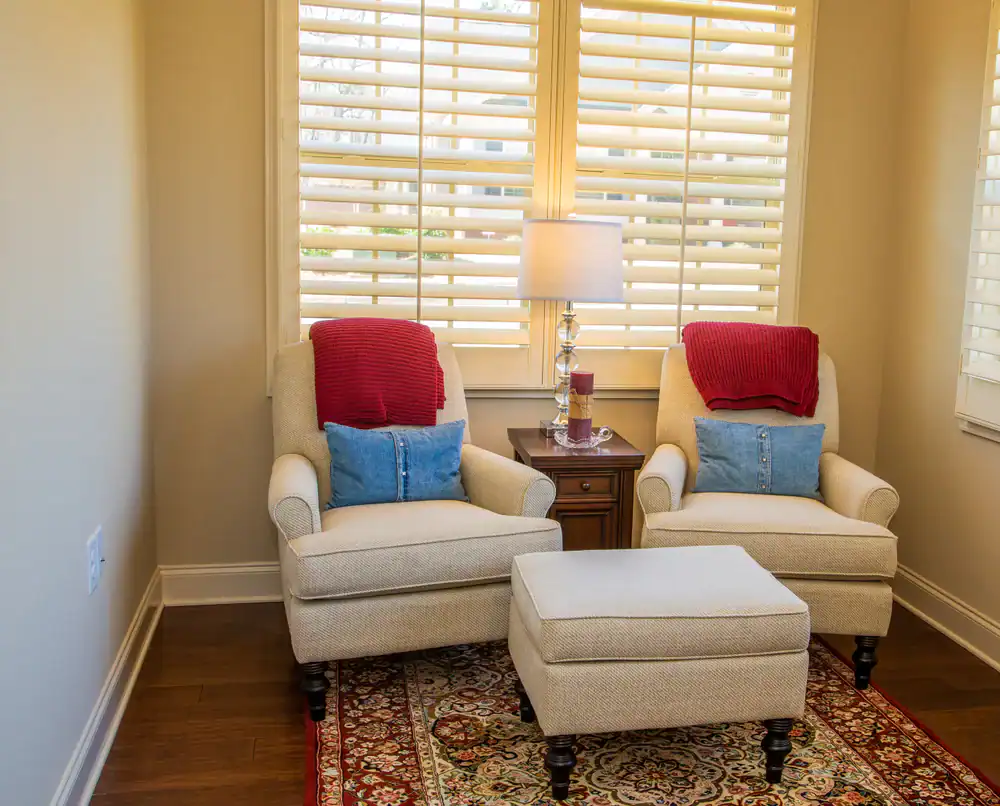
Plantation shutters are another strong master bedroom option, particularly in established homes in Fort Worth, Mansfield, or Southlake where the architecture leans traditional or transitional. Shutters give you precise tilt control over light and airflow, they’re easy to clean, and unlike most window treatments, they’re considered a permanent architectural feature — not just a furnishing. That distinction matters for home value in a way that most other window treatments simply don’t.
Most people assume their bedroom window treatment problem is a summer problem. It’s not — or at least, it’s not only a summer problem. The intense overhead sun of a Texas July is actually easier to block than the low-angle afternoon sun of a Texas October.
When the sun sits high in the sky, your roofline, eaves, and overhangs do a lot of the work for you. But as the earth tilts heading into fall, the sun drops lower on the horizon. That lower angle sends light directly into windows that were in shade all summer. It hits at a sharper, more penetrating angle — and it doesn’t care that you thought you had your bedroom handled.
West-facing bedrooms in Arlington, North Richland Hills, and Keller are particularly vulnerable to this. If your bedroom faces west and you’ve been relying on a light-filtering shade that worked fine in June, you may find it’s not enough by the time September rolls around. The same is true for south-facing rooms, where the sun tracks lower across the sky all day rather than overhead.
This is why fall is actually the right time to reassess — not spring, and not after you’ve already been living with the problem for two months. Getting a consultation scheduled in September means you’re ahead of it, not reacting to it. Practically speaking, custom window treatments typically take two to six weeks from order to installation. Homeowners in Tarrant County who want everything in place before Thanksgiving need to be moving by early October at the latest. The ones who wait until November usually end up living through the holidays with bare windows and a longer-than-expected wait list.
The kitchen window — especially the one over the sink — is one of those spots that people either overthink or completely ignore. It’s a focal point. You’re standing in front of it multiple times a day. And it has a specific set of demands that most other windows in your home don’t: moisture exposure, grease and steam from cooking, privacy from the yard or a neighboring house, and the need for natural light while you’re actually using the space.
Whatever you put here needs to handle all of that without looking like an afterthought.
The short answer is: something that can handle moisture, gives you privacy without blocking light, and looks intentional rather than functional-only.
Faux wood blinds are a reliable choice for this reason. Unlike real wood, faux wood doesn’t warp or crack in humid environments — and a kitchen window above the sink sees more humidity than almost any other window in the house. They’re easy to wipe down, they tilt to let in light while maintaining privacy, and they come in enough finishes to match almost any cabinet or countertop palette. For a lot of Tarrant County kitchens — particularly the open-concept layouts common in newer homes in Mansfield and Keller — faux wood blinds strike the right balance between practical and polished.
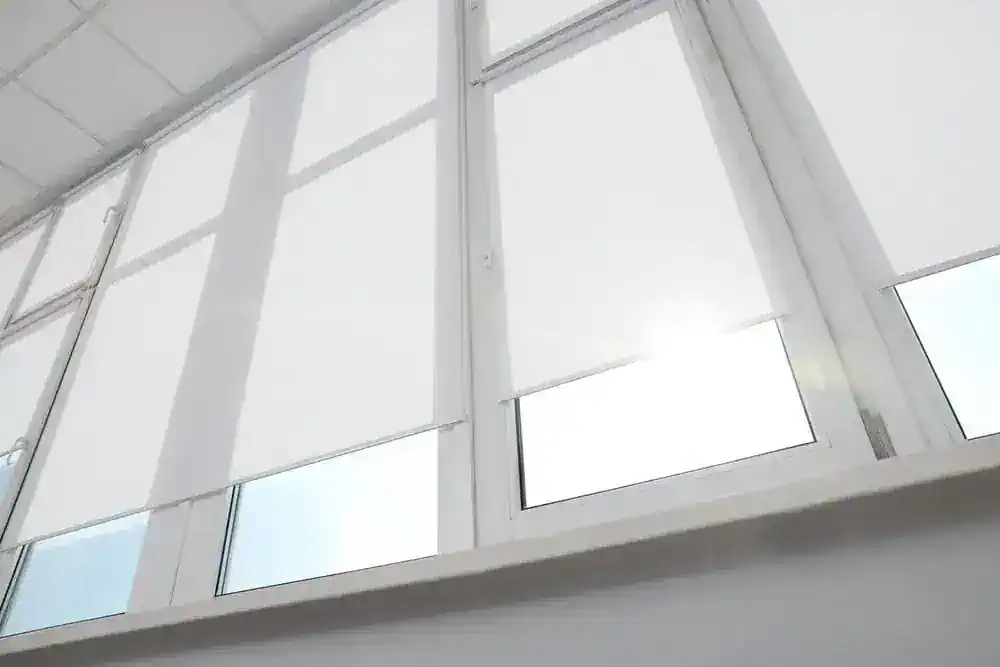
Roller shades are another strong contender, particularly if you want a cleaner, more minimal look. A solar shade over the kitchen sink lets in diffused natural light while cutting glare and filtering UV — which matters more than people realize in a kitchen, since direct sun accelerates the fading of cabinet finishes and countertops over time. Solar shades preserve your view of the backyard or the street while doing actual work. They’re also easy to raise completely out of the way when you want maximum light, and they wipe clean.
Roman shades are popular in kitchens for the same reason they’re popular in dining rooms — they add a layer of warmth and texture that blinds and rollers don’t. If your kitchen leans more traditional or transitional in style, a roman shade in a durable, easy-clean fabric can pull the room together without competing with the rest of the space. The key is choosing a fabric that can handle the environment — not every roman shade fabric is appropriate for a high-humidity, high-use area like a kitchen.
One thing worth noting: the kitchen is often the room homeowners deprioritize when they’re doing a home refresh, because it feels like a lot of work for a relatively small window. But if you’re hosting for the holidays — Thanksgiving, Christmas, or even just a fall dinner party — the kitchen is one of the first places guests see. A bare or dated window treatment over the sink is more noticeable than most people think.
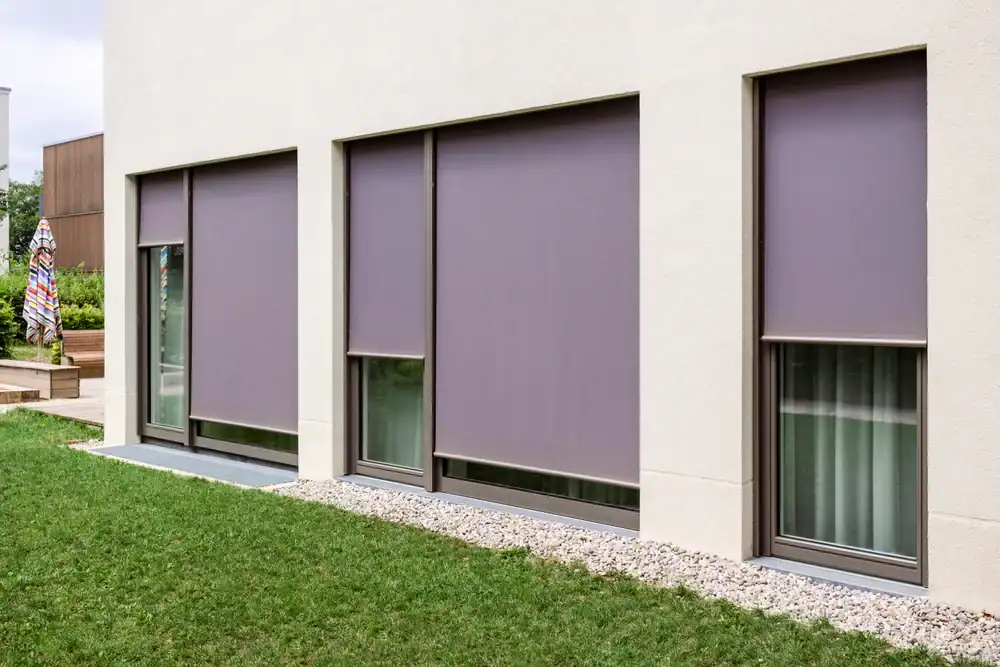
Most people think about window treatments as interior solutions. You hang something on the inside of the window, it filters or blocks the light, and you’re done. That works — but it’s not the whole picture, especially in a climate like Tarrant County’s.
Here’s the thing about interior shades: by the time the light hits them, the heat is already in the room. The glass has absorbed it, the air near the window has warmed up, and your shade is now managing the aftermath rather than the source. For mild light filtering, that’s fine. For serious heat control in a south- or west-facing kitchen or living room in October, it’s a limitation.
Exterior roller shades work differently. They intercept solar heat before it ever reaches the glass — which means your interior stays cooler, your AC runs less, and the room is actually more comfortable, not just slightly less bright. This is a meaningful distinction in Tarrant County, where fall afternoons can still push into the mid-80s and direct sun through a large kitchen or living room window can make the space genuinely unpleasant.
We offer both interior and exterior roller shades — and it’s one of the things that sets us apart from most local window treatment companies, who focus entirely on interior solutions. For kitchens and living rooms with significant southern or western exposure, an exterior shade is often the more effective long-term answer. It’s not always the right choice for every window or every home, but it’s a conversation worth having — and one we’re equipped to have in a way most competitors aren’t.
For homeowners in Fort Worth, Arlington, Southlake, or anywhere else in Tarrant County who’ve tried interior shades and still felt like the room was fighting them, exterior roller shades are worth a serious look. They’re not a niche product or a commercial-only solution. They’re a practical option for any home with a heat or glare problem that interior treatments haven’t fully solved.
Fall is genuinely the best time to upgrade your window treatments in Tarrant County — not because it’s a sales season, but because the seasonal conditions make the need real and immediate. The light shifts, the days shorten, the holidays approach, and suddenly the windows you’ve been ignoring all year are very much on your mind.
The practical reality is that custom window treatments take time. From consultation to fabrication to installation, you’re typically looking at two to six weeks. For Tarrant County homeowners who want everything in place before the holiday season, September and early October are the window. After that, lead times stretch and scheduling gets tight.
If you’re ready to figure out what your home actually needs — room by room, with real samples and honest recommendations — A Plus Shutters & Shades offers free in-home consultations across Tarrant County. No pressure, no guesswork, just a straightforward conversation about what works for your space.
Article details:
Share:
Continue learning: