Not sure whether roman shades or roller shades are right for your home? Here's how to think through the decision room by room in Tarrant County.
Share:
Most people come into this comparison thinking it’s mostly about looks. Roman shades have that layered, tailored feel. Roller shades are cleaner, more minimal. Pick the one that matches your vibe and move on, right?
Not quite. The style difference is real, but the functional differences matter just as much — especially in Tarrant County, where west-facing windows can turn an afternoon living room into a sauna and where the AC runs for five solid months. The right shade does more than look good. It works for your room, your light, and your climate. Here’s how to think through it.
Roman shades are made from fabric that folds as the shade rises — creating that stacked, layered look at the top of the window. That extra fabric volume is what gives them warmth and visual depth. It also means they provide better insulation than a single-layer roller shade, which matters when you’re trying to keep conditioned air from escaping through a large picture window in July.
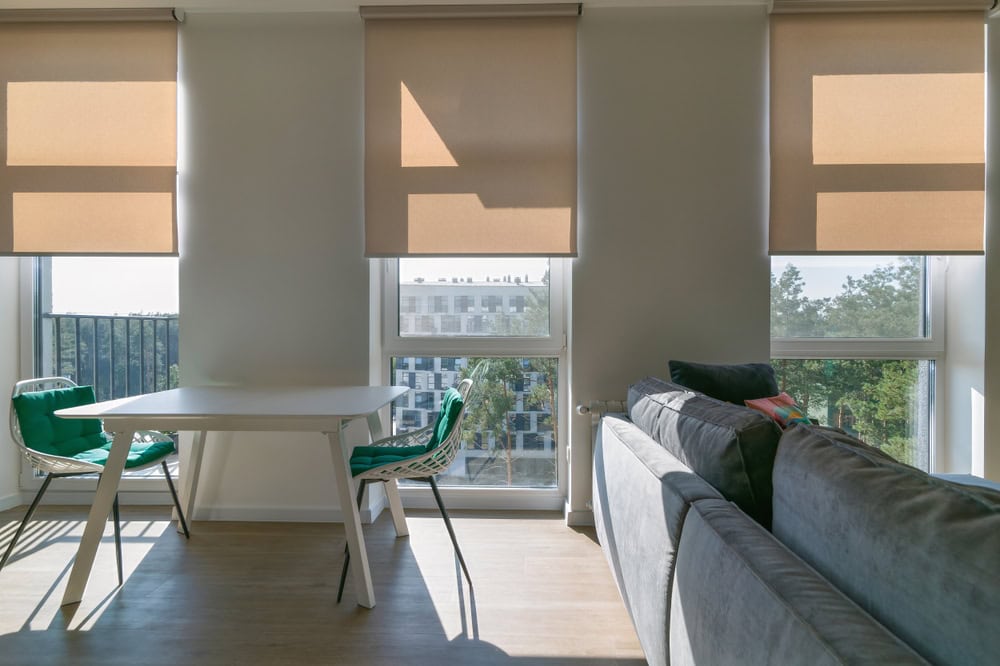
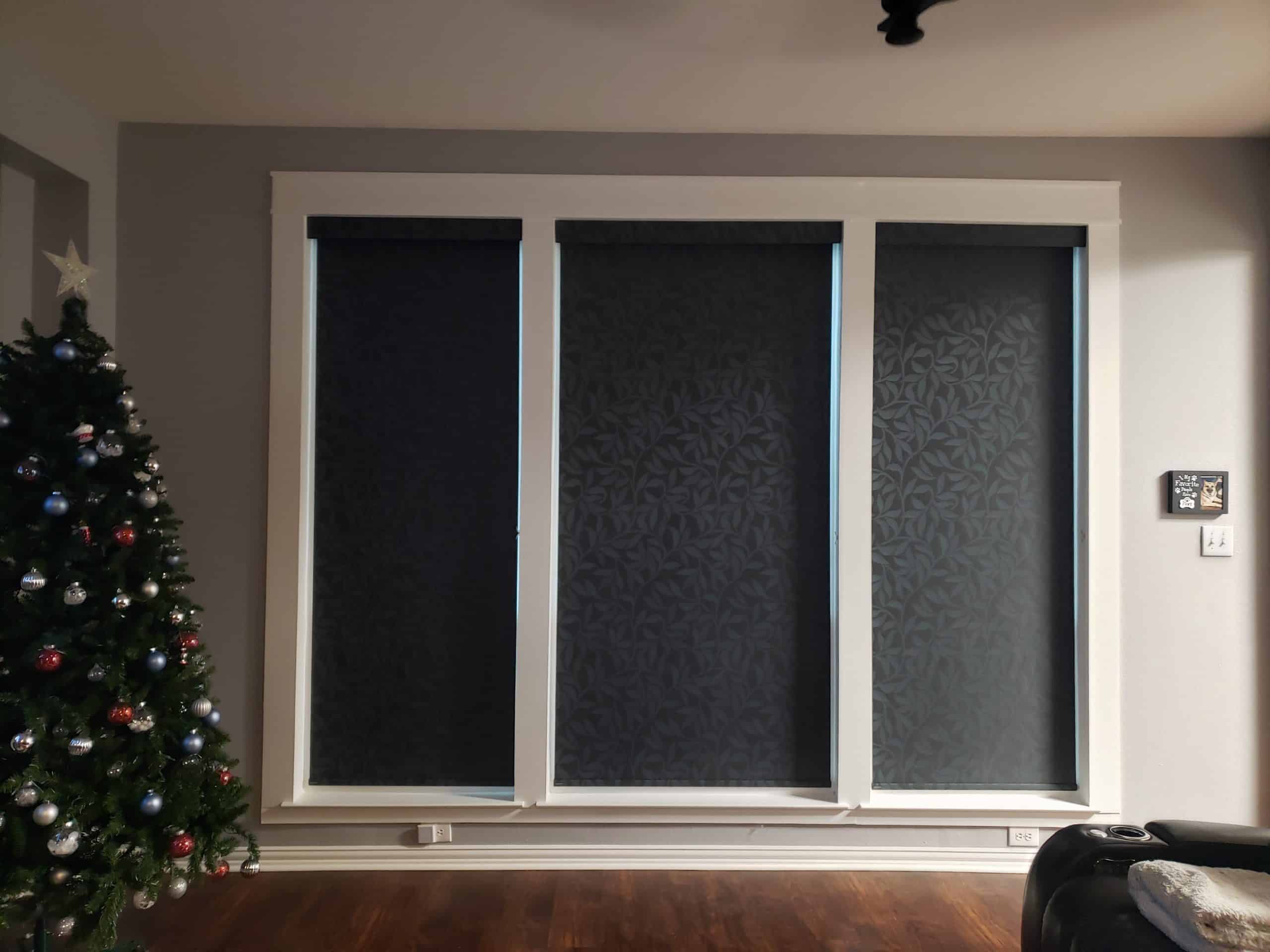
Roller shades are a single piece of material that rolls up around a tube at the top. They’re cleaner visually, easier to wipe down, and generally simpler to operate. They also come in a much wider range of opacities — from nearly transparent solar screens that preserve your view while cutting glare, all the way to full blackout.
The honest answer is that neither is universally better. The right choice depends on the room, what you need it to do, and — in some cases — whether you’re thinking about motorization.
The kitchen is the room where most people hesitate on roman shades. The concern makes sense — fabric near a stove or above a sink sounds like a recipe for grease stains and water damage. But the hesitation usually comes from imagining a delicate linen shade hanging over a commercial range, which isn’t the right frame.
The right fabric changes everything. For kitchen roman shades, we recommend moisture-resistant polyester and linen-blend materials — fabrics that wipe clean, resist grease absorption, and don’t warp or pucker near steam. These aren’t the same materials we’d use in a formal dining room or a master bedroom. They’re chosen specifically for high-use, high-humidity environments.
Placement matters too. A roman shade positioned above the window frame, rather than inside the casing close to the glass, keeps it further from direct steam and splatter. Pair that with a light-filtering opacity — enough to soften the afternoon sun coming through a south- or west-facing kitchen window without making the room feel dark — and you end up with something that actually functions well in the space.
The reason kitchen roman shades are so popular in Tarrant County homes isn’t just aesthetic. Kitchens in this market tend to have windows that take a lot of direct sun, particularly in the afternoon. A light-filtering roman shade with a quality linen-polyester blend handles that sun load while keeping the kitchen feeling bright and open. A plain roller shade in the same space often looks like an afterthought by comparison — functional, but flat.
That said, if your kitchen has a window directly above the sink with constant moisture exposure, a roller shade in a moisture-rated solar fabric is probably the more practical call. We’ll tell you that honestly during a consultation rather than push you toward one option over the other.
The bedroom is where roman shades tend to outperform roller shades most clearly — not because roller shades can’t do the job, but because roman shades do it while adding something to the room.
Blackout roman shades pair a blackout liner behind the decorative fabric, which eliminates nearly all incoming light when the shade is closed. The misconception that roman shades are decorative-only — that they can’t provide real blackout — comes from seeing unlined or light-filtering versions and assuming that’s the whole category. A properly lined blackout roman shade, custom-fit to the window, closes off the light gaps that defeat most off-the-shelf blackout curtains.
In Tarrant County, this matters more than it might in a milder climate. Summer days here are long and bright. If you have a bedroom that faces east or west, the sun is coming in early or staying late, and a shade that doesn’t seal the window properly isn’t going to give you the dark room you’re paying for. Custom fit is the difference — a shade made to your exact window dimensions eliminates the gaps around the edges that let light bleed in.
For street-facing bedrooms in established Fort Worth and Arlington neighborhoods — the ones where the houses sit close together and the bedroom window faces a sidewalk — a top-down/bottom-up roman shade is worth considering. It lets you bring in natural light from the upper portion of the window while keeping the lower half closed for privacy. That’s a configuration that works particularly well in rooms where you want daylight without exposure.
Roller shades are a solid choice for bedrooms too, especially in rooms with a more modern or minimal aesthetic where the layered fabric look of a roman shade would feel out of place. Blackout roller shades in a room-darkening fabric perform well. The practical difference comes down to what you want the window to look like when the shade is open — roman shades stack into a neat fold at the top, roller shades disappear into a slim tube. Both are clean. The roman shade just has more presence.
Motorization tends to get framed as a luxury add-on — something for high-end remodels or tech-forward homeowners. That framing undersells it. For certain rooms and certain window configurations, motorization isn’t a premium; it’s the practical solution.
The clearest case is windows that are hard to reach. A roman shade above a kitchen sink, a window over a built-in bookcase, or a row of windows above a staircase landing — these are all situations where a corded or cordless shade requires awkward reaching or a step stool every time you want to adjust the light. Motorization solves that problem without any compromise on the shade itself.
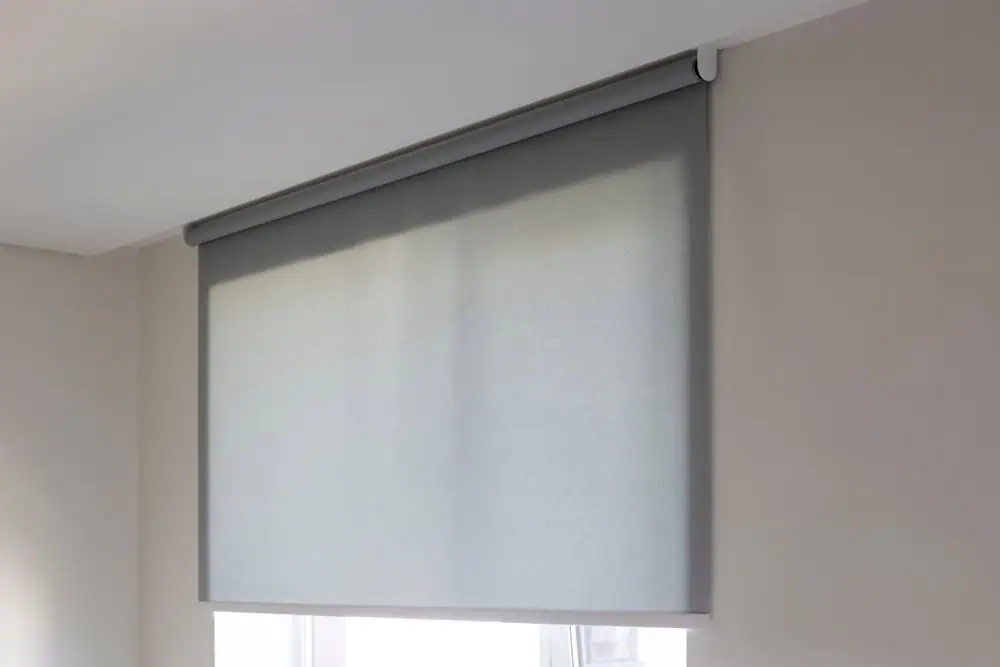
We install Hunter Douglas PowerView Gen 3 motorization on roman shades, and it’s worth understanding what that actually means before deciding whether it’s right for your home.
PowerView Gen 3 uses Bluetooth Low Energy — which means the shades connect directly to your smartphone without requiring a separate hub for basic operation. The motors run at under 38 decibels, which is quieter than a soft whisper. You won’t hear them. Daily operation works through the PowerView app, a wall switch, or a remote control. If you have a smart home setup, the system integrates with Alexa, Google Assistant, and Apple HomeKit — so you can add your shades to existing routines without learning a new platform.
For roman shades specifically, motorization removes one of the main practical objections people have to the style. The common knock on roman shades versus roller shades is that rollers are simpler — one pull and it’s done. A motorized roman shade is just as simple. Tap the app, tell Alexa to raise the shades, or press the wall switch. The fold, the fabric, the warmth of the roman shade style — all of that stays. The operational friction disappears.
This matters for homeowners in Tarrant County who are already running smart home devices. If you’ve got Alexa in the kitchen and Google Home in the living room, adding motorized shades to those ecosystems isn’t a new system to learn. It’s an extension of what you already use. The shades go up when the morning routine starts, come down when the afternoon sun hits the west-facing windows, and close at night — all without touching anything.
For rooms with multiple windows, motorization also makes it practical to control all the shades simultaneously. Adjusting six individual roman shades by hand every afternoon is tedious enough that most people stop doing it. Motorized shades that move together on a schedule or with a single command are actually used — which means they actually do their job of managing heat gain and privacy.
Here’s the part of this comparison that most national guides skip entirely, because they’re writing for a generic American audience and Tarrant County isn’t generic.
From roughly May through September, the AC runs continuously in most homes here. West-facing windows in Fort Worth, Arlington, Mansfield, Southlake, and North Richland Hills take the full force of the afternoon sun — from around 2 in the afternoon until well past 7 in the evening. That sustained heat load is hard on cheap materials and hard on your energy bill. We only use Texas-made products with UV-resistant fabrics and heat-rated hardware. A shade that looks fine in a showroom can warp, fade, or fail within a season when it’s facing a Tarrant County summer from the inside of a west-facing window.
For those west-facing windows, the roman vs. roller decision gets a third option that most companies don’t bring up: exterior roller shades. An exterior shade blocks solar heat before it reaches the glass, which is meaningfully more effective than an interior treatment trying to manage heat that’s already entered the room. We install both interior and exterior roller shades — and for patios, covered porches, and west-facing windows across Tarrant County, exterior shades are often the smarter functional call.
Interior roman shades with a thermal lining are still a strong choice for west-facing rooms where you want fabric warmth and design depth. The lining adds an insulating layer that a single-panel roller shade doesn’t replicate. But if the primary goal is heat reduction rather than aesthetics, that’s a conversation worth having honestly before you commit to a product.
One more thing worth mentioning: North Texas soil is expansive clay. Foundations move. That affects how windows sit in their frames over time, which in turn affects how shades hang and operate. Our owner, Manuel Reyes, brings a decade of construction experience to every installation — which means we’re accounting for those variables when we mount and fit your shades, not just hanging them level on the day of installation and hoping for the best.
Roman shades bring warmth, insulation, and design depth — they work especially well in kitchens, bedrooms, and living rooms where the window is a focal point. Roller shades are cleaner, easier to maintain, and available in a wider range of opacities. For west-facing windows dealing with serious afternoon heat, exterior roller shades are worth adding to the conversation entirely.
Motorization makes both styles easier to live with — and for hard-to-reach windows or rooms with multiple shades, it moves from a nice-to-have to a practical necessity.
The decision doesn’t have to be complicated, but it does benefit from someone who knows both products and will tell you honestly which one fits your room. If you’re somewhere in Tarrant County trying to figure out what actually makes sense for your windows, A Plus Shutters & Shades is available seven days a week and will come to you — samples in hand — so you can see the options in your actual light, against your actual walls, before you commit to anything.
Article details:
Share:
Continue learning: