Tarrant County homeowners may be leaving real money on the table. Here's what actually qualifies for energy rebates — and what doesn't.
Share:

If your electric bill climbs every summer and certain rooms in your house become genuinely unusable by mid-afternoon, you’re not imagining it. Tarrant County sees over 70 days above 90°F every year, and most homes are running air conditioning from April straight through October. That’s a long season — and a lot of money moving through windows that are working against you.
The good news is that specific energy efficient window shades can qualify for tax credits and utility rebate programs. The catch is that not every shade marketed as “energy efficient” actually qualifies. We’ve helped hundreds of Tarrant County homeowners navigate these programs, and here’s what you need to know before you buy.
The federal Section 25C Energy Efficient Home Improvement Credit allowed homeowners to claim 30% of the cost of qualifying window treatments — up to $1,200 per year — for purchases made through December 31, 2025. If you bought qualifying cellular shades last year and haven’t filed yet, that credit may still apply to your 2025 taxes. It’s worth a conversation with your tax professional before you assume you missed it.
For 2026 purchases, the 25C credit expired under the One Big Beautiful Bill Act. That’s a real change, and anyone telling you otherwise is working from outdated information. What remains available for Tarrant County homeowners are Oncor’s utility programs — and the long-term energy savings that come from choosing the right product in the first place.

This is where most buyers got tripped up — and where a lot of money was left on the table. Not every shade labeled “energy efficient” qualified for the 25C credit. The IRS required a specific Manufacturer’s Certification Statement confirming the product met its energy efficiency standards. Without that document, the credit wasn’t claimable, regardless of how the shade was marketed.
The products that consistently qualified were dual-cell honeycomb (cellular) shades from manufacturers who had obtained AERC certification — the Attachments Energy Rating Council, a third-party organization partially funded by the U.S. Department of Energy that independently rates the energy performance of window coverings. Hunter Douglas Duette® Honeycomb Shades were among the confirmed qualifying products. Basic roller shades, standard Roman shades, and most off-the-shelf blinds did not meet the threshold.
The distinction matters because cellular shades earn their qualification through measurable thermal performance. A double-cell cellular shade creates two layers of trapped air between the window and the room — that air acts as insulation. According to Lawrence Berkeley National Laboratory simulations, cellular shades achieve higher energy savings than all other types of window shading devices. In summer conditions, they can reduce unwanted solar heat gain through a window by up to 60%. In winter, they can cut heat loss by up to 40%. That’s not marketing language — those are DOE-backed numbers.
If you purchased qualifying cellular shades in 2025 and want to claim the credit on your taxes, the process requires three things: your purchase invoice, the Manufacturer’s Certification Statement (available directly from the manufacturer’s website), and IRS Form 5695. Keep in mind that the credit covers product cost only — installation labor is not included. A tax professional can walk you through the specifics for your situation.
Oncor Electric Delivery is the transmission and distribution utility for most of the Dallas-Fort Worth metro, including all of Tarrant County. They don’t sell electricity — that’s your retail provider, whether you’re with TXU Energy, Reliant, or another company — but they do administer rebate and weatherization programs that directly benefit Tarrant County homeowners.
Oncor’s flagship energy efficiency initiative is called Take a Load Off, Texas. Under this umbrella, there are two programs worth knowing about. The Home Energy Efficiency (HEE) Program is open to all Oncor residential customers — homeowners and renters with owner permission — and covers weatherization improvements including insulation and heating and cooling upgrades. The Low-Income Weatherization Program provides low- to no-cost upgrades for households at or below 200% of the federal poverty line; 2025 funding was fully exhausted due to high demand, but the program typically reopens in February.
Here’s the honest answer on window shades specifically: Oncor’s documented rebate categories focus primarily on attic insulation, duct sealing, and HVAC equipment — not window coverings as a standalone line item. So if you’re expecting a direct Oncor rebate check for buying cellular shades, that’s not currently how the program works.
What is true is that energy-efficient window treatments contribute meaningfully to a home’s overall thermal performance, which is exactly what these weatherization programs are designed to improve. If you’re doing a whole-home energy efficiency upgrade — adding insulation, sealing ducts, and upgrading window treatments at the same time — the conversation with an Oncor-approved contractor becomes more relevant. The energy savings from properly installed cellular or solar shades are real and measurable, even when they don’t come with a direct rebate attached.
To check current program availability and confirm your address falls within Oncor’s service territory, visit oncor.com or search “Take a Load Off, Texas.”
Tarrant County’s heat problem isn’t uniform. West-facing rooms in Fort Worth and Arlington take the hardest hit from afternoon sun — the kind of direct solar radiation that can raise a room’s temperature significantly even with the AC running. South-facing windows deal with sustained solar exposure throughout the day. The right window treatment depends on which problem you’re actually trying to solve.
There are two product categories that do the most work for energy efficiency in this climate: cellular (honeycomb) shades and solar shades. They’re not interchangeable, and understanding the difference helps you choose the right tool for each window in your home.

Cellular shades — sometimes called honeycomb shades — are the top performer for all-direction insulation. The fabric is constructed with hollow cells that trap air, creating a thermal barrier between the window glass and the room. A double-cell configuration adds a second layer of air pockets, pushing the insulating value up to an R-2 to R-4 range depending on the product. That matters year-round: the same shade that blocks summer heat gain also helps retain warmth during a North Texas cold snap.
One detail that often gets overlooked: cellular shades only achieve their rated R-value when installed with proper side seals and precise measurements. A shade with gaps around the edges — common with standard retail sizes — allows heat to transfer around the fabric, not through it. That’s why custom fitting isn’t just about aesthetics. It’s a performance requirement. We measure to the sixteenth of an inch specifically because a loose fit defeats the purpose of the insulating cells.
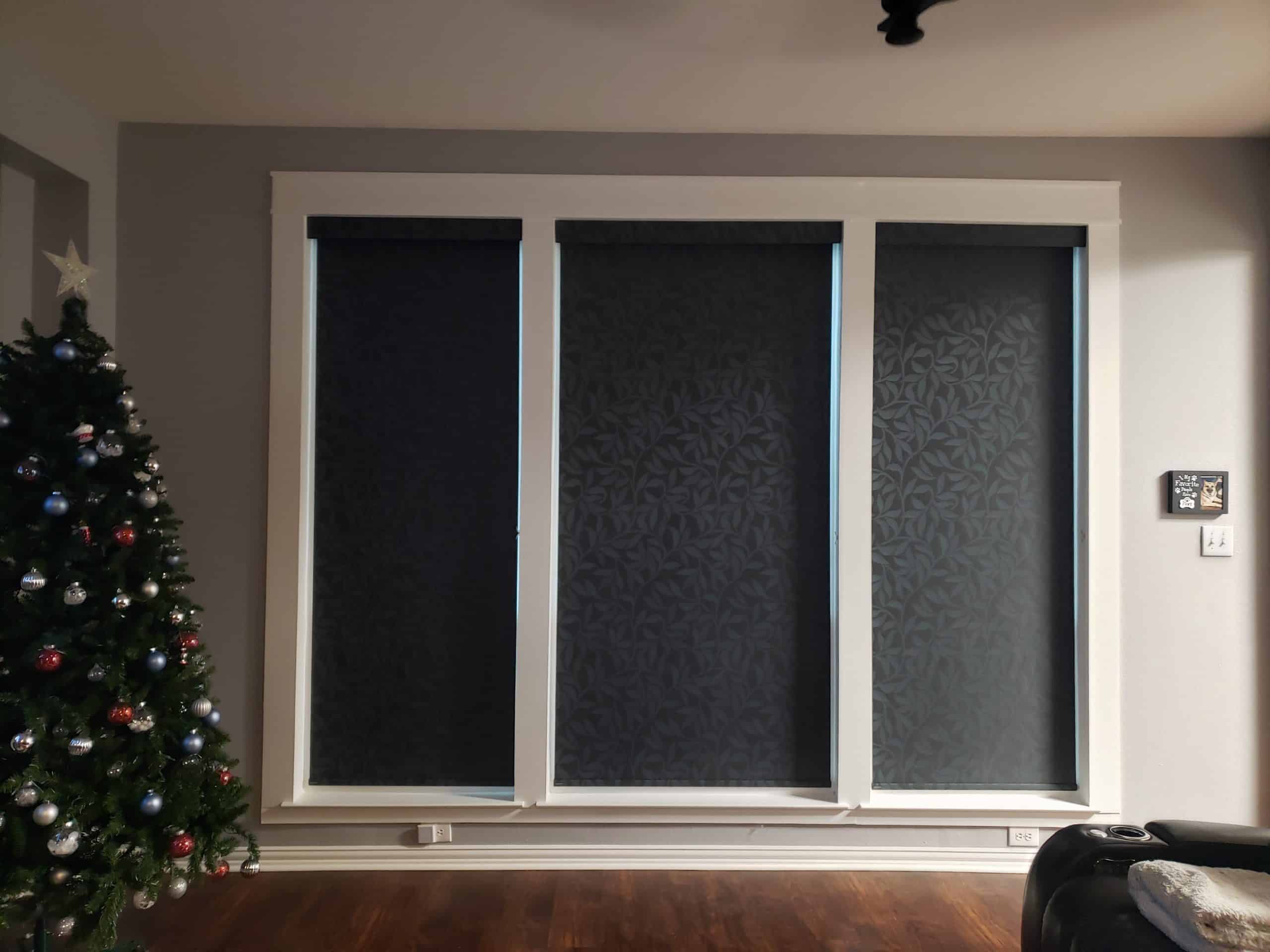
Solar shades work differently. Rather than creating an air barrier, they’re designed to filter and block solar radiation before it heats the room. The key spec is the openness factor — the percentage of the fabric that’s open. A 1%–3% openness provides stronger UV and heat blocking with less view through the shade; a 5%–10% openness keeps more of the view while still reducing glare and heat. For west-facing windows in Tarrant County that get hammered by afternoon sun, solar shades with a lower openness factor are often the right call.
We also carry exterior solar shades, which is worth mentioning because most competitors don’t. An exterior shade blocks solar heat before it ever contacts the glass — which is significantly more effective than trying to manage heat that’s already entered the window. For large south- or west-facing windows in newer construction, exterior solar shades can make a measurable difference in how hard your AC has to work.
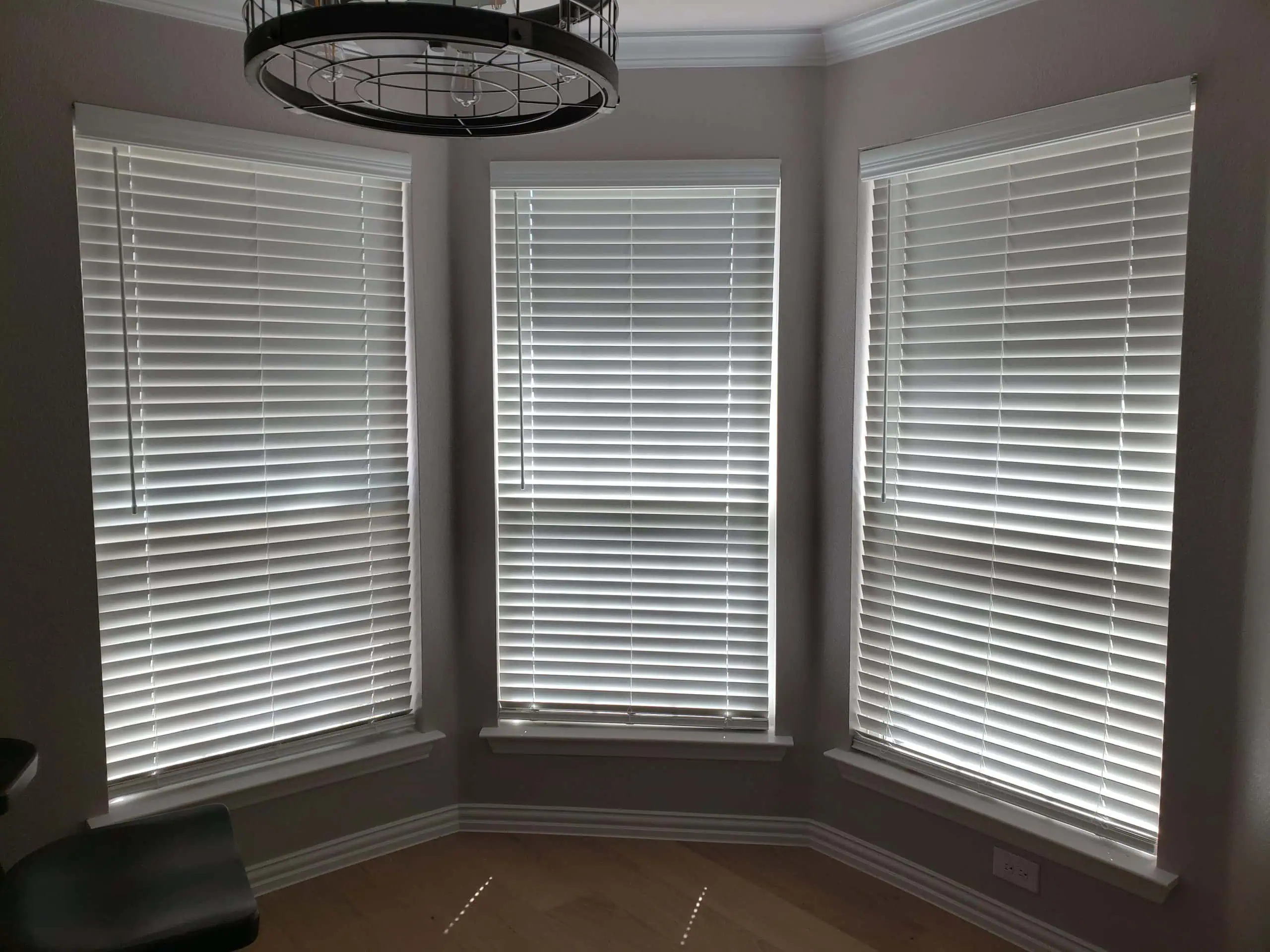
The short answer is: not much. Vinyl and metal blinds account for roughly 60% of all window coverings in U.S. homes, according to DOE research — but they provide minimal insulation. They block some light, but they don’t create a meaningful thermal barrier. If your goal is reducing cooling costs, standard horizontal blinds are largely cosmetic.
Faux wood blinds perform slightly better because the thicker slats reduce light penetration more effectively, but they still don’t come close to the insulating performance of a properly installed cellular shade. If you’re comparing products specifically for energy efficiency, cellular shades are in a different category entirely — which is exactly why they were the ones that qualified for the 25C tax credit while standard blinds did not.
The best insulating window treatment for any given window in your home depends on more than just the product type. Window orientation matters — a cellular shade on a north-facing window behaves differently than the same shade on a west-facing window that gets direct afternoon sun for six hours a day. Room use matters too. A home office where you need to see a screen clearly has different requirements than a bedroom where you want complete blackout and maximum insulation overnight.
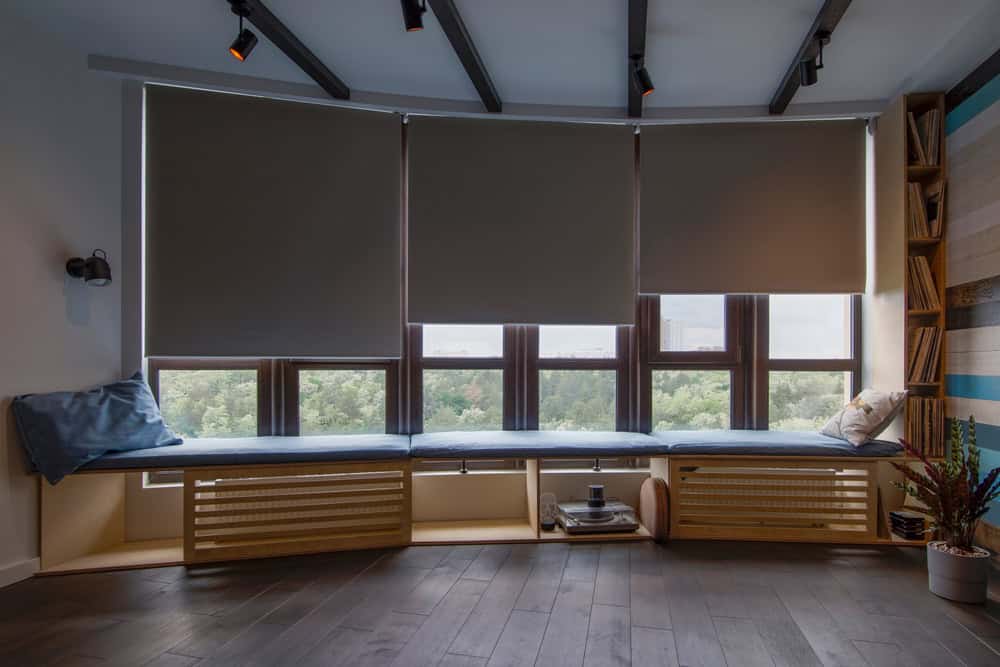
This is where motorized shades become genuinely useful beyond the convenience factor. A motorized cellular or solar shade can be scheduled to close before the afternoon heat peaks on your west-facing windows — even when you’re not home. That means the shades are capturing energy savings consistently, not just when someone remembers to pull them down. Our PowerView® Automation system integrates with Alexa and Google Home, so the shades can work on a schedule or respond to voice commands without any manual operation at all.
For Tarrant County homeowners in communities like Southlake, Keller, or Mansfield — where newer construction often features large, architecturally dramatic windows — the combination of custom-fitted cellular shades and motorized automation tends to deliver the most consistent energy performance. The windows are beautiful, but they’re thermally demanding. Getting the right treatment on the right window, installed correctly, makes a real difference in how much you’re spending to keep the house comfortable from April through October.
If you’re motivated by energy savings and want to know what financial incentives are still available, here’s the honest summary: the federal 25C tax credit expired at the end of 2025, but 2025 tax filers with qualifying purchases may still be able to claim it — check with your tax professional and confirm the product has a Manufacturer’s Certification Statement. For 2026 and beyond, Oncor’s Take a Load Off, Texas program is the primary utility program serving Tarrant County, and it’s worth verifying current availability for your address.
More importantly, the energy savings from the right window treatment are real regardless of what rebate programs are active. Cellular shades that reduce solar heat gain by up to 60% in summer pay for themselves over time — especially in a climate where you’re running the AC for seven months straight.
If you want help figuring out which products make the most sense for your specific windows, A Plus Shutters & Shades offers free consultations with no pressure and no obligation — just a straightforward conversation about what will actually work for your home.
Article details:
Share:
Continue learning: