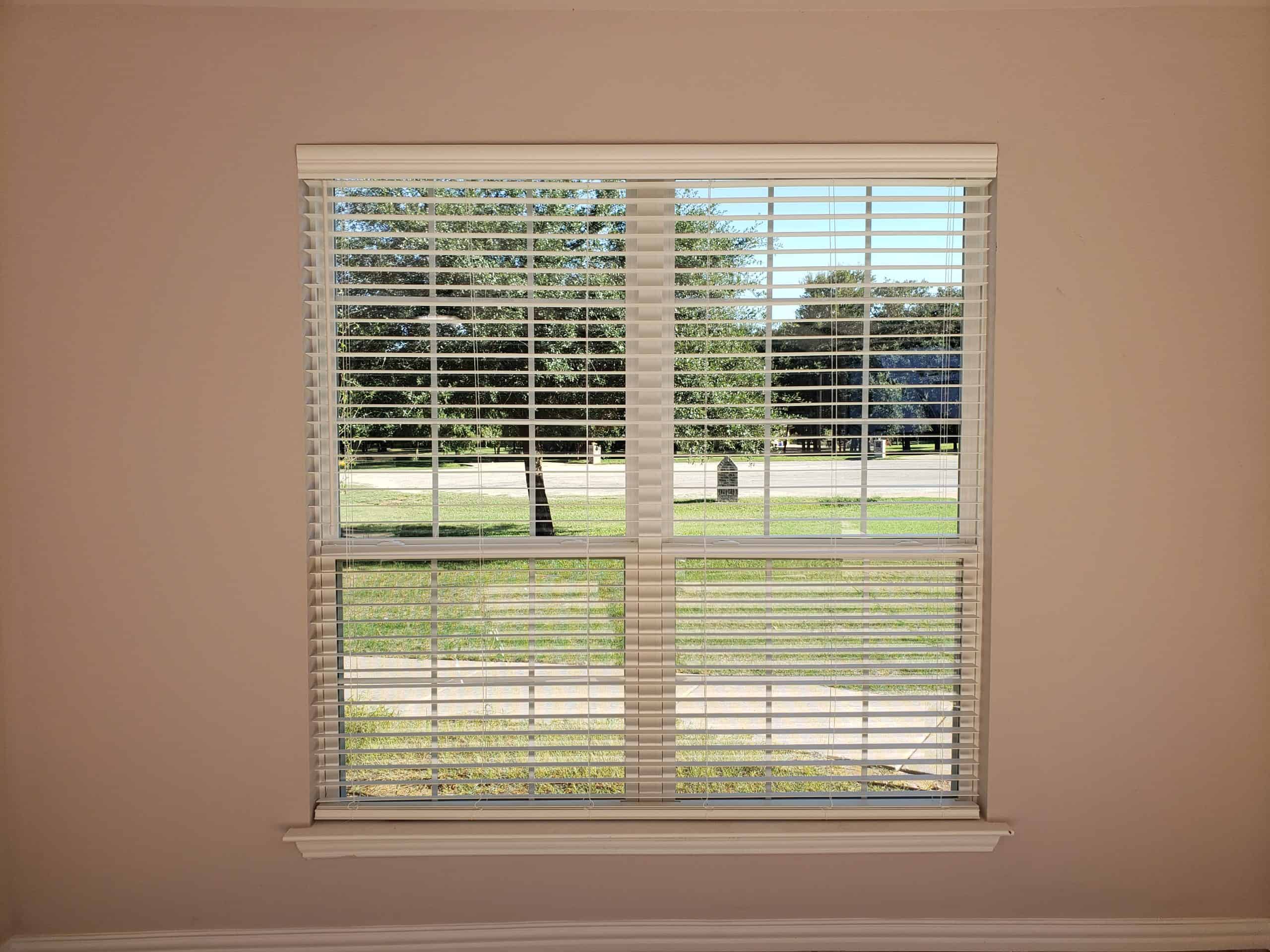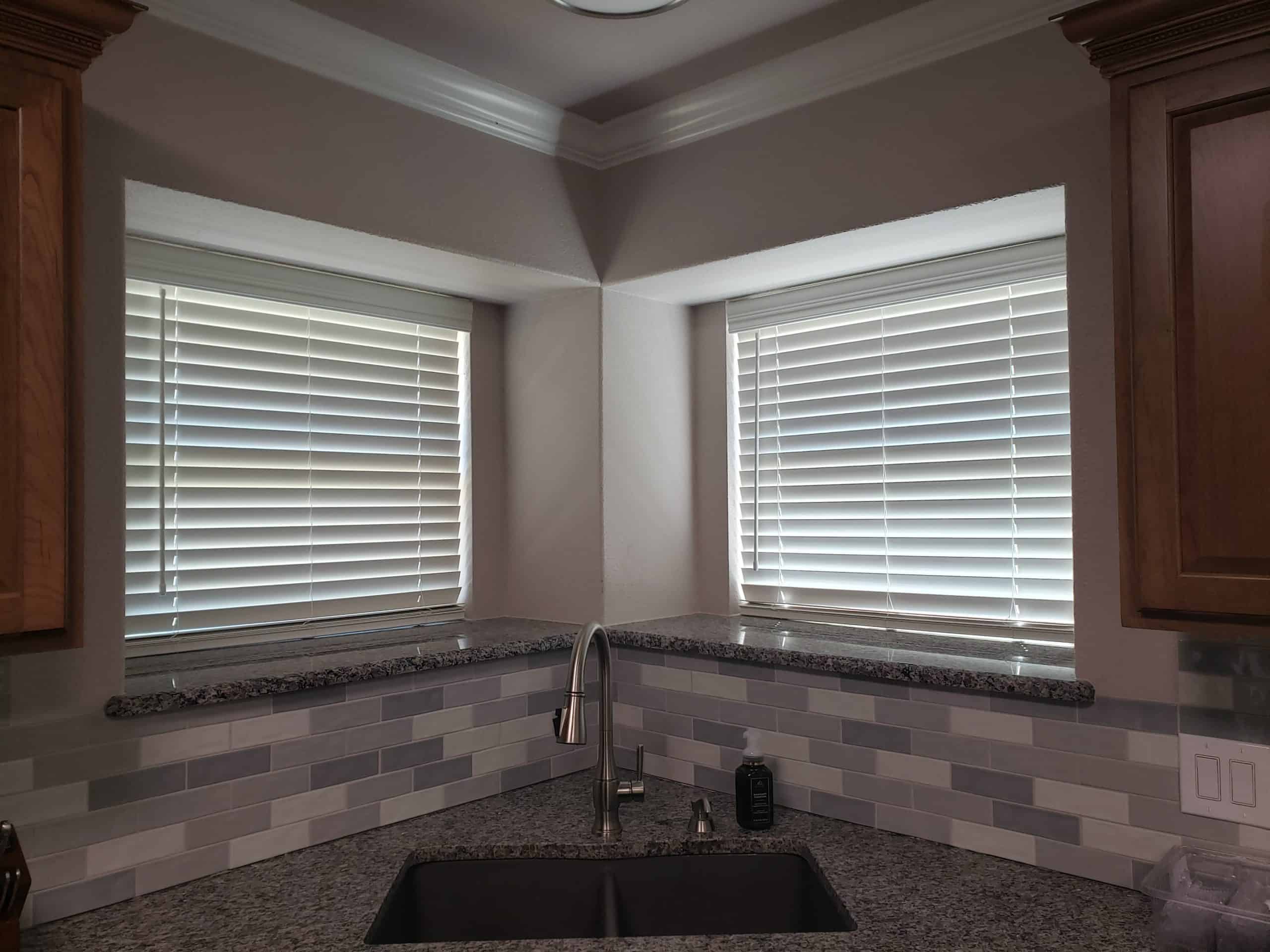
104 days above 90°F changes the math on window treatments entirely. Here's what actually works in Tarrant County — and why it matters more than you think.
Share:

Tarrant County averages 104 days above 90°F every year. That’s not a typo — it’s more than one-third of the calendar year where your A/C is fighting a losing battle against the sun pouring through your windows. Standard builder-grade windows let in heat fast, and most off-the-shelf window coverings don’t do much to stop it. The good news is that the right window treatments genuinely move the needle on cooling costs, comfort, and furniture protection. We’ve walked hundreds of Tarrant County homeowners through how different products work, which ones perform best in this specific climate, and how to match the right solution to the right window in your home.
**What are the most energy efficient blinds for a Texas home?** Cellular (honeycomb) shades are consistently the top-rated option for energy efficiency, and for Tarrant County specifically, double cell configurations are the right choice. They provide higher R-values than single cell shades and are built to handle the sustained heat of a Texas summer. Exterior roller shades are the highest-performance option for west-facing windows because they block solar heat before it reaches the glass — but interior double cell shades are the most practical all-around solution for most rooms.
**What is the difference between single and double cell honeycomb shades?** Single cell shades have one layer of air-trapping pockets and carry an R-value of roughly 2.0 to 2.5 — adequate for mild climates. Double cell shades add a second layer of pockets, meaningfully increasing the R-value and insulating performance. In Tarrant County, where afternoon temperatures regularly exceed 98°F for months at a time, the additional cell layer makes a real difference. Single cell is not the wrong product — it’s just the wrong specification for this climate.
**Are cellular shades and honeycomb shades the same thing?** Yes. The two terms describe the same product. Some manufacturers use “cellular,” others use “honeycomb” — both refer to the same construction: a shade built from hollow, air-trapping pockets that provide insulation between the fabric and the glass. There is no meaningful difference between a product marketed as cellular and one marketed as honeycomb.
**Are pleated shades the same as cellular shades?** No, though they look similar. Pleated shades use a single layer of folded fabric. Cellular shades use two or more layers that form sealed air pockets. The air pockets are what create the insulating value — a pleated shade doesn’t have them, so it doesn’t perform the same thermal function. If energy efficiency is the goal, cellular is the right choice over pleated.
**Are zebra blinds energy efficient?** Zebra blinds (also called dual shades or transitional shades) alternate between sheer and opaque fabric bands, giving you adjustable light control. They’re a strong option for privacy and light management, but they’re not designed as an insulating product. They don’t create the air-trapping structure that gives cellular shades their thermal performance. For energy efficiency specifically, cellular shades outperform zebra blinds — but zebra blinds are a good choice in rooms where light control matters more than insulation.
**What is the difference between single and double cell shades for Tarrant County homes specifically?** In Tarrant County, the cooling season runs from roughly May through October — about six months of sustained heat. That extended season is what makes the double cell specification worth the difference in cost. The DOE estimates that medium-performance cellular shades save an average of $100 to $180 per year on heating and cooling in a typical home with 15 windows. In a climate where cooling demand runs for half the year, the payback on the higher-performing double cell configuration comes faster than it would in a state with a shorter summer.
**Should cellular shades be inside or outside mount?** Inside mount is generally better for energy efficiency because it places the shade as close to the glass as possible, creating a tighter thermal seal. Outside mount is the right choice when window frames are too shallow for a clean inside fit — common in many Tarrant County homes built before 2000. Either way, the shade needs to be custom-measured to fit precisely; gaps at the edges significantly reduce the insulating effect regardless of mount type.

Cellular shades — also called honeycomb shades, because the two terms mean exactly the same thing — are widely recognized as the most energy-efficient interior window treatment available. Their structure is what makes them work: instead of a flat panel of fabric, they’re built from hollow cells that trap air between the shade and the glass, creating a thermal buffer that slows heat from moving in during summer and out during winter.
The question most buyers run into is whether single cell vs double cell shades makes a real difference, or whether double cell is just an upsell. The honest answer: in a moderate climate, single cell shades are adequate. In Tarrant County, they’re not the right call.
Single cell shades carry an R-value of roughly 2.0 to 2.5. That’s a reasonable starting point, but it’s designed for climates with mild temperature swings — not for a county where afternoon highs regularly push past 98°F for months at a stretch. Double cell shades add a second layer of air-trapping pockets, meaningfully increasing the R-value and the overall insulating performance. When you’re trying to slow heat transfer through glass that’s been baked by direct Texas sun since noon, that second cell layer earns its cost.
The DOE estimates that properly fitted cellular shades can reduce heat loss through windows by 40% or more in winter and cut unwanted solar heat gain by up to 60% in summer. Oak Ridge National Laboratory field research found up to 24% heating energy savings compared to standard venetian blinds over two full heating seasons. Those numbers are based on real installations, not lab projections — and they apply to double cell configurations in climates where insulation actually matters.
For most Tarrant County homes, double cell is the right specification. If you have very large windows — common in newer construction in communities like Mansfield or Keller — a larger pleat size (3/4″ rather than 3/8″) traps more air and performs even better. The cell size and pleat depth both affect how much thermal work the shade actually does.
One detail worth knowing: these numbers assume a tight, precise fit at the window frame. A shade with gaps at the edges doesn’t create a real thermal barrier — it just looks like one. That’s the difference between custom-measured cellular shades and the stock sizes you pull off a shelf at a big-box store.
Once you’ve settled on double cell as the right configuration for Tarrant County heat, the next decision is how the shade mounts — and this one has real energy efficiency implications that most buying guides treat as a purely aesthetic choice.
An inside mount places the shade within the window frame, as close to the glass as possible. This positioning is what creates the sealed air space that makes cellular shades thermally effective. The shade sits right against the glass, minimizing the gap where heat can bypass the treatment entirely. For energy efficiency, inside mount is the stronger choice — provided your window frame has enough depth to accommodate it (typically at least 2.5 to 3 inches for a clean fit).
An outside mount attaches to the wall above and around the window frame. It covers more surface area, which is useful for blocking light that bleeds in around the edges of the frame, and it’s often the only option for shallow window frames common in older Tarrant County homes built in the 1980s and 1990s. The trade-off is that the shade sits slightly farther from the glass, which reduces the insulating effect compared to a well-fitted inside mount.
For cellular shades on sliding glass doors — a common situation in Tarrant County homes where back patios face west or south — outside mount is typically the practical choice, since sliding door frames rarely have the depth for a clean inside installation. The coverage benefit of outside mount matters here too, since sliding doors have large glass surface areas that let in significant heat.
The bottom line on mounting: if your window frame has the depth, inside mount maximizes the insulating performance of your cellular shades. If it doesn’t, outside mount still delivers meaningful benefits — it just needs to be sized correctly to cover the full frame and minimize edge gaps. This is one of the reasons custom measurement matters. A shade that’s a quarter-inch short on either side isn’t doing the thermal job you’re paying for.
Energy efficiency and light control aren’t separate conversations — they’re the same one. A room that gets flooded with direct afternoon sun isn’t just uncomfortable; it’s actively adding heat load to your home at the exact hours when your A/C is already working hardest. Room darkening and blackout treatments address both problems at once.
The terminology here trips people up. “Light filtering” shades soften and diffuse incoming light while maintaining some visibility. “Room darkening” shades block most light but allow a small amount to filter around the edges. “Blackout” shades are designed to eliminate light almost entirely — relevant for bedrooms, media rooms, and any space where afternoon sun makes the room unusable.
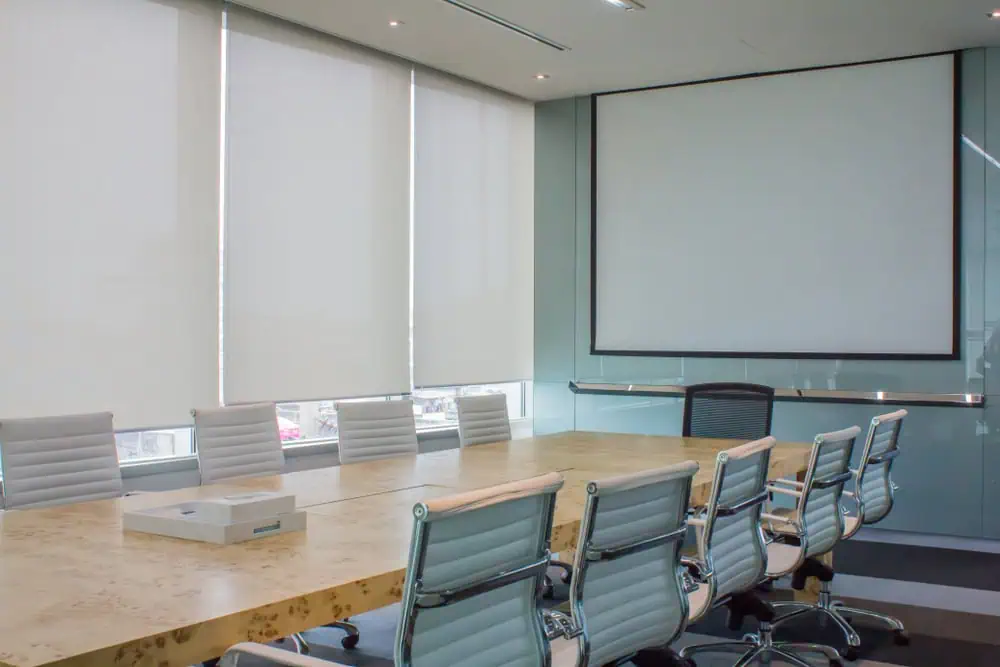
Blackout shades have a reputation as a bedroom product, and they are genuinely excellent for that application — especially in Tarrant County, where east-facing bedrooms get hit with early morning sun and west-facing rooms absorb heat from roughly 2 PM through sunset. If your bedroom runs warm at night or the sun wakes you up before you’re ready, a properly fitted custom blackout shade makes a meaningful difference.
But the bedroom framing undersells what blackout and room-darkening treatments do for the rest of the house. A west-facing living room in Fort Worth or Arlington can become genuinely uncomfortable during the hours of peak afternoon sun — even with A/C running. The issue isn’t just brightness; it’s radiant heat coming through the glass and warming the room from the inside. A custom blackout shade or high-opacity room-darkening cellular shade on those windows cuts that heat load directly.
The “custom” part matters more than it might seem. Off-the-shelf blackout blinds are cut to standard sizes, which means they almost never fit a window frame precisely. Light — and heat — comes in around the edges. For a blackout shade to actually block light and slow heat transfer, it needs to be measured and manufactured to the exact dimensions of your window. This is especially true for older homes in established Tarrant County neighborhoods where window dimensions don’t always match standard sizes.
Custom blackout blinds and custom cellular blackout shades are also more durable in the Texas climate. The UV index in the DFW area regularly hits Very High to Extreme levels during summer months, and cheaper materials degrade quickly — fading, warping, or losing their opacity within a year or two. Materials selected specifically for Texas UV exposure hold up through multiple summers without losing their performance characteristics.
Here’s a DOE finding that doesn’t get enough attention: 75% of residential window coverings stay in the same position every day. That means most homeowners who invested in energy-efficient shades aren’t actually getting the energy benefit — because the shades are either always open or always closed, regardless of what the sun is doing.
Motorized and automatic blackout shades solve this problem by removing the behavior requirement entirely. With a programmed schedule, shades can close automatically during peak heat hours — say, 1 PM to 6 PM on west-facing windows — and open again in the evening when the sun drops. The energy efficiency stops being something you have to remember and becomes something that just happens.
This is the strongest practical argument for motorization beyond convenience. Automated scheduling turns a passive product into an active energy management tool. For homes in Tarrant County with significant west-facing window exposure, the difference between shades that are always open and shades that close during the hottest five hours of the day is measurable on a monthly electricity bill.
Electric blackout blinds and automatic blackout blinds that integrate with smart home systems — including Alexa, Google Home, and Apple HomeKit — allow you to control shading from your phone, set schedules, or tie shade position to temperature triggers. For homeowners who travel frequently or have irregular schedules, this removes the “I forgot to close the shades before I left” problem entirely.
Top-down bottom-up cellular shades with motorized operation are worth mentioning here as well. This configuration lets you lower the top of the shade from above while keeping the bottom raised — giving you privacy at eye level while still allowing natural light in from the upper portion of the window. Motorized top-down bottom-up systems let you adjust this balance automatically, which is particularly useful for rooms where you want light control without sacrificing the view.
The upfront cost of motorization is real. But when you account for the energy savings from actually using your shades as designed — rather than leaving them in the same position indefinitely — the math shifts considerably.
The core takeaway is this: Tarrant County’s climate — 104 days above 90°F, intense afternoon UV, a cooling season that runs from May through October — makes energy-efficient window treatments a different calculation than anywhere in the northern half of the country. Double cell cellular shades, properly fitted and custom-measured, deliver real insulating performance. Blackout and room-darkening options address both light and heat in the rooms that need it most. And motorized systems make sure the energy efficiency you paid for actually happens, automatically.
Generic buying guides don’t account for the specific demands of a North Texas summer. The right product for a home in Mansfield, Keller, or Fort Worth isn’t the same as the right product for a home in Minneapolis — and it shouldn’t be treated that way.
If you’re ready to stop guessing and get a real answer for your specific windows, we at A Plus Shutters & Shades offer free in-home consultations across Tarrant County. We bring the samples to you, measure every window ourselves, and handle installation with the same team that did the consultation — no handoffs, no surprises.
—
FREQUENTLY ASKED QUESTIONS
Article details:
Share:
Continue learning: