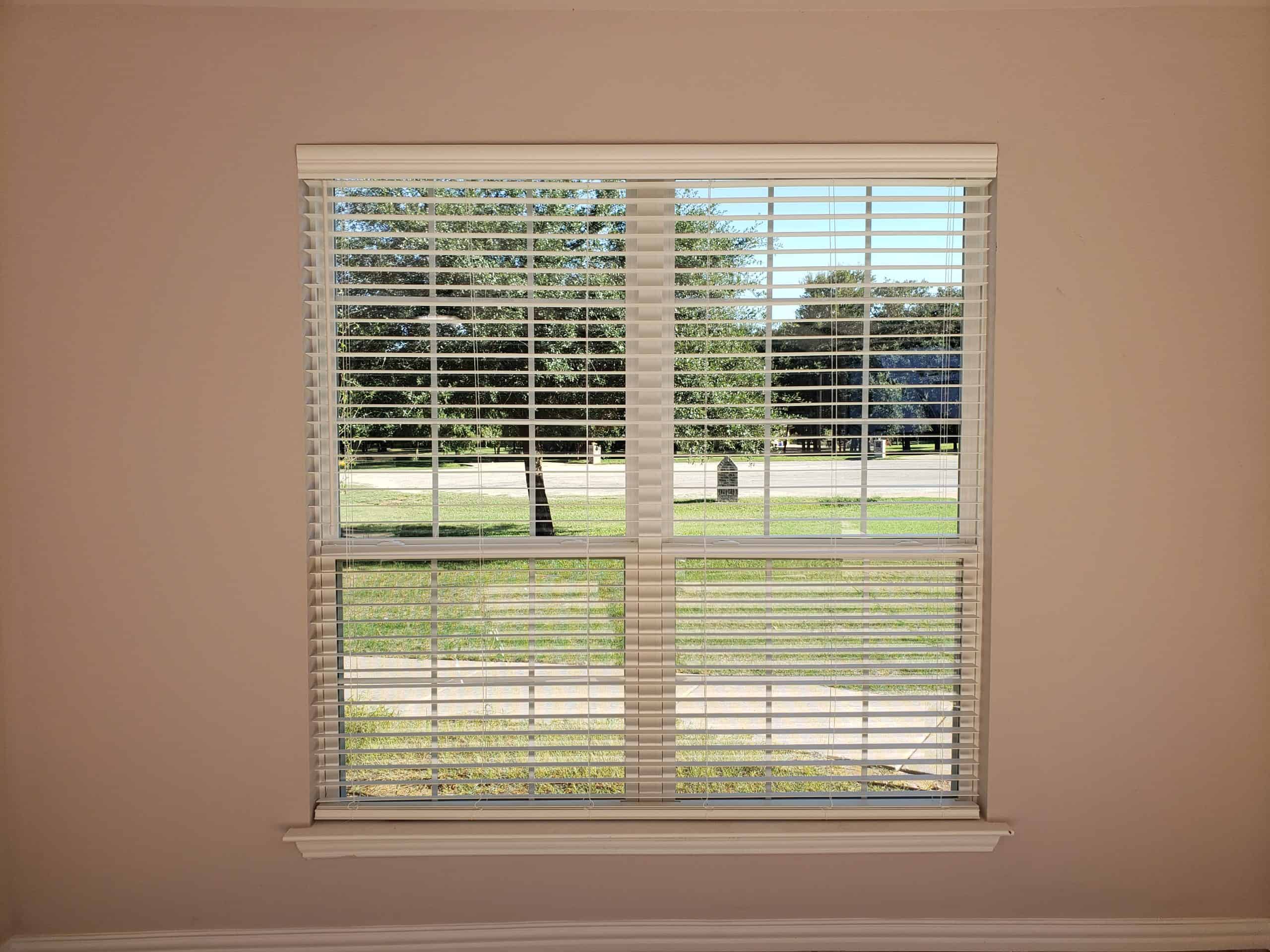
Not sure whether single or double cell shades are worth the upgrade? Here's a straight answer built for Tarrant County's climate — not a northern one.
Share:
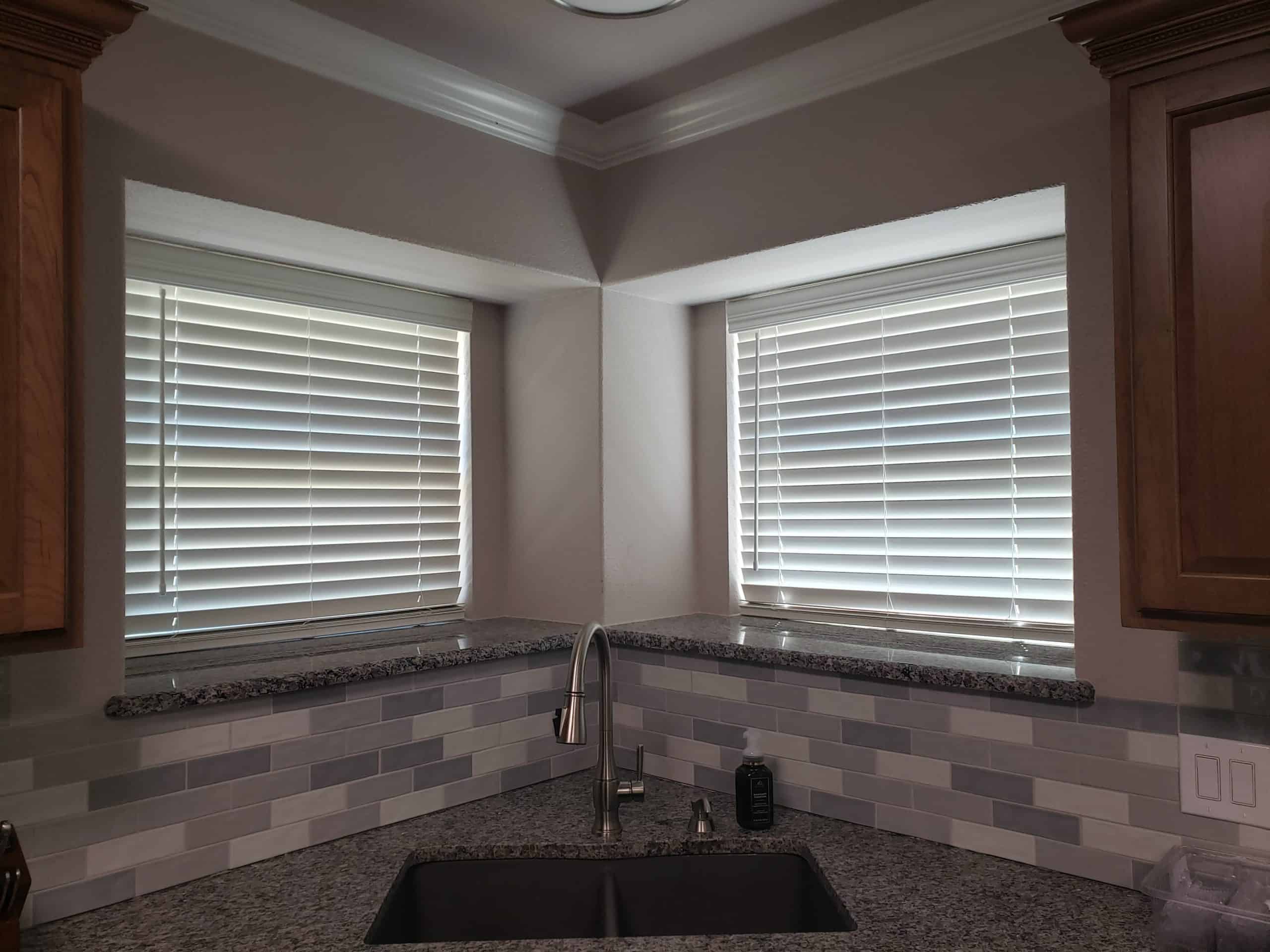
You’ve done enough research to know that cellular shades are the right move. Now you’re stuck on the part nobody explains clearly: does the double cell option actually justify the extra cost, or is it just an upsell dressed up in technical language?
That’s a fair question — and it deserves a straight answer. Not a generic one pulled from a buyer’s guide written for Minnesota winters, but one that accounts for what Tarrant County summers actually feel like. We’re talking about 37-plus days above 100°F, west-facing rooms that become unusable by 3 PM, and an air conditioner that doesn’t get a real break until October. The stakes here are different, and the answer should reflect that.
Cellular shades — also called honeycomb shades, though both names describe the exact same product — get their insulating power from pockets of trapped air built into the shade itself. When you look at one from the side, you’ll see hollow cells running horizontally across the fabric. Those cells hold still air, and still air is a surprisingly effective insulator.
The physics behind it are simple: a three-quarter-inch pocket of air has an R-value of roughly 0.87. Stack enough of those pockets together and you’ve created a meaningful thermal barrier between your window and your room. That’s not a marketing claim — it’s the same principle used in insulated walls and double-pane glass.
A standard double-pane window sits at around R-1.8 on its own. Add a properly fitted cellular shade and you can push that closer to R-4.0 or higher, depending on the configuration you choose. That’s where the single vs. double cell question comes in.

The difference is exactly what it sounds like. A single cell shade has one layer of honeycomb cells. A double cell shade has two layers stacked together, which means more trapped air and a higher R-value. Single cell shades typically land somewhere between R-2.0 and R-3.5. Double cell shades push that range up to R-3.5 and beyond, with some configurations reaching R-5.0 or higher.
That gap matters more in some situations than others. For a north-facing bedroom in a newer Fort Worth build where the window gets indirect light most of the day, single cell shades do the job well and cost less. For a west-facing living room in a home in Mansfield or Keller — one that takes a direct hit from afternoon sun between 2 and 6 PM — double cell is the specification that actually solves the problem, not just softens it.
The U.S. Department of Energy has confirmed that tightly installed cellular shades can reduce window heat loss by up to 40% and cut solar heat gain by up to 60%. Researchers at Oak Ridge National Laboratory measured up to 24% heating energy savings in rooms equipped with cellular shades compared to standard venetian blinds. Those numbers come from independent federal research, not a product brochure.
For a Tarrant County household spending around $1,200 per year on energy, even a 10% reduction equals $120 saved annually. Double cell shades, which can reduce cooling costs by up to 15% on their own, push those savings further — and in a climate where you’re running the AC from May through October, the payback timeline is shorter than it would be anywhere north of Dallas.
One thing worth knowing: single cell shades are lighter, stack more compactly when raised, and are a reasonable choice for windows where thermal performance isn’t the primary concern. Double cell adds a bit more bulk when stacked but delivers noticeably better insulation. Neither is universally right — the window, its orientation, and the room it’s in should drive the decision.
Here’s where most comparison guides miss the mark. They’re written around winter heat loss — how well a shade keeps warm air inside when it’s cold outside. That’s a real concern in plenty of markets, but it’s not the primary problem for homeowners in Tarrant County.
The bigger challenge here is summer heat gain. Up to 76% of sunlight that hits your windows converts into heat inside your home. Standard blinds and thin curtains don’t stop that — they just filter the light. Cellular shades work differently because they create an actual air barrier between the glass and the room, slowing the transfer of heat before it has a chance to build up inside.
For south- and west-facing windows — which take the most direct sun during the hottest part of a Tarrant County afternoon — double cell shades are consistently the better choice. The extra layer of trapped air gives the shade more thermal resistance to work with, which matters when the glass on the other side is absorbing intense direct sun for several hours straight. In rooms that face north or east, or in spaces that don’t get much direct sun exposure, single cell shades often perform well enough and cost less to install.
It’s also worth thinking about the full picture. Cellular shades work best when they’re fitted precisely — gaps at the sides of a loosely installed shade create a convective loop that bypasses the thermal barrier almost entirely, regardless of whether you chose single or double cell. The product configuration matters, but so does the quality of the measurement and installation. A shade that fits correctly will always outperform a better shade that doesn’t.
There’s also the option of pairing motorized cellular shades with a scheduling system — closing west-facing shades automatically before the afternoon heat peaks, then reopening them in the evening. That kind of automation removes the human variable entirely and can amplify the energy savings beyond what the shade achieves on its own. It’s worth considering if you’re already leaning toward the higher-performance option.
Most of the questions we hear about cellular shades come down to a few recurring themes: whether the performance difference is real, whether the cost difference is worth it, and whether there are any financial incentives worth knowing about before buying. These are good questions, and they deserve direct answers.
The following covers the ones that come up most often — including a few that buyers usually only think to ask after they’ve already made a decision.

**Are cellular shades and honeycomb shades the same thing?**
Yes. Hunter Douglas trademarked the name “Honeycomb Shades” because of how the cells look when viewed from the side. The rest of the industry uses “cellular shades.” Both terms describe the same air-pocket construction, the same R-value range, and the same energy performance. If you’ve been searching both terms and getting different results, that’s why — you’re looking at the same product with two different names.
**Do cellular shades actually save energy, or is that marketing?**
The savings are real and they’re documented by sources that have no stake in selling window treatments. The U.S. Department of Energy, Oak Ridge National Laboratory, and Pacific Northwest National Laboratory have all published research on cellular shade performance. Field studies from DOE National Labs found up to 20% savings on heating energy and up to 15% on total energy for homes with properly installed cellular shades. Those figures are based on real homes, not controlled lab conditions. In Tarrant County, where cooling costs dominate your energy bill, these shades pay for themselves faster than they would in most other regions.
**Is double cell always the better choice?**
Not always. Double cell delivers better thermal performance, which makes it the right call for high-heat-gain windows — particularly south- and west-facing windows in Tarrant County homes where afternoon sun is a persistent problem. But for rooms that don’t face direct sun, or for homeowners working within a tighter budget, single cell shades provide meaningful insulation at a lower cost. The honest answer is that it depends on the window, and we’ll tell you that before you order.
**Do cellular shades qualify for any tax credits?**
Possibly. The Section 25C tax credit under the Inflation Reduction Act allows homeowners to claim up to $1,200 per year for qualifying energy-efficient home improvements. Certain cellular shades that meet EPA energy performance criteria may be eligible. This is worth asking about before you purchase — it’s a detail most buyers don’t find out about until after the fact.
**Will these hold up in Tarrant County heat?**
This is a legitimate concern, especially if you’ve had cheap blinds warp, fade, or fall apart after one or two summers in the area. Quality cellular shades are built to last — typically 10 to 15 years with basic care — but the key word is quality. Products designed for the Texas climate, installed correctly, perform very differently from whatever ships in a box from an online retailer. The heat here isn’t a footnote; it’s the environment the product has to live in every day.
**Does installation really matter that much?**
More than most people realize. A cellular shade that isn’t fitted precisely loses most of its thermal benefit. When there are gaps along the sides of the shade, warm air from the window surface circulates into the room in a convective loop — the shade is present, but the insulating effect is largely bypassed. Proper inside mount depth, correct bracket placement, and accurate measurements before ordering are what make the R-value real in practice rather than just on a spec sheet.
This is one area where working with someone who has a construction background makes a meaningful difference. Understanding how a window frame is built — how trim sits, where the mounting surface actually is, how much depth is available for an inside mount — changes the quality of the installation. It’s not something most window treatment retailers think about, but it’s something we do on every job.
**What about light filtering versus room darkening?**
Cellular shades come in light filtering, room darkening, and blackout fabric options. The cell configuration — single or double — is separate from the opacity of the fabric. You can have a double cell shade in a light filtering fabric for a living room that gets afternoon sun, or a single cell shade in blackout fabric for a bedroom. The two decisions are independent of each other, and both matter. We’ll walk you through the combination that makes sense for each room before anything is ordered.
**Are they hard to clean?**
Routine dusting or a pass with a vacuum on a low setting using an upholstery attachment is usually all they need. Avoid submerging them in water regardless of the fabric type — it can damage the cell structure and affect how the shade hangs. With basic maintenance, they stay looking clean for years.
The short version: single cell shades are a solid, cost-effective choice for windows that don’t face direct sun or don’t experience significant heat gain. Double cell shades are the better specification for south- and west-facing windows — the ones that take the brunt of a Tarrant County summer and make rooms uncomfortable by mid-afternoon. Most homes need a mix of both, and the right answer depends on the window, not a blanket rule.
What matters as much as the configuration is how well the shades are measured and installed. A precisely fitted double cell shade outperforms a loosely installed one every time, regardless of what the spec sheet says.
If you’re still working through the decision, a free in-home consultation is the most straightforward way to get a clear answer for your specific windows, rooms, and budget. A Plus Shutters & Shades serves homeowners throughout Tarrant County — from established neighborhoods in Fort Worth to newer builds in Arlington, Mansfield, Burleson, and Keller — and we’re happy to walk you through the options without the pressure of a sales pitch.
Article details:
Share:
Continue learning: