Everything you need to know about motorized blackout shades — how they work, what they cost, and whether they're right for your home.
Share:
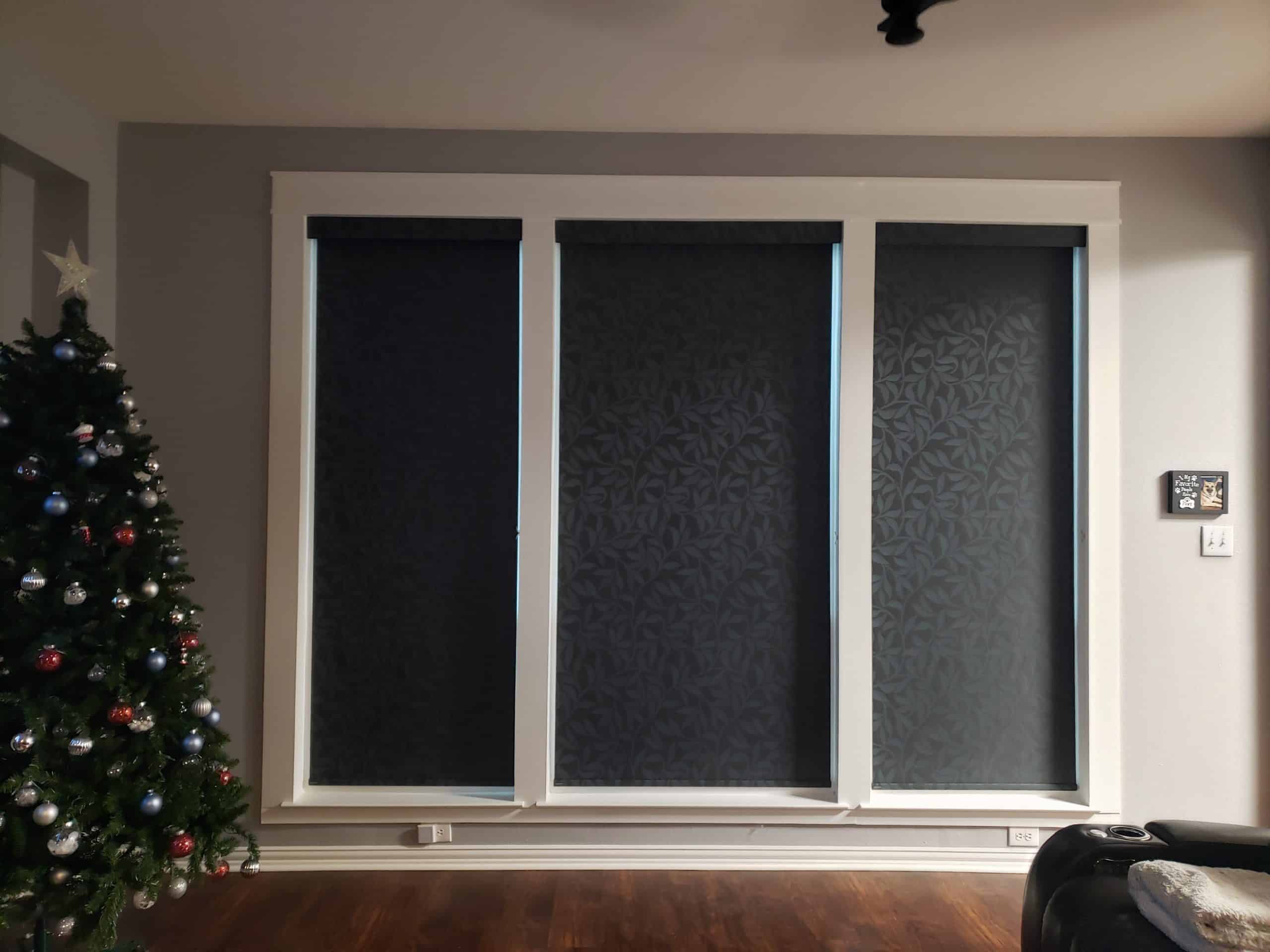
There’s a specific kind of frustration that comes from window treatments that don’t quite do their job. The shade that lets in a strip of light right at eye level. The blinds you have to physically reach across the couch to close. The bedroom that never gets fully dark, no matter what you try.
Motorized blackout shades solve all of that — and in Tarrant County, where the sun is aggressive and the summers are long, they solve a few other problems too. This guide covers how they work, how they connect to your smart home, and what to think about before you invest.
The basic concept is simple: a small tubular motor sits inside the roller tube of your shade, replacing the manual mechanism entirely. You control it with a remote, a wall switch, a smartphone app, or your voice. The shade moves to a precise position every single time — no half-open gaps, no crooked hang, no guessing.
What’s changed in recent years is how seamlessly this technology fits into a regular home. Battery-powered motors mean no electrician is required for most installations. Rechargeable systems cut down on the cost and hassle of replacement batteries. And the programming options have become genuinely intuitive — not the kind of “smart” that requires a manual and a weekend to figure out.
One of the most common questions we hear is whether motorized shades require major work to install — tearing into walls, running new wiring, hiring an electrician separately. For most homes in Tarrant County, the answer is no. Battery-powered and rechargeable systems mount the same way a standard roller shade does. The motor is self-contained inside the tube, so the installation looks clean from the outside and doesn’t touch your walls beyond the standard bracket hardware.
Hardwired systems are a different story. If you want a fully wired setup — which offers the most reliable performance and the cleanest aesthetic since there are no battery compartments to access — you’ll need a power source at each window. In new construction in communities like Haslet or North Fort Worth, where builders are increasingly pre-wiring for smart home features, this is often already planned for. In older homes in Arlington or central Fort Worth, it may require coordinating with an electrician for the power supply portion before the shades go in.
What matters most in any motorized installation is precision. The shade needs to be mounted level, the brackets need to be set at the right depth, and the motor needs to be programmed to stop at exactly the right point — fully open, fully closed, and any positions in between. This is where construction experience makes a real difference. Hanging a motorized shade is not difficult. Hanging it so that it seals the window properly, operates quietly, and holds up to daily use for years — that takes more than a product catalog and a drill.
We come from a construction background, not a retail one, and that distinction shows up in the details. The mount is solid. The alignment is right. And when we leave, the system works the way it’s supposed to.
Not all motorized blackout shades perform equally in a North Texas climate. The combination of intense UV exposure, summer temperatures that regularly exceed 100°F, and the occasional severe weather event creates conditions that reveal the difference between quality materials and cheaper alternatives fairly quickly.
Fabric is the first thing to evaluate. Blackout fabrics are rated by their opacity — true blackout means the fabric itself blocks essentially all light when properly installed. But fabric quality also affects how well it holds up over time. Cheaper materials can delaminate, sag, or fade within a few years of daily sun exposure. In a home with south- or west-facing windows in Mansfield or Southlake, that degradation happens faster than you’d expect.
The motor’s operating range matters too. Standard tubular motors are rated to function in ambient temperatures up to 110°F. In a west-facing room in Arlington during July, that’s not a theoretical number — it’s a real condition. Motors that aren’t rated for it can fail or become sluggish, which is exactly the kind of thing you don’t want to find out after installation.
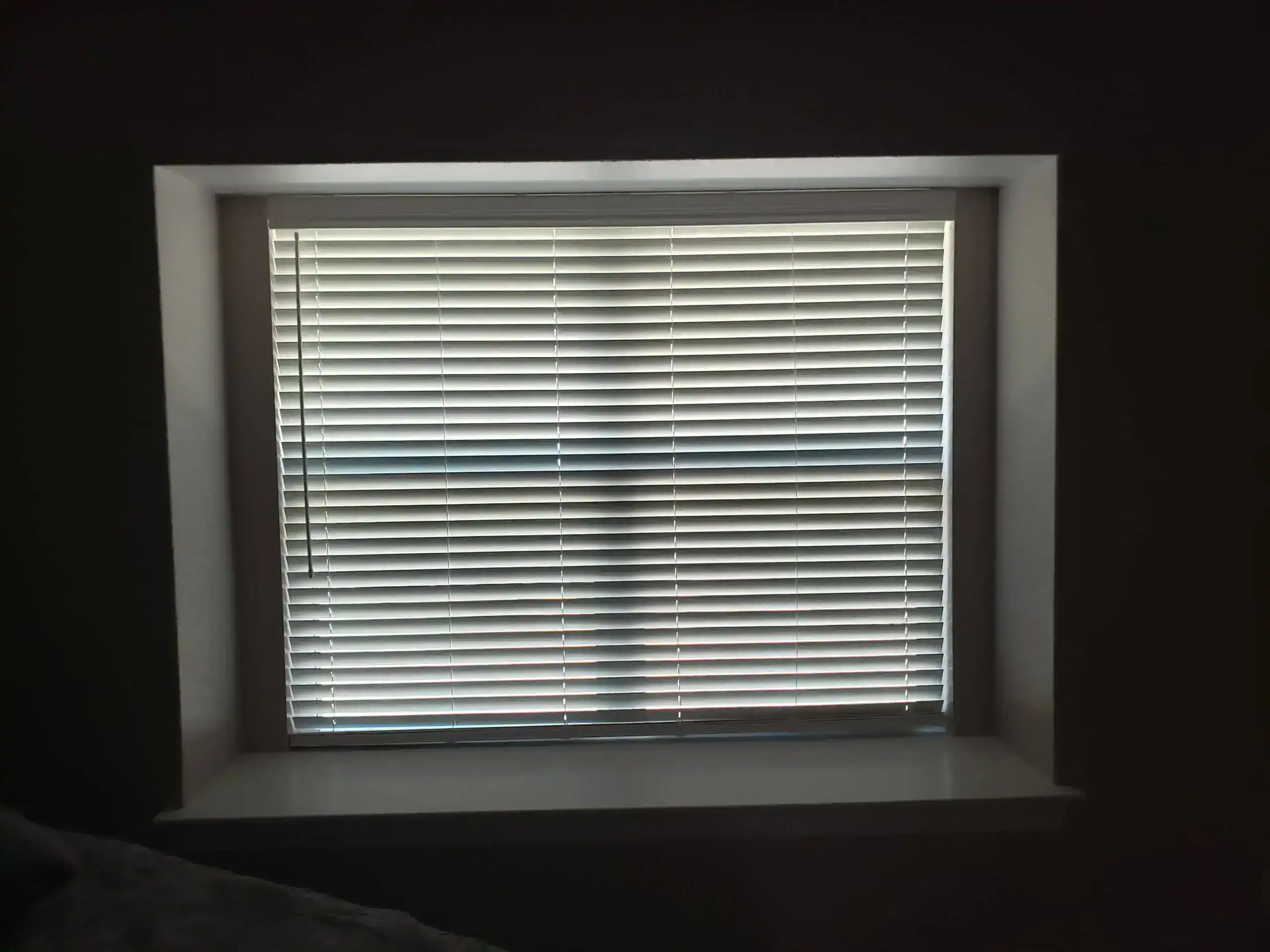
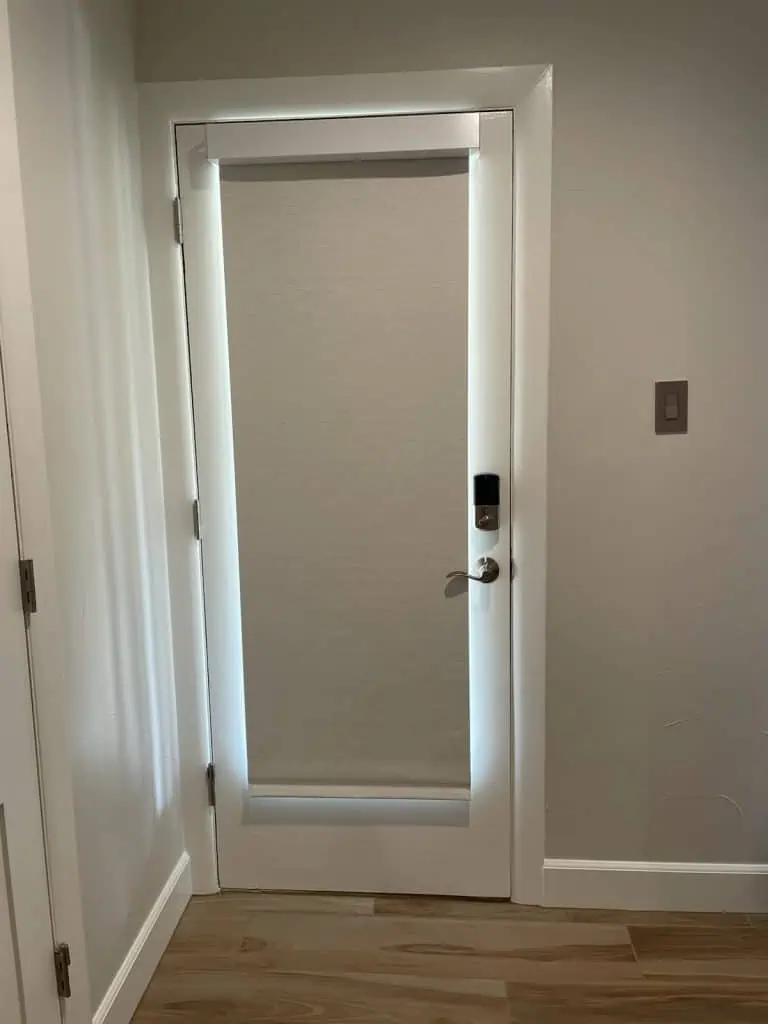
Beyond materials and motors, the mounting system determines whether you get true blackout performance or just “pretty dark.” Light gaps at the sides and bottom of a shade are the most common complaint from homeowners who bought motorized shades online and installed them without professional guidance. Side channels and proper bracket placement close those gaps. It’s a detail that’s easy to overlook when you’re shopping by price, and it’s the difference between a shade that works and one that almost works.
The products we install are manufactured in Denton, TX — built for this climate, not shipped from a warehouse designed for somewhere with mild summers. That matters when you’re asking window treatments to perform year after year in Tarrant County heat.
Manual blinds and shades work fine — until they don’t. The cord that frays. The shade that won’t stay at the position you set. The high window in the living room that you stopped trying to reach six months ago. None of these are catastrophic problems, but they add up, and they’re the reason most homeowners who switch to motorized systems don’t go back.
The practical difference comes down to consistency and convenience. A motorized system does exactly what you tell it to do, every time, without you being in the room. That consistency is what makes the energy savings and light control actually work — because a shade you forget to close doesn’t protect anything.
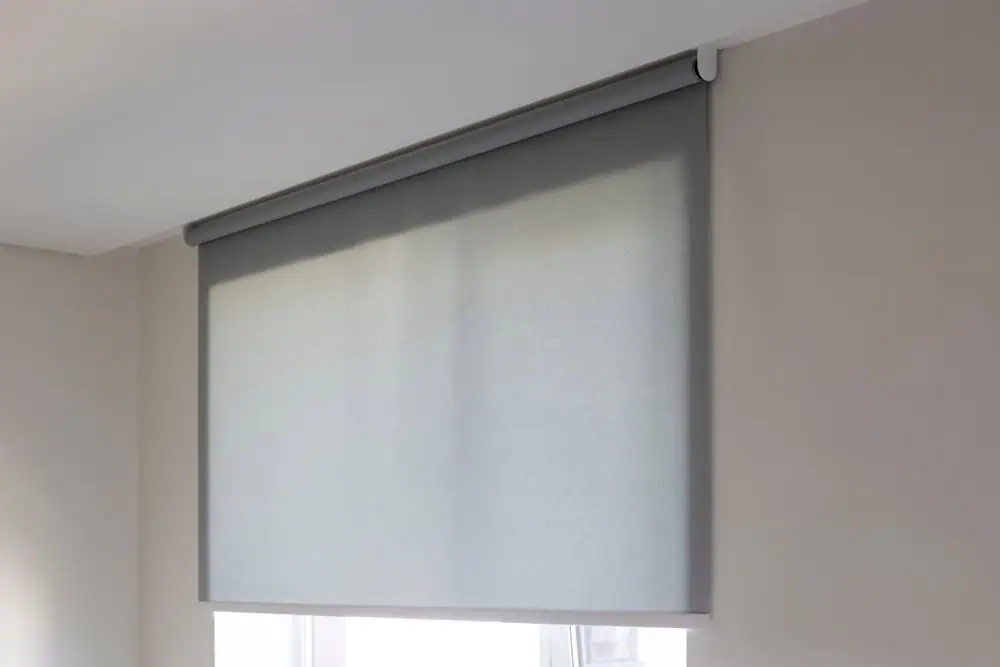
This is one of the most common questions we get, and the honest answer is: sometimes yes, sometimes no, and it depends on what you have. Many existing roller shade systems can be upgraded by replacing the manual roller tube with a motorized one. If the brackets are compatible and the fabric is in good condition, a retrofit can save you the cost of replacing the entire shade — you’re essentially just upgrading the mechanism.
Where retrofits get complicated is with older or non-standard hardware, custom sizes, or shades where the fabric itself has worn or faded. In those cases, a full replacement often makes more sense, both for performance and aesthetics. The good news is that a proper in-home assessment can answer this question quickly. Measurements, hardware inspection, and a conversation about what you’re trying to accomplish will tell you whether a retrofit is viable or whether starting fresh is the better call.
This is an area where our construction background is genuinely useful. We’re not just looking at whether a motor fits — we’re looking at the wall, the window frame, the bracket depth, and the load-bearing capacity of the mounting surface. In older Fort Worth homes with plaster walls or non-standard framing, those details matter. In newer construction in Crowley or Keller where the framing is predictable and the windows are standard, a retrofit is usually straightforward.
The short version: don’t assume you need to replace everything before you’ve had someone look at what you already have. A free in-home consultation is the fastest way to find out what your options actually are.
Smart home integration is where motorized blackout shades go from convenient to genuinely useful. When your shades are connected to the platform you already use — whether that’s Alexa, Google Home, or Apple HomeKit — you can build automations that run without any input from you at all.
The most practical setup for a Tarrant County home is a schedule tied to the sun and your daily routine. Shades open in the morning when you want natural light, close automatically at noon or 1 PM before the afternoon heat peaks, reopen in the evening once temperatures drop, and close again at bedtime. You set it once. After that, it just happens. Your west-facing living room stays cooler during the hours it would otherwise act like a greenhouse, your HVAC isn’t fighting solar heat gain all afternoon, and you don’t have to think about any of it.
Voice control adds another layer of convenience — “close the bedroom shades” before you fall asleep, or “open the living room shades” without getting up. For rooms with high or hard-to-reach windows, which are increasingly common in the open-plan homes being built across North Fort Worth and Mansfield, this goes from a nice-to-have to genuinely practical.
One thing worth clarifying: smart integration does not require a complicated setup or a dedicated hub in most cases. Modern motorized shade systems pair directly to your home’s Wi-Fi and connect to your existing smart home app in a few minutes. The complexity that people imagine — proprietary bridges, incompatible protocols, hours of troubleshooting — has largely been engineered out of current systems. What remains is a simple pairing process that we walk through with you during installation so you leave knowing exactly how to use it.
The energy management side of smart shades is worth taking seriously in Tarrant County specifically. Summer electric bills here are not abstract — they’re a real monthly expense that homeowners feel. Shades that automatically close during peak sun hours reduce solar heat gain through your windows, which directly reduces the load on your air conditioning system. The savings vary depending on window orientation, home size, and how your current HVAC is configured, but south- and west-facing rooms see the most benefit, and those are exactly the rooms where the afternoon sun is most punishing.
UV protection is a related benefit that’s easy to underestimate until you’ve replaced a hardwood floor or a leather sofa. North Texas’s year-round sun intensity accelerates fading on flooring, upholstery, and artwork. Blackout shades block UV entirely when closed, and even light-filtering shades in a dual-shade configuration can reduce UV transmission significantly. If you have expensive flooring or furniture in sun-exposed rooms, this is a real return on the investment — not a marketing talking point.
Motorized blackout shades aren’t complicated, but they’re also not a purchase where the details don’t matter. The motor type, the fabric quality, the mounting precision, and the smart home setup all affect how well the system performs — and how long it holds up in a climate like Tarrant County’s.
What makes the difference is having someone install them who actually knows what they’re doing. Not just someone who sells window treatments, but someone who understands the construction side of the job: the wall, the frame, the hardware, and the way all of it has to work together for the finished product to perform the way it should.
If you’re in Fort Worth, Arlington, Mansfield, Southlake, Keller, or anywhere else in Tarrant County and you want a straight answer about what motorized blackout shades would look like in your home — what they’d cost, whether a retrofit makes sense, and how they’d connect to your existing setup — we offer free in-home consultations with no pressure and no hidden fees. It’s the fastest way to go from questions to a clear plan.
Article details:
Share:
Continue learning: