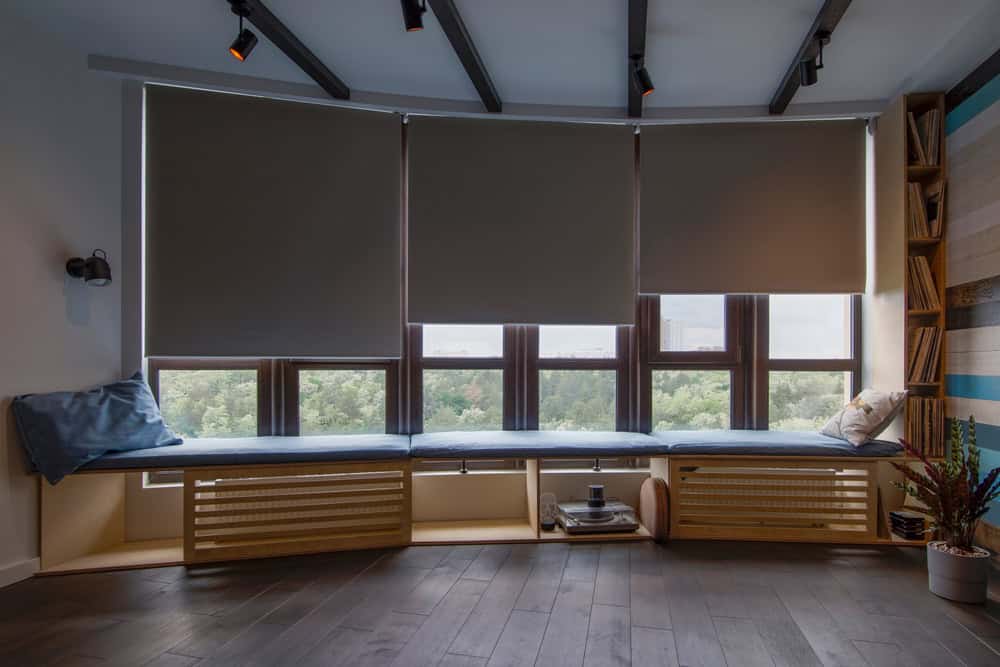
Texas summers don't forgive unprotected windows. Here's how remote control window shades help Tarrant County homeowners stay cooler and spend less.
Share:

If you’ve ever walked into your living room at 4 p.m. in July and felt like you’d opened an oven door, you already know the problem. The AC is running. The thermostat is set. And somehow the west side of your house is still unbearable. The issue usually isn’t your HVAC system — it’s your windows. Unshaded glass in a Tarrant County summer lets in heat faster than any cooling system can remove it. Remote control window shades, the right kind installed in the right places, change that equation. Here’s how to think through your options.
Not all window treatments block heat the same way, and that distinction matters a lot when you’re dealing with Fort Worth summers that regularly push past 100°F. Decorative curtains and standard fabric blinds slow light — they don’t meaningfully stop solar heat gain. To actually reduce the temperature inside your home, you need a treatment designed around thermal performance, not just appearance.
There are three main options worth understanding: solar shades, cellular shades, and exterior roller shades. Each works differently, and the right choice depends on where the window faces, what you’re trying to accomplish, and how much heat is entering that particular space.

Solar shades are made from a mesh fabric with a specific openness factor — typically ranging from 1% to 14%. The lower the number, the less light and heat passes through. A 1% openness fabric blocks significantly more UV and solar radiation than a 10% fabric, though it also reduces your view to the outside.
For south- and west-facing windows in Tarrant County, where afternoon sun hits hardest, a 3% to 5% openness solar shade is usually the practical sweet spot: meaningful heat reduction without turning the room into a cave. Solar shades work by intercepting UV radiation before it converts to heat inside the room. You’ll still have daylight, but they cut the intensity of that direct afternoon sun that turns a living room couch into something you can’t sit on comfortably.
Cellular shades, sometimes called honeycomb shades, work on a different principle. Instead of filtering radiation, they trap air in their honeycomb-shaped cells, creating an insulating layer between the glass and the room. They’re better suited for winter heat retention — keeping warmth in — than for blocking summer solar gain.
For rooms that face north or east, where direct sun isn’t the primary problem, cellular shades are an excellent choice for year-round comfort. The key takeaway: if you’re fighting afternoon heat through west-facing windows in Arlington, Mansfield, or Fort Worth, solar shades are the more targeted tool. If you’re trying to hold heat in during cooler months or manage a room that doesn’t get direct sun, cellular shades earn their place.
Here’s something that surprises a lot of homeowners: interior shades — no matter how well-made — are working with a fundamental disadvantage. By the time sunlight passes through your glass and hits an interior shade, a significant portion of that solar energy has already entered your home. The glass itself traps infrared heat. An interior shade then has to slow the re-radiation of that heat into the room, but it can’t undo what’s already come through.
Exterior roller shades intercept solar radiation before it ever reaches the glass. That’s not a minor distinction — it’s a fundamentally more effective mechanism for heat control. Studies on smart shading systems have documented indoor heat gain reductions of around 22% with properly deployed exterior shading, and for Tarrant County patios specifically, exterior roller shades can drop surface temperatures by 10 to 20 degrees depending on sun exposure and fabric selection.
For homes across Tarrant County — many of which were built in the 1980s through 2000s with large window footprints, open floor plans, and west-facing living spaces — exterior roller shades represent the highest-impact single upgrade you can make for summer comfort. They’re not widely offered by every local window treatment company, which is part of why so many homeowners don’t know they’re an option. We install both interior and exterior roller shades, which gives us the flexibility to recommend what actually works for your specific situation rather than defaulting to what most companies happen to carry.
The tradeoff with exterior shades is that they require appropriate mounting space and should be motorized — manually operating an exterior shade from inside the house isn’t practical. That’s where remote control and scheduling come in, and it’s also why the two features tend to go together naturally.
The most common reason window treatments underperform isn’t the product — it’s that people forget to use them. You leave for work at 7 a.m. when it’s still 75°F and pleasant. By 2 p.m., the west sun is hammering your living room, but you’re not home to do anything about it. You come back to a house that’s been absorbing heat for five hours and an AC system that’s been running nonstop trying to compensate.
Automatic shades for windows solve this by removing the human variable entirely. You set a schedule once — close at noon on west-facing windows, open at 6 p.m. when the sun drops — and the shades handle it every day without any further input from you. No reminders. No app check-ins. No walking room to room.

If you already have a smart thermostat, smart lighting, or a voice assistant like Alexa or Google Home, adding motorized shades to that ecosystem is more straightforward than most people expect. The platform we use — Hunter Douglas PowerView — integrates natively with Alexa, Google Home, and Apple HomeKit, which means your shades can be controlled by voice, through the app you already use, or as part of an automated scene that runs on its own.
A practical example: you can set a “good morning” scene that opens your east-facing bedroom shades at 7 a.m. and a “beat the heat” scene that closes your west-facing living room shades at 12:30 p.m. automatically. Neither requires you to touch anything. If you’re traveling and realize you forgot to adjust something, you can do it from your phone wherever you are.
One concern we hear often is whether motorized shades require an electrician. For most installations, the answer is no. Battery-operated and rechargeable motor options handle the majority of residential applications without any hardwiring. Solar-powered motors are also available, which are particularly well-suited for Tarrant County given the amount of sunlight the area receives year-round.
The installation process is typically no more involved than a standard shade installation — the difference is in the motor inside the tube, not the complexity of the mounting. The other common question is reliability. Cheap motorized blinds from big-box stores fail — that’s a real experience many homeowners have had, and it’s a fair reason to be skeptical. The motors used in professional-grade systems like PowerView are a different category of product. Motor warranties in this tier typically run five years, and the motors themselves often last a decade or more with normal use. The gap between a $60 motorized shade from a warehouse and a professionally installed PowerView system is significant, and it shows up in daily performance over time.
If you have a sliding glass door opening to a backyard patio — and in Tarrant County, most homes built in the last 40 years do — that door is likely the single largest source of solar heat gain in your home. A standard six- or eight-foot sliding glass door has two to three times the glass area of a typical window, often faces south or west toward the backyard, and has no architectural overhang to provide shade during peak afternoon hours.
Standard blinds for sliding glass doors are notoriously awkward. They’re difficult to open and close smoothly, they tend to bunch or gap, and most people leave them in one fixed position because adjusting them is more trouble than it’s worth. That fixed position is usually wrong — either blocking the door when you want to use it or leaving it fully open when the sun is at its worst angle.
Motorized blinds for sliding glass doors eliminate that friction entirely. A single tap on a remote or a voice command opens or closes the treatment fully, partially, or to any position you choose. Better yet, a scheduled automation can close the shades at the time of day when the afternoon sun hits that door hardest and open them again in the evening — without you ever having to think about it.
For homes in Fort Worth, Arlington, Mansfield, and the surrounding Tarrant County communities, this is often the highest-return single location to address. The glass area is large, the solar exposure is direct, and the manual operation of existing treatments is a daily frustration. Electric shades for your patio also pair naturally with motorized blinds for sliding glass doors — if you’re addressing the door, you’re one step away from addressing the outdoor space beyond it.
The right window shades don’t just make a room look better — they change how the room actually feels and what it costs to keep it comfortable through a Tarrant County summer. Solar shades cut the intensity of direct afternoon sun. Exterior roller shades intercept heat before it ever reaches the glass. Motorized systems with scheduling handle the adjustments automatically, so your home is managing heat even when you’re not there to think about it.
The products we install are manufactured in Denton, TX — built for this climate, not designed for somewhere with mild summers. And because we handle both interior and exterior roller shades, we can look at your specific situation and recommend what will actually move the needle, not just what happens to be on the shelf.
If you’re in the Fort Worth, Arlington, Mansfield, or Southlake area and want to talk through your options before the summer heat peaks, A Plus Shutters & Shades offers free in-home consultations — no pressure, no pushy sales pitch, just a real look at what your windows need and what it would take to fix them.
Article details:
Share:
Continue learning: