Most Tarrant County homeowners assume their windows are doing the heavy lifting when it comes to UV protection. They're not. Standard glass — even newer double-pane — still lets in enough UV radiation to fade furniture, heat up rooms, and quietly damage interiors over time.
Share:
If you’ve noticed your furniture fading near the windows, or certain rooms becoming unbearable by mid-afternoon, you’re not imagining it. The Texas sun is doing real damage — to your flooring, your upholstery, your energy bill, and depending on where you spend your time, potentially your skin. The frustrating part is that most window treatments sold at big-box stores don’t actually address any of this. They cover the window. That’s about it. This post is about understanding what UV protection actually means for a home in Tarrant County, and which window treatment styles are built to handle what North Texas summers actually throw at them.
Here’s something most people don’t realize: closing your windows doesn’t close the door on UV. Standard single-pane glass blocks roughly 25% of UV rays, which sounds okay until you flip it — that means 75% is still getting through. Double-pane windows do better, blocking somewhere between 40% and 50%, but that still leaves half of the UV radiation entering your home unchecked, every hour the sun is up.
In Tarrant County, the sun is up a lot. Fort Worth averages 229 sunny days a year, and the county sees more than 70 days above 90°F annually. The air conditioning runs from April through October — seven months of sustained UV exposure hitting your floors, your furniture, and anyone sitting near a window, day after day.
UV damage doesn’t announce itself. It builds slowly, and by the time you notice it, a lot of it is already done. Fading is the most visible sign — that bleached strip on an area rug where afternoon light falls, or a couch that looks noticeably lighter on the side facing the window.
Hardwood floors near west-facing windows in older Arlington and Fort Worth homes are especially vulnerable. Refinishing hardwood floors runs upward of $1,800, and that’s before you factor in the disruption of having it done. Unlike a scratch or a stain, UV damage is cumulative and irreversible — you can’t undo what’s already faded.
UV accounts for roughly 40% of interior fading, with visible light contributing about 25% and solar heat another 25%. That means even on a bright but mild day, UV is still doing its work.
There’s also a health dimension that doesn’t get talked about enough. Most residential glass allows between 45% and 75% of UVA rays to pass through. UVA is the wavelength associated with skin aging and long-term skin damage. The Skin Cancer Foundation specifically recommends UV-protective window products for indoor protection. If you work from home, have kids in a sunny playroom, or spend a lot of time near large windows, this isn’t a minor footnote.
West- and south-facing windows are where this hits hardest in Tarrant County. Those are the orientations that catch the worst of the afternoon sun — the sustained, low-angle light that pours in between 2 and 6 PM and turns a perfectly comfortable living room into something you’d rather avoid. If your home has large picture windows or an open-concept layout with a lot of glass facing west or south, you’re dealing with this problem at full intensity.
This is one of the most common misconceptions we run into. A homeowner replaces their windows — spends real money on it — and then wonders why their furniture is still fading six months later. The answer is that window replacement and UV protection are not the same thing.
Even Low-E glass, which is one of the better-performing options for UV reduction, can reduce UV-induced fading by up to 75% compared to standard clear glass. That’s meaningful — but it still leaves 25% of UV entering, and the majority of homes in established Tarrant County neighborhoods, particularly those built before 2000 in areas like south Arlington or older Fort Worth subdivisions, don’t have Low-E glass at all.
Replacing windows is a major investment, and it doesn’t fully solve the problem even when done well. The more targeted solution is treating the glass itself — with a window covering rated for UV blocking, applied at the right openness factor for the room’s orientation and use. That’s where window treatment selection actually matters, and where the difference between a generic store-bought shade and a properly specified product becomes real.
The U.S. Department of Energy estimates that approximately 76% of sunlight falling on standard double-pane windows enters as heat during cooling seasons. In a Tarrant County home running the AC from April through October, that heat gain is working directly against your system every afternoon. The right window treatment doesn’t just protect your furniture — it reduces the load on your HVAC, which shows up on your Oncor bill.
Not all window treatments are equal when it comes to UV protection, and the difference matters more in Texas than almost anywhere else. Window top treatments — valances, cornices, swags — are primarily decorative, designed to cover the hardware at the top of a window and add a finished look. They’re worth understanding, but they’re not where the UV protection work happens. That falls to what’s underneath them.
Here’s how the main treatment types actually stack up, from the most UV-protective to the least, so you can match the right solution to your specific problem.
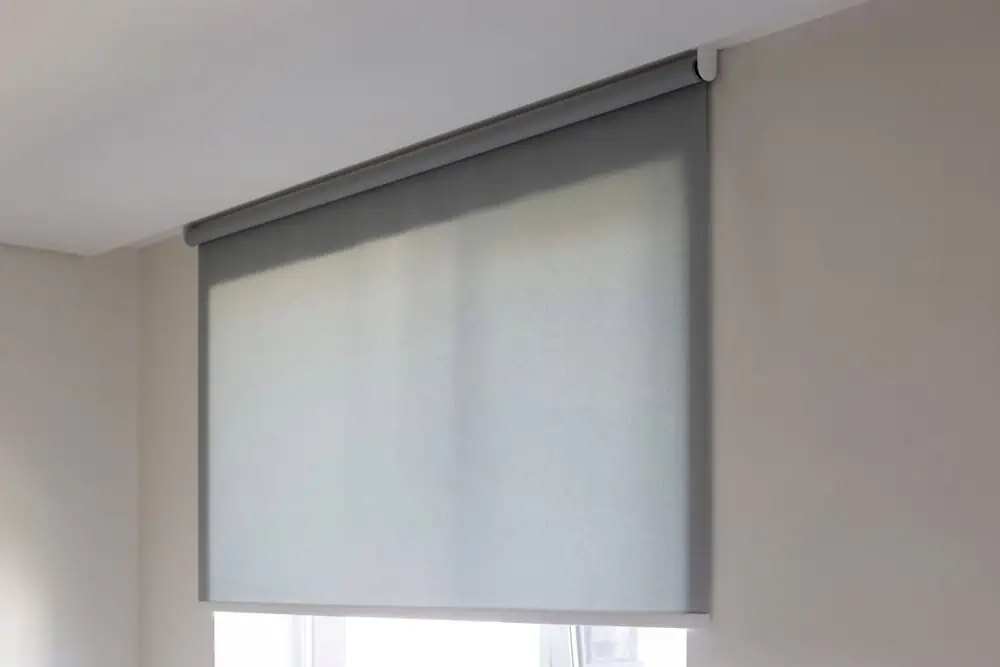
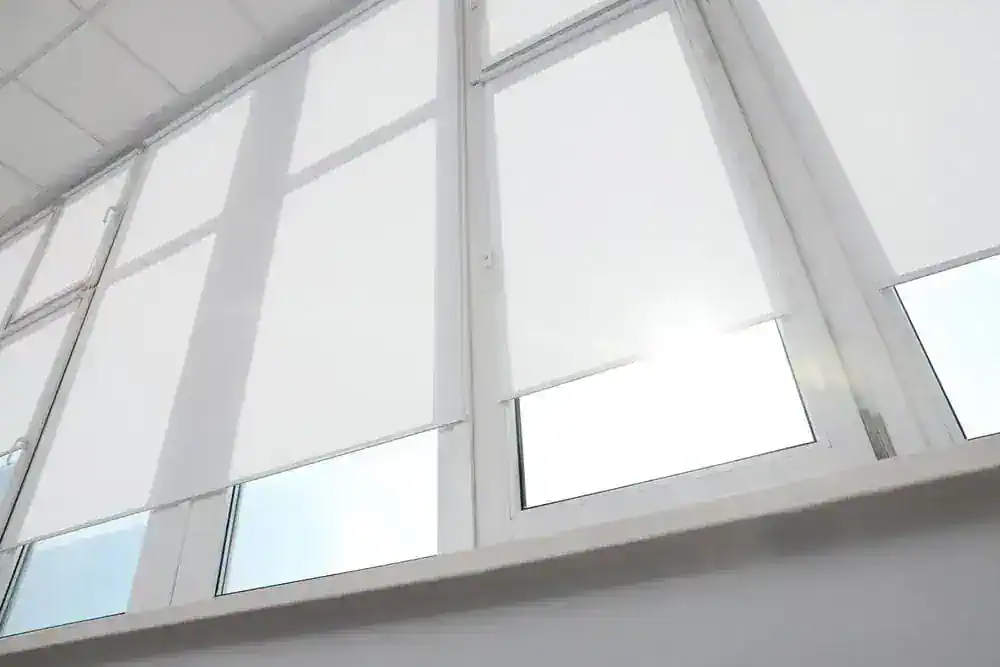
Solar shades are the most effective window treatment for UV blocking, and for good reason. The key variable is something called the openness factor — the percentage of the shade fabric that is open weave versus solid material. A 1% openness factor means 99% of the fabric is blocking light and UV; a 3% shade blocks 97%; a 5% shade blocks approximately 95%.
For west- and south-facing windows in Tarrant County, we typically recommend a 1% to 3% openness factor to get meaningful heat and UV reduction where the sun hits hardest.
The counterintuitive thing about solar shades is that a tighter openness factor doesn’t necessarily mean a darker room. These shades are engineered to reduce glare and heat while preserving your view to the outside — something that heavy drapery or blackout shades can’t offer. A 5% openness solar shade can block 95% of UV while still letting you see your backyard. That’s the balance most homeowners are actually looking for: protection without feeling like you’re living in a cave.
Solar shades can also reduce heat gain by up to 33%, which in a home running air conditioning for seven months straight translates to real savings. We offer both interior and exterior solar shades — and the exterior option is worth knowing about. When a shade is mounted outside the window, it intercepts solar heat before it even reaches the glass. That’s the most effective point of interception available, and it’s something most local window treatment companies don’t offer at all.
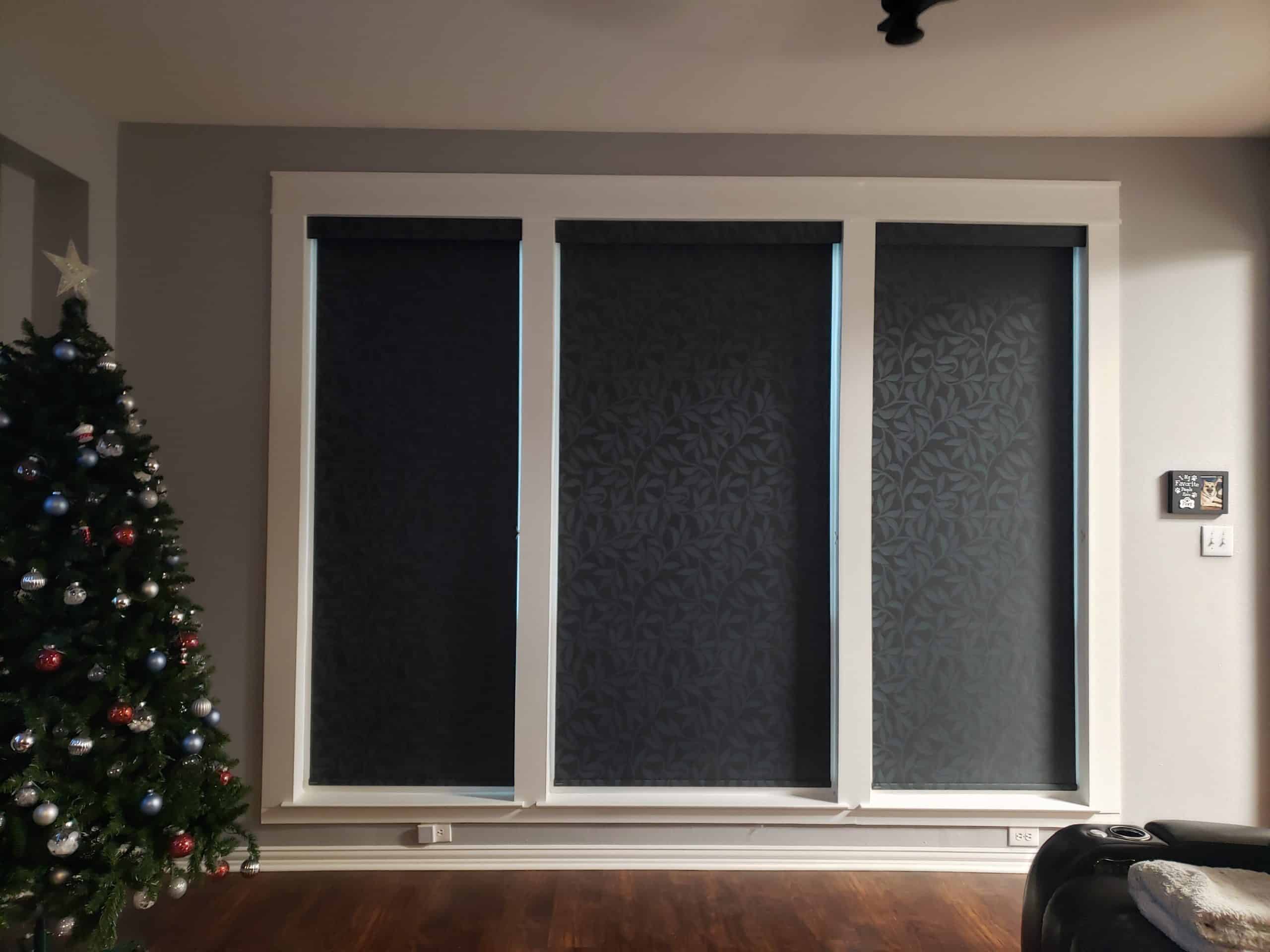
One thing to know: solar shades don’t provide nighttime privacy. When your interior lights are on after dark, the effect reverses — you can see out, but people can see in. For rooms where that matters, layering a solar shade with a drapery panel or a blackout shade handles both situations without compromise.
We also offer motorized solar shades with smart home integration — controllable via remote, smartphone app, or voice through Alexa or Google Assistant. For Tarrant County homeowners who are away during the worst of the afternoon heat, automated shades can respond to the sun’s position without anyone home to manage them. For a west-facing home office or a living room that faces southwest, that’s genuinely practical.
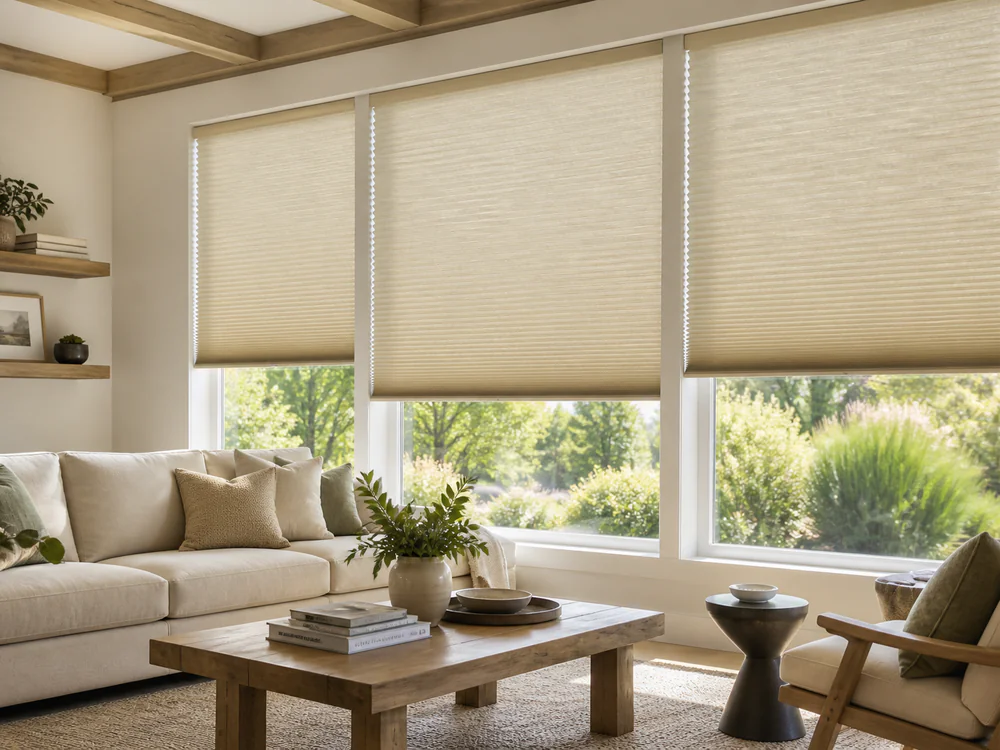
Cellular shades — sometimes called honeycomb shades — are excellent insulators. Their structure traps air in small pockets between the window and the room, which slows heat transfer in both directions. In a Tarrant County home, that means they help keep heat out in summer and warmth in during the brief but real North Texas winters.
For UV blocking specifically, cellular shades perform well when closed, but they don’t offer the view-preserving UV protection that solar shades do. They’re a strong choice for bedrooms, for rooms where insulation is the primary goal, or as part of a layered system with a sheer or solar shade in front.
Plantation shutters are one of the most popular choices we see in Tarrant County, and for good reason — they’re durable, they look right on a wide range of home styles, and they give you precise control over light and airflow by adjusting the louver angle. What they don’t do especially well is block UV when the louvers are open. With the slats tilted to let in light, UV still enters at an angle. Shutters are an excellent choice for light control, privacy, and longevity, but if UV protection is the primary concern, they work best as part of a layered system rather than a standalone solution.
Standard blinds — the aluminum or faux-wood horizontal blinds common in rental properties and older homes — offer minimal UV protection when open and only partial protection when closed. They’re not the right tool for this job. If you have them now and you’re noticing fading or afternoon heat buildup, that’s a signal worth paying attention to.
Where top treatments like valances and cornices come in is as the finishing layer — they conceal the hardware and mounting at the top of the window and give the whole treatment a polished, intentional look. They’re not UV protection on their own, but paired with a properly specified solar or cellular shade underneath, they complete the system. For larger windows or rooms where the window treatment is a visual centerpiece, that finishing detail matters.
Our team has a construction background, which means we handle the technical side of installation that generic installers often can’t — older homes in established Arlington and Fort Worth neighborhoods where window frames have shifted over decades, openings that aren’t perfectly square, or unusual configurations that require custom measurement and mounting. The products we use are manufactured locally in Denton, TX, built for the specific heat and UV conditions of North Texas, not mass-produced overseas and shipped in.
The right window treatment for UV protection isn’t the same for every room, every orientation, or every home. A west-facing living room in an older Fort Worth neighborhood calls for a different solution than a south-facing bedroom in a newer Southlake build. Openness factor, shade type, motorization, and layering all factor into what actually works — and getting that right is what separates a treatment that looks good from one that actually does something.
If your furniture is fading, your afternoon rooms are uncomfortable, or your energy bills are telling you something is wrong, it’s worth having someone look at the actual windows — the orientation, the glass type, the frame condition — before recommending anything. That’s how we approach every job at A Plus Shutters & Shades. If you’re ready to stop guessing and start with a real assessment, reach out and we’ll take it from there.
Article details:
Share:
Continue learning: