Texas heat changes the window treatment math entirely. Here's what to expect on cost, performance, and which options actually make a difference in your Tarrant County home.
Share:
If you’ve ever gotten a quote for window treatments and felt like you were missing something — some context that would make the number make sense — you’re not alone. Most people searching “window treatment cost” are trying to budget before they call anyone, or they’ve just seen a figure that surprised them and want to know if it’s reasonable.
Here’s what most cost guides skip: in Tarrant County, window treatments aren’t just a decorating decision. They’re doing real work against real heat. That changes how you should think about what you’re spending — and what you’re actually getting for it.
There are more options out there than most homeowners realize — plantation shutters, roller shades, solar shades, exterior roller shades, motorized blinds, faux wood blinds — and each one performs differently depending on your windows, your rooms, and what problem you’re trying to solve.
Aesthetics matter, but in a climate where west-facing rooms in Mansfield, Arlington, and Fort Worth can feel like an oven by 3 PM, function matters more. The right window treatment for a sun-drenched great room is a completely different product than what works in a north-facing bedroom. Understanding that distinction upfront saves you from spending money on something that looks great but doesn’t actually fix the problem.
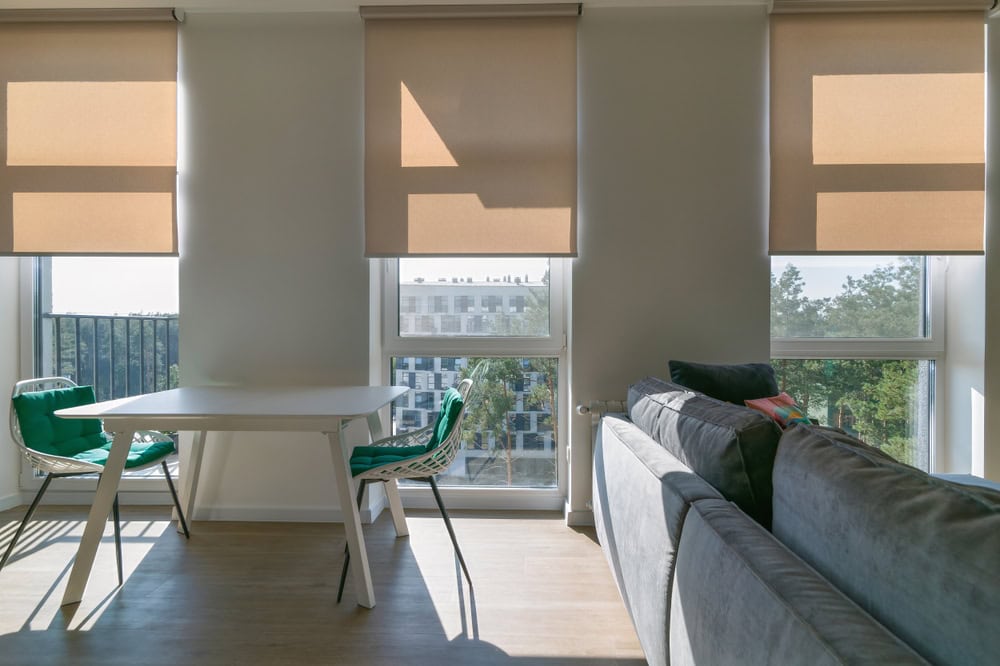
Solar shades are one of the most practical choices for Tarrant County homes, and they’re still underused. They’re made from a mesh fabric that filters light and blocks UV without completely darkening the room — you can still see outside, but the heat and glare are dramatically reduced. Solar shades block up to 95% of solar heat gain before it enters the home, which is a meaningful number when you’re running your AC through a Texas summer.
The key variable with solar shades is something called the openness factor — a percentage that tells you how tightly the mesh is woven. A 1% openness shade blocks nearly all UV and provides strong privacy, while a 10% shade lets in more light and preserves more of your view. Neither is universally better. It depends on the room, the window’s orientation, and what you’re trying to accomplish. We’ll walk you through this before you commit to anything.
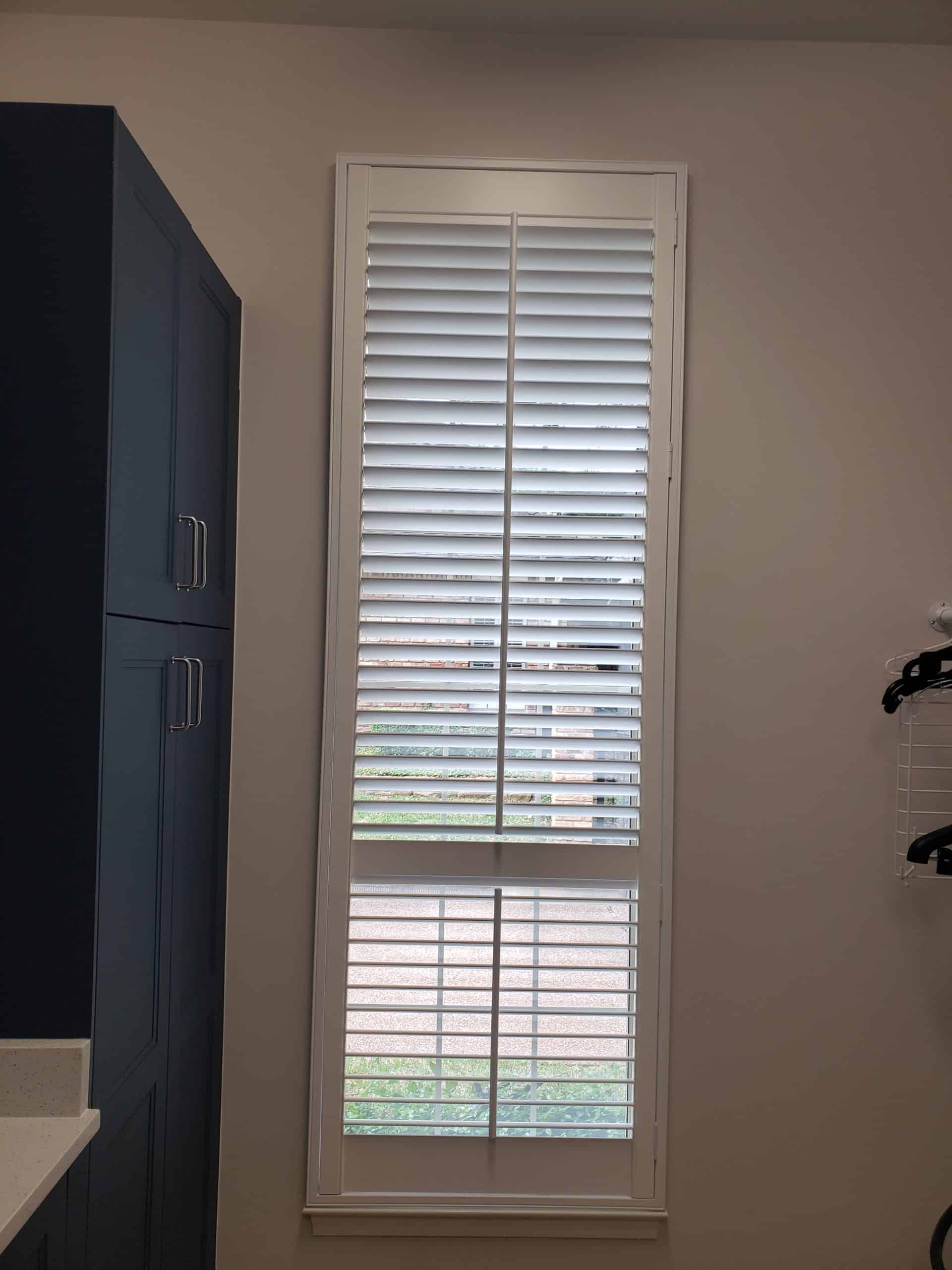
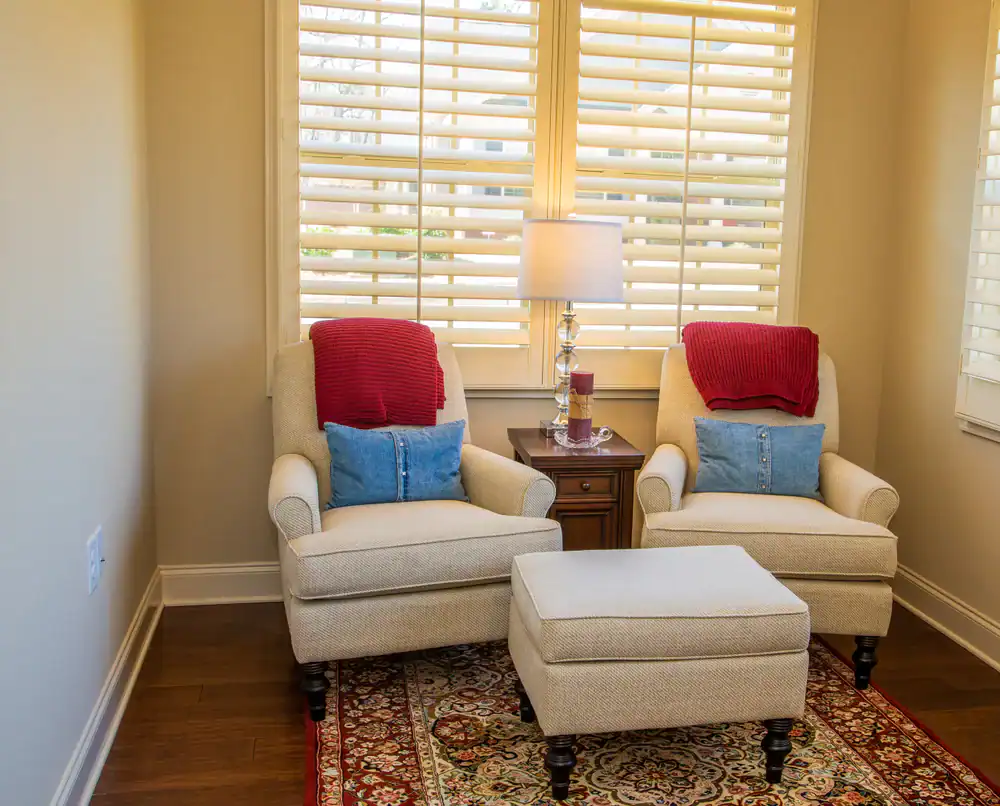
Plantation shutters take a different approach. Instead of filtering light, they give you direct control over it — you adjust the louvers to direct sunlight up toward the ceiling rather than straight into the room, which reduces glare without blocking your view entirely. They’re also a home fixture, not a personal possession, which means they stay with the house when you sell. In the Tarrant County market, that’s a real consideration for homeowners in Keller, Southlake, and the newer developments in North Fort Worth where buyers expect quality finishes.
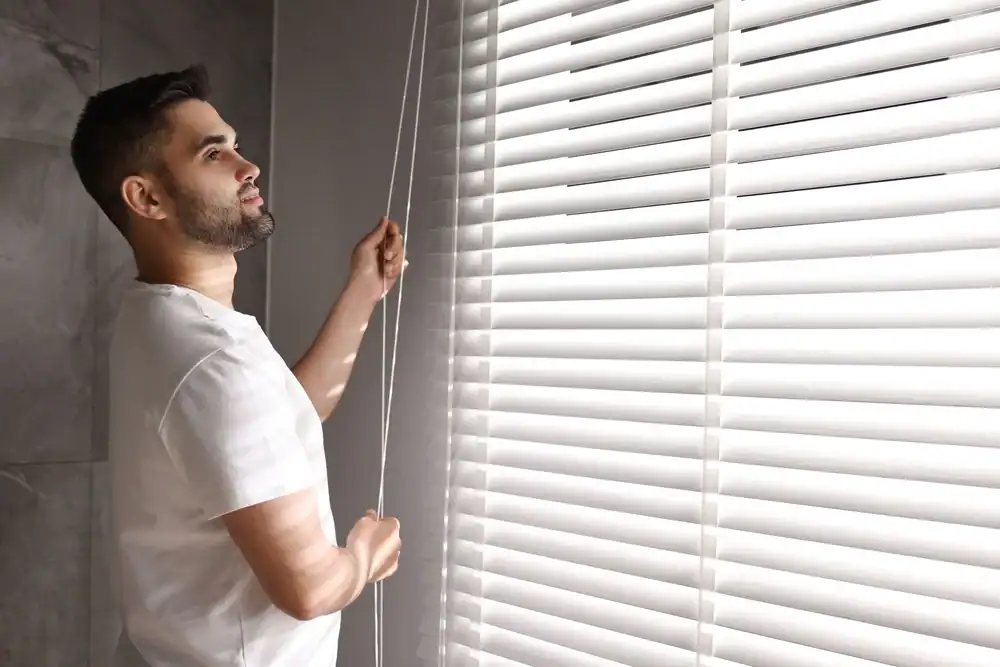
Faux wood blinds are the most popular choice across Tarrant County for good reason. They handle humidity well, hold up in rooms that get a lot of direct sun, and cost less than real wood while looking nearly identical. For rooms that don’t have a severe heat problem — a guest room, a north-facing office — they’re a practical, durable option that doesn’t require overthinking.
Most people think of window treatments as something that goes on the inside of the glass. Exterior roller shades flip that logic — they intercept the sun before it ever reaches your window, which is fundamentally more effective at reducing heat gain than any interior treatment.
Think about it this way: an interior shade stops light after it’s already passed through the glass and entered the room. An exterior shade stops it outside, where it can’t heat up the air inside your home. For covered patios, pergolas, and outdoor living spaces — which are common in Tarrant County neighborhoods — exterior roller shades also extend the usability of those spaces well into the afternoon when the heat would otherwise make them unusable.
This is a product category that most local competitors don’t offer at all. We carry both interior and exterior roller shades, which means we can look at a home with a west-facing living room and a covered back patio and recommend the right solution for each situation rather than defaulting to one product for everything. For a home in Arlington or Fort Worth where afternoon sun is hammering multiple sides of the house, that flexibility matters.
Exterior roller shades are also available with motorization, which lets you program them to lower automatically during peak sun hours — typically between 2 PM and sunset in most Tarrant County neighborhoods. That’s a meaningful convenience for homeowners who travel frequently or just don’t want to think about it every afternoon.
National averages put the typical window treatment project somewhere between $167 and $1,874, with most homeowners spending around $1,020. Per window, the national average is roughly $463, with a range of $106 to $828 depending on the type and features. Those numbers are a reasonable starting point, but they’re built from data across the entire country — not from custom installations in Tarrant County homes with non-standard window sizes and specific heat management needs.
For Tarrant County specifically, custom roller shades typically run $150 to $500 per window depending on size, material, and features. A full home installation — covering most or all windows — usually lands between $1,200 and $3,500 for most homeowners.

The single biggest cost driver is customization — and in Tarrant County, custom sizing isn’t a luxury, it’s often a necessity. Older neighborhoods in Fort Worth and Arlington have homes that have settled over decades. Window frames that were square when the house was built often aren’t anymore. Standard retail sizes from a big-box store don’t account for that. Custom treatments are measured to fit the actual opening, which is why professional measurement matters even before you’ve committed to a product.
Newer builds in Mansfield, Keller, and North Fort Worth have the opposite problem: large picture windows and open floor plans with significant glazing that standard retail sizes simply don’t cover. If you’re furnishing a new construction home with 20 or 25 windows, you’re doing the per-window math carefully — and the difference between a treatment that fits correctly and one that doesn’t shows up immediately.
Material is the second major factor. Light-filtering roller shades start at the lower end of the range. Blackout fabrics, premium solar mesh, and motorized options push costs higher. Motorization — which we offer through PowerView — adds roughly $100 to $200 per window. For homeowners in Southlake or Keller who already have a smart home system (Lutron, Control4, Crestron), PowerView integrates directly with those ecosystems, so your shades can be part of the same automation that controls your lighting and thermostat.
Plantation shutters run $150 to $800 per window at the national level. They’re a higher upfront investment than most alternatives, but they’re also the most durable option and the only one that transfers with the home at resale. For a homeowner who plans to stay in their house for ten or more years — which describes a lot of Tarrant County buyers — the math on shutters often works out better than it looks at first.
This is the question that doesn’t get answered honestly enough. The short version: it depends on what you’re buying and why.
A $150 roller shade on a north-facing bedroom window is a straightforward purchase. You want light control and privacy, and that product delivers it. The cost is easy to justify. But a west-facing living room in a Mansfield subdivision that runs 85°F by mid-afternoon is a different situation — and spending $150 on a decorative shade that doesn’t address the heat problem means you’ve spent money without solving anything.
Quality window treatments can reduce summer cooling costs by 15 to 25 percent. For a Tarrant County home spending $300 to $500 a month on electricity through a Texas summer, that’s $45 to $125 per month in potential savings. Over three to five years, a well-chosen set of solar shades or exterior roller shades can effectively pay for themselves through reduced energy costs — and that’s before you factor in the UV protection benefit.
Windows without UV-blocking treatments allow up to 99% of UV-A rays to pass through standard glass. That’s what fades hardwood floors, bleaches upholstery, and degrades artwork over time. If you’ve invested in quality flooring or furniture — which describes most homeowners in the $75,000 to $200,000+ income range that makes up a large share of Tarrant County’s market — UV protection is a real financial consideration, not a marketing talking point.
Tarrant County sees approximately 229 sunny days per year, which is above the national average. UV exposure here isn’t a seasonal concern — it’s a year-round one. That context changes the ROI calculation for treatments that address UV, because they’re working every day, not just in July and August.
The best window treatment for your home isn’t the cheapest one or the most expensive one — it’s the one that actually solves the problem your windows are creating. For some rooms, that’s a $150 faux wood blind. For others, it’s a motorized exterior roller shade that lowers itself every afternoon while you’re at work.
The way to figure that out isn’t to guess from a blog post. It’s to have someone measure your windows, look at how your home sits relative to the afternoon sun, and give you a straight answer about what will work and what won’t. That’s exactly what a free in-home consultation is for — no commitment, no pressure, just a clear picture of your options and what they cost.
If you’re in Tarrant County and ready to stop guessing, A Plus Shutters & Shades is available seven days a week to help you figure out the right fit for your home.
Article details:
Share:
Continue learning: