
Still dealing with bare windows or panels that never quite fit? Here's how modern bedroom drapes actually work — and what to do differently.
Share:
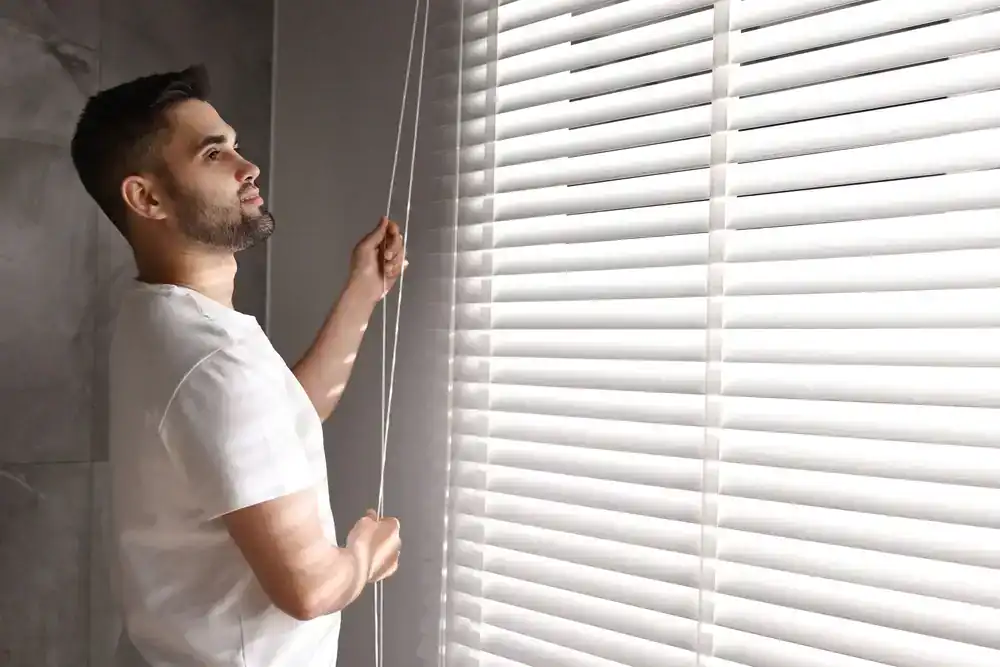
Most bedrooms are the last room to get proper window treatments. The living room gets done first, then the kitchen, and the bedroom ends up with whatever was left over — or nothing at all. If you’re in Tarrant County and your guest room still has the builder blinds from move-in day, you’re not alone. But with Thanksgiving and Christmas coming up, it’s worth asking: is this the year you finally fix it?
Modern bedroom drapes have come a long way, and getting the layering right makes a bigger difference than you’d think — in how the room looks, how it sleeps, and how it feels when someone else is staying in it. We’ve worked with homeowners across Fort Worth, Arlington, Mansfield, and Southlake long enough to know that the difference between a bedroom that feels finished and one that feels temporary often comes down to window treatments.
Blackout drapes are one of those things that sound straightforward until you buy a pair and realize the room is still glowing at 6 AM. That’s because “blackout,” “room darkening,” and “light filtering” are not the same thing — and the labels don’t always make that obvious.
True blackout drapes block 100% of external light. Room darkening options may block most of it, but not all. For a bedroom in Tarrant County, where the sun comes up early and hits hard, that distinction matters.
Fort Worth averages 229 sunny days a year. If your bedroom faces east or south, early morning light is a genuine sleep disruptor. If it faces west, you’re dealing with intense afternoon heat pushing through the glass for hours. Blackout drapery addresses both — not just as a decorative choice, but as a functional one that affects how comfortable the room actually is to sleep in.

Here’s the pattern that plays out constantly: someone buys blackout curtains online or at a big-box store, hangs them up, and immediately notices something is off. The panels are too short. There are light gaps on both sides. The rod is sitting too low, which makes the ceiling look shorter instead of taller. The fabric looks flat and skimpy when the panels are open.
The problem usually isn’t the curtain itself — it’s that standard sizing doesn’t account for real windows. Windows in Tarrant County homes vary considerably, from the wide floor-to-ceiling expanses common in newer Southlake and Mansfield builds to the more compact, irregularly spaced windows in older Arlington and Fort Worth neighborhoods. Off-the-shelf panels are made for a hypothetical average window, not yours.
Custom-measured drapery solves this at the source. When panels are fabricated to your exact window dimensions, the fit is right from the start — no awkward gaps, no panels that stop two inches above the floor, no light bleeding in from the edges. The rod goes at the correct height, the panels have the right fullness (professional standard is at least twice the width of the window, with 2.5 to 3 times the width for a fuller, more intentional look), and the finished result looks like it belongs in the room rather than something that was just hung up and hoped for.
There’s also the lining question. Blackout performance depends heavily on the lining, not just the face fabric. A beautiful panel with inadequate lining will still let light through. When we work with you on custom drapery, we help you select the right lining for your specific exposure — which matters considerably when you’re dealing with Fort Worth’s UV intensity and afternoon sun on west-facing walls.
If you’re hosting family for Thanksgiving or Christmas, the guest bedroom is worth thinking about more carefully than it usually gets. Guests sleeping in a Tarrant County home in November and December are still dealing with bright mornings — the sun doesn’t take the holidays off, and a room without proper blackout coverage will have your relatives awake earlier than they’d like.
Beyond the light issue, there’s the question of how the room presents. A guest bedroom with bare windows or mismatched temporary blinds sends a message, even if no one says anything. A finished room with layered, well-fitted drapes signals that the space was prepared intentionally — and that matters to people who are staying in your home.
The practical consideration is timing. Custom window treatments require lead time for measurement, fabrication, and installation scheduling. Booking a consultation in October puts you in a realistic position to have everything installed before the holiday. Waiting until November makes that much harder to guarantee. This isn’t pressure — it’s just how the calendar works when you’re dealing with custom work rather than something pulled off a shelf.
For guest bedrooms specifically, a clean layered treatment — blackout panels with sheer panels in front on a double rod — gives the room a polished, hotel-like finish without making it feel heavy or overly formal. The sheers soften the look during the day, and the blackout panels do their job at night. It’s a practical combination that also happens to look exactly right.
Sheer curtains tend to get underestimated. People think of them as decorative filler — something to put up when you’re not sure what else to do. But in a bedroom, sheers are doing real work.
During the day, they filter harsh sunlight into something softer and more even, reduce glare without blocking your view, and provide a level of daytime privacy that bare windows don’t. You can see out; people outside generally can’t see in. The limitation of sheers alone is nighttime privacy and light control — once it’s dark outside and your lights are on, the equation reverses.
That’s why layering matters. Sheers handle the daytime; blackout panels handle the night. Together, they cover the full range without either one having to do a job it wasn’t designed for.

The layering setup is simpler than it sounds once you understand the logic. The sheer panel goes closest to the window — it’s the first layer light passes through, and it softens what comes in. The blackout panel goes on the room side, where it can be drawn closed when you need full darkness and stacked neatly to the sides when you don’t. Both layers hang on a double rod or double track, which lets each one move independently.
What makes this work visually is proportion. If the sheers are too narrow or the blackout panels don’t have enough fullness, the whole thing looks thin and unfinished. This is where the professional standard of 2 to 3 times the window width comes in — panels with that fullness stack beautifully when open and look substantial when closed. It’s the difference between curtains that look intentional and curtains that look like an afterthought.
In Tarrant County homes with significant sun exposure — particularly those with south- or west-facing bedrooms — the choice of sheer fabric matters more than most people realize. Linen and linen-blend sheers hold up better in high-UV conditions than synthetic options. They resist fading, breathe well in the Texas climate, and don’t deteriorate as quickly under the kind of sustained sun exposure that Fort Worth windows deal with year-round. It’s not a minor detail; it’s the reason a sheer panel looks good five years from now or starts looking tired in two.
For homes where light control is especially important — bedrooms above a well-lit street, rooms facing a neighbor’s exterior lights, or any space where even small amounts of ambient light disrupt sleep — layering sheers over a roller or cellular shade before adding the blackout drape creates a complete system. Each layer handles a different part of the problem, and the combined result is a room that you can tune to exactly the light level you want at any given time.
Valances tend to get dismissed as outdated — people picture the ruffled, country-cottage styles from decades past and assume the category doesn’t apply to them. Modern valances are a different thing entirely. A clean, tailored fabric header or flat panel valance conceals the hardware, frames the window from the top, and gives the treatment a finished quality that’s hard to achieve without one. It’s a small detail with a disproportionate visual impact.
In a bedroom, a valance works particularly well when you’re layering treatments. It ties the sheer and blackout panels together visually, hides the double rod and any hardware that would otherwise be visible, and adds a sense of height to the window — especially useful in rooms where the ceiling feels low or the windows are on the smaller side. Used well, it doesn’t read as decorative excess; it reads as a room that was finished properly.
For homeowners in Tarrant County who are updating bedrooms before the holidays, a valance is also one of the lower-commitment ways to elevate a window that already has a shade or blind. If you have a roller shade or cellular shade that’s functional but plain, adding a valance and a pair of sheer panels in front of it transforms the look without replacing what’s already working. It’s a layered approach that builds on what you have rather than starting over.
The style options for modern bedroom valances range from structured box pleats to relaxed gathered fabric to simple flat panels with a clean hem — the right choice depends on the rest of the room, the window size, and how formal or casual you want the finished look to feel. This is one of those decisions that’s genuinely easier to make in person, with fabric samples in hand and someone who can hold them up against your actual window, than it is to figure out from a product photo online.
Modern bedroom drapes aren’t complicated in concept — it’s the details that trip people up. Panel length, fullness, lining, fabric choice, rod placement, layering order. Each one affects the final result, and most of the common regrets come from decisions that felt minor at the time.
If your bedroom windows have been on the back burner, the weeks before the holidays are a natural moment to address them — both because guests are coming and because custom work takes time to schedule and complete. Getting the measurement and consultation done in October is the realistic path to having everything finished before Thanksgiving.
We work with homeowners across Tarrant County — Fort Worth, Arlington, Mansfield, Southlake, and the surrounding area — on exactly this kind of project. If you’re ready to stop guessing and get it done right, reach out to schedule a free in-home consultation with A Plus Shutters & Shades.
Article details:
Share:
Continue learning:


