"Shade blinds" gets searched constantly, but blinds and shades are two different things. Here's what actually sets them apart — and how to choose right for your Tarrant County home.
Share:
Most people use “shade blinds” like it’s one thing. It’s not. Blinds and shades are built differently, operate differently, and perform differently depending on what you’re asking them to do. That distinction matters a lot when you’re trying to block out a brutal July afternoon in Fort Worth or get some privacy without turning your living room into a cave.
If you’re trying to figure out which one actually belongs on your windows — and why it matters more in North Texas than most places — you’re in the right place. Let’s start with the basics and work from there.
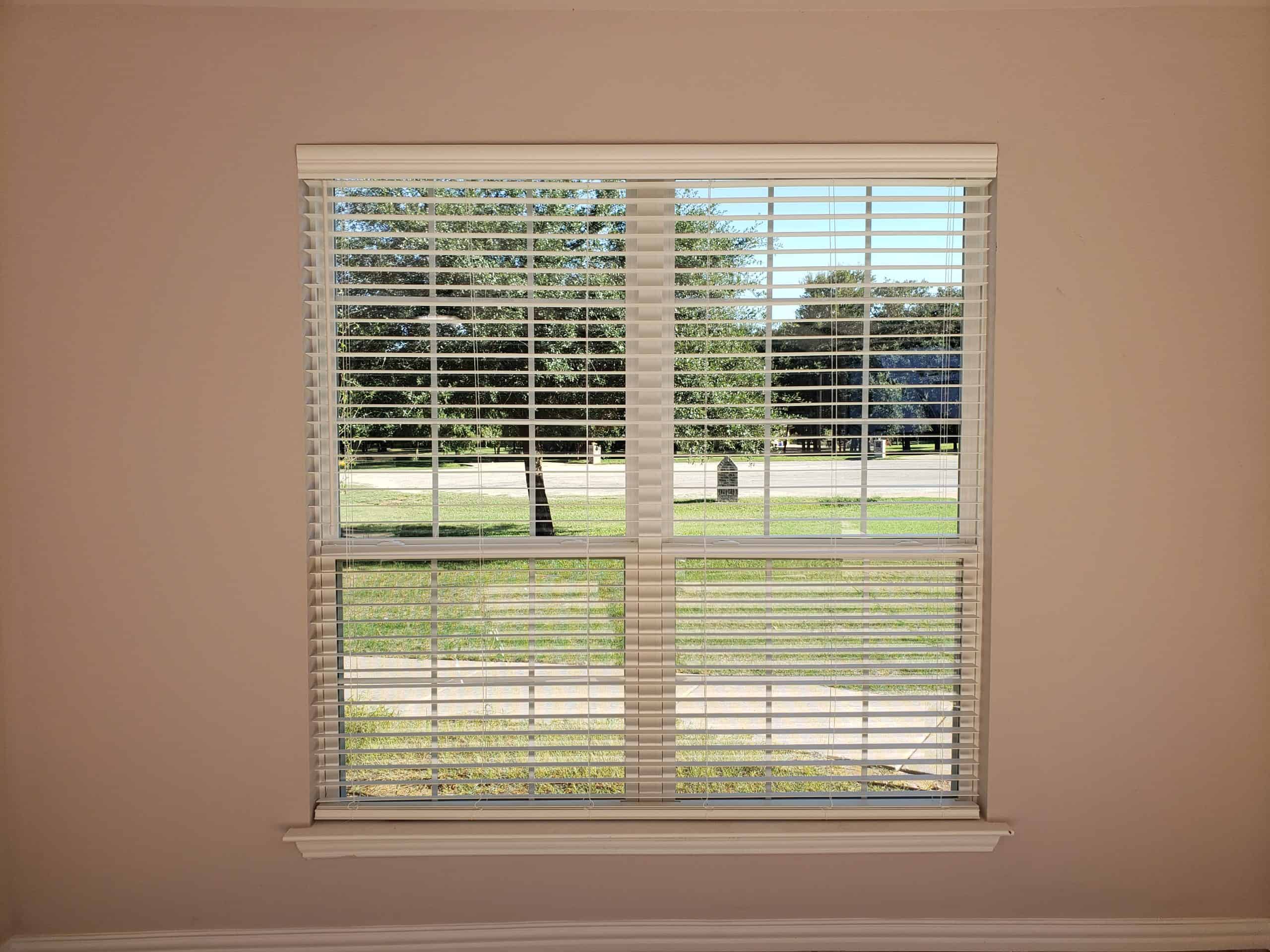
The simplest way to understand it: blinds have slats, shades don’t. Blinds are made of rigid horizontal or vertical pieces — wood, faux wood, or aluminum — that tilt open and closed to adjust light. Shades are a single continuous piece of fabric that rolls, folds, or stacks depending on the style.
That difference in construction changes everything about how they perform. Blinds give you adjustable control by angling the slats, but there are always small gaps between them — gaps that let in light, heat, and outside air even when the blinds are fully “closed.” Shades, when properly fitted, create a more complete seal against the window frame, which matters a lot when you’re trying to keep a room cool or dark.
Neither one is universally better. The right answer depends on the room, the window, and what you’re actually trying to accomplish.
This is probably the most common question people have, and the honest answer is: shades win, but only if you choose the right opacity level for the room.
Shades come in a range of opacity options — sheer, light-filtering, room-darkening, and full blackout. A blackout roller shade, when custom-fitted to your window, blocks light more completely than any slatted blind can. That’s because there are no gaps between slats for light to sneak through. If you’ve ever noticed thin lines of light across your floor even with the blinds down, that’s exactly what we’re talking about.
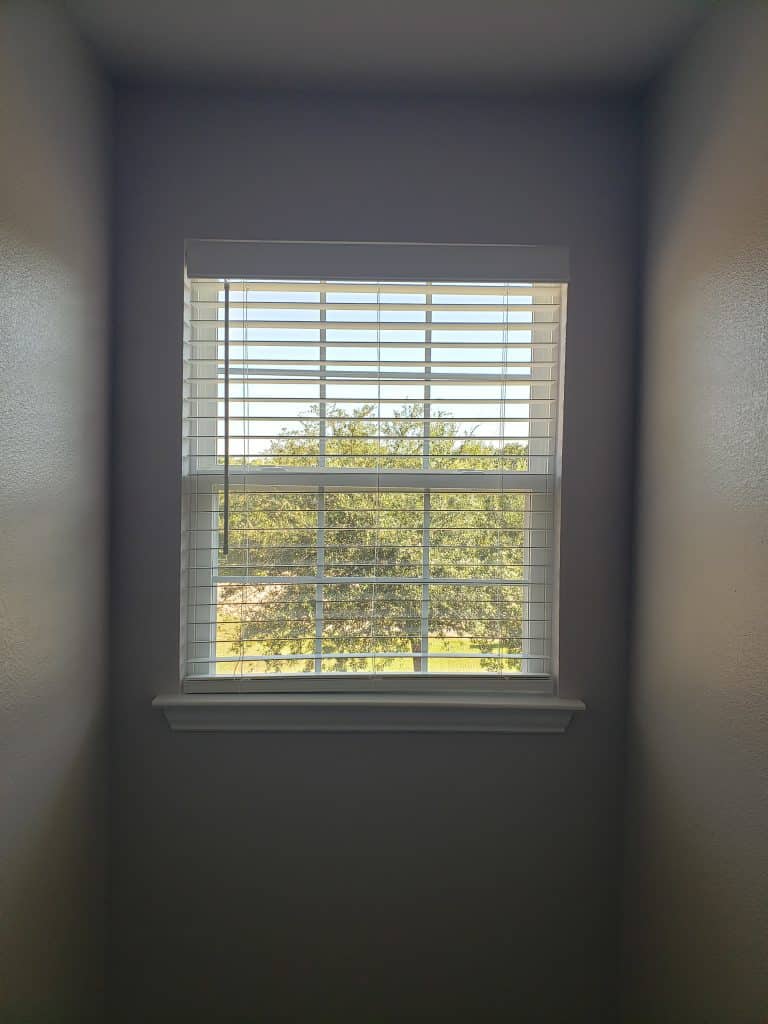
Blinds offer more flexibility in the moment — you can tilt the slats to redirect light toward the ceiling, angle them for partial privacy, or open them fully without removing the treatment from the window. That adjustability is genuinely useful in rooms where the light changes throughout the day and you want control without committing to fully open or fully closed.
For bedrooms — especially in Tarrant County homes where streetlights and early morning sun are real issues — blackout shades tend to outperform blinds significantly. For living rooms and offices where you want some natural light but not glare on a screen, light-filtering shades or solar shades often hit the right balance. Solar shades in particular are worth mentioning here: they block UV rays and reduce heat gain while still letting you see outside, which makes them one of the most practical options for south- and west-facing windows in homes that take the full force of the afternoon sun.
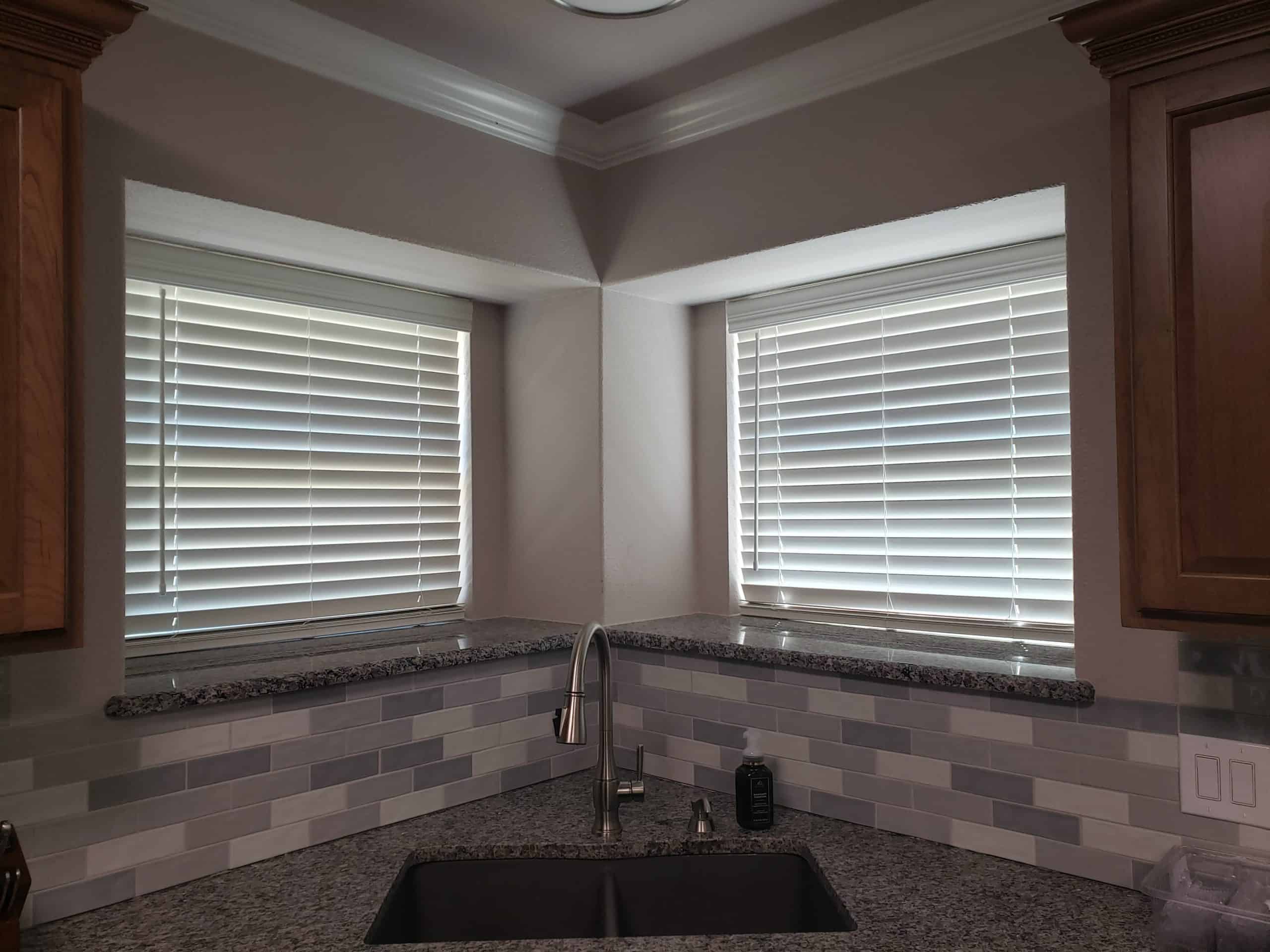
Blinds still make sense in rooms where you want that quick, adjustable control — a kitchen, for example, where you might want full light in the morning and more privacy by evening. The slat mechanism gives you that kind of moment-to-moment flexibility that a roller shade doesn’t quite replicate.
The bottom line is that neither category is one-size-fits-all. Matching the treatment to the room’s actual function is what separates a window that works from one that just looks okay.
If you live in Tarrant County, you already know the weather here doesn’t mess around. Summers run well past 100°F for weeks at a time, and spring and fall bring the kind of severe storms — hail, high winds, the occasional tornado warning — that remind you pretty quickly that you live in Tornado Alley. Standard window treatments aren’t built for any of that.
Storm shades are a different category entirely. They’re exterior roller shades engineered specifically for weather exposure — built with commercial-grade hardware and solution-dyed fabrics where the color is embedded throughout the fiber, not just printed on the surface. That matters because standard exterior fabrics fade, crack, and weaken under intense UV exposure. A solution-dyed fabric holds up year after year under North Texas sun without losing its integrity or its appearance.
What makes storm shades particularly practical is that they’re not just sitting there waiting for a storm. On a normal Tuesday in August, they’re blocking solar heat before it ever enters your home — which is meaningfully different from interior shades that block light after the heat has already passed through the glass. Proper window treatments can reduce energy loss through windows significantly, and exterior applications are the most effective version of that because they intercept the heat at the source.
For homeowners in Tarrant County with outdoor patios or pergolas, storm shades also solve a problem that has nothing to do with storms: they make outdoor spaces actually usable from May through September. A covered patio without shade protection in a North Texas summer is essentially decorative. With the right exterior roller shades, it becomes a functional room you can use most of the year.
We manufacture and install exterior roller shades locally using commercial-grade hardware and fabrics designed specifically for Texas conditions — not the residential-grade materials you’d find at a big-box store. The same team that measures your space builds the product and installs it, which means the fit is right and the mounting is done at a construction level, not a retail level.
Understanding the difference between blinds and shades is one thing. Knowing which one belongs in your specific home — with your specific windows, your light situation, and your daily routine — is where it gets more personal.
There’s no formula that works for every room. A bedroom in a newer home with large west-facing windows has completely different needs than a bathroom in an older craftsman. The right treatment for one could be the wrong treatment for the other, and that’s exactly why getting the selection right matters as much as the installation itself.

Start with what the room actually needs, not what looks good in a catalog photo.
Bedrooms are usually the easiest call. If you want real darkness for sleep — especially in homes near busy roads or in neighborhoods with active streetlights — room-darkening or blackout roller shades are hard to beat. They create a tighter seal than blinds, they’re simple to operate, and they come in enough fabric options that you don’t have to sacrifice style for function. A top-down, bottom-up shade is worth considering here too: it lets natural light in from the top while keeping the lower half of the window private, which solves the “I want light but not exposure” problem that comes up a lot in suburban Tarrant County homes where houses sit close together.
Kitchens and living rooms are where blinds often make more sense. You want flexibility — some light in the morning, more privacy in the evening, and the ability to adjust without thinking too hard about it. Faux wood blinds hold up well in kitchens where moisture and grease are factors, and they give you that quick adjustability that works well in high-traffic rooms.
Bathrooms call for moisture-resistant materials no matter which direction you go. Polywood or vinyl are the practical choices here — wood warps in humid environments, and that applies to both blinds and shades. If privacy is the priority, a light-filtering roller shade in a moisture-resistant fabric tends to work better than horizontal blinds in tight bathroom window configurations.
For rooms with large picture windows or sliding glass doors — common in Tarrant County suburban homes — vertical blinds or wide-panel roller shades are typically the right approach. Standard horizontal blinds get unwieldy at large widths and tend to sag over time. A properly fitted roller shade or vertical treatment handles that scale much better.
A gap at the edge of a window treatment isn’t just an aesthetic problem. In Tarrant County, where summer cooling costs can be significant and afternoon sun hits hard from the south and west, even a small gap between the treatment and the window frame is a direct path for heat to enter the room. The treatment is doing its job on the glass and failing at the edges — which is exactly where stock sizes from a big-box store tend to fall short.
Custom window treatments are measured to fit your actual windows, not an industry-standard size that’s close enough. We measure to the sixteenth of an inch, which sounds like overkill until you see the difference between a treatment that fits and one that doesn’t. The gap problem disappears. The light control works the way it’s supposed to. The energy efficiency benefit is real rather than theoretical.
There’s also the installation side of it. We come from a construction background — A Plus Shutters & Shades is part of A Plus Home Remodel, which has been working in the DFW area for over a decade. That means when we mount a treatment, we’re thinking about the structure, the hardware load, the right anchoring for the wall type, and whether the mounting will hold up over years of daily use. That’s a different level of attention than a retail installation, and it shows in the finished product.
The other thing worth saying plainly: when you call us, you’re talking to the owner. Not a franchise coordinator, not a call center. Someone who knows Tarrant County homes, knows what works in this climate, and will tell you honestly what you need — and what you don’t. That kind of directness is harder to find than it should be in this industry.
Blinds and shades solve different problems. Knowing which one fits your room, your windows, and your daily life is what turns a window treatment from a cosmetic upgrade into something that actually makes your home more comfortable and more efficient — especially in a climate like North Texas where your windows are working against you for a good portion of the year.
The short version: shades give you better light blockage and a tighter fit, blinds give you adjustable, moment-to-moment control, and exterior storm shades are in a category of their own for anyone dealing with Texas heat or severe weather. None of it is one-size-fits-all, and the right answer usually depends on details that only show up when someone is standing in the room with you.
That’s exactly what we do. If you’re in Tarrant County and you’re ready to stop guessing, reach out to A Plus Shutters & Shades for a free in-home consultation. We’ll bring the samples, take the measurements, and help you figure out what actually makes sense for your home — no pressure, no upsell, just a straight answer.
Article details:
Share:
Continue learning: