
Your complete guide to plantation shutters covering benefits like energy savings, style options, cost factors, and professional installation in Tarrant County.
Share:
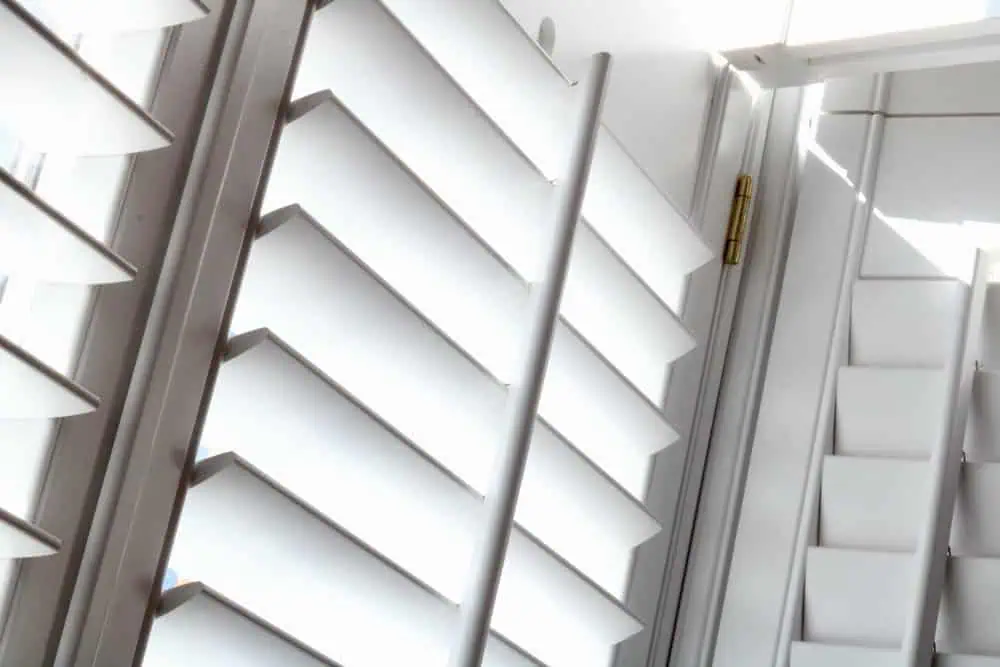
Plantation shutters are interior window coverings with wide, adjustable louvers that mount directly inside your window frame. Unlike blinds or shades, they’re permanent fixtures that become part of your home’s architecture.
Texas homeowners gravitate toward plantation shutters because they solve the specific challenges of our climate. The thick materials naturally insulate against our extreme temperature swings. When closed, they create a barrier that blocks heat transfer more effectively than any other window treatment.
The adjustable louvers give you precise control over light and airflow. You can angle them to let in natural light while maintaining privacy, or close them completely for maximum insulation and room darkening.
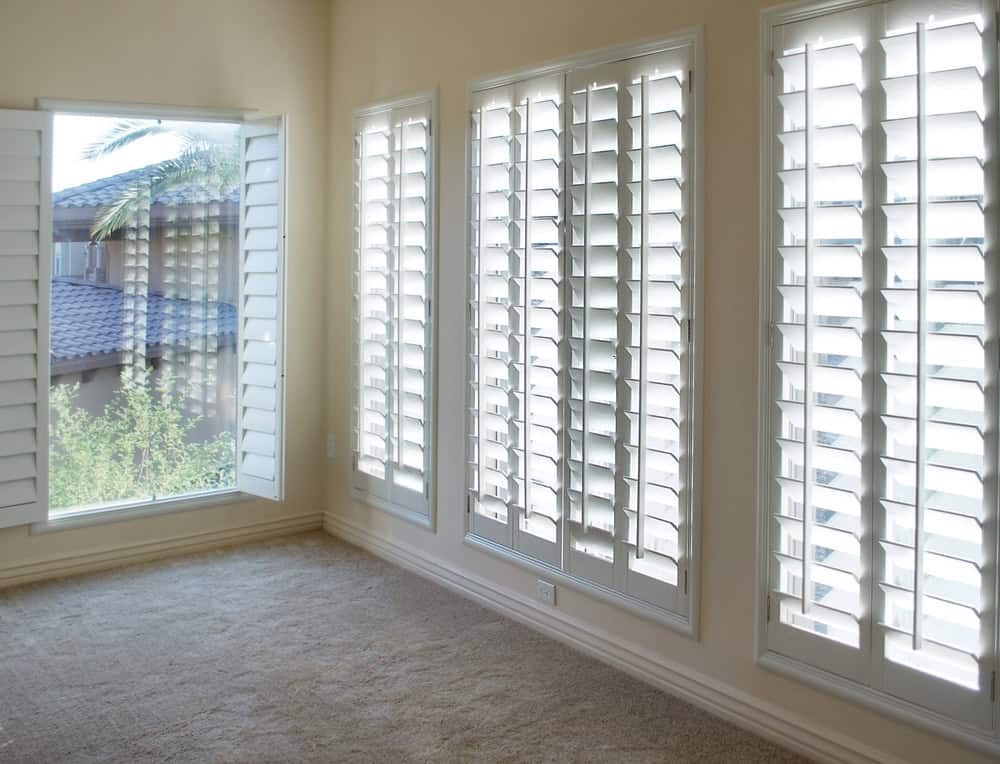
Here’s where plantation shutters really shine for Texas homes. Quality shutters can reduce heat transfer through your windows by up to 51% – that’s significantly better than the 14% you get from curtains or 22% from standard blinds.
This translates to real money in your pocket. Homeowners typically see energy savings of 25-30% annually after installation. For a typical Tarrant County home, that could mean $250 to $1,500 or more in yearly savings, depending on your current energy costs.
The insulation works both ways. During our brutal summers, shutters block solar heat from penetrating your home, reducing the strain on your air conditioning. In winter, they help retain warm air inside, cutting heating costs.
But there’s an extra bonus you might not know about. Under the Inflation Reduction Act, you can claim a 30% federal tax credit on plantation shutters as an energy-efficient home improvement. This credit can cover up to $1,200 per year with no lifetime limit, making quality shutters even more affordable.
The energy efficiency isn’t just about temperature control. Shutters also reduce your reliance on artificial lighting during the day. The adjustable louvers let you filter in just the right amount of natural light, cutting your electricity usage even further.
Here’s where plantation shutters really shine for Texas homes. Quality shutters can reduce heat transfer through your windows by up to 51% – that’s significantly better than the 14% you get from curtains or 22% from standard blinds.
This translates to real money in your pocket. Homeowners typically see energy savings of 25-30% annually after installation. For a typical Tarrant County home, that could mean $250 to $1,500 or more in yearly savings, depending on your current energy costs.
The insulation works both ways. During our brutal summers, shutters block solar heat from penetrating your home, reducing the strain on your air conditioning. In winter, they help retain warm air inside, cutting heating costs.
But there’s an extra bonus you might not know about. Under the Inflation Reduction Act, you can claim a 30% federal tax credit on plantation shutters as an energy-efficient home improvement. This credit can cover up to $1,200 per year with no lifetime limit, making quality shutters even more affordable.
The energy efficiency isn’t just about temperature control. Shutters also reduce your reliance on artificial lighting during the day. The adjustable louvers let you filter in just the right amount of natural light, cutting your electricity usage even further.
Choosing the right material affects both performance and cost. Each option has distinct advantages depending on your budget, room location, and maintenance preferences.
Wood shutters offer the most authentic look and feel. Basswood is the premium choice – it’s lightweight, stable, and takes paint or stain beautifully. Wood shutters work best in low-moisture areas like living rooms and bedrooms.
Faux wood (composite) shutters balance aesthetics with practicality. Made from engineered materials, they resist warping and moisture while maintaining a wood-like appearance. They’re ideal for bathrooms, kitchens, and other high-humidity areas.
Vinyl shutters are the most budget-friendly option. They’re completely moisture-resistant and require minimal maintenance, making them perfect for areas with extreme humidity or temperature fluctuations.
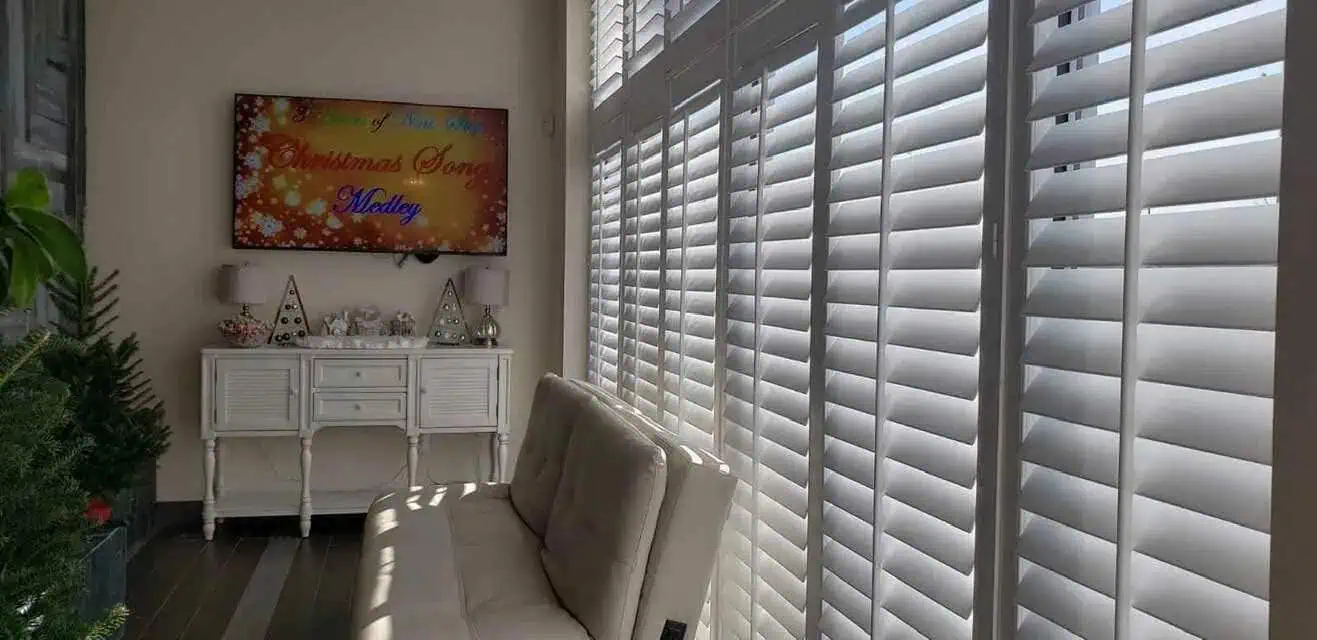
Plantation shutter costs vary significantly based on material, window size, and customization level. Here’s what to expect in the Tarrant County market.
Material costs range from $15-45 per square foot. Vinyl shutters start around $15-20 per square foot, faux wood runs $20-30 per square foot, and premium wood shutters can reach $30-45 per square foot.
Window size directly impacts your total cost. A standard 24″ x 36″ window might cost $150-400 for materials, while larger windows or specialty shapes can run $500-1,200 or more.
Shutter Installation typically adds $50-150 per window, depending on complexity. While some homeowners attempt DIY installation, professional installation ensures proper fit and function. Poorly installed shutters can have gaps that reduce energy efficiency and aesthetic appeal.
The total project cost for most Tarrant County homes ranges from $1,500-6,000, depending on the number of windows and material choices. While this represents a significant upfront investment, the combination of energy savings, increased home value, and decades of use makes plantation shutters cost-effective over time.
Many companies offer financing options to spread the cost over time. Some also provide seasonal promotions that can reduce your total investment by hundreds of dollars.
Professional installation might seem like an unnecessary expense, but it’s crucial for getting the full benefits of plantation shutters.
Precise measurements are critical. Even small errors can result in gaps that reduce energy efficiency and create an unfinished appearance. Professional installers measure to 1/16th of an inch accuracy, ensuring a perfect fit.
Installation complexity varies by window type. Standard rectangular windows are straightforward, but arched, angled, or unusually shaped windows require specialized techniques. Professionals have the tools and experience to handle any window configuration.
Quality installers also understand local building codes and best practices for Texas homes. They know how to work around existing trim and molding to create a seamless, built-in appearance.
The warranty implications matter too. Many manufacturers require professional installation to honor their warranties. DIY installation mistakes could void your coverage, leaving you responsible for any future repairs or replacements.
Professional installation typically takes 2-4 hours per window, depending on complexity. The installers handle all cleanup, leaving your home spotless and your new shutters ready to use immediately.
Plantation shutters offer compelling advantages for Texas homeowners dealing with extreme weather, rising energy costs, and the desire for lasting home improvements.
The energy efficiency benefits are real and measurable. Combined with federal tax credits, the actual cost of quality shutters becomes much more reasonable. The long-term value through increased home equity and decades of use makes them a smart investment.
When you’re ready to explore plantation shutters for your home, work with experienced local professionals who understand Texas homes and weather challenges. We can help you choose the right materials and ensure proper installation for maximum benefits.
We serve Tarrant County homeowners with quality plantation shutters designed to handle our unique climate while providing the style and functionality you want.
Article details:
Share:
Continue learning:


