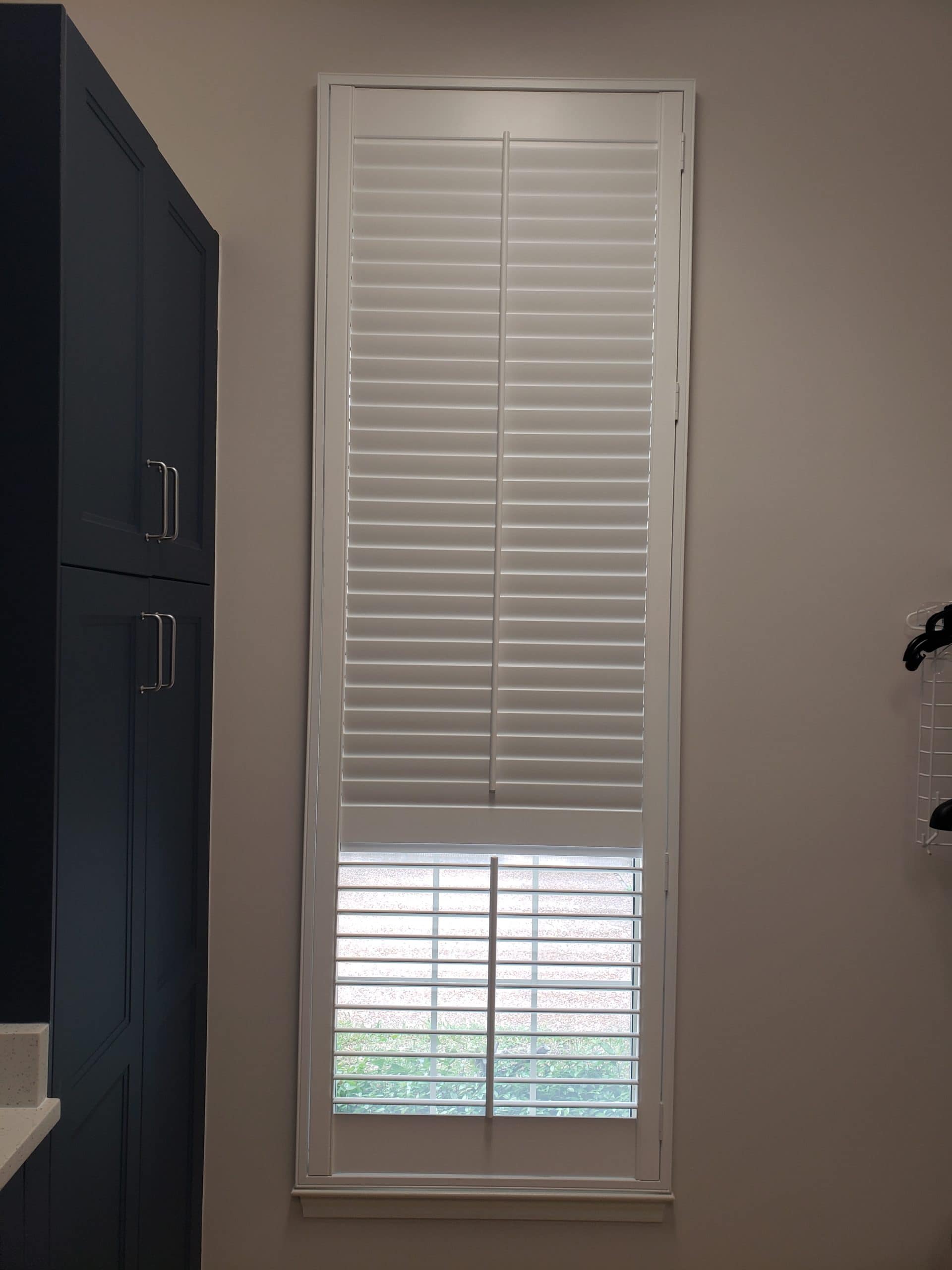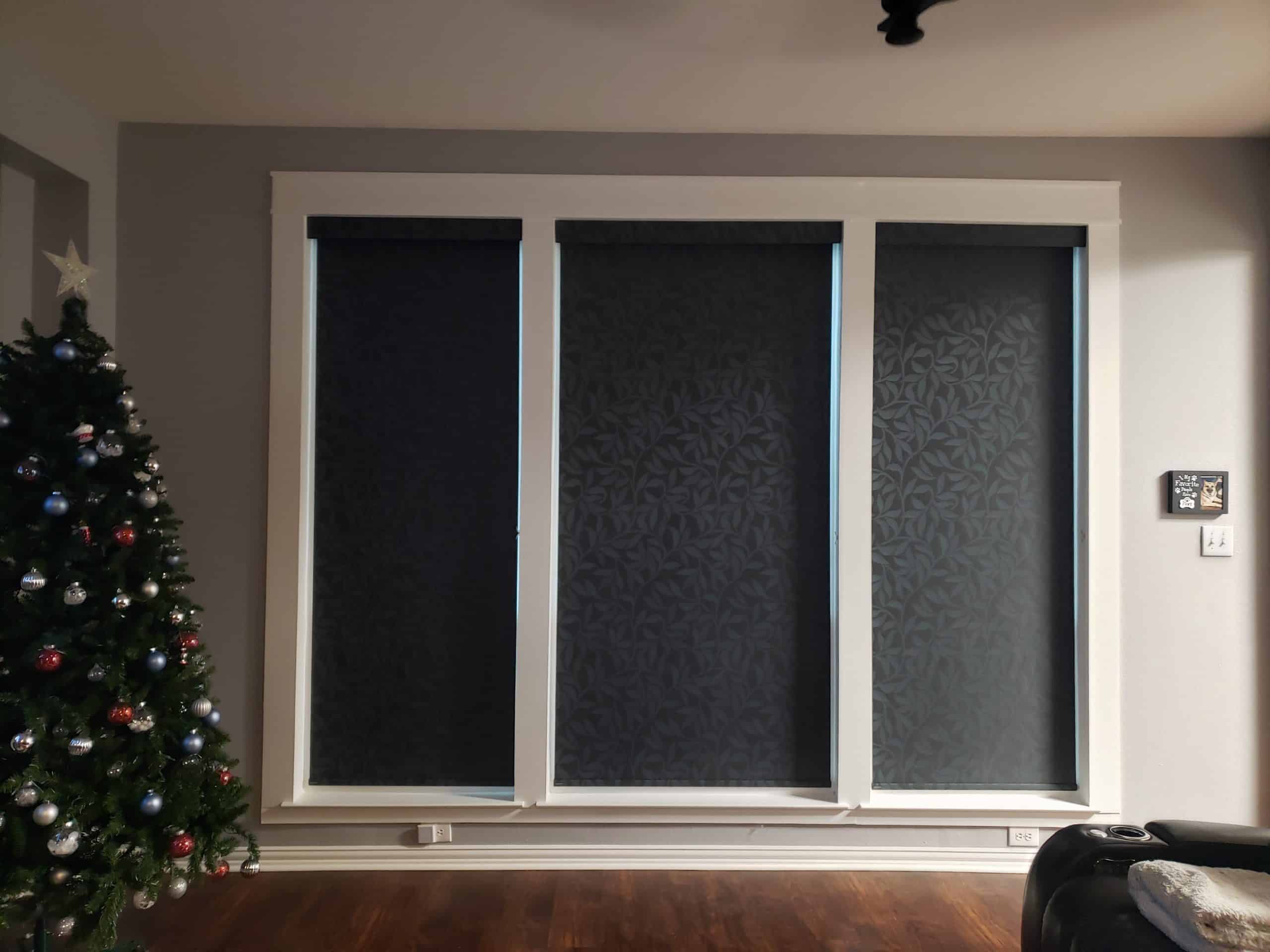
Thinking about installing your own blinds? Here's what the guides don't tell you about measurements, warranties, and what happens when it goes sideways.
Share:

You’ve picked out the blinds. Maybe you’ve even watched a few installation videos. It looks straightforward — a drill, a level, some brackets. How hard could it be?
For some windows, honestly? Not that hard. For others, it’s where things quietly go wrong — a measurement that’s off by a quarter inch, a bracket that pulls out of soft drywall, a blind that won’t sit level no matter how many times you adjust it. And once you’ve ordered custom blinds, there’s no returning them.
This page is for anyone in Tarrant County who’s trying to figure out whether professional installation is actually worth it — or whether DIY is a reasonable option for their situation.
The honest answer is that DIY works fine in certain situations. If you’re hanging a single set of basic horizontal blinds in a standard-sized window with a clean, square frame, you can probably get it done in under ten minutes with decent results. The instructions are clear, the hardware is simple, and the margin for error is small.
But most homes across Tarrant County aren’t that straightforward. New construction in Mansfield and Keller often features oversized windows, two-story openings, and sliding glass doors that require a completely different approach. Older homes near Fort Worth’s Fairmount or Stockyards neighborhoods frequently have frames that are out of square after decades of settling. And if you’re installing motorized blinds, vertical panels, or roller shades across multiple rooms — the complexity adds up fast.
The real cost of DIY isn’t always the product. It’s the re-order when the measurements are off, the wall repair when a bracket pulls through, and the loss of manufacturer warranty coverage that most companies void the moment you install the product yourself.

Texas heat changes the calculus on window treatments in ways that don’t apply everywhere else. When temperatures in Fort Worth and Arlington regularly push past 100°F from June through August, the difference between a properly installed solar shade and a poorly fitted one isn’t just aesthetic — it shows up on your electricity bill.
Properly installed roller shades and solar shades can cut your AC runtime by three to five hours a day. That’s a potential 25% reduction in cooling costs over a Texas summer, which adds real money back to your pocket when bills are already running $300 to $500 a month. But that efficiency only happens when the shades are measured and mounted correctly — when they seal the window the way they’re supposed to, without light gaps on the sides or a bottom edge that doesn’t sit flush.
Cellular shades are another strong option for energy efficiency, particularly in rooms that get direct afternoon sun. Faux wood blinds hold up better than real wood in high-humidity areas like bathrooms and laundry rooms, where moisture causes warping over time. And for large windows or sliding glass doors — common in newer builds across Mansfield, Southlake, and Cedar Hill — vertical blinds and panel tracks are technically the right call, but they’re also among the most difficult products to install without professional help. The hardware is heavier, the alignment requirements are tighter, and a small error at the top rail means nothing hangs straight.
The point isn’t that every window needs a professional. It’s that the products best suited to Tarrant County’s climate — the ones that actually perform in this heat — tend to be the same ones where installation precision matters most. A basic horizontal blind in a guest bedroom is a reasonable DIY project. A set of motorized solar shades across your south-facing living room windows is a different conversation entirely.
The upfront savings from DIY installation are real. Skipping professional labor can save you $75 to $150 per window, which adds up quickly across a full house. That’s a legitimate reason to consider it, and it’s worth acknowledging honestly.
What’s less obvious is what happens when the job doesn’t go cleanly. Custom blinds are made to order — if your measurements are off, even by a small amount, you’re looking at a full re-order at full product cost. There’s no “close enough” with custom window treatments. A blind that’s a half-inch too wide won’t compress to fit. One that’s a half-inch too narrow will leave a light gap on both sides that defeats the entire purpose.
Beyond re-orders, there’s the warranty issue. Most manufacturers — including the brands we use — void their product warranty when installation is performed by someone other than an authorized installer. That means if a mechanism fails, a slat cracks, or the hardware breaks six months in, you’re paying out of pocket for a replacement that would have been covered. It’s a detail that rarely comes up until it matters.
Then there’s the wall damage question. Drywall anchors pull out. Drill bits hit unexpected spots. Window frames in older homes — particularly in neighborhoods like Fairmount, Mistletoe Heights, or the historic areas around downtown Fort Worth — can have plaster walls, unusual framing, or previous repair work that makes standard mounting unpredictable. Patching and repainting after a failed bracket installation is a cost most DIY guides don’t factor in.
None of this is meant to talk you out of doing it yourself if you have the skills and the right project for it. But the honest math often looks different once you account for the full picture — not just the labor savings, but the risk of what a mistake actually costs to fix.
Once you’ve decided professional installation makes sense, the next question is who to trust with the job. And in a market as competitive as Tarrant County, that’s not always an easy call.
The most important thing to understand is that not all professional installation is the same. National chains and big-box services frequently use subcontractors — third-party workers who may have never installed the specific product you ordered, and who have no ongoing relationship with the company that sold it to you. When something goes wrong, accountability gets complicated fast.
What you’re looking for is a company with its own trained installation team, a verifiable local presence, and a track record you can actually check on third-party platforms — not just testimonials on their own website.
In Texas, window blind and shade installation for residential properties doesn’t require a specific state contractor’s license in most cases. That means almost anyone can show up and call themselves a professional installer. So licensing alone isn’t the filter — it’s the combination of factors that tells you whether a company is genuinely accountable.
General liability insurance is a baseline. If a bracket goes through your wall or a window frame gets damaged during installation, you want to know the company is covered. Ask for proof before anyone starts drilling. A legitimate company will hand it over without hesitation.
Beyond insurance, look at how the warranty is structured. Product warranties are common — most manufacturers offer them. What separates quality companies is whether the installation labor is also warranted. If a bracket loosens, a blind starts tilting, or hardware fails because of how it was mounted, a strong company stands behind that work and comes back to fix it. That kind of post-installation support is worth asking about specifically before you book.
Verified reviews on HomeAdvisor, Angi, or Google are more reliable than anything a company says about itself. Look for patterns in what customers mention — not just star ratings, but whether the process was smooth, whether measurements were accurate, and whether the installer was knowledgeable about the specific product. In this category, reviews that mention the installer by name are a strong signal. It usually means the same person who sold the job showed up to do it, which is a level of personal accountability that subcontractor models can’t replicate.
Finally, consider whether the company brings samples to your home rather than asking you to make decisions from a website or a showroom catalog. In-home consultations let you see how materials look in your actual light, against your walls, with your furniture — and they give you a chance to assess whether the person you’re dealing with actually knows the product or is just reading from a brochure.
Most window treatment companies know their products well. Fewer of them understand the structures those products are going into. That gap matters more than it sounds.
When an installer has a construction background — meaning they’ve worked with wall assemblies, framing, drywall, and mounting mechanics across a wide range of home types — they approach a window differently than someone who’s only ever installed blinds. They check the frame for strength before they drill. They recognize when a wall surface isn’t going to hold a standard anchor. They understand how a home in Southlake’s newer developments is built differently from a 1940s craftsman in Fort Worth’s historic neighborhoods, and they adjust accordingly.
We’re a branch of A Plus Home Remodel, which means our installation team comes with over a decade of construction experience behind every job we take on. That’s not a marketing angle — it’s the reason our measurements are double-checked before we order anything, and why we’ve handled everything from standard residential installs in Arlington and Grand Prairie to more complex configurations in homes with non-standard windows, high ceilings, and specialty framing. We use Texas-made products wherever possible, back every installation with warranties that go beyond what most companies offer, and our team handles the job from first measurement to final adjustment — no subcontractors, no handoffs to someone who wasn’t part of the original conversation.
For Tarrant County homeowners who’ve been through a bad installation experience before — whether with a national chain that sent an unfamiliar face to do the work, or a DIY attempt that didn’t go the way the YouTube video suggested — the difference tends to be obvious from the first visit. The process is cleaner, the result is more precise, and there’s an actual person accountable for the outcome.
The DIY vs. professional question doesn’t have one universal answer. For simple projects in forgiving spaces, doing it yourself is a reasonable choice. But for most homes in Tarrant County — where the heat demands performance, the windows are often non-standard, and custom products mean there’s no margin for measurement error — professional installation pays for itself in ways that aren’t always visible until something goes wrong.
The bigger decision is who you hire. An in-house team with a construction background, verified reviews, and a warranty that covers the labor — not just the product — is a different thing entirely from a franchise that dispatches a subcontractor you’ve never met.
If you’re weighing your options for window blinds installation in Tarrant County, TX, we offer free in-home consultations with samples brought directly to your home. No pressure, no guesswork — just an honest look at what your windows need and what it’ll actually take to do the job right.
Article details:
Share:
Continue learning: