Texas heat is brutal on window treatments. Here's how to choose shades that actually hold up — and what to avoid before you spend a dime.
Share:
If you live in Tarrant County, you already know what a west-facing window feels like at 3 PM in July. It’s not just uncomfortable — it’s a furniture-fading, electricity-bill-spiking problem that cheap blinds from a big-box store aren’t going to fix. The right window shades can block up to 95% of solar heat, protect your floors and furniture from UV damage, and actually bring your cooling costs down. The wrong ones warp, gap, and fail before the second summer hits. This guide walks you through what works, what doesn’t, and how to make a decision you won’t regret.
The words get used interchangeably, but shades and blinds are built differently and behave differently. Blinds use rigid slats — wood, faux wood, or metal — that tilt open and closed to control light. Shades use a single continuous piece of fabric that rolls, folds, or stacks, depending on the style.
That distinction matters more in Texas than it does anywhere with a milder climate. Rigid slats can warp under sustained heat, especially in rooms with direct afternoon sun. Fabric shades, when made with the right materials, hold their shape and their performance over time. The choice between them isn’t just aesthetic — it’s functional, and it depends heavily on which direction your windows face and what you’re trying to solve.

Here’s where most buyers get surprised. Not all window treatments are created equal when it comes to heat performance, and the gap between a well-specified shade and a poorly chosen one is significant enough to feel in your electricity bill.
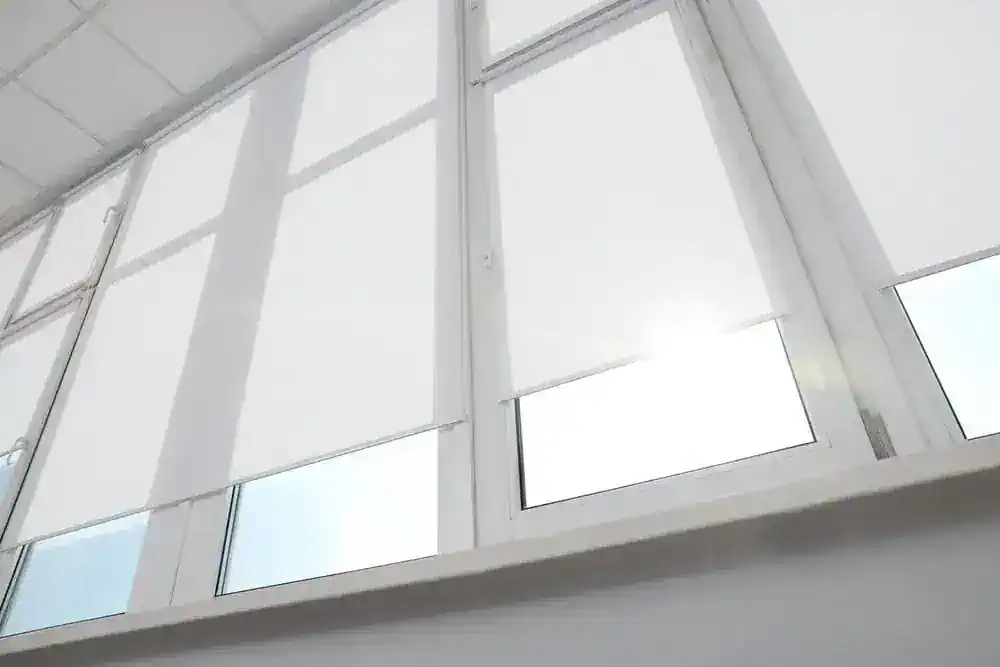
Blackout roller shades made with UV-resistant fabric can block up to 95% of solar heat. Zebra shades — the style with alternating sheer and solid bands — block around 90%. Standard roller shades without UV-rated material land in the 70–80% range. That 15–25% difference isn’t abstract. In a room with three or four west-facing windows, it’s the difference between a livable space and one you avoid all afternoon.
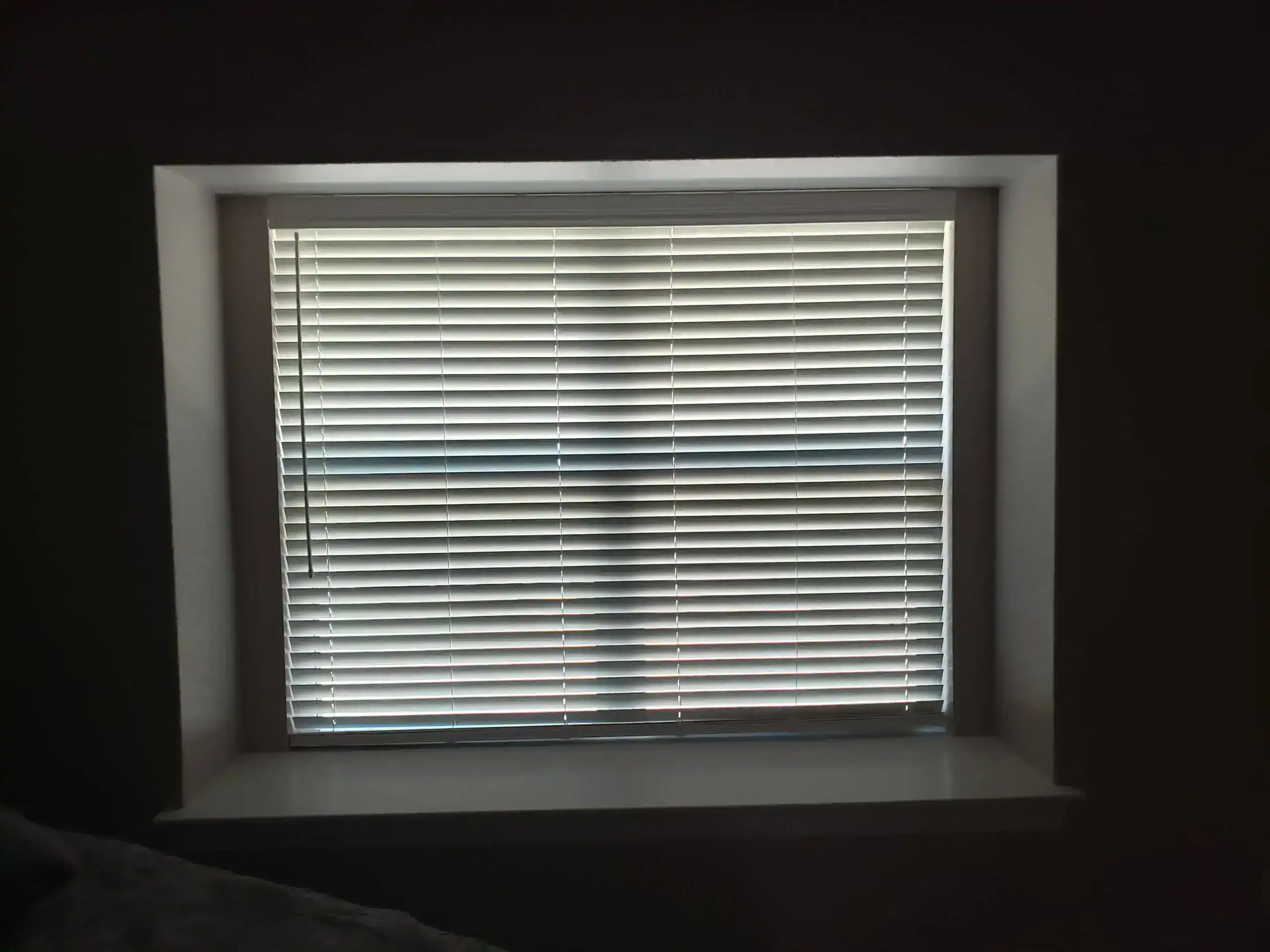
Blinds, by comparison, depend heavily on how tightly the slats close and how well the product fits the window frame. Even high-quality wood blinds leave gaps at the top, bottom, and sides where heat transfers freely. Faux wood blinds hold up better than real wood in humid Tarrant County summers — real wood can bow and crack — but they still don’t seal the way a properly fitted shade does.
For rooms where heat control is the priority — living rooms, master bedrooms, home offices — roller shades with UV-rated fabric consistently outperform blinds. For spaces where you want some light and airflow control but heat isn’t the main concern, blinds are a reasonable and often more affordable option.
One more thing worth knowing: exterior roller shades stop heat before it ever hits the glass. Interior shades, no matter how good, are working after the heat has already entered through the pane. If you have a covered patio or a room with serious solar exposure, exterior shades are in a different category entirely — we’ll cover those in more detail below.
This is one of the most common points of confusion, and it’s worth clearing up before you make a purchase you’ll have to live with for years.
Solar shades are designed to filter light and block UV while maintaining some view-through to the outside. They’re rated by openness factor — a 14% openness factor lets in more light and view; a 1% openness factor is nearly opaque. Solar shades are the right choice for living rooms, kitchens, and home offices where you want to reduce glare and heat without feeling like you’re sitting in a cave. They can block up to 99% of UV rays even at higher openness ratings, which means your floors and furniture stay protected without sacrificing the view.
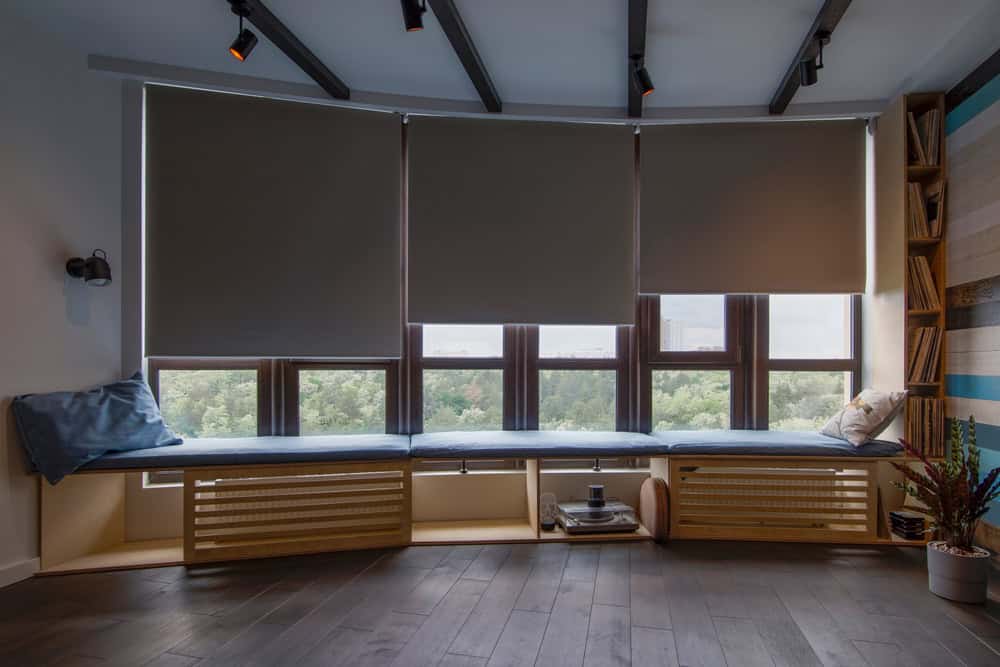
Blackout shades are a different product for a different purpose. They filter out close to 99% of sunlight and are the right call for bedrooms, nurseries, and media rooms where total darkness matters. If you’ve ever tried to sleep past 7 AM in a Texas summer with the wrong window covering, you understand the value.
Where buyers go wrong is assuming solar shades will get dark enough for a bedroom, or that blackout shades are the only option worth considering. The right answer depends on the room. A nursery needs blackout. A kitchen facing west needs solar. A master bedroom might need both — a solar shade for daytime privacy and a blackout layer for sleep.
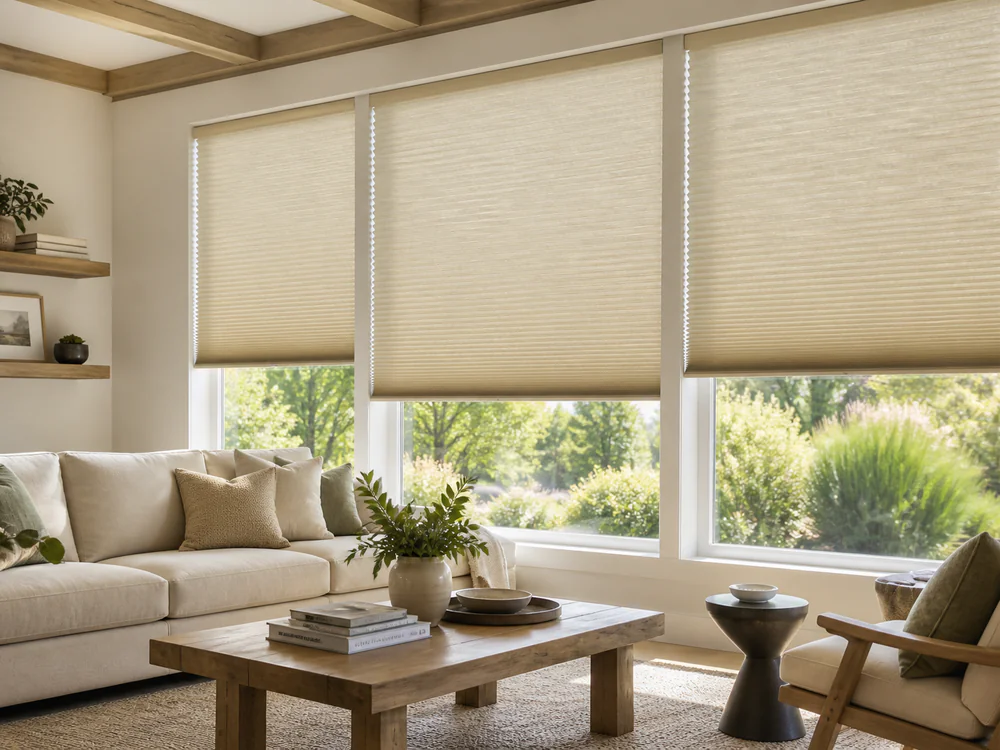
Zebra shades sit somewhere in the middle. The alternating sheer and solid bands give you precise control over how much light comes in throughout the day, but they can’t achieve full blackout even when fully closed. They’re a strong choice for living areas where you want flexibility, but not for rooms where total darkness is the goal.
Most people think about the product and forget about the installation — until something goes wrong. A shade that’s measured incorrectly, mounted on the wrong hardware, or installed without accounting for the window frame leaves gaps that defeat the entire purpose of buying it.
In Tarrant County, this matters more than in markets with uniform housing stock. The county spans everything from 1960s ranch homes in Haltom City to new construction in Mansfield and Keller, and window sizes vary widely. Custom fabrication after an in-person measurement isn’t a luxury — it’s the only way to guarantee the product actually fits and performs the way it’s supposed to.

For standard interior window shades and blinds, no permit is required in Texas. It’s a straightforward installation that doesn’t touch the structure of the home, and in most Tarrant County municipalities — Fort Worth, Arlington, Mansfield, Keller — there’s no licensing requirement for basic window treatment installation.
Motorized systems are where it gets more nuanced. Battery-powered motorized shades don’t require electrical work and typically don’t trigger a permit requirement. Hardwired motorized systems are a different story — if the installation involves connecting to your home’s electrical system, that work needs to be done by a licensed electrician and may require a permit depending on the municipality.
Exterior roller shades add another layer of complexity. When they’re mounted to a structure — a covered patio, a pergola, or the exterior wall of the home — the mounting hardware needs to be appropriate for the surface and load. Masonry, wood framing, and metal posts all require different anchoring approaches. Getting this wrong doesn’t just look bad; it creates a safety issue when a Texas thunderstorm rolls through.
We come out of a construction background, which means we understand how buildings are put together, not just how to hang hardware on them. We know which surfaces need which anchors, when to involve an electrician, and when a project is straightforward enough to complete in a single visit. If a permit is needed, we know it before we start — not after.
For homeowners in HOA communities, which are common throughout Southlake, Keller, and parts of Mansfield, there’s one more consideration: exterior appearance standards. Many HOAs require window treatments to have a neutral-colored backing visible from the street. It’s worth checking your HOA guidelines before selecting a fabric, and it’s something we flag during every in-home consultation.
The sticker price on a stock blind from a big-box store looks appealing right up until you’re replacing it two summers later. In Texas heat, generic imported materials — fabrics not rated for UV exposure, slats that weren’t built for sustained high temperatures — fail faster than they do in cooler climates. The real cost of a cheap window treatment isn’t the purchase price. It’s the purchase price, plus the replacement, plus the faded floor underneath it.
Custom roller shades in Tarrant County typically run $150 to $500 per window, depending on size, material, and whether you’re going motorized. That range covers a lot of ground — a straightforward bedroom window at the lower end, a large living room window with a motorized blackout shade at the higher end. It’s not a trivial investment, but it’s also not the open-ended number people sometimes fear when they hear the word “custom.”
What you’re paying for with custom is precision. Every shade we build is fabricated after we measure your windows in person. Not your estimate of the window size — the actual dimension, accounting for the frame, the depth of the recess if there is one, and the mounting surface. That’s what eliminates the gaps. Gaps at the edges of a window treatment aren’t just an aesthetic problem; they’re where heat transfers, where UV sneaks through, and where the energy efficiency argument falls apart.
For homeowners in newer communities like Burleson or North Richland Hills who are outfitting an entire house at once, the per-window cost adds up — but so does the alternative. A full house of stock blinds that need replacing in two years ends up costing more than a full house of custom shades that are still performing in year seven. That math is worth running before you decide.
We manufacture in Texas. Shorter lead times, quality we can verify directly, and products built with this climate in mind — not designed for a market with 60°F summers and shipped here anyway.
The short version: shades outperform blinds for heat control in most Texas applications, material specification matters more than most buyers realize, and custom fit is what makes the performance numbers actually apply to your home. Solar shades for living areas, blackout for bedrooms, exterior roller shades for patios that you’d actually like to use in September — the right answer is specific to your windows, your rooms, and your goals.
If you’re still not sure what you need, that’s exactly what a free in-home consultation is for. We come to you, measure your windows, look at your exposure, and tell you honestly what’s going to work and what isn’t. No pressure, no guesswork, no ordering online and hoping it fits.
We’ve been working in Tarrant County homes for over a decade. Reach out and let’s figure out what your windows actually need.
Article details:
Share:
Continue learning: