Not sure whether roman shades or cellular shades are right for your home? This guide breaks down the real differences — style, function, and everything in between.
Share:
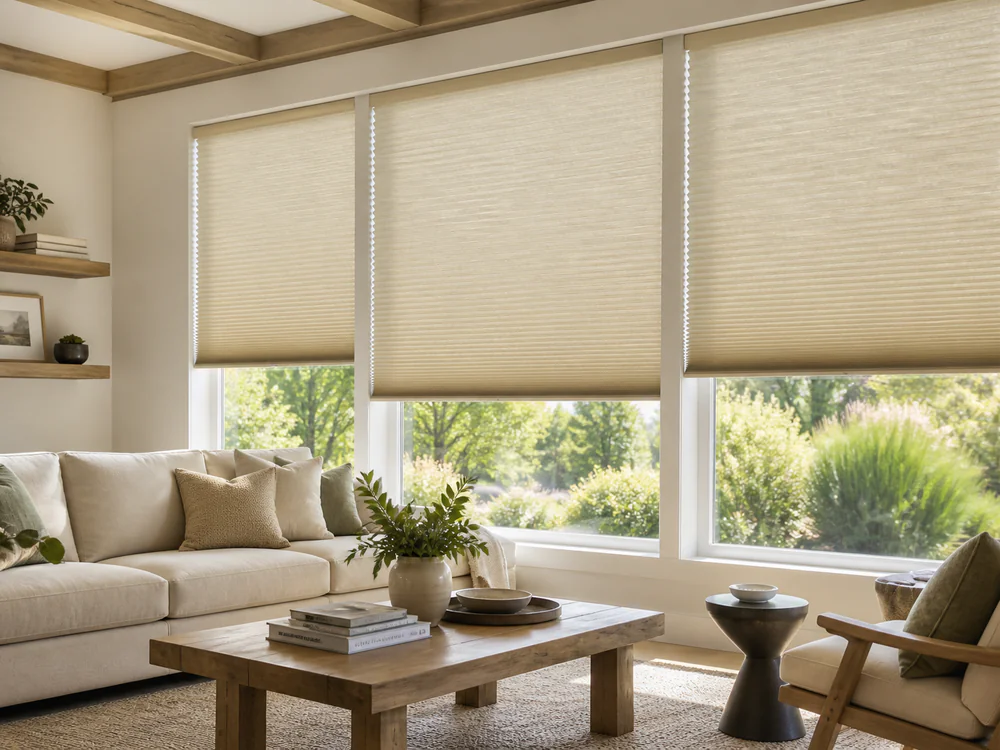
If you’ve spent any time researching window treatments, you’ve probably hit the same wall most Tarrant County homeowners hit — too many options, too much overlap in how they’re described, and not enough straight answers. Roman shades and cellular shades both fall under the “shades” category, but they serve pretty different purposes. One is built around how it looks. The other is built around how it performs. Knowing which problem you’re actually trying to solve makes the decision a lot easier. Here’s what you need to know before you commit to either.
Roman shades are a fabric window treatment that folds up in horizontal layers when raised and lies flat when lowered. That stacking effect — soft, even folds of fabric — is what gives them their distinctive look. It’s a warmer, more finished appearance than blinds or roller shades, which is why they show up so often in living rooms, dining rooms, and master bedrooms where the window is part of the design, not just a functional opening.
They’re available in a wide range of fabrics, from sheer linens that filter light gently to heavier woven materials with blackout liners. That range means roman shades can work in almost any room — the key is matching the fabric opacity to what that room actually needs. A sheer roman shade in a living room lets in soft, diffused light. A blackout-lined roman shade in a bedroom does something completely different.
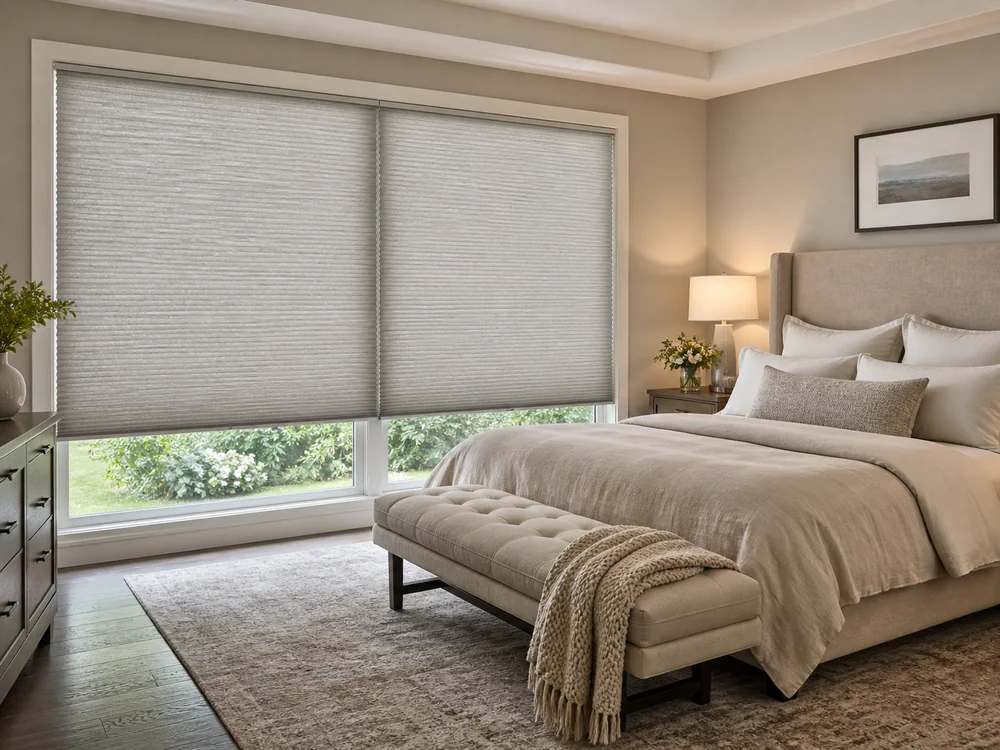
Top down bottom up roman shades offer a feature that sounds like a small upgrade until you actually live with it — and then you wonder how you managed without it. The concept is straightforward: instead of only being able to raise the shade from the bottom, you can also lower it from the top. This lets you control where the open portion of the window sits, not just how much of it is exposed.
For homeowners across Tarrant County, this matters in specific, practical ways. Think about a bathroom window that faces a neighbor’s yard, or a street-facing bedroom in a neighborhood like Arlington’s Pantego area where houses sit close together. You want natural light — but you don’t want to feel like you’re on display. With a top down roman shade, you lower the top portion to let light in from above while the bottom half stays covered at eye level. Privacy and daylight at the same time, without having to choose between them.
It’s also useful in living rooms where you want to preserve the view outside — say, a backyard or a landscaped front yard — without fully opening the shade and losing your privacy from the street. You raise the bottom, keep the top down, and get the best of both.
Top down bottom up roman shades are available in most fabric options, including light-filtering and blackout. The mechanism adds some cost over a standard shade, but for rooms where privacy and light control are both priorities, it’s usually the right call. If you’re not sure whether your windows would benefit from it, that’s exactly the kind of thing worth talking through during a professional measurement consultation — because the answer often depends on how your windows are oriented, what’s outside them, and how you actually use the room.
“Room darkening” and “blackout” get used interchangeably in a lot of product listings, but they’re not the same thing. Room darkening shades reduce light significantly. Blackout shades — when properly sized and installed — eliminate it. For parents of young children, shift workers, or anyone who’s ever tried to sleep through a Fort Worth summer morning when the sun rises before 6:30 AM, that distinction matters more than it might seem.
True blackout roman shades use a tightly woven or coated backing fabric that blocks light at the material level. But the fabric is only part of the equation. If the shade isn’t measured and installed correctly, light bleeds in around the edges — along the sides, at the top, sometimes at the bottom. That’s the gap that cheap or improperly fitted blackout shades always leave. You end up with a shade that’s technically blackout but doesn’t actually create a dark room.
Custom-measured blackout roman shades eliminate this problem. When the shade is built to the exact dimensions of your window — not a stock size that’s close enough — and mounted with proper hardware at the right depth, the light seal is dramatically better. For inside-mount installations, the shade fits within the window frame precisely. For outside-mount, the shade extends beyond the frame on all sides, covering the gaps that would otherwise let light in.
In nurseries and kids’ rooms across Tarrant County — whether you’re in a newer build in Mansfield or an established neighborhood in Hurst — blackout shades are one of those investments that pays off immediately. Better sleep for the kids means better sleep for everyone. And unlike blackout curtains, which bunch, shift, and leave gaps at the sides, a well-installed blackout roman shade stays put and does its job every time.
Cellular shades — also called honeycomb shades — are engineered around a single idea: insulation. The fabric is constructed in a series of hollow cells that trap air between the window and the room. That air barrier slows heat transfer in both directions, which means less heat coming in during summer and less conditioned air escaping in winter.
In Tarrant County, where summer highs routinely hit 100°F and west-facing windows can feel like heat lamps by mid-afternoon, that’s not a minor feature. Windows account for a significant portion of residential heating and cooling energy use. Double-cell honeycomb shades can reduce window heat loss by up to 40 percent compared to uncovered glass. For a home with multiple south- or west-facing windows — common in DFW subdivisions built on east-west street grids — the cumulative effect on your energy bill is real and measurable.
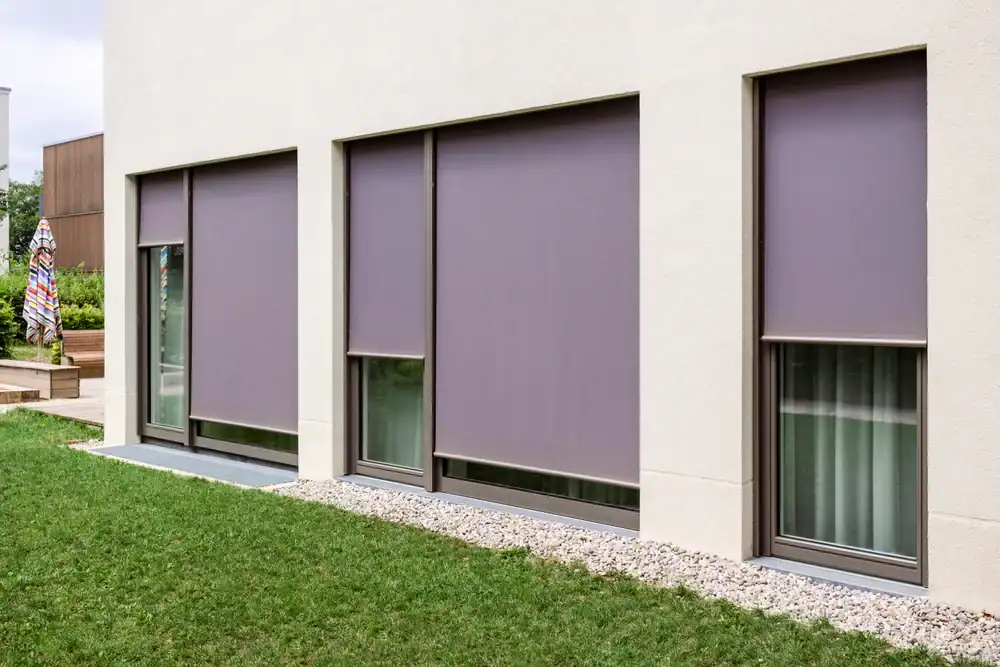
Sliding glass doors are one of the most common window treatment headaches in newer Tarrant County homes. The opening is wide, the glass is floor to ceiling, and the standard options — horizontal blinds, curtain panels — either look cheap or get in the way of the door’s function. Cellular shades designed specifically for sliding glass doors solve both problems.
The key is vertical operation. Rather than raising and lowering like a standard shade, cellular shades for sliding glass doors typically operate on a vertical track system or are configured as a panel track that slides to one side, matching the movement of the door itself. This keeps the door fully functional while giving you the insulation, light control, and clean appearance that cellular shades are known for.
For homes in communities like Viridian in Arlington or Walsh Ranch in Fort Worth — where open-concept layouts and large sliding glass doors to covered patios are standard — this is a particularly relevant solution. Those doors face west in a lot of these floor plans, which means afternoon sun is pouring directly into the main living area during the hottest part of the day. A properly fitted cellular shade on that door can make a noticeable difference in how comfortable the room feels without making the space feel closed off.
Custom sizing matters here more than almost anywhere else. Sliding glass door openings vary significantly between builders and floor plans, and stock-size shades almost never fit correctly. A shade that’s slightly too narrow leaves a light and heat gap along one side. A shade that’s slightly too tall drags on the track or bunches at the bottom. Professional measurement ensures the shade fits the actual opening — not the approximate one.
Bamboo shades occupy a specific niche that neither roman shades nor cellular shades fully fill. They’re woven from natural materials — bamboo, jute, or grasses — which gives them a texture and warmth that fabric shades don’t replicate. In rooms where you want a more organic, relaxed aesthetic, they’re a genuinely different look. Think covered patios that transition into interior spaces, sunrooms, or living rooms with a lot of natural wood or stone.
Functionally, bamboo shades filter light rather than blocking it. The woven construction lets some light through even when fully lowered, which creates a warm, dappled effect that works well in certain rooms and not at all in others. They’re not the right choice for a bedroom where you need darkness, but for a casual living room or a breakfast area where you want to soften the afternoon light without losing it entirely, they do something that solid fabric shades can’t.
In Tarrant County’s climate, bamboo shades hold up well in interior spaces but aren’t recommended for high-humidity areas like bathrooms or for windows that get direct water exposure. For covered patios in Southlake or Colleyville — where the outdoor living space is protected from rain but still gets plenty of Texas sun — natural woven shades can be a good fit aesthetically, though exterior-rated options are typically a better long-term choice for outdoor use.
Custom bamboo shades are available in a range of weave tightnesses, which affects how much light filters through. A tighter weave gives you more privacy and more light control. A looser weave lets in more light and gives the room a more open feel. Like most window treatment decisions, the right choice depends on the specific room, how it’s used, and what’s outside the window — which is why it’s worth getting eyes on the space before committing.
Roman shades and cellular shades are both good products — they’re just good at different things. If the room needs warmth, texture, and design presence, roman shades are usually the right starting point. If the room needs to stay cool, manage glare, or handle a large or awkward window configuration, cellular shades are built for that job. A lot of homes in Tarrant County end up with both, in different rooms, for exactly those reasons.
What matters most is getting the right product in the right window, measured correctly and installed properly. A shade that fits the way it’s supposed to — sealed at the edges, level, operating smoothly — performs better, looks better, and lasts longer than one that’s close enough.
If you’re ready to stop guessing and get a clear answer for your specific windows, we offer free in-home consultations across Tarrant County. You’ll get professional measurement, honest recommendations, and a finished product that’s built for your home — not a showroom floor model.
—
FAQ: Energy Star Tax Credit
Q: Do window shades qualify for the Energy Star tax credit?
A: Some do. Under the Inflation Reduction Act, homeowners can claim up to $1,200 per year through the Section 25C tax credit for qualifying energy-efficient home improvements. Certain cellular shades that meet EPA energy performance criteria may qualify — but the credit is tied to specific product certifications, not just the category. If you’re in Tarrant County and energy costs are part of why you’re looking at new window treatments, it’s worth asking specifically about Energy Star-certified cellular shade options during your consultation. We can point you toward products that meet the criteria.
FAQ: Shades vs Blinds
Q: What’s the actual difference between shades and blinds?
A: Blinds have individual slats — horizontal or vertical — that tilt to adjust light and privacy. Shades are a single continuous piece of fabric that raises and lowers. They look different, operate differently, and suit different rooms. Blinds give you more precise light angle control through slat adjustment. Shades give you a cleaner, softer look and — in the case of cellular shades — better insulation. Neither is universally better. It depends on the room and what you’re trying to accomplish.
FAQ: Window Shade Companies
Q: How do I find a window shade company I can actually trust?
A: Look for a company that measures in person, builds or sources custom products, and handles installation with their own team — not subcontractors. In Tarrant County, that matters because local companies understand the specific demands of the Texas climate: intense summer heat, UV exposure, and the kind of west-facing afternoon sun that makes certain rooms nearly unusable without proper window coverage. A company with a construction background brings an added layer of installation quality that a retail-only operation typically can’t match.
FAQ: Shade Company
Q: What should I expect from a professional shade company versus buying online?
A: When you order online, you’re measuring yourself, choosing materials without seeing them in your space, and installing everything on your own. If something’s off — the fit, the color, the operation — you’re dealing with it alone. A professional shade company measures every window individually, brings samples to your home so you can see how fabrics look in your actual light, and installs the finished product correctly the first time. For most homeowners in Fort Worth, Arlington, and surrounding Tarrant County communities, the difference in the finished result is significant enough that those who’ve tried both rarely go back to the DIY route.
FAQ: Hurricane Screens for Lanai Cost
Q: How much do hurricane screens for a lanai or covered patio cost in North Texas?
A: Pricing varies depending on the size of the opening, the type of screen material, and the mounting system. Kevlar-based hurricane screens are on the higher end of the cost spectrum due to the material’s strength and certification ratings. Fabric-based storm shades and polycarbonate panels are typically more accessible price points. In Tarrant County, where severe weather includes hail, high winds, and occasional tornado activity rather than coastal hurricane conditions, the right product depends on what you’re actually protecting against. The best way to get an accurate number is a site visit, where we can assess the opening, discuss your priorities, and give you a real quote rather than a ballpark.
Article details:
Share:
Continue learning: