Not all window coverings block heat equally. Here's what actually works in Tarrant County — and why the right choice depends on more than just looks.
Share:

If your electricity bill climbed past $250 last August, you’re not imagining things — and you’re not alone. Most Tarrant County homeowners running the AC all summer are fighting a losing battle if their windows aren’t covered properly. The heat isn’t just coming through the air. It’s radiating straight through the glass, warming the room before your HVAC ever gets a chance to catch up.
The good news is you don’t need to replace your windows to fix it. The right window covering — matched to your specific situation — can change how your home feels and what you pay to cool it. We’ve helped hundreds of families across Fort Worth, Arlington, Mansfield, and surrounding areas solve this exact problem. Here’s what you need to know.
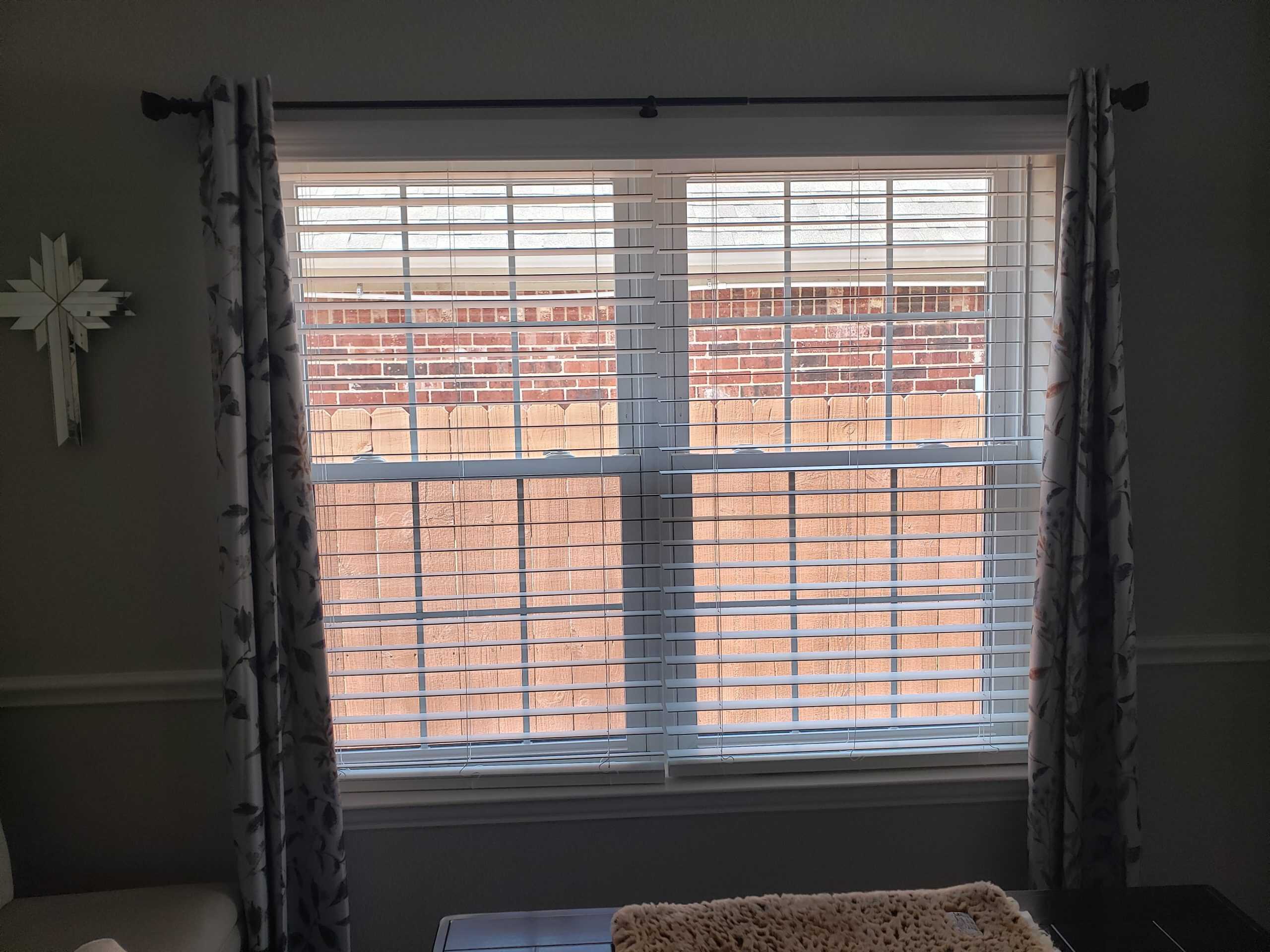
Not every window covering does the same job. Standard vinyl blinds — the kind in roughly 60% of U.S. homes — offer almost no meaningful insulation. They block some light, but heat passes right through them. If you’re serious about reducing solar heat gain and lowering your cooling costs, the type of covering matters more than most people realize.
The U.S. Department of Energy estimates that 76% of sunlight hitting a standard double-pane window converts to heat inside the home. That’s the root of the problem. The best energy efficient window coverings address it at the source — either by trapping air to slow heat transfer, blocking solar radiation before it penetrates the glass, or stopping it before it even reaches the window.

Cellular shades — also called honeycomb shades — are the most thoroughly researched window covering when it comes to energy performance. Lawrence Berkeley National Laboratory simulations, which form the scientific basis for the industry’s independent energy rating system, found that cellular shades outperform every other type of interior shading device on energy savings. That’s not a marketing claim. It’s what the data shows.
The reason comes down to structure. Cellular shades are built with hollow chambers that trap air between the window and your room, creating a thermal buffer. A single-cell shade adds roughly R-2.8 of insulation on its own. A double-cell shade can push your window’s effective R-value to R-5 or higher — more than doubling the thermal resistance of a standard double-pane window without touching the glass itself.
In summer, properly fitted cellular shades can reduce unwanted solar heat gain by up to 80%. In winter, they reduce heat loss through windows by up to 40%. For Tarrant County homes, that matters for more than just July and August. The cooling season here runs roughly five to six months — April through September — which means you’re fighting solar heat gain for the better part of the year.
A double-cell cellular shade on a large south- or west-facing window in a Mansfield, TX or Burleson, TX home isn’t a luxury purchase. It’s one of the most cost-effective things you can do to reduce what you’re spending on electricity. One thing worth understanding: fit is everything. A cellular shade with gaps at the sides or top allows heat to bypass the covering entirely, which wipes out most of the efficiency benefit. This is why custom measurement and professional installation matter — a poorly fitted shade is not much better than no shade at all.
Solar shades and cellular shades are both strong performers, but they work differently and suit different situations. Understanding the distinction helps you avoid buying the wrong thing for your specific windows.
Solar shades are designed to filter and block solar radiation — the direct sunlight that drives heat gain — while preserving your view to the outside. They’re rated by “openness factor,” expressed as a percentage: a 1% openness fabric blocks significantly more light and heat than a 10% openness fabric. For south- and west-facing windows in Fort Worth, TX, Arlington, TX, or Keller, TX — where afternoon sun hits hardest — a lower openness factor (1–3%) can dramatically reduce glare and heat without making the room feel closed off.
Cellular shades, by contrast, are the better choice when insulation is the priority. They don’t preserve views the same way, but their air-trapping structure gives them a higher R-value and makes them particularly effective in rooms where you want to hold conditioned air in and keep outdoor temperatures out. Think bedrooms, home offices, and living rooms with large glass panels that face the afternoon sun.
In practical terms: if you’re dealing with glare and heat on a window where the view matters, solar shades are the right call. If you’re trying to insulate a room and reduce how hard your HVAC works, cellular shades win on thermal performance. Many Tarrant County homeowners end up using both — solar shades in living areas facing south or west, cellular shades in bedrooms and utility rooms where insulation is the priority.
Motorized versions of both are worth considering. A shade that automatically closes when the sun hits your west-facing windows at 2 PM — even when you’re not home — delivers measurably higher energy savings than one that relies on someone remembering to close it. We carry PowerView motorization options that integrate with most smart home systems, which means your shades can work on a schedule without any manual effort.
Here’s something most window covering content leaves out entirely: exterior shading outperforms interior shading for heat control. Not by a small margin, either. When you stop solar radiation before it reaches the glass, there’s no heat to transfer into the room. Interior shades — even the best cellular shades — absorb some heat and re-radiate a portion of it inward. Exterior shades don’t have that problem.
This is particularly relevant in Tarrant County, where homes in Crowley, TX, Benbrook, TX, and Grand Prairie, TX commonly feature large sliding glass doors, covered patios, and generous west-facing glass that takes a beating from afternoon sun between April and October. We offer both interior and exterior roller shades — which is not something every local window covering company can say.

The physics are straightforward. Solar radiation hits your window and converts to heat. If an interior shade is present, some of that heat is blocked — but the shade itself absorbs warmth and releases part of it into the room. An exterior shade intercepts the radiation before it reaches the glass, which means the window stays cooler and significantly less heat enters the home in the first place.
The numbers back this up. Exterior awnings reduce solar heat gain by 65% on south-facing windows and by 77% on west-facing windows. For a home in Southlake, TX or Keller, TX with a large west-facing living room wall, that’s a meaningful reduction in the heat load your AC is fighting every afternoon from May through September.
Exterior roller shades serve a dual purpose that interior shades can’t match. They protect the interior from heat gain, and they extend the usable hours of covered patios and outdoor living spaces — which is a real quality-of-life issue for Tarrant County homeowners who’ve invested in outdoor kitchens and entertainment areas. A patio that’s unusable from noon to 7 PM for five months of the year is a significant loss. Exterior roller shades change that equation.
The other thing worth noting: exterior shades protect your glass and interior finishes from UV damage year-round. North Texas UV intensity is high enough that furniture, hardwood floors, and artwork near unprotected windows fade noticeably over time. Exterior shading addresses that problem at the source rather than managing it from inside.
The honest answer is: it depends on your windows, their orientation, and how your home is built. But here’s a useful framework for thinking through it.
If your biggest issue is a room that overheats — especially one with large south- or west-facing glass — exterior shading or a low-openness solar shade will have the most immediate impact on comfort and cooling load. If your issue is more diffuse, with the whole house feeling warm and the AC cycling constantly, double-cell cellular shades throughout the home will deliver the most consistent improvement in thermal performance.
The DOE estimates that a typical home with 15 windows can save $100 to $180 per year on heating and cooling costs with properly fitted cellular shades alone. In Tarrant County, where the cooling season runs nearly half the year and summer electricity bills regularly reach $220 to $280 per month for average-sized homes, the savings potential skews higher. Texas electricity rates have also risen roughly 28% over the past five years, which means the return on a quality window covering investment improves every year you own the home.
For homeowners in older Arlington, TX or Benbrook, TX neighborhoods with single-pane windows, the case is even stronger. Window replacement for a typical Tarrant County home runs $10,000 to $30,000. Energy-efficient window coverings address the same root problem — solar heat gain through glass — at a fraction of that cost, with no construction disruption and no permits required. That’s not a consolation prize. For most homeowners, it’s the smarter financial decision.
What we consistently tell clients across Fort Worth, TX, Mansfield, TX, and Pantego, TX is this: the product type matters, the fit matters, and the installation matters. A well-chosen, custom-measured, professionally installed window covering is a fundamentally different product than a generic off-the-shelf shade with gaps around the frame. The energy performance gap between the two is not small.
There’s no single answer that works for every home. The right window covering depends on which direction your windows face, how your home is built, what you’re trying to solve — comfort, cooling costs, UV protection, or all three — and whether interior or exterior shading makes more sense for your specific situation.
What’s clear is that the type of covering you choose makes a real difference. Cellular shades, solar shades, and exterior roller shades all perform meaningfully better than the standard vinyl blinds most homes start with — and each has a specific situation where it’s the strongest choice.
If you’re in Tarrant County and want a straightforward conversation about what would actually work in your home, A Plus Shutters & Shades offers free in-home consultations. We’ll look at your windows, talk through your priorities, and give you an honest recommendation — no pressure, no guesswork.
Article details:
Share:
Continue learning: