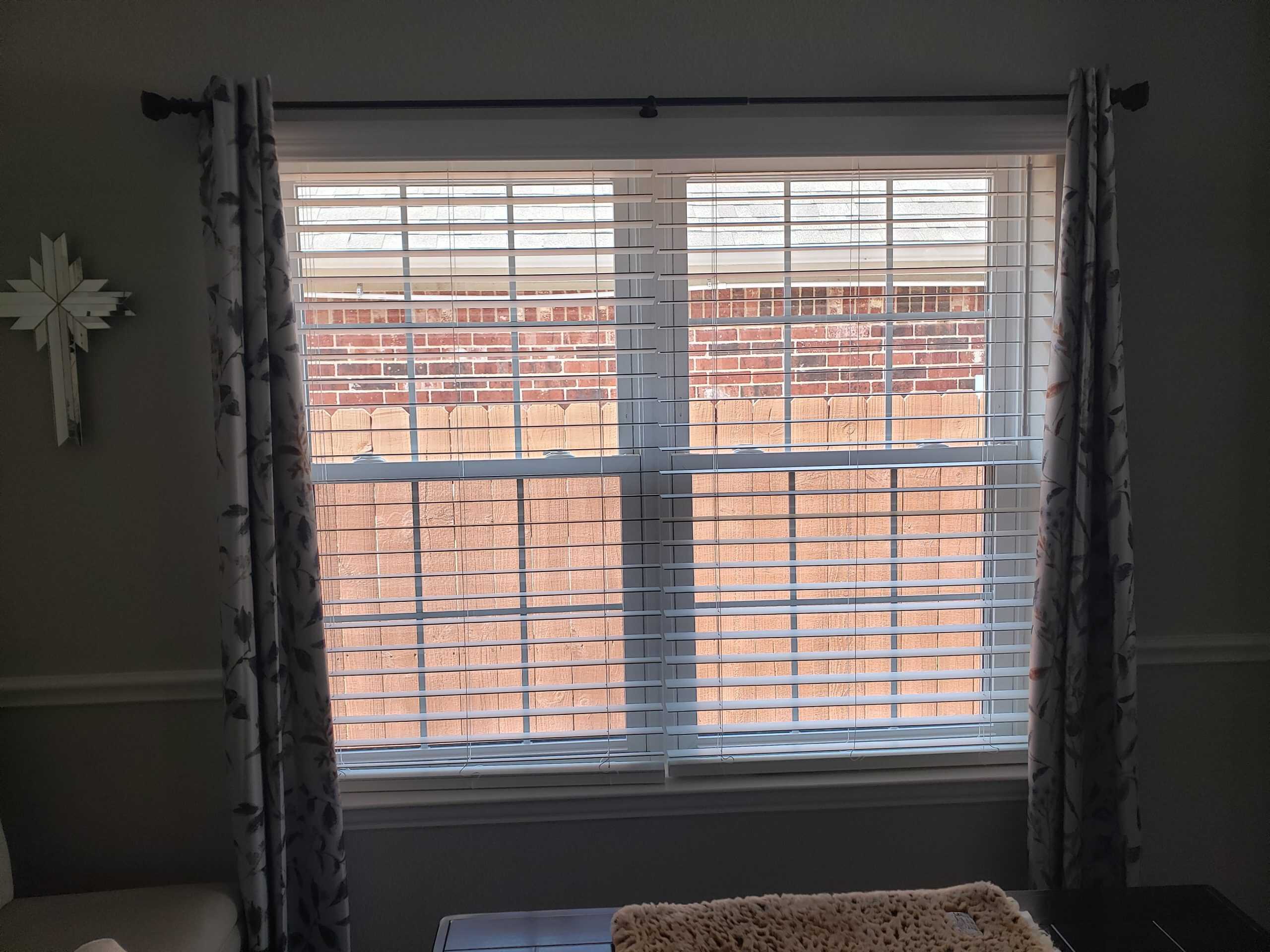
Not all "blackout" window treatments are created equal. Here's what actually blocks light in a Tarrant County bedroom — and what doesn't.
Share:

In most parts of the country, “blackout” is a marketing word. In Tarrant County, it’s a survival strategy. Fort Worth’s summers average 11 hours of sunshine a day in July, and east-facing bedrooms start taking direct sun before 6 a.m. If your current window treatments aren’t built for that, you feel it — in your sleep, in your mood, and in your electric bill.
The good news is there’s a real solution. The less obvious news is that not every product labeled “blackout” actually delivers it. We’ve walked hundreds of Tarrant County homeowners through what works, what doesn’t, and why the right fit for your bedroom might not be what you’d expect.
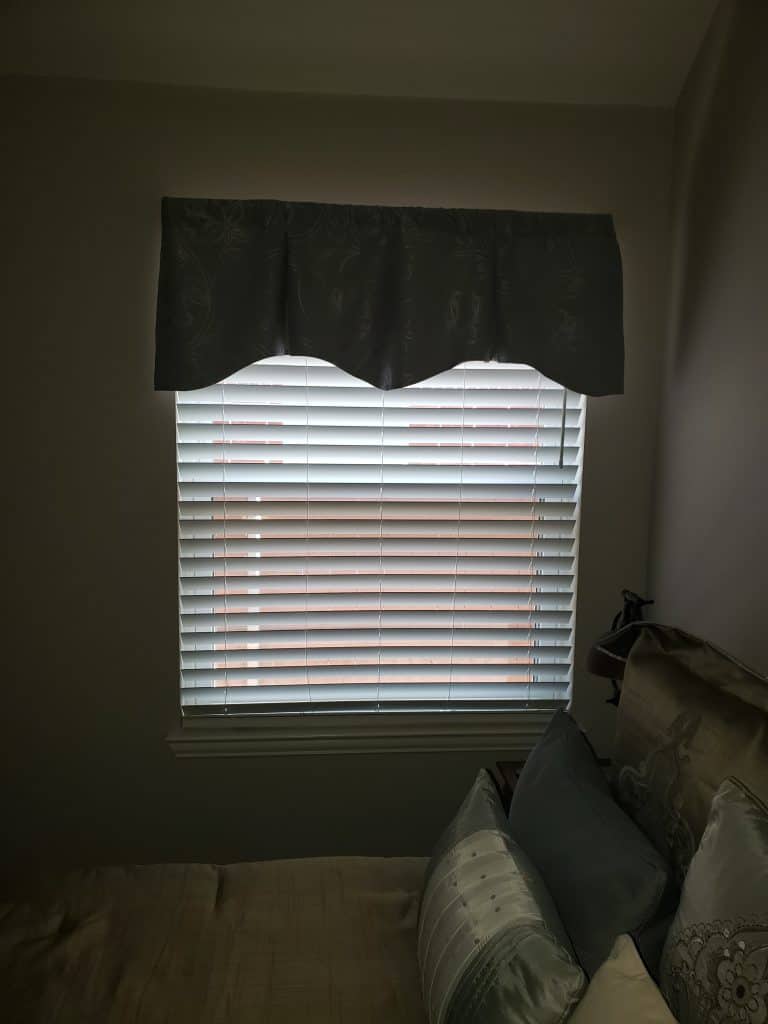
When most people search for blackout blinds for a bedroom, they picture a roller shade — a clean, minimal panel that rolls up during the day and drops down at night to block the light. Done right, that’s exactly what you get. Done wrong, you get a blind that blocks 99% of light through the fabric and lets the other 1% pour in through the gap between the shade and the window frame.
That gap is the real problem. Standard retail blinds are made to the closest standard size, not your actual window. Even a quarter inch of space on either side is enough to let in a strip of morning light — and in a Tarrant County summer, that strip hits your eyes at 5:30 a.m. like a spotlight.
Custom blackout blinds are measured and fabricated to your exact window dimensions, which is the only real way to eliminate that edge gap and get the darkness your bedroom actually needs. We measure every window in person to ensure a perfect fit.
Roller shades and cellular shades are both excellent blackout options, but they perform differently and suit different bedrooms. Understanding the distinction saves you from buying the wrong thing.
Blackout roller shades are the sleeker of the two. They use a single layer of UV-resistant fabric that rolls onto a tube at the top of the window. When made with quality material and installed with a proper inside mount or side channels, they can block virtually all incoming light. They’re a strong choice for modern bedrooms, and they hold up well in Texas heat — UV-resistant fabric resists the kind of warping and fading that cheaper imported shades develop after a summer or two of direct sun exposure.
Blackout cellular shades — sometimes called honeycomb shades — work on a different principle. Instead of a flat panel, they’re made of a series of air-trapping cells that form an insulating barrier between the glass and your room. Oxford University lab testing has certified that cellular shades with sealed side tracks provide 30% energy savings and 30% noise reduction compared to uncovered windows.
In Tarrant County, where August average highs reach 95.7°F and AC units run almost continuously from May through September, that insulation matters. The honeycomb structure also gives cellular shades a softer, more textured look that works well in traditional or transitional bedroom styles.
The honest answer to which is better? It depends on your window orientation, your aesthetic, and how much heat gain you’re dealing with. West-facing bedrooms — which take intense afternoon sun — tend to benefit most from the insulating properties of cellular shades. East-facing bedrooms, where the problem is early morning light rather than sustained heat, are often well-served by a quality roller shade with proper edge coverage.
Either way, the performance difference between a custom-fit shade and an off-the-shelf option is significant enough that it’s worth getting the measurement right the first time. Roman shades with a blackout liner are also an option for buyers who want a softer, more decorative look without sacrificing light control. They’re not as common a recommendation for primary bedrooms in Tarrant County — the fabric folds can be harder to keep clean in dusty conditions — but for a guest room or a bedroom where aesthetics carry more weight, they’re a legitimate choice.
Most window treatment guides are written for a generic national audience. They mention “light control” and “privacy” and leave it there. Tarrant County is not a generic market.
Fort Worth’s summer of 2023 was the third-hottest on record, with an average temperature of 88.7°F through September. Eighteen people in Tarrant County died from heat-related causes in 2022 — the highest count in a decade. These aren’t abstract statistics. They reflect a climate where the sun is genuinely aggressive, and where windows that face east or west aren’t just a comfort issue — they’re a meaningful contributor to how hot your home gets and how much your AC has to work to compensate.
There’s also a housing stock factor specific to this area. Older homes in Arlington and established Fort Worth neighborhoods — particularly those built between the 1970s and 1990s — frequently have non-standard window dimensions. Builders weren’t working from a universal template, and the result is windows that don’t match any size on the shelf at a big-box store.
If you’ve ever bought a blind that was supposed to fit a 36-inch window and ended up with a visible gap on one side, this is why. Custom fabrication to your exact measurements isn’t a luxury upsell in these homes — it’s the only way to get the product to actually work.
Then there’s the shift worker population. Tarrant County is home to tens of thousands of people who work nights — nurses at JPS Health Network and Texas Health Resources, airline employees at DFW Airport, logistics workers at major distribution centers throughout the county. These buyers don’t need “room darkening.” They need their bedroom to feel like midnight at 10 a.m. on a Tuesday in July. That’s a completely different standard, and it requires a solution built to meet it.
Plantation shutters are one of the most requested window treatments in Tarrant County, and for good reason. They look sharp, they last for decades, and they give you real control over light and privacy through the day.
But there’s a specific misconception worth clearing up before you make a decision based on it: plantation shutters do not achieve true blackout. Light enters through the gaps between louvers and around the frame perimeter, even when the louvers are fully closed. For most rooms, that’s completely fine. For a bedroom where you need total darkness, it’s worth knowing upfront.

Shutters are excellent for bedrooms where light control is a priority but total blackout isn’t the goal. If you want to reduce morning glare, maintain privacy from the street, and have a window treatment that looks intentional and holds its value over time, shutters deliver on all three. They’re also a strong choice for bedrooms where aesthetics matter as much as function — a master bedroom in a Southlake or Colleyville home, for example, where the window treatment is part of a broader design scheme and the goal is a polished, finished look.
The other scenario where shutters work well in a bedroom is as part of a layered approach. A set of plantation shutters handles daytime privacy and light management, while a blackout roller shade or cellular shade mounted behind them handles the nighttime darkness. You get the best of both — the aesthetic weight of shutters during the day, and genuine blackout performance when you need to sleep. This is a more involved installation, but it’s not uncommon, and it’s worth considering if you love the look of shutters and don’t want to give up the sleep quality angle.
What shutters aren’t ideal for is a bedroom where the primary need is total light elimination — a shift worker’s room, a nursery where a baby needs to sleep through midday, or a bedroom with east-facing windows that get direct sun before 6 a.m. In those cases, a dedicated blackout shade will outperform shutters at their core job, and trying to make shutters do something they’re not designed to do leads to frustration and a second purchase.
The honest conversation — which is the one we have with every homeowner we meet — is about matching the product to the actual need. Shutters are a premium, long-lasting choice for the right application. They’re not the right answer for every bedroom, and we’ll tell you that before you spend anything.
**What’s the difference between “room darkening” and “blackout”?**
Room darkening shades reduce light by roughly 85 to 95 percent. That’s enough to make a room feel dim, but it still lets in a visible glow around the edges — especially in a Tarrant County summer when the sun is intense and the days are long. True blackout products, when properly fitted, eliminate that remaining light. The distinction matters most for light-sensitive sleepers, shift workers, and anyone who’s experienced the frustration of buying something labeled “blackout” that still lets in enough light to read by.
**Will blackout blinds actually help with the heat in my bedroom?**
Yes, but the degree depends on the product. Blackout roller shades made with UV-resistant fabric can block up to 95% of solar heat — meaning the heat that would have radiated through the glass into your room is largely stopped at the window. Blackout cellular shades go further, adding an insulating air barrier that reduces heat transfer between the glass and your interior.
In Tarrant County, where August highs average 95.7°F and electric bills climb sharply through summer, that thermal performance is a real, tangible benefit — not just a marketing claim. We’ve had homeowners report noticeable reductions in their cooling costs after installing custom blackout shades on west-facing bedrooms.
**My windows are an odd size — can I still get custom blackout blinds?**
This is one of the most common questions we hear from homeowners in Arlington and older Fort Worth neighborhoods, and the answer is yes. Custom fabrication means your shades or blinds are made to your exact window dimensions, regardless of whether they match any standard size. In fact, this is precisely why custom solutions exist — older Tarrant County homes were built without a universal window template, and off-the-shelf blinds simply don’t fit them properly. Getting the measurement right is the first step, and it’s something we handle as part of the consultation process.
**Do I need motorized blackout blinds for my bedroom?**
Not necessarily, but motorized blackout shades offer some genuinely useful features in a bedroom context. The ability to open shades gradually with your alarm — rather than snapping from full blackout to full sun — is a real quality-of-life improvement for people who are light-sensitive in the morning. Motorized options also work well for hard-to-reach windows, and they integrate with smart home systems if that’s part of how your home is set up. It’s worth asking about during a consultation, even if you’re not sure you want it yet.
**How do I know which type of blackout treatment is right for my bedroom?**
Window orientation is a good starting point. East-facing bedrooms deal with early morning direct sun — that’s a light problem more than a heat problem, and a well-fitted blackout roller shade handles it effectively. West-facing bedrooms absorb afternoon heat for hours, which makes the insulating properties of cellular shades more relevant. Beyond orientation, your priorities around aesthetics, budget, and whether you want a layered solution (shutters plus a blackout shade) all factor in. That’s a conversation worth having in person, with someone who can look at your actual windows.
The bedroom is the one room in your home where window treatments have a direct effect on your health. Light at night disrupts sleep. Heat through an unprotected west-facing window makes a bedroom uncomfortable for hours. And a product that’s labeled blackout but doesn’t fit your window properly doesn’t solve either problem.
The right answer depends on your windows, your sleep needs, and your home — not on what happens to be in stock at a big-box store. Whether that’s a custom blackout roller shade, a cellular shade with sealed side tracks, a layered shutter-and-shade setup, or something else entirely, the goal is the same: a bedroom that’s actually dark when you need it to be.
If you’re ready to figure out what that looks like for your home, A Plus Shutters & Shades offers free in-home consultations across Tarrant County — no pressure, no obligation, just a real conversation about your windows and what will actually work.
Article details:
Share:
Continue learning: