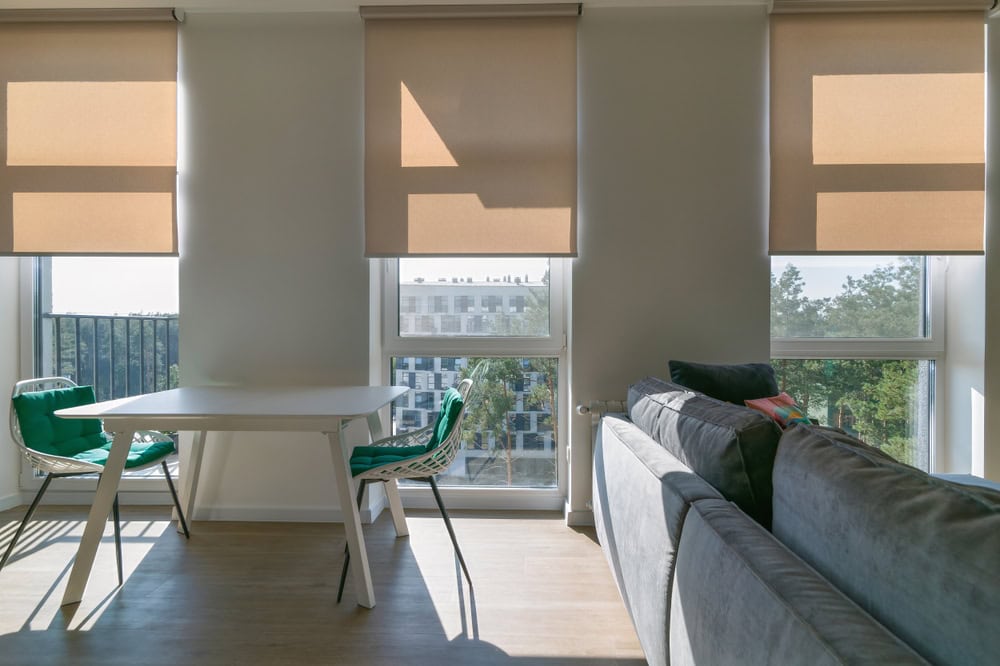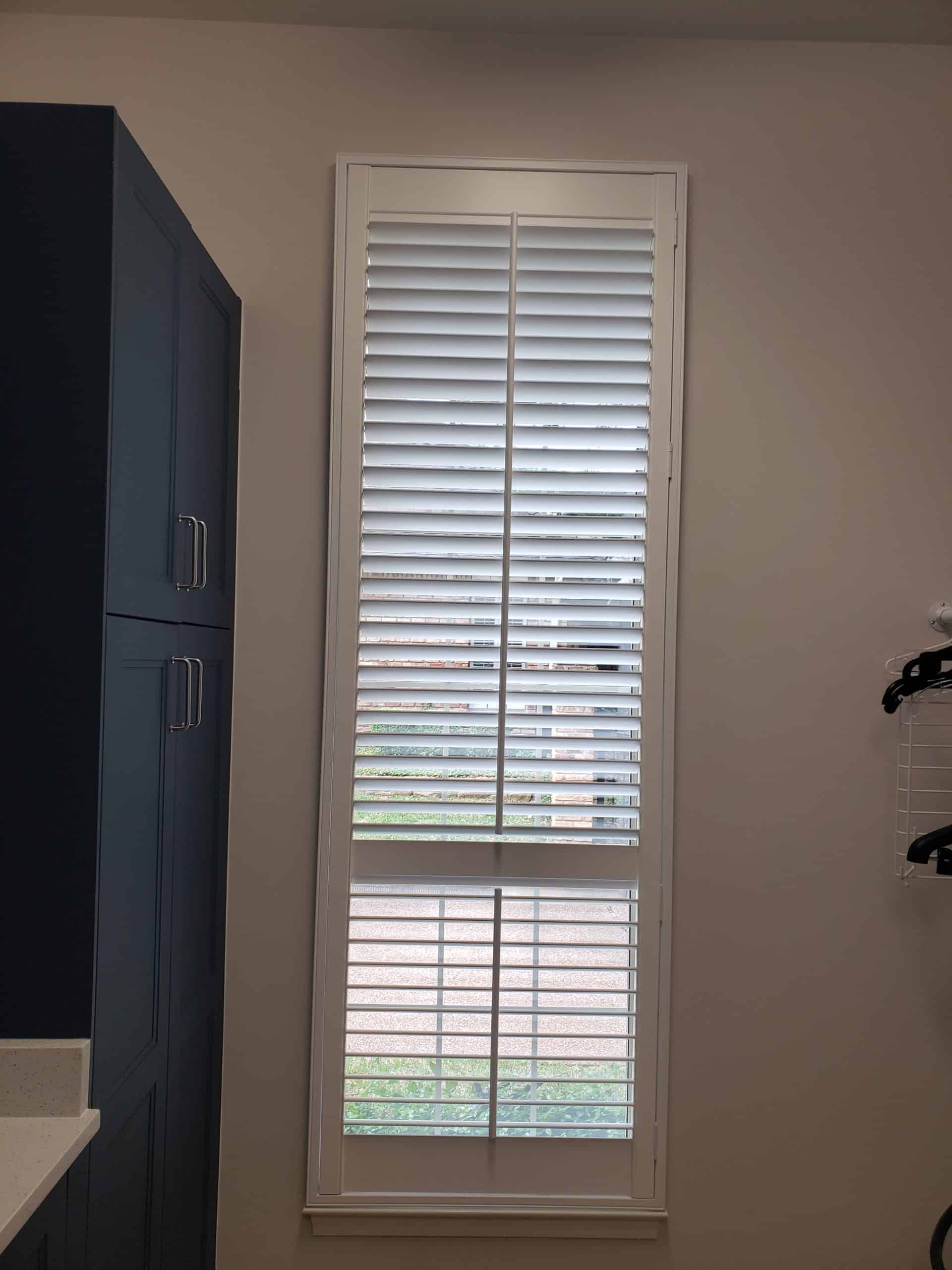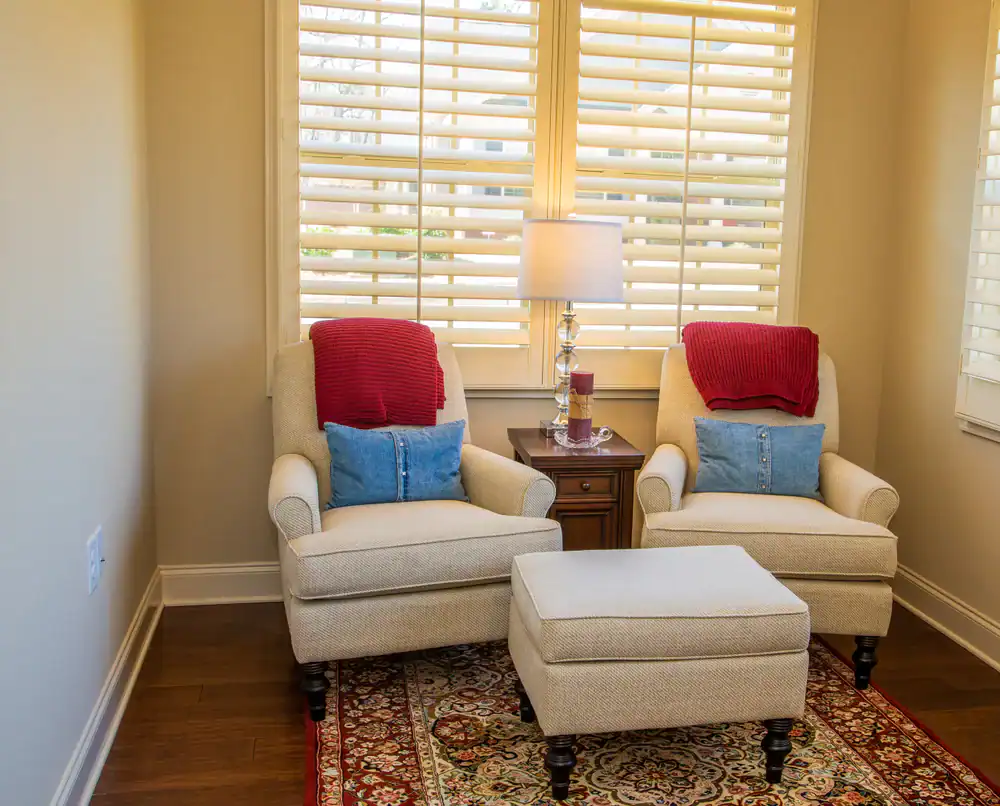
Natural, warm, and genuinely beautiful — woven wood shades are a smart choice for Texas homes when you know what to look for.
Share:

There’s a reason woven wood shades keep showing up in Tarrant County living rooms, master bedrooms, and covered patios. They bring something that blinds and rollers just can’t — actual warmth. Real texture. A look that feels intentional without trying too hard.
But if you’ve ever wondered whether natural fiber shades can actually hold up in a Texas summer, or whether they’ll give you enough privacy, or whether they even work outdoors — those are fair questions. We answer all of them on this page. By the end, you’ll know exactly what to look for, what to avoid, and what a properly installed set of woven wood shades can do for your home.
Woven wood shades are exactly what the name suggests — window coverings made from natural materials like bamboo, reeds, grasses, jute, and rattan, woven together into panels that filter light while adding organic texture to a room. They’re not a trend. More than 50 million units sell annually worldwide, and demand for natural fiber window treatments keeps growing as homeowners move away from the sterile look of faux wood and mass-market rollers.
In Tarrant County, they work particularly well in living rooms, dining rooms, and bedrooms — spaces where you want warmth and light control without blocking the view entirely. The natural weave filters harsh sunlight beautifully, softening it rather than shutting it out. And in a state where home values in our region rose over 10% in a single year, the right window treatment isn’t just aesthetic — it’s part of protecting and enhancing what you’ve invested in.

Bamboo is the most recognizable material in the woven wood category, and it’s often what people picture when they search for natural shades. But it’s one of several options — and in a climate like ours, the material choice matters more than most buyers realize.
Bamboo is dense, rigid, and relatively resistant to warping, which makes it a solid choice for Tarrant County homes. It’s also fast-growing and renewable, which matters to homeowners who care about sustainability. Reeds and grasses tend to have a softer, looser weave that creates a more casual, layered look — great for a modern farmhouse aesthetic, which is common throughout Mansfield, Keller, and the newer Arlington suburbs. Jute and rattan bring a finer texture that reads more refined and works well in transitional or contemporary interiors.
The real variable in our climate isn’t the material itself — it’s whether the shade has a liner. Tarrant County gets intense UV exposure from May through September, and unlined natural fiber shades in direct sunlight will fade and become brittle faster here than in almost any other U.S. climate. A UV-blocking or light-filtering liner protects the fibers from the inside out, dramatically extending the life of the shade while also adding privacy and improving light control.
This is where the liner conversation matters. Without one, a south- or west-facing window in Fort Worth will age a woven wood shade quickly. With the right liner, that same shade can look great for a decade. The liner choice — privacy, light-filtering, or blackout — also depends on the room. A bedroom facing west needs something different than a dining room with north-facing windows. Getting that right requires knowing the space, not just the product.
Bamboo also expands and contracts with humidity changes, which is worth knowing in Tarrant County where summers are humid and winters are dry. Proper installation technique accounts for this — another reason professional measuring and mounting matters more than buyers often expect.
Off-the-shelf woven wood shades look fine in a catalog. In your actual windows, the story is often different. Even a small sizing error — we’re talking 1/8 of an inch — creates visible light gaps on the sides, poor operation, and a finished look that never quite feels right. It’s one of the most common complaints from homeowners who ordered online or bought from a big-box store.
Custom sizing means we measure your windows before anything is manufactured. Every window in your home has its own quirks — depth of the frame, whether the casing is square, how the trim sits. Older homes in Fort Worth’s Fairmount or Ryan Place neighborhoods often have non-standard window configurations that require real attention. Newer construction in Southlake or Haslet might have oversized windows or angled frames that need specific bracket placement. None of that is guesswork when the person doing the measuring has a construction background.
There’s also the question of mounting — inside mount versus outside mount changes the visual proportions of the shade and how much light comes in around the edges. Inside mounts require precise depth clearance; outside mounts need proper wall anchoring. Getting this right isn’t complicated if you know what you’re doing, but it’s easy to get wrong if you don’t. A shade that’s measured correctly and installed cleanly looks like it was always part of the room. One that isn’t looks like an afterthought.
We custom-measure every window and custom-manufacture every shade to those exact specifications. That’s just how window treatments should work.
Ask anyone in Tarrant County and they’ll tell you the same thing: from roughly May through September, the patio is off-limits. The heat index regularly pushes past 105°F, and even a covered patio without proper shading becomes unusable by mid-morning. That’s nearly half the year lost to a space most homeowners in Southlake, Mansfield, and Keller invested real money in building.
A retractable sun shade for a patio changes that calculation. A properly installed exterior shade system blocks direct solar radiation before it heats the space underneath — which is fundamentally different from a ceiling fan or a patio umbrella. You’re not cooling the air after the heat gets in; you’re blocking it at the source. The result is a covered patio that’s genuinely usable through the Texas summer, not just during the mild shoulder months.

Standard interior woven wood shades are not rated for outdoor use. This is a common misconception — and an expensive one if you install them on a patio and watch them deteriorate within a season. Outdoor applications require specifically outdoor-rated fabrics that are engineered for UV exposure, moisture, and temperature swings.
Custom outdoor roller shades use materials designed to handle exactly those conditions. High-performance outdoor fabrics block UV radiation, resist moisture without growing mold, and maintain their color and structural integrity through years of Texas summers. Some are designed to preserve the view while blocking heat — a major advantage over solid panels. Others provide full privacy for outdoor entertaining spaces. The right choice depends on the orientation of your patio, how much direct sun it gets, and what you’re using the space for.
The other variable is the control system. Motorized outdoor roller shades have become the practical standard for larger patio installations — especially for shades that span 10 or 12 feet or more. Raising and lowering a large exterior shade manually every day is tedious. A motorized system, controllable by remote or integrated with a smart home setup, makes it effortless. Given that 69% of U.S. households now have at least one smart home device, this kind of integration is less of an upgrade and more of an expectation.
We specialize in exterior roller shades — it’s not an add-on service or something we figured out along the way. It’s a dedicated specialty, and the difference shows in how the installations hold up over time.
Installing an outdoor shade in Tarrant County isn’t the same as installing one in a mild coastal climate. North Texas spring storms bring serious wind loads — and an exterior shade that’s mounted without proper structural anchoring will fail. Not maybe. It will fail. A shade panel that catches a strong gust and pulls free from a poorly mounted bracket can damage the shade, damage the structure it’s attached to, and create a safety hazard.
Proper outdoor shade installation means using wind-rated mounting hardware, anchoring into structural members rather than just surface material, and selecting a retraction system that allows the shade to be rolled up quickly when severe weather approaches. These are construction decisions, not just window treatment decisions. There’s a meaningful difference between a company that installs interior blinds and occasionally hangs an outdoor shade, and a company that brings over a decade of construction experience to every exterior installation.
Our parent company, A Plus Home Remodel, has been doing construction work in this area for more than ten years. That background isn’t incidental — it’s why we’re comfortable taking on exterior installations that other window treatment companies won’t touch, including non-standard configurations, large spans, and structural anchoring in older homes where the framing requires real attention.
The other outdoor-specific consideration is UV treatment. Even outdoor-rated fabrics benefit from proper installation positioning that minimizes unnecessary UV stress when the shade is retracted. A shade that’s stored in direct sunlight all day when it’s not in use will age faster than one that’s positioned thoughtfully. These are the details that separate an installation that lasts from one that needs replacing in three years.
If your patio is underused because of the Texas sun, the fix is real and it’s available. It just needs to be done right.
Woven wood shades are one of the few window treatments that genuinely improve with the right installation. The material, the liner, the sizing, the mounting — every detail compounds. Get them right and you have something that looks intentional, performs well in Texas conditions, and holds up for years. Get them wrong and you have a shade that gaps, fades, or fails before it should.
The same principle applies outdoors. A retractable patio shade that’s properly specified and installed gives you your outdoor space back. One that’s installed without the right hardware or the right fabric is a short-term fix at best.
If you’re somewhere in Tarrant County — Fort Worth, Arlington, Mansfield, Keller, Southlake, or anywhere in between — and you’re thinking about natural shades for your interior or exterior, we’re happy to take a look. We offer free in-home consultations, and we bring samples so you can see how the materials actually look in your space before committing to anything. Reach out and we’ll figure out what actually makes sense for your home.
Article details:
Share:
Continue learning: