Not sure whether you need exterior shutters, interior plantation shutters, or both? Here's what actually matters for Texas homes.
Share:
If you’ve been staring at your windows trying to figure out whether you need exterior shutters, interior plantation shutters, or something else entirely — you’re not alone. Most homeowners in Tarrant County start this search with a vague idea of what they want and end up more confused after reading a few generic articles that could’ve been written about any house, anywhere.
This isn’t that. We’re going to walk through what actually separates exterior and interior shutters, what they cost in this market, what holds up in Texas heat, and how to make a decision that makes sense for your home specifically. By the end, you’ll know exactly what to ask for.
Exterior shutters mount on the outside of your home — on the facade, framing the window from the street. Interior plantation shutters mount inside the window frame, on the wall, or within the opening itself. They look completely different, serve different primary purposes, and are made from different materials for good reason.
The confusion happens because both are called “shutters,” both affect light and privacy, and both can dramatically change how a room looks and feels. But they’re not interchangeable. Knowing which problem you’re actually trying to solve is the first step toward picking the right one — or figuring out that you need both.
Decorative exterior shutters — the louvered or raised-panel style you see flanking windows on traditional homes — are mostly aesthetic. They add curb appeal, frame the window from the street, and give the facade a finished look. In a lot of Tarrant County neighborhoods, particularly in established parts of Fort Worth and Arlington, they’re a standard architectural feature. But they don’t open, close, or do much functionally.
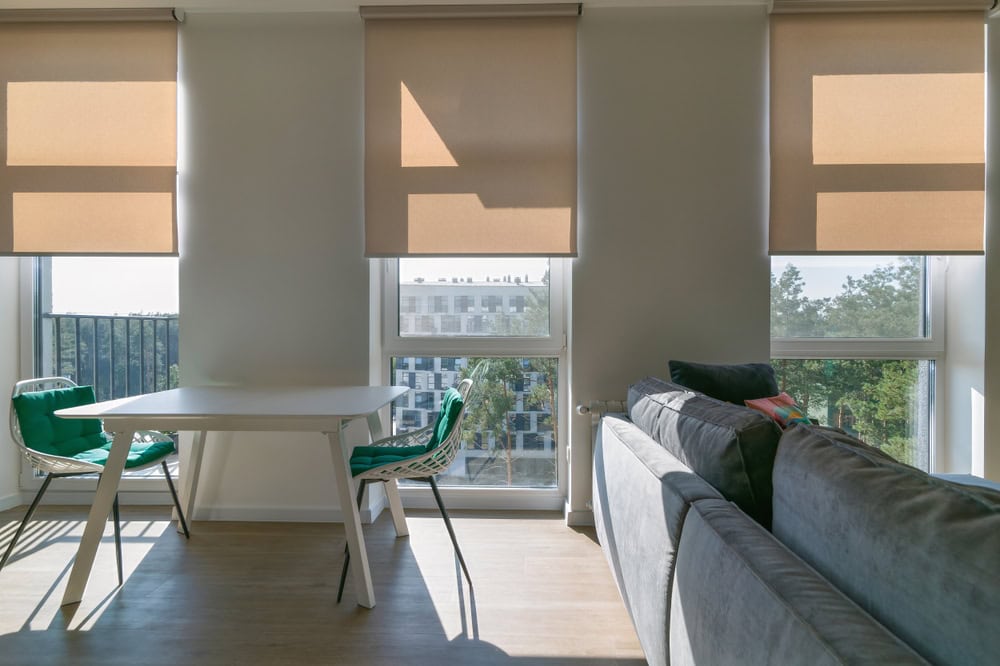
Functional exterior shutters are a different story. Roll-down exterior shutters and exterior roller shades are built to actually work — blocking sun before it hits the glass, reducing heat gain, and in some cases providing a layer of storm protection. In Tarrant County, where hail storms roll through regularly and summer afternoons can push past 100°F, that distinction matters.
Exterior roller shades in particular are worth understanding if you haven’t come across them. They mount above the window on the outside of the home and roll down to block direct sun, wind, and heat. Because they stop solar energy before it enters the glass, they’re more effective at keeping a room cool than any interior treatment alone. We specialize in these specifically because they’re genuinely well-suited to the Texas climate — and because most window treatment companies in the area don’t offer them.
The other thing exterior shutters can do is protect against weather. If you’re in a part of Tarrant County that’s taken hail damage before — and most of us have — a functional exterior shutter adds a physical barrier that interior treatments simply can’t provide. It’s real protection against the kind of severe weather this area sees every spring.
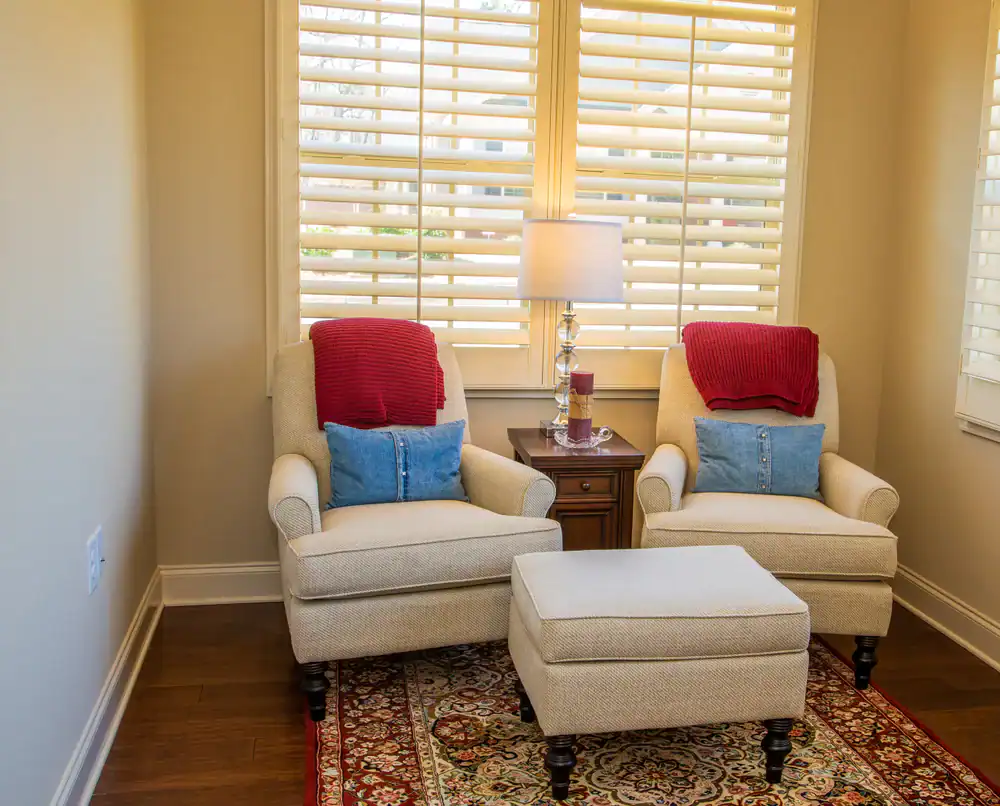
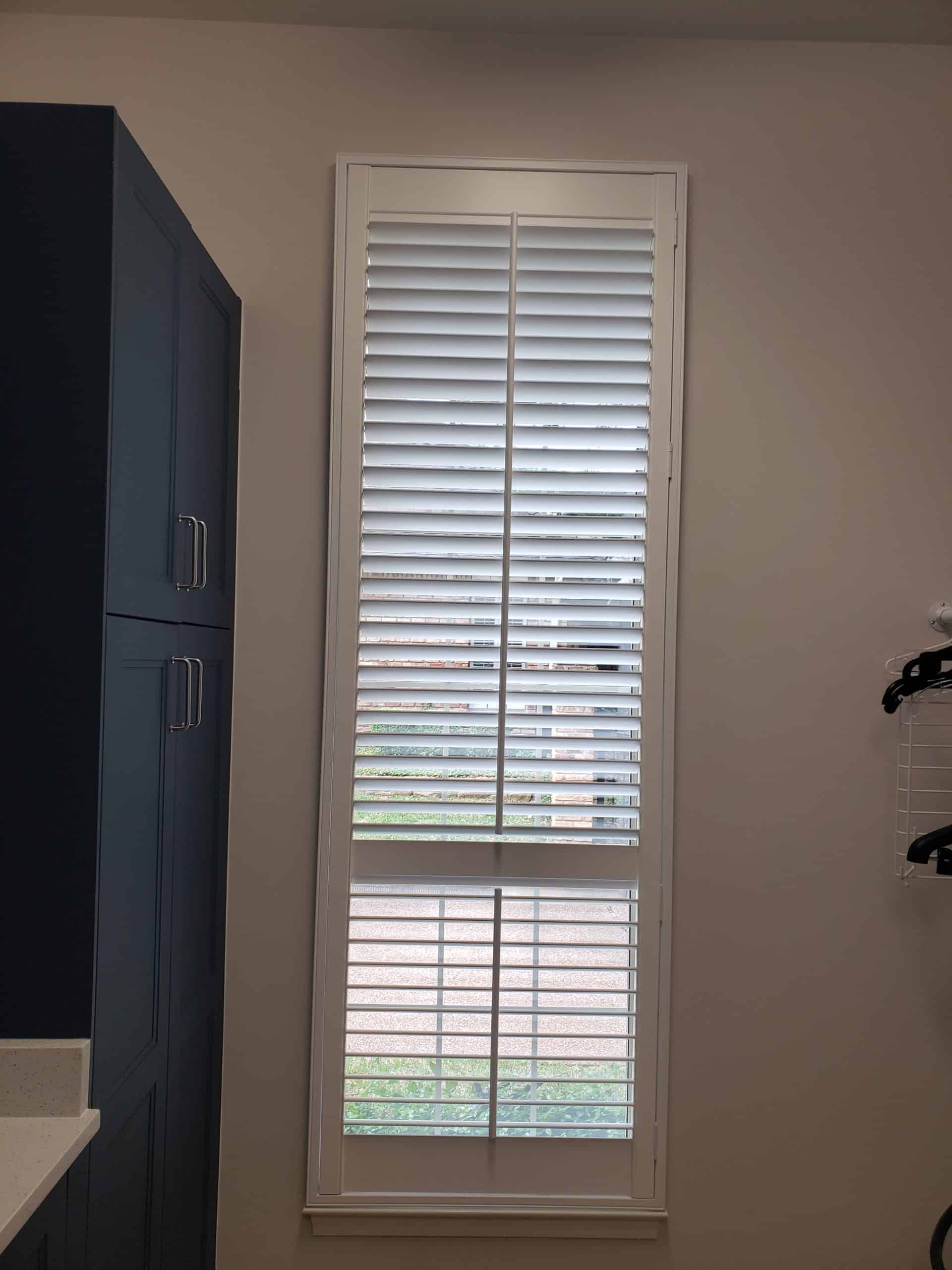
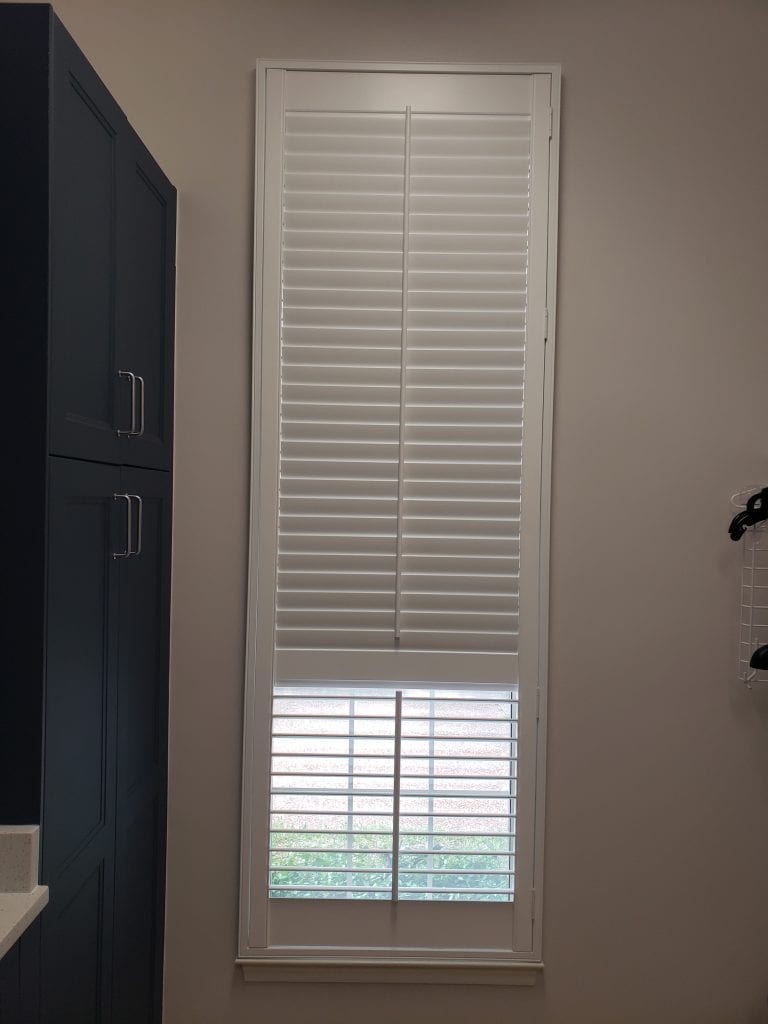
Interior plantation shutters are the gold standard for light control and privacy inside the home. The wide louvers — typically 2.5 to 4.5 inches — let you fine-tune exactly how much light enters a room without fully blocking the view. Tilt them one way and you get soft, diffused light. Tilt them the other way and you get privacy without darkness. Close them fully and you get both.
Beyond the light control, plantation shutters provide a layer of insulation that most people underestimate. A well-fitted interior shutter creates an air gap between the glass and the room that slows heat transfer in both directions — keeping rooms cooler in summer and warmer in winter. In a Tarrant County home where the air conditioning runs from April through October, that’s a real utility bill difference over time.
There’s also the aesthetic factor, which is hard to overstate. Plantation shutters have a clean, architectural look that drapes, blinds, and roller shades can’t replicate. They read as part of the home rather than something hung in front of it. That’s why they’re consistently cited as a value-add in home sales — buyers notice them, and they hold up over time in a way that fabric treatments don’t.
White plantation shutters are one of the most popular choices in DFW new construction for exactly this reason. The clean white finish works across virtually every interior style that’s common in the suburbs right now: modern farmhouse, transitional, craftsman. If you’re in a newer home in Mansfield, Southlake, or Keller and you’re trying to figure out what will look right, white plantation shutters are almost never the wrong call.
One thing worth clarifying: when people search for “white shutter blinds,” they’re usually picturing plantation shutters. Technically, shutters and blinds are different products — shutters have a solid frame with adjustable louvers, while blinds use horizontal slats on a cord or lift system. Both can be white, both control light, but they look different, install differently, and perform differently over time. Plantation shutters are more durable, more permanent-feeling, and generally more valuable as a home feature.
Pricing is where a lot of buyers get stuck, mostly because the range is genuinely wide. Plantation shutters can run anywhere from $150 to $800 per window installed, depending on material, size, and complexity. A full home installation averages around $3,000, though smaller projects come in much lower and larger homes with oversized or non-standard windows can go higher.
The material choice is the biggest cost driver — and it’s also the most important decision you’ll make. Not because of price alone, but because different materials perform very differently in a Texas climate.

Vinyl plantation shutters typically run $150 to $500 per window installed, making them the most accessible option in the plantation shutter category. But the reason we recommend them for most rooms in Tarrant County homes isn’t just the price — it’s the performance.
Wood is beautiful, and in the right application it’s the best-looking option available. But solid wood shutters can warp, crack, and fade under intense UV exposure and humidity swings. North Texas isn’t coastal-humid, but it’s not dry either — and the combination of summer heat, direct sun, and the occasional stretch of humid weather is hard on untreated wood over time. For rooms with significant sun exposure, bathrooms, kitchens, or any space where moisture is a factor, vinyl is simply the smarter material.
Modern vinyl plantation shutters don’t look cheap. The manufacturing has come a long way, and when they’re fabricated to precise measurements and installed correctly, they’re difficult to distinguish from painted wood at a glance. The difference shows up over years of ownership, when the vinyl still looks and operates the same way it did on day one.
Composite and polywood shutters fall in between — typically $175 to $650 per window installed. They offer the look of painted wood with better moisture and UV resistance than solid wood, at a price point above vinyl. For living rooms, dining rooms, and spaces where aesthetics are the priority and the budget allows, composite is worth considering. For high-sun or high-moisture rooms, vinyl wins on practicality.
Labor typically adds $65 to $100 per hour to the project, with most single-window installations taking around two hours. If a company is quoting you a suspiciously low number, it’s worth asking whether the measurement, fabrication, and installation are all included — or whether there are add-ons coming later.
The product is only part of what you’re buying. The other part is the company installing it — and in a market with national franchises, big-box store installation services, and local operators of varying quality, the differences are real.
Custom fabrication matters more than most buyers realize going in. Off-the-shelf shutters from a retail store come in standard sizes. If your windows are anything other than perfectly standard — and in most DFW homes, they’re not — you end up with gaps, misaligned panels, or shutters that don’t operate correctly. We measure every shutter to the sixteenth of an inch before anything is built, eliminating that problem entirely.
Our construction background also changes what’s possible. Because we operate as a branch of A Plus Home Remodel — a DFW construction company with over a decade of experience — our installers understand wall substrates, framing, and weatherproofing in a way that retail-trained installers typically don’t. That matters when you’re mounting exterior roller shades on a stucco facade, or installing plantation shutters in a room with an angled ceiling or a non-standard bay window.
If you’re in a community with an active HOA — Southlake, Mansfield, and Keller all come to mind — exterior shutter choices may require approval before installation. Material, color, and style can all be subject to architectural guidelines. Working with us means you’re not navigating that alone or finding out after the fact that your choice doesn’t comply.
When you call us, you’re talking directly to Manny, the owner — not a call center, not a salesperson working on commission. That means the person answering your questions is the same person accountable for the outcome. Every consultation is free, there’s no pressure to decide on the spot, and we’re not going to recommend something you don’t need.
**Should I get exterior shutters, interior plantation shutters, or both?** It depends on what you’re trying to solve. If your main concern is curb appeal and light control from inside, interior plantation shutters are likely your answer. If you’re dealing with intense afternoon sun, energy bills, or weather protection — particularly common in west- and south-facing rooms across Tarrant County — exterior roller shades address the problem before it reaches the glass. A lot of homeowners end up wanting both, and there’s a real functional case for that combination in this climate.
**How much do plantation shutters cost per window in Tarrant County?** Most homeowners in Tarrant County pay between $150 and $800 per window installed, depending on material and size. Vinyl comes in at the lower end of that range and performs well in Texas conditions. A full home typically runs around $3,000 on average, though the scope of your project will determine the final number. A free in-home consultation is the most accurate way to get a real figure for your specific windows.
**Are vinyl plantation shutters good quality, or do they look cheap?** Modern vinyl plantation shutters are a significant improvement over older versions. When they’re custom-fabricated to your window dimensions and installed correctly, they look clean and finished — and they hold up better than wood in high-sun or high-moisture rooms. For most rooms in a Tarrant County home, vinyl is the practical choice without being a visual compromise.
**What are white shutter blinds?** It’s a common search term for the classic white plantation shutter look. Technically, shutters and blinds are different products — shutters have a solid frame with adjustable louvers, while blinds use horizontal slats on a cord system. Both can be white, both control light, but plantation shutters are more durable and have a more architectural, built-in appearance. If you’re picturing the clean white window coverings common in DFW new construction, you’re probably thinking of plantation shutters.
We offer free in-home consultations across Tarrant County — no pressure, no middleman, just a straightforward conversation about your windows and what will work best for them.
Article details:
Share:
Continue learning: