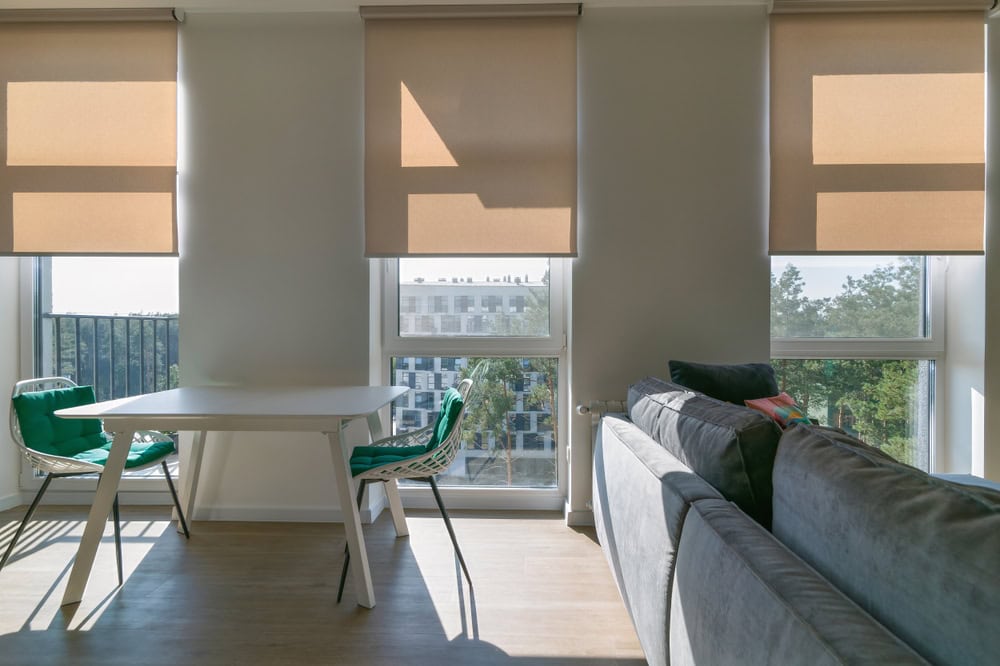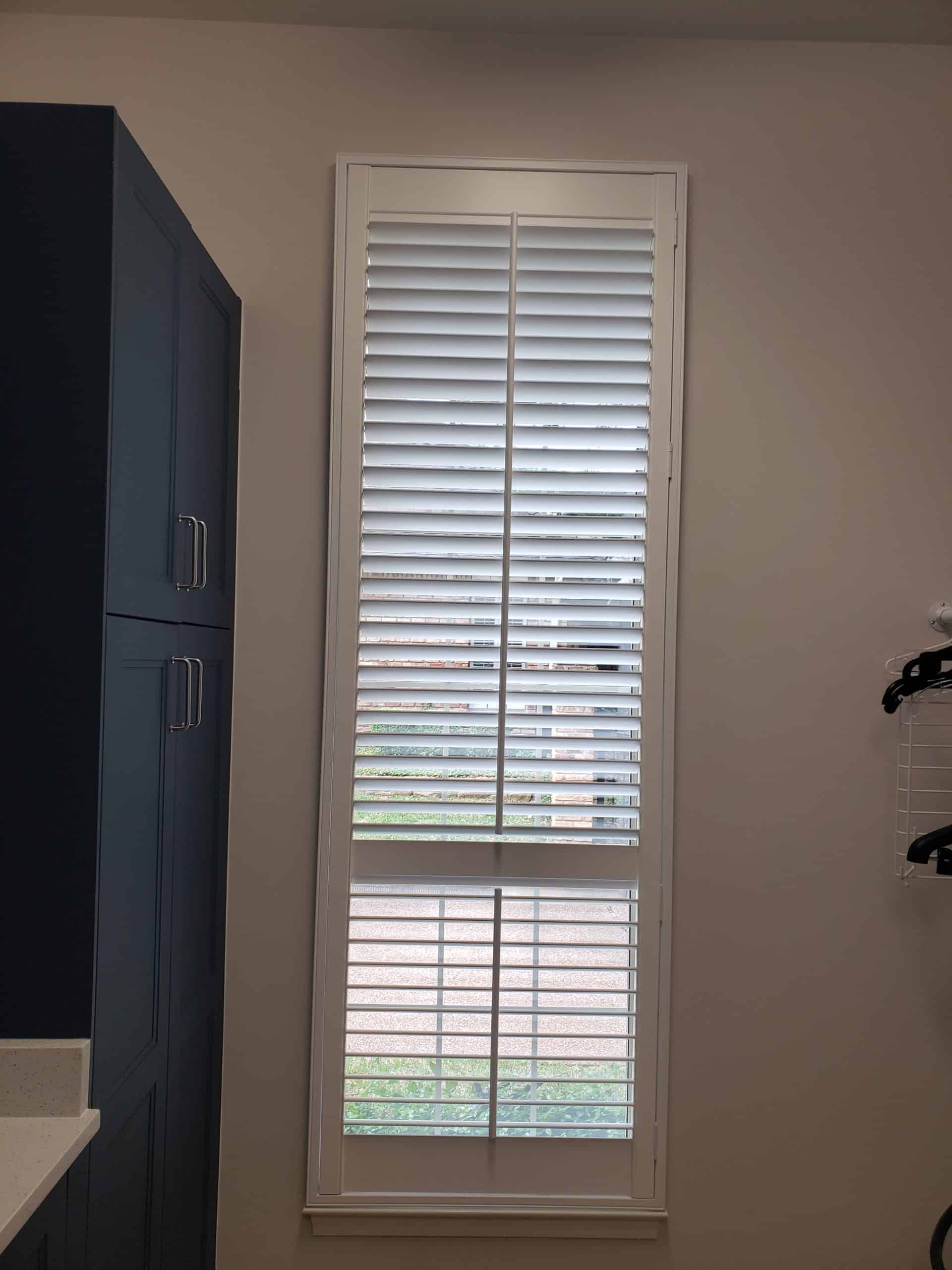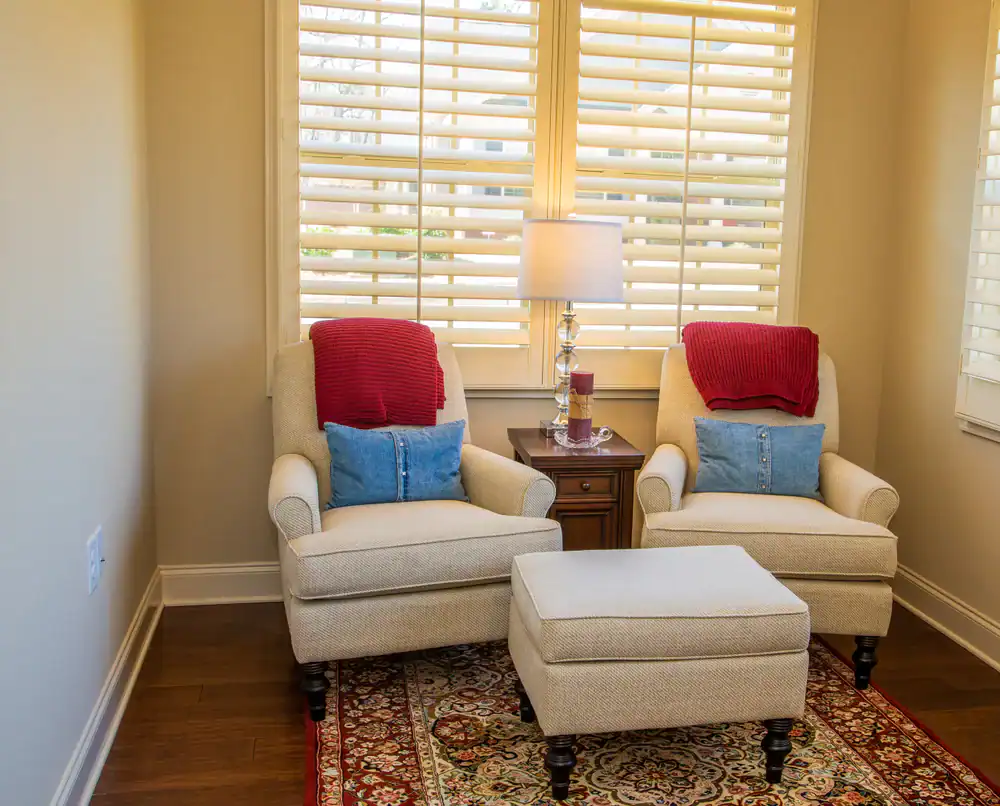
There's a big gap between a shade with a remote and one that joins your smart home. Here's what actually separates the two.
Share:

You’ve already got a smart thermostat, smart lights, maybe even a smart lock. But every morning you’re still walking room to room, pulling cords or twisting wands, like none of that other tech exists. It’s a small thing — until it isn’t. If you’ve started looking into smart roller shades, you’ve probably noticed the options range wildly in price and capability, and the marketing doesn’t always make it clear why. This guide cuts through that. We’ll explain what actually separates a basic motorized shade from a true smart shade, which one makes sense for your home, and what to expect when you go to have them installed here in Tarrant County.
The word “smart” gets used loosely in this category, and that causes real confusion. A motorized shade has an electric motor inside the roller tube that raises and lowers the shade in response to a signal. That signal could come from a handheld remote, a wall switch, a phone app, or a voice assistant — and the source of that signal is what actually determines how “smart” the shade is.
A shade that only responds to a physical remote is motorized, but it isn’t smart. You still have to be in the room, find the remote, and press a button. It’s more convenient than a cord, but it’s not connected to anything. A true smart roller shade, by contrast, operates as a native device inside your home automation system — the same way your Nest thermostat or Philips Hue lights do. It can be scheduled, grouped into scenes, triggered by other devices, and controlled from anywhere with a phone.

Once you understand that “motorized” and “smart” aren’t the same thing, the market starts to make a lot more sense. There are really three distinct tiers, and knowing which one you’re buying — before you buy it — saves a lot of frustration.
The first tier is remote-only motorized. The shade has a motor, and it responds to a handheld remote or a hardwired wall switch. No app, no scheduling, no voice control, no integration with anything else in your home. It’s a genuine upgrade over a cord, especially for high windows in two-story great rooms or stairwells where manual operation isn’t practical — but it stops there.
The second tier adds app control. You can raise and lower the shade from your phone, set basic schedules, and adjust things without being in the room. This is where a lot of the mid-range motorized shade products land. It’s more flexible than a remote, and the scheduling alone is useful — but the app is typically proprietary to the shade brand, which means it lives separately from whatever smart home platform you’re already using.
The third tier is true smart home integration. The shade operates as a native device inside Alexa, Google Home, or Apple HomeKit. You can include it in routines, group it with other devices, and control it through voice commands without any extra steps. A “Good Morning” routine can open your shades, adjust the thermostat, and turn on the kitchen lights — all at once, automatically. This is the tier that actually closes the loop on a smart home.
The price difference between tier one and tier three is real, and it’s worth understanding before you start getting quotes. What you’re paying for as you move up isn’t just more features — it’s deeper integration, better hardware, and the ability to build automation that works without you thinking about it.
One of the most common mistakes buyers make is assuming that any motorized shade will work with their existing smart home setup. That’s not always true. Not all motorized shades support every smart home platform, and some systems require a separate hub or bridge to connect. Before you commit to anything, it’s worth knowing which ecosystem you’re working with — Alexa, Google Home, Apple HomeKit, or Samsung SmartThings — and confirming that the shade system you’re buying is genuinely compatible, not just technically capable with workarounds.
The newer Matter protocol is starting to change this. Matter is an emerging interoperability standard supported by all four of the major smart home platforms, and shades built on Matter can communicate with your system natively without brand-specific bridges. It’s not yet universal across all products, but it’s the direction the industry is moving, and it’s worth asking about if you’re planning a more comprehensive smart home setup.
For most homeowners in Tarrant County, the practical question is simpler: will this shade show up in my Alexa or Google Home app the same way my lights do? The answer depends entirely on which motor system is inside the shade. Systems like Hunter Douglas PowerView and Lutron Caseta are built for this kind of integration and have a long track record of working reliably within established smart home ecosystems. Less expensive systems may offer an app but require a separate hub, limit your automation options, or simply not support voice control at all.
If your internet goes down, app control and voice commands stop working. A physical remote or wall switch will still operate the shade — so you’re not completely stuck — but the smart functionality depends on connectivity. For most households in Tarrant County, that’s a non-issue. It’s just good to know going in.
Alexa integration is one of the most requested features we hear about, and it’s one of the clearest examples of where true smart shades pull ahead of basic motorized ones. When your roller shades are properly integrated with Alexa, you’re not just saying “Alexa, lower the shades” — though that works too. You’re setting up routines that run automatically based on time, temperature, or other triggers, without you having to say anything at all.
For Tarrant County homes, that kind of automation has a practical edge that goes beyond convenience. This area sees more than 70 days above 90°F every year, and the cooling season runs from April through October. A scheduled routine that lowers your west-facing shades at 2 PM and raises them again at sunset doesn’t just make the room more comfortable — it reduces the heat load your AC is working against during the hottest part of the day.
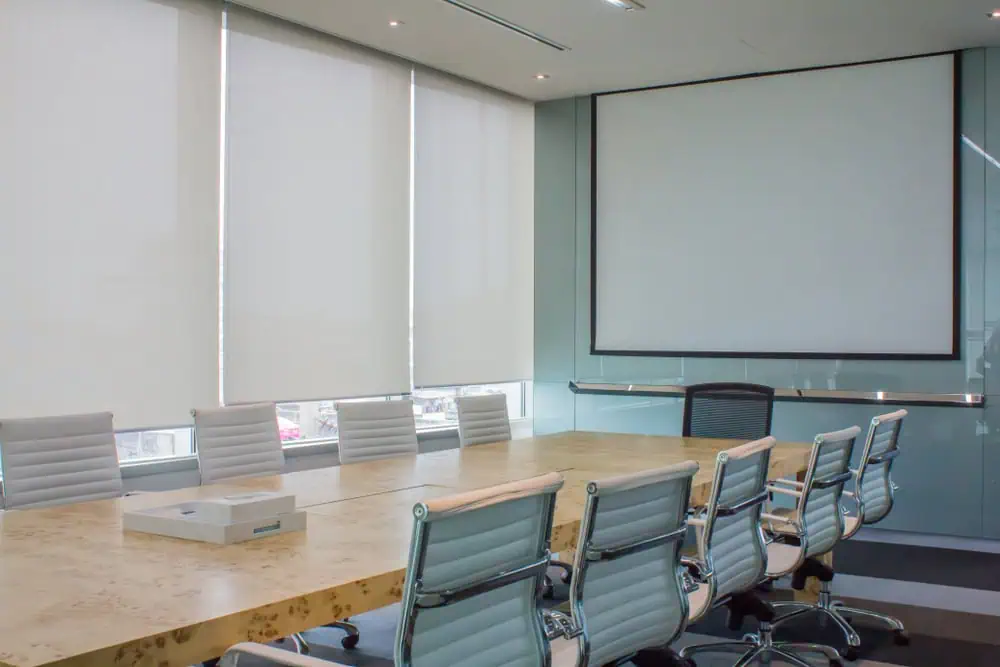
When a roller shade is added as a native device in Alexa or Google Home, it behaves like any other smart device in your ecosystem. You can control it individually by voice, group it with other shades in the same room, or include it in a multi-device routine. The shade doesn’t need its own separate app open — it’s just part of the system you already use.
A practical example: in a home office with east-facing windows, you might set a morning routine that opens the shades at 7 AM when you start work, then lowers them to 50% by 9 AM when the direct sun hits the screen. That’s not something you’d think to do manually every day, but once it’s set, it runs without you. For anyone working from home across Tarrant County, that kind of glare management makes a real difference across a long workday.
Scenes work similarly. A “Movie Time” scene can lower all the living room shades, dim the lights, and adjust the thermostat — triggered by a single voice command or a tap on your phone. The shades don’t have to be the centerpiece of that routine; they just participate in it automatically. That’s the difference between a shade with a remote and one that’s actually part of how your home runs.
Setting this up correctly requires more than just buying the right shade. The motor system needs to be compatible with your platform, the hub or bridge (if required) needs to be configured, and the device needs to be added and tested in your smart home app. This is where professional installation makes a meaningful difference. A DIY motorized shade from a big-box retailer might technically support Alexa, but getting it to work reliably within a broader smart home setup — and keeping it working — is a different matter.
We install systems that are built for this kind of integration, and we handle the setup end to end. That includes pairing the shades with your existing smart home platform so they’re ready to use when we leave, not a project you have to finish yourself.
Most of the conversation around smart roller shades focuses on interior products, and that’s where most buyers start. But there’s an exterior option worth knowing about, especially for homes in Tarrant County where heat management is a real seasonal concern.
Exterior smart roller shades mount on the outside of the window and intercept solar heat before it ever passes through the glass. Interior shades do a good job of blocking light and reducing glare, but the heat has already entered the home by the time it hits the fabric. An exterior shade stops it earlier in the process, which translates to better thermal performance and less work for your air conditioning system during those long Texas summers.
For motorized and smart integration purposes, exterior shades work the same way interior ones do — they connect to your app, respond to voice commands, and can be scheduled. The additional consideration with exterior shades is wind. Quality exterior shade systems can be paired with wind sensors that automatically retract the shades when wind speeds exceed a safe threshold, which protects the fabric and hardware during storms. That kind of automation is genuinely useful in Tarrant County, where afternoon thunderstorms roll in quickly during spring and summer.
We offer both interior and exterior smart roller shades, which isn’t something every local installer can say. If your home has a covered patio, a west-facing wall that takes the full afternoon sun, or large windows in a room that never quite cools down the way it should, exterior shades are worth a conversation. The combination of exterior shades on the hottest exposures and interior shades on the rest of the house gives you the most flexibility for managing light, heat, and privacy across different times of day and different seasons.
Custom roller shades in Tarrant County typically run $150 to $500 per window depending on size, fabric, and features. Smart motorization adds to that cost, but the range varies depending on the tier you choose and the number of windows involved. Starting with one or two rooms is a completely reasonable approach — the system can be expanded later, and you’ll have a clear sense of how it works in your home before committing to more.
The most important takeaway here is that not all motorized shades are the same, and the difference between a remote-only system and a true smart home integration isn’t just a feature upgrade — it’s a fundamentally different product. Knowing which tier fits your home, your existing setup, and your daily routine is what makes the decision straightforward instead of overwhelming.
If you’re in Tarrant County and you want to talk through the options with someone who actually installs these systems — and who can tell you honestly which tier makes sense for your situation — reach out to A Plus Shutters & Shades. We’ve been working on homes across the DFW area for over a decade, we carry both interior and exterior smart roller shades, and we handle everything from measurement to smart home pairing. No guesswork, no leftover project for you to finish.
Article details:
Share:
Continue learning: