There's a difference between a shade that hangs outside and one that's actually built for it. Here's what separates the two — and why it matters for your Tarrant County home.
Share:
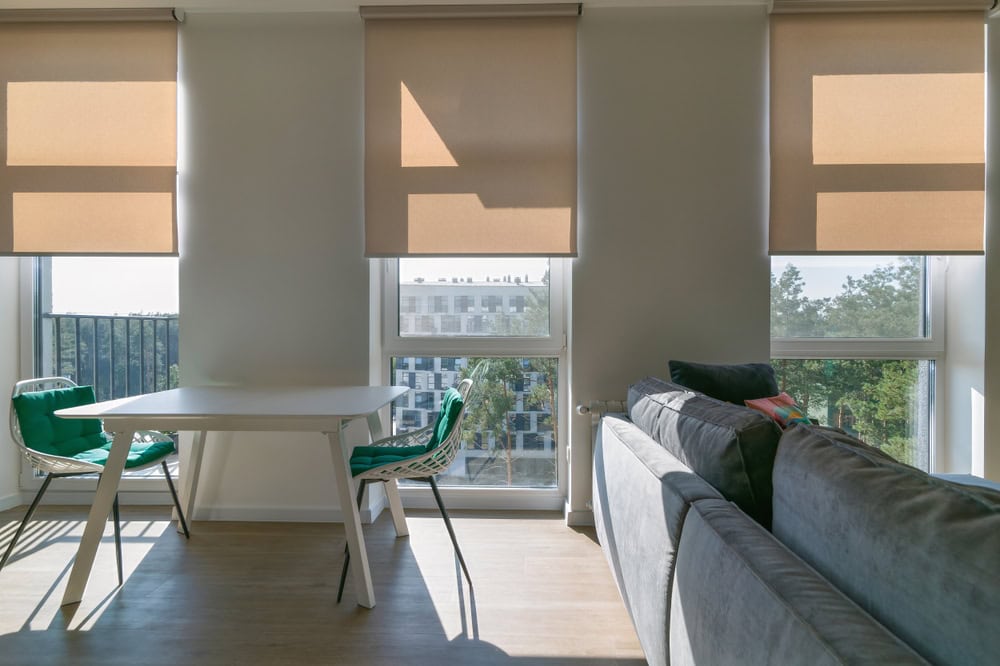
If you’ve spent any time researching outdoor shades for your home in Tarrant County, you’ve probably run into a wall of options that all look the same on the surface. Solar shades, outdoor roller shades, exterior blinds, outside mount shades — the terms get used interchangeably, and most product pages don’t bother explaining the difference. That confusion costs homeowners money. You end up with the wrong product, an HOA violation notice, or both. This page is here to clear that up. By the time you finish reading, you’ll know exactly what qualifies as a genuine exterior roller shade, how local HOA rules factor into the decision, and how to move forward without second-guessing yourself.
Not all window treatment styles are built to live outside. That sounds obvious, but it’s a distinction that gets blurred constantly — by product listings, by big-box retailers, and sometimes by installers who don’t specialize in exterior applications.
A genuine exterior roller shade is a distinct product category. It’s designed to be mounted on the building’s exterior face and deployed outdoors, which means it has to handle direct sun exposure, wind, humidity, and temperature swings that no interior shade is engineered for. The fabric, the hardware, and the mounting system all have to meet a higher standard. When they don’t, you’re not getting an exterior shade — you’re getting an interior shade in the wrong place.

One of the most common points of confusion in this category is the difference between inside mount, outside mount, and true exterior mounting. These are not the same thing, and mixing them up leads to the wrong product, the wrong installation, and — in HOA communities — the wrong outcome.
An inside mount means the shade is installed within the window frame opening, sitting flush inside the casing. An outside mount means the shade is mounted on the wall or trim outside the window frame, but it’s still an interior product — it lives on the inside of the building envelope. Neither of these is an exterior roller shade.
A true exterior roller shade is mounted on the outside face of the building — above the window, on the soffit, or along an exterior wall or pergola beam. It deploys outward, into the outdoor environment. That’s a fundamentally different application, and it requires fundamentally different materials.
The reason this matters practically: many HOA architectural guidelines in Tarrant County communities along the I-20 corridor through Arlington or the newer master-planned developments in Mansfield specify not just what color a window treatment must be, but how it should appear from the street. An outside mount interior shade and a proper exterior roller shade can look completely different from the curb, and only one of them may meet your community’s exterior appearance standards. Getting this wrong means you could spend money on a product, have it professionally installed, and still receive a violation notice from your HOA’s architectural review committee.
When we do an in-home consultation, one of the first things we clarify is which mounting configuration is actually appropriate for each window or opening — because the right answer isn’t always obvious from the inside of the house. A west-facing living room window on a home in North Richland Hills has different requirements than a covered patio in Pantego, and the mounting approach changes accordingly.
Woven wood shades — the bamboo, rattan, and jute styles that have become popular for their natural texture and warmth — are an interior product. Full stop. Natural fiber materials absorb moisture, warp in heat, and deteriorate quickly when exposed to direct sun and outdoor humidity. Texas summers will destroy them in a season or two, and no reputable manufacturer warranties them for exterior use.
That said, outside mount woven wood shades do have a place. Installed inside the home in an outside mount configuration — meaning mounted on the wall above and around the window frame rather than inside the casing — they can look clean, architectural, and intentional. For covered porches with minimal weather exposure, some synthetic woven wood alternatives exist that are more durable, but even those have limits in a climate like Tarrant County’s, where afternoon UV index regularly hits “Very High” levels and summer temperatures push well past 100°F.
The confusion usually happens because outside mount woven wood shades photograph beautifully and show up constantly in home décor content. Homeowners see them on a covered patio in a lifestyle photo and assume they’re rated for that use. They’re typically not. In HOA communities across Tarrant County — whether in Southlake, Keller, or Arlington — an architectural review committee that pays close attention to what’s visible from the street will flag a natural fiber shade that starts fading and fraying after one summer. It’s not just a product problem. It’s a compliance problem.
If you love the look of woven wood and want something in a covered outdoor space, we’ll tell you honestly whether a synthetic alternative makes sense for your specific situation or whether a solar screen fabric in a warm, textured tone would give you the aesthetic you’re after with the durability to back it up. The goal is always to match the right product to the right application — not to sell you something that looks good in the showroom and fails in the field.
HOA approval anxiety is real, and it’s especially common in Tarrant County. Communities in Mansfield, Keller, Southlake, and parts of Arlington have active architectural review committees that enforce exterior appearance standards — and window treatments, particularly exterior-facing ones, fall squarely within their jurisdiction.
The stakes are straightforward: if you install a non-compliant exterior shade, you may be required to remove it at your own expense. That’s not a hypothetical. It happens. And the frustrating part is that most homeowners don’t find out about the compliance issue until after the product is already installed.
Getting ahead of that process isn’t complicated, but it does require knowing what to look for and what to ask before you order anything.

Most HOA exterior appearance restrictions for window treatments in Tarrant County fall into a few consistent categories. Understanding these upfront saves you from a lot of back-and-forth later.
Exterior-facing color is the most common restriction. Many communities require that any window treatment visible from outside the home — including the backing or liner of interior shades — must be white or a neutral tone. This applies even if the interior-facing side of your shade is a rich charcoal or deep navy. For exterior roller shades, this typically means specifying a fabric color that reads as neutral from the street, even if the underside is a different tone.
Reflective materials are frequently prohibited. Metallic, foil-backed, or highly reflective fabrics can trigger violations in communities that restrict materials that alter the visual character of the neighborhood’s streetscape. Solar screen fabrics in standard openness factors generally don’t fall into this category, but it’s worth confirming with your specific community’s ARC documentation before ordering.
Uniformity requirements are common in newer master-planned communities throughout Tarrant County. Some HOAs require that all window treatments on a given elevation of the home match in style, color, or profile. Custom fabrication is the practical answer here — it’s the only way to ensure every window on a south-facing or street-facing wall presents consistently.
Mount type and visibility profile are increasingly specified in updated HOA governing documents, particularly in communities that have refreshed their architectural guidelines in the past five to ten years. Some communities in Tarrant County now explicitly address exterior roller shades as a category, specifying acceptable mounting locations, retracted profiles, and hardware finishes.
The practical takeaway: before you select a fabric, a color, or a mounting configuration, pull your community’s current architectural guidelines and look for any language related to window coverings, window treatments, or exterior modifications. If the language is vague or you’re not sure how it applies, submit a written inquiry to your ARC before you order anything. Most committees will respond with written guidance, which protects you if a question comes up later.
The HOA approval process varies by community, but the general framework is consistent enough that you can prepare for it regardless of which Tarrant County neighborhood you’re in — whether that’s a newer development off US Highway 287 in Mansfield or an established subdivision near State Highway 360 in Arlington.
Start by locating your community’s Declaration of Covenants, Conditions, and Restrictions (CC&Rs) and any separate Architectural Guidelines document. These are often available through your HOA’s management portal or by request from the management company. Look specifically for language about exterior modifications, window treatments, and exterior appearance standards. Note any specific requirements around color, material, mount type, or visibility.
Next, complete your community’s Architectural Review Committee (ARC) request form. Most communities have a standard form that asks for a description of the proposed modification, the materials and colors involved, and sometimes a photo or diagram of the planned installation. For exterior roller shades, you’ll typically need to provide the fabric manufacturer’s spec sheet (which includes the color name, openness factor, and material composition), a photo of the proposed mounting location, and a brief description of the hardware and installation method.
Submit the completed form and supporting documents to your HOA management company or ARC directly. Most committees meet monthly, and many have a submission deadline a week or two before the meeting date. If your community allows administrative approval for minor modifications, exterior roller shades sometimes qualify — which means a faster turnaround than waiting for the full committee meeting cycle.
This is one area where working with a provider who’s done this before makes a real difference. When we handle a project in a Tarrant County HOA community, we document the product specifications in a format that’s easy to submit — fabric name, color code, openness factor, hardware finish, mounting method. That documentation package is designed to give the ARC everything they need to make a decision without sending you back for more information. It doesn’t guarantee approval, but it eliminates the most common reasons for delays.
One more thing worth noting: if you’re in Pantego — the small, tight-knit town of about 2,500 residents entirely surrounded by Arlington — exterior appearance standards are taken seriously at the neighborhood level. Pantego residents tend to know their neighbors, and the community’s character is something people actively protect. Getting the product right and the process right matters there in a way that goes beyond just avoiding a fine.
The short version of everything above: not every shade qualifies as an exterior roller shade, the terminology in this category is genuinely confusing, and HOA exterior appearance rules in Tarrant County communities add a layer of complexity that most product pages and national retailers don’t address at all.
Getting this right means starting with the right questions — about your specific windows, your mounting options, your HOA’s current guidelines, and what fabric and hardware will hold up through a Texas summer without fading, warping, or failing in a wind event.
If you’re working through this decision and want a straight answer from someone who’s installed exterior roller shades across Tarrant County and knows what the local HOA landscape actually looks like, reach out to A Plus Shutters & Shades. We offer free on-site consultations, we measure every window ourselves, and we’ll tell you honestly what will work for your home — and what won’t.
Article details:
Share:
Continue learning: