Not all plantation shutters are built the same. Here's what Tarrant County homeowners need to know before choosing a style or material.
Share:
If you’ve started researching plantation shutters, you’ve probably already noticed how quickly the options multiply. Wood or faux wood? 3.5-inch louvers or 4.5-inch? Inside mount or outside mount? And that’s before you even get to color, frame style, or what to do about that arched window above your front door.
Most of the content out there treats this like a simple checklist. It isn’t — especially not in Tarrant County, where the summer heat, UV intensity, and wide range of home styles all factor into what will actually work for your windows. Here’s what you need to know to make a decision you’ll be happy with for the next few decades.
Plantation shutters aren’t one-size-fits-all, and the style you choose should follow the function you need. Standard panel shutters — the classic configuration — work beautifully on most rectangular windows. But there are several other configurations worth knowing about before you commit.
Café-style shutters cover only the lower half of the window, giving you privacy at street level while keeping the top open for natural light. Tier-on-tier shutters (sometimes called double-hung) split the panel into independent top and bottom sections, so you can open one while keeping the other closed. Bypass shutters slide on a track and are a practical solution for wide openings like sliding glass doors or oversized picture windows. Each configuration solves a different problem — and we’ll help you match the right one to how you actually use the room.
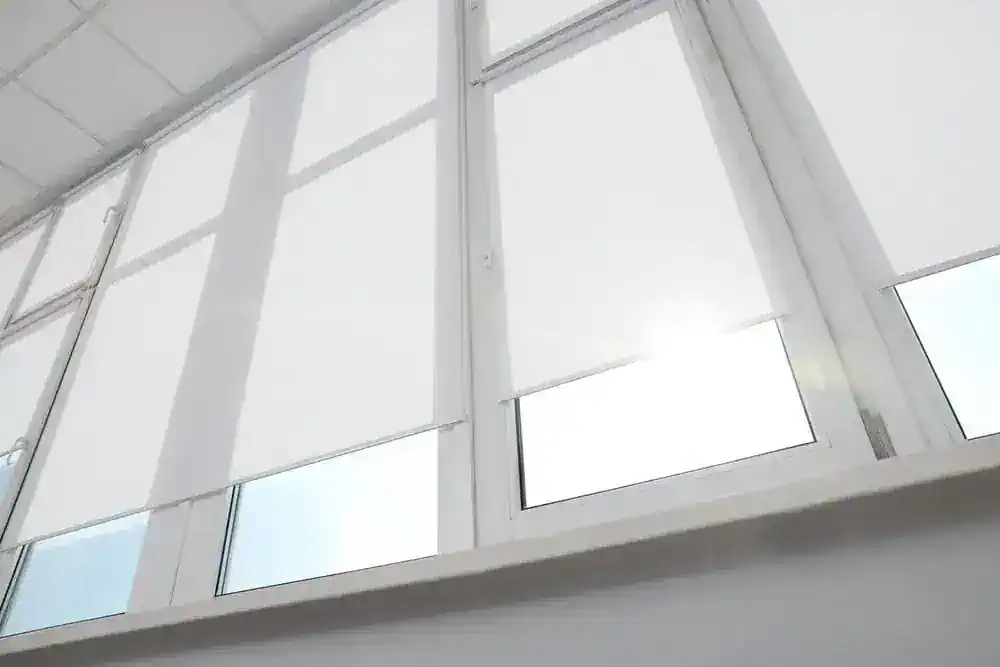
This is where a lot of homeowners hit a wall. They have an arched entryway, a half-moon transom above a window, or a circular accent window — and they assume shutters simply aren’t an option. Most big-box retailers will confirm that assumption, because off-the-shelf products don’t accommodate non-rectangular windows.
Custom fabrication changes that entirely. Specialty-shaped shutters — including half-moon, full arch, quarter-circle, eyebrow, and sunburst configurations — can be built to fit virtually any window opening when they’re made to order. The key is working with someone who actually fabricates to spec rather than cutting down a standard panel and hoping it fits.
For these shapes, solid wood — particularly basswood or poplar — is typically the preferred material because it can be formed into curves without compromising structural integrity. Most composite and vinyl lines don’t offer specialty shapes at all, so if your home has architectural details you want to dress rather than hide, wood is usually the right starting point for that conversation.
Tarrant County homes are full of these situations. Newer construction in Mansfield and Burleson often features dramatic arched entries and transom windows as design details. Older homes in established Fort Worth and Arlington neighborhoods tend to have bay windows and non-standard proportions that standard shutters simply won’t accommodate. Getting these windows right takes custom work — and the difference in the finished result is immediately visible.
One thing worth knowing: specialty shapes don’t have to match the rest of your shutters in material. It’s common to use solid wood for arched or curved windows and composite panels on standard rectangular windows in the same home. We’ll walk you through those combinations so everything reads as intentional rather than mismatched.
Louver size is one of the most underestimated decisions in the shutter selection process. The three standard options are 2.5-inch, 3.5-inch, and 4.5-inch — and they produce noticeably different results in the same room.
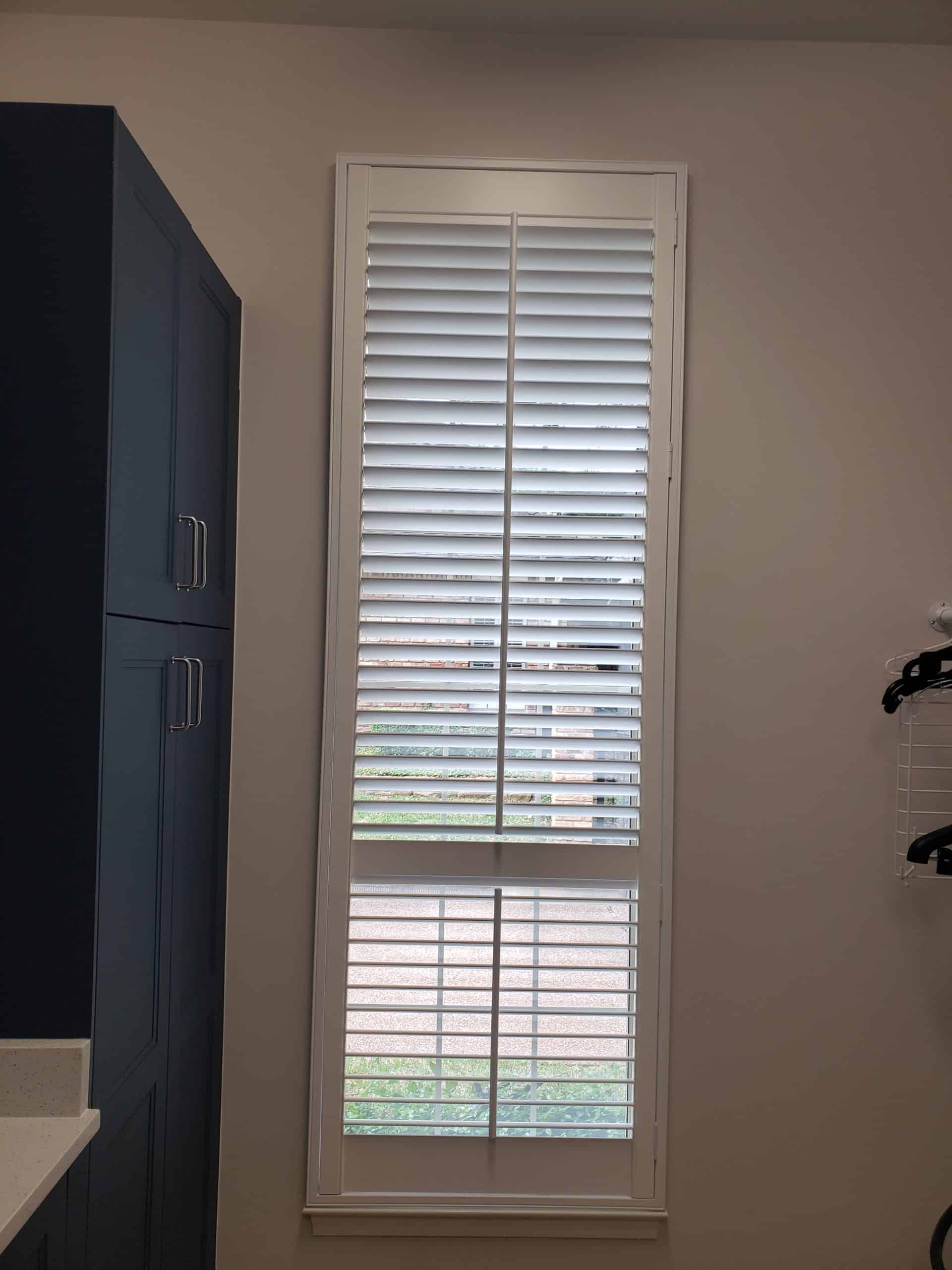
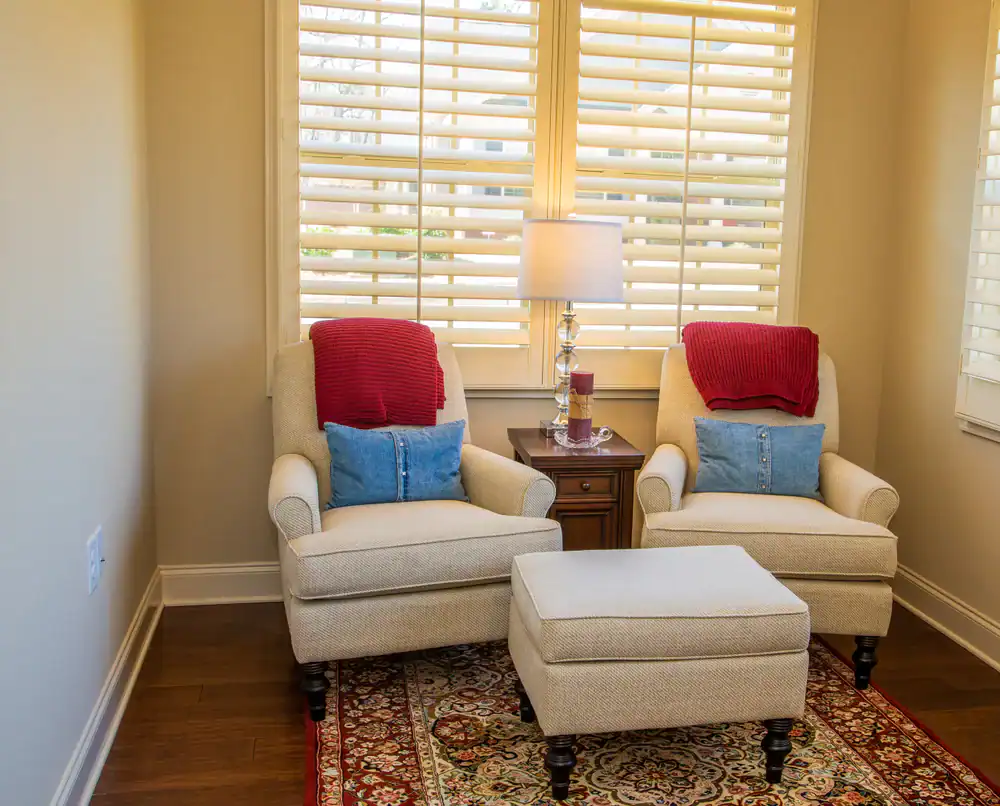
The 2.5-inch louver has a traditional, cottage feel. It’s more intricate-looking, with more slats visible across the panel, and it suits smaller windows and period-style homes well. The 3.5-inch louver is the most popular choice across the board — it works in both classic and contemporary interiors, provides a clean sightline when open, and doesn’t overwhelm smaller windows the way a larger louver can. The 4.5-inch louver reads as distinctly modern. It’s the right call for large windows, open-concept spaces, and homes with a transitional or contemporary design direction. When the louvers are open, the view-through is noticeably cleaner and more expansive.
In practice, the louver size you choose should follow two things: the scale of the window and the character of the room. A 4.5-inch louver on a small bathroom window can look out of proportion. A 2.5-inch louver on a floor-to-ceiling living room window in a new Southlake build can feel fussy and dated. Most homeowners in Tarrant County’s newer construction communities — particularly in Burleson, Saginaw, and Kennedale — are gravitating toward 3.5-inch and 4.5-inch louvers because they align with the open, airy aesthetic of modern floor plans.
There’s also a practical dimension. Larger louvers let in more light when open and are easier to clean. If you have young kids or pets and you’re cleaning shutters regularly, that’s worth factoring in.
Material selection is where most buyers feel the most uncertainty — and where the most costly mistakes get made. The options are solid wood, composite (engineered wood), and vinyl or faux wood. Each has a legitimate use case. The problem is when one gets used where another belongs.
In North Texas, the climate adds a layer of complexity that generic buying guides don’t address. You’re dealing with summers that regularly exceed 100°F, intense UV exposure year-round, and humidity that swings between dry and moderately humid depending on the season. The material you choose needs to hold up to all of that — and the right answer often varies room by room within the same house.
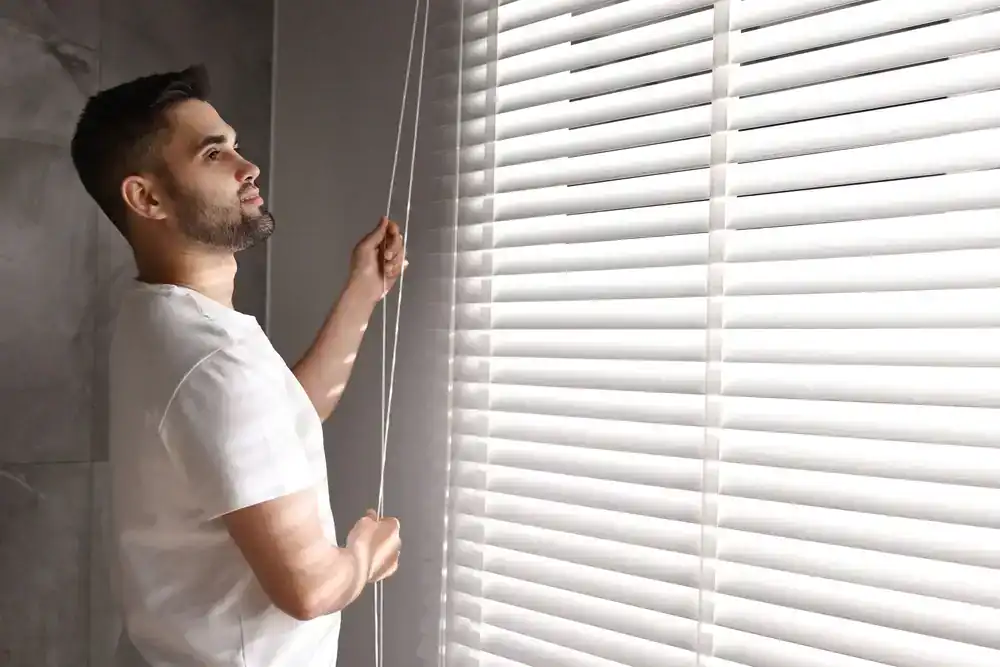
Solid wood shutters — most commonly made from basswood — are the premium option, and for good reason. Basswood has an ideal strength-to-weight ratio, meaning the panels stay rigid without being so heavy that they stress the hinges over time. It accepts paint and stain cleanly, holds its finish well, and can be custom-shaped for specialty window configurations. When you see plantation shutters in a high-end home and think they look genuinely beautiful rather than functional, there’s a good chance they’re solid basswood.
For interior spaces in Tarrant County homes living rooms, dining rooms, bedrooms, home offices — solid wood performs well. These are climate-controlled environments, and properly sealed basswood shutters in a room with consistent temperature and humidity are not at significant risk of warping. The concern about wood warping in Texas heat is real, but it applies primarily to improperly installed shutters, shutters placed in high-humidity rooms without adequate sealing, or products made from cheaper wood species that aren’t stable enough for the application.
Where solid wood earns its cost most clearly is in custom applications. If you have large windows, specialty shapes, or you want a stained finish that shows the natural grain of the wood, solid wood is the only material that delivers that result. Composite and vinyl can be painted, but they can’t be stained — the surface doesn’t accept it the same way. For homeowners in Southlake, Colleyville, or Westlake who are furnishing custom-built homes and want shutters that look like a considered design choice rather than an add-on, solid wood is typically the right conversation to have.
The cost reflects the material and the craftsmanship. Custom wood plantation shutters in the Texas market typically run between $20 and $45 per square foot installed, with solid hardwood options at the higher end of that range. Over a 25- to 50-year lifespan, that math looks very different than it does on the day you write the check.
Composite shutters — sometimes called engineered wood or poly shutters — are built from a wood-polymer core that resists moisture and temperature fluctuation better than solid wood. Faux wood and vinyl shutters take that further, using entirely synthetic materials that won’t warp, crack, or swell regardless of what the environment throws at them.
For bathrooms, kitchens, laundry rooms, and any window that gets direct sun exposure for most of the day, composite or faux wood is the more practical choice. In a bathroom where the shower runs daily and humidity spikes regularly, even the best-sealed solid wood shutter is working against the environment. A composite panel in that same window will look just as good in fifteen years as it does on installation day — without the maintenance concerns.
There’s also a cost consideration. Composite shutters are generally less expensive than solid wood, which makes them a reasonable choice for high-window-count projects where budget is a factor. Some homeowners in Arlington and Fort Worth use composite panels throughout the main living areas and reserve solid wood for a few focal-point windows where the visual upgrade is most noticeable. That kind of hybrid approach is completely workable when you’re buying custom — the key is having someone help you think through which windows warrant which material.
One important caveat: not all composite shutters are built the same. There’s a meaningful quality difference between a well-engineered composite panel and a budget vinyl product that looks fine in the showroom but fades and becomes brittle within a few years of Texas sun exposure. The material matters, but so does who manufactures it and how it’s installed. That’s why we specifically feature Texas-made products — because the manufacturing standards and material choices are calibrated for this climate, not a generic national average.
The right plantation shutter isn’t just about what looks good in a photo. It’s about what holds up in your specific rooms, fits your actual windows — including the non-standard ones — and makes sense for the way you use your home every day.
For most Tarrant County homeowners, that means thinking through material by room rather than choosing one option for the whole house, taking louver size seriously as a design decision, and not assuming that specialty-shaped windows are off the table. They usually aren’t — they just require custom work.
If you’re ready to move from research to real options, we offer free in-home consultations across Tarrant County, TX. We’ll measure your windows, bring samples, and walk you through the choices that actually apply to your home — without pressure, and without guesswork.
—
**Frequently Asked Questions**
**What types of custom plantation shutters are available?** The main configurations are standard panels, café-style (lower half only), tier-on-tier (independent top and bottom sections), and bypass shutters for wide or sliding openings. Beyond configuration, you’re also choosing material — solid wood, composite, or faux wood — and louver size, which significantly affects the look of the finished installation.
**How much do custom wood plantation shutters cost in Tarrant County?** In the Tarrant County, TX market, custom plantation shutters typically run between $20 and $45 per square foot installed, or roughly $250 to $700 per window depending on size, material, and complexity. Solid hardwood options sit at the higher end of that range. It’s a real investment — but one that lasts decades and adds measurable value to your home.
**Can you make plantation shutters for arched or half-moon windows?** Yes — and this is one of the most common questions we get from Tarrant County homeowners. Custom-fabricated wood shutters can be built to fit arched, half-moon, quarter-circle, and other specialty-shaped windows. It requires precise measurement and the right material (solid wood is typically best for curved configurations), but it’s entirely doable. Many homes across the county — particularly newer construction in Mansfield, Burleson, and Southlake — have exactly these kinds of architectural details that call for custom work.
**Are wood shutters a good choice for Texas heat?** Solid wood shutters perform well in climate-controlled interior rooms — living rooms, bedrooms, and offices — even in North Texas. The warping risk is real but manageable: it’s primarily a concern in high-humidity spaces (bathrooms, kitchens) or with improperly installed products. For those rooms, composite or faux wood is the better call. We help you match the material to the environment rather than recommending the same product for every window in your home.
**What’s the difference between composite and faux wood shutters?** Composite shutters use an engineered wood-polymer core that resists moisture better than solid wood while still accepting paint finishes. Faux wood and vinyl shutters are fully synthetic — the most moisture-resistant option available, and typically the most affordable. Both are good choices for bathrooms, kitchens, and high-sun-exposure windows. The main tradeoff is that neither can be stained to show wood grain the way solid basswood can.
Article details:
Share:
Continue learning: