Real plantation shutter pricing for Tarrant County homes — what drives the cost, how it compares to blinds and shades, and what to watch for in a quote.
Share:
Getting a quote for plantation shutters in Tarrant County shouldn’t feel like guessing a price at a car dealership. But for a lot of homeowners in Fort Worth, Arlington, Mansfield, and Southlake, that’s exactly what it feels like — a lump sum from a national chain, no per-window breakdown, no explanation of what’s driving the number.
We built this page to fix that. We’re going to walk through what window treatment cost actually looks like in the DFW market, what factors push the price up or down, and how shutters compare to other options over the long run. No filler, no vague ranges — just the information you need to make a confident decision.
There’s a reason shutter quotes vary so widely — and it’s not because installers are making up numbers. The cost of plantation shutters depends on a handful of real variables, and understanding them is the fastest way to decode any quote you receive.
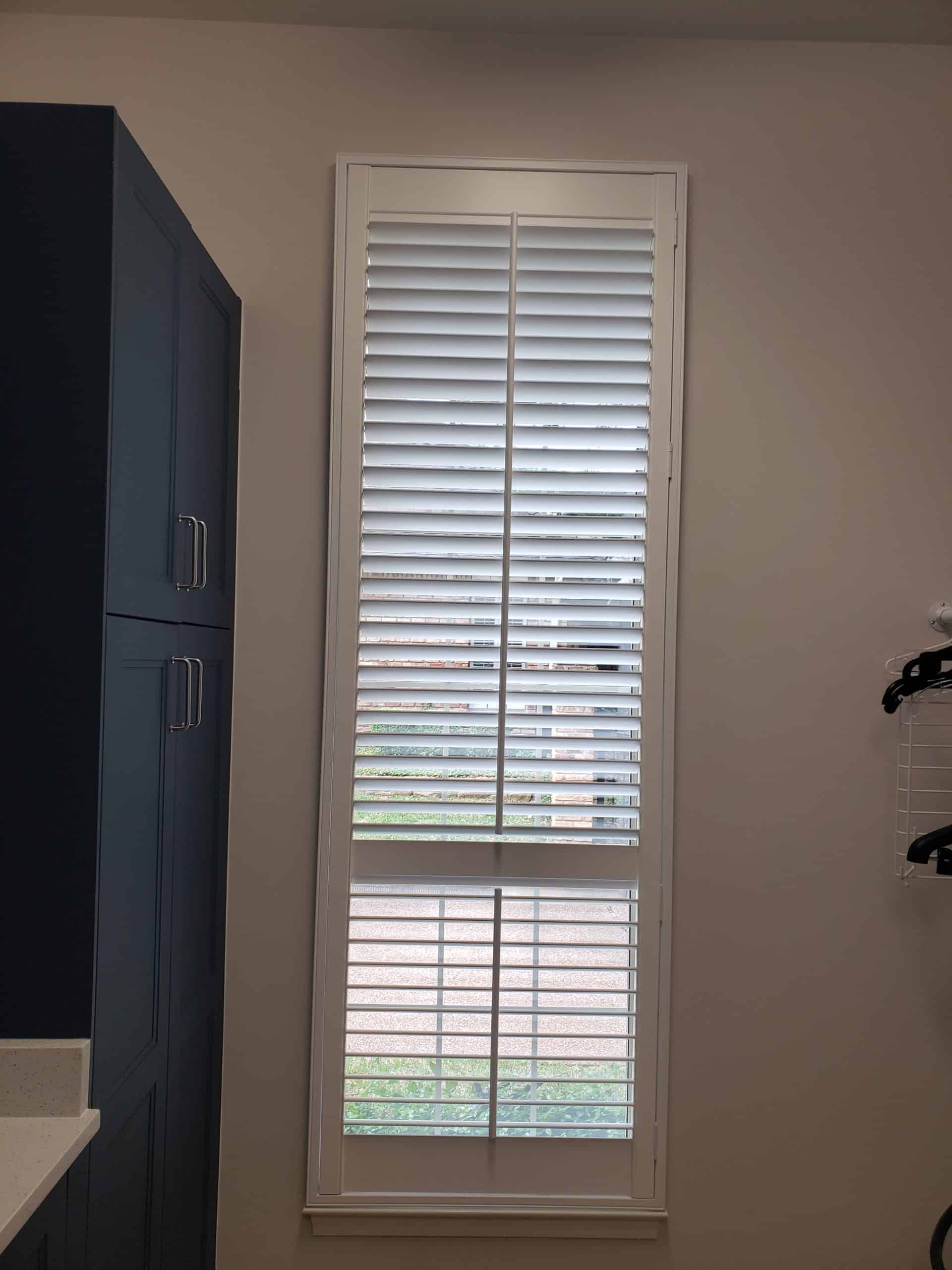
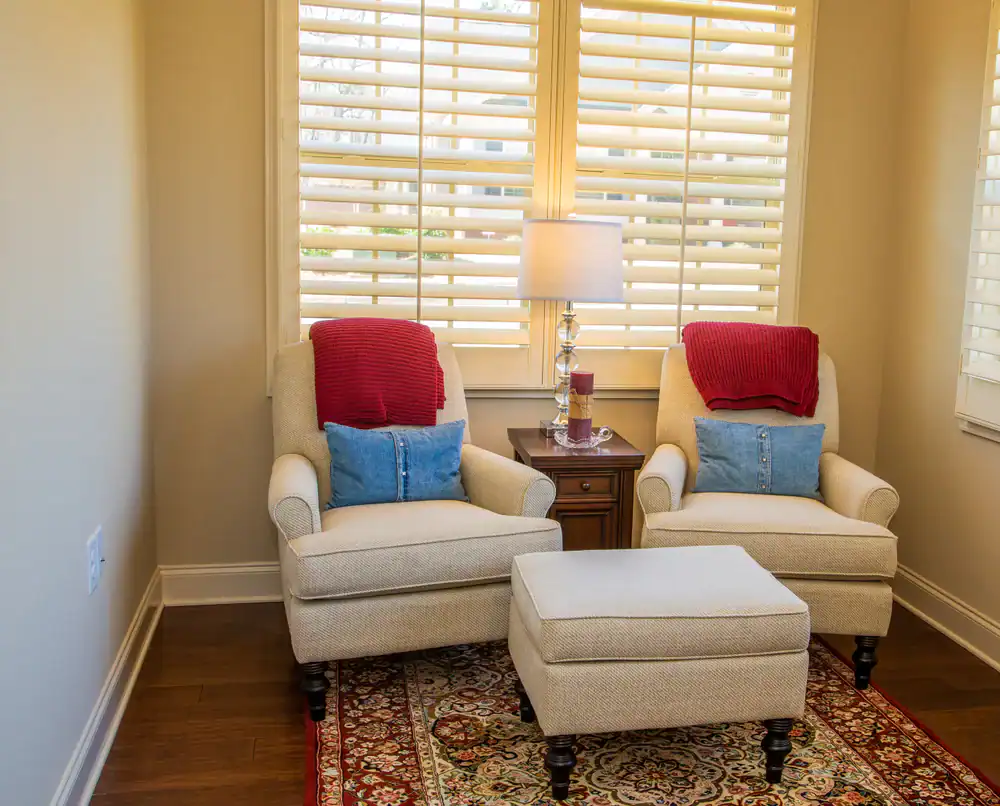
The biggest factors are window size, material, and louver width. A small 24″ × 24″ window in a bedroom costs far less than an oversized 48″ × 60″ window in an open-plan living room facing west — which, if you’ve lived through a Tarrant County July afternoon, you know is a very different beast. The material you choose — vinyl, composite, or hardwood — creates another significant cost gap. And louver width matters more than most buyers expect: the 3.5″ louver is the most popular choice because it balances light control with sightlines, but wider louvers for larger windows add to the cost.

Here’s what the numbers actually look like. In the DFW market, plantation shutters typically run between $300 and $800 per window installed for custom work — with the realistic average landing around $520 per window based on what local installers with decades of market experience consistently report. Entry-level vinyl options can come in lower, and our own installations for straightforward windows in communities like Pantego or Grand Prairie have started as low as $100 to $400 per window depending on size and material.
Material is the single biggest lever. Vinyl and PVC shutters sit at the lower end of the range and are a smart choice for high-humidity rooms like bathrooms or laundry spaces. Composite or faux wood shutters offer a more refined look at a mid-range price and hold up exceptionally well in Texas heat — they won’t warp or crack the way real wood can when temperatures climb past 100°F for weeks on end. Hardwood shutters are the premium tier, with a look that’s hard to match but a price point to match it.
Louver width adds nuance. The 2.5″ louver works well on smaller, traditional windows. The 3.5″ is the go-to for most Tarrant County homes — it’s versatile, clean, and works across a wide range of window sizes. The 4.5″ louver is designed for larger windows and gives a more modern, open feel. Going wider typically adds to the per-window cost, but it also means fewer louvers obstructing your view — which matters a lot in newer builds in Keller or Southlake where floor-to-ceiling glass is common.
For specialty windows, expect the numbers to climb. Bay windows average around $800 in this market. Standard sliding glass doors — a fixture in most DFW homes — run around $860 on average. These require more material, more custom fabrication, and more installation time, so the premium is legitimate.
For a whole home, most Tarrant County homeowners end up in the $1,341 to $4,790 range depending on how many windows they’re covering and what material they choose. Larger homes in Southlake or Colleyville with expansive window profiles will naturally sit at the higher end.
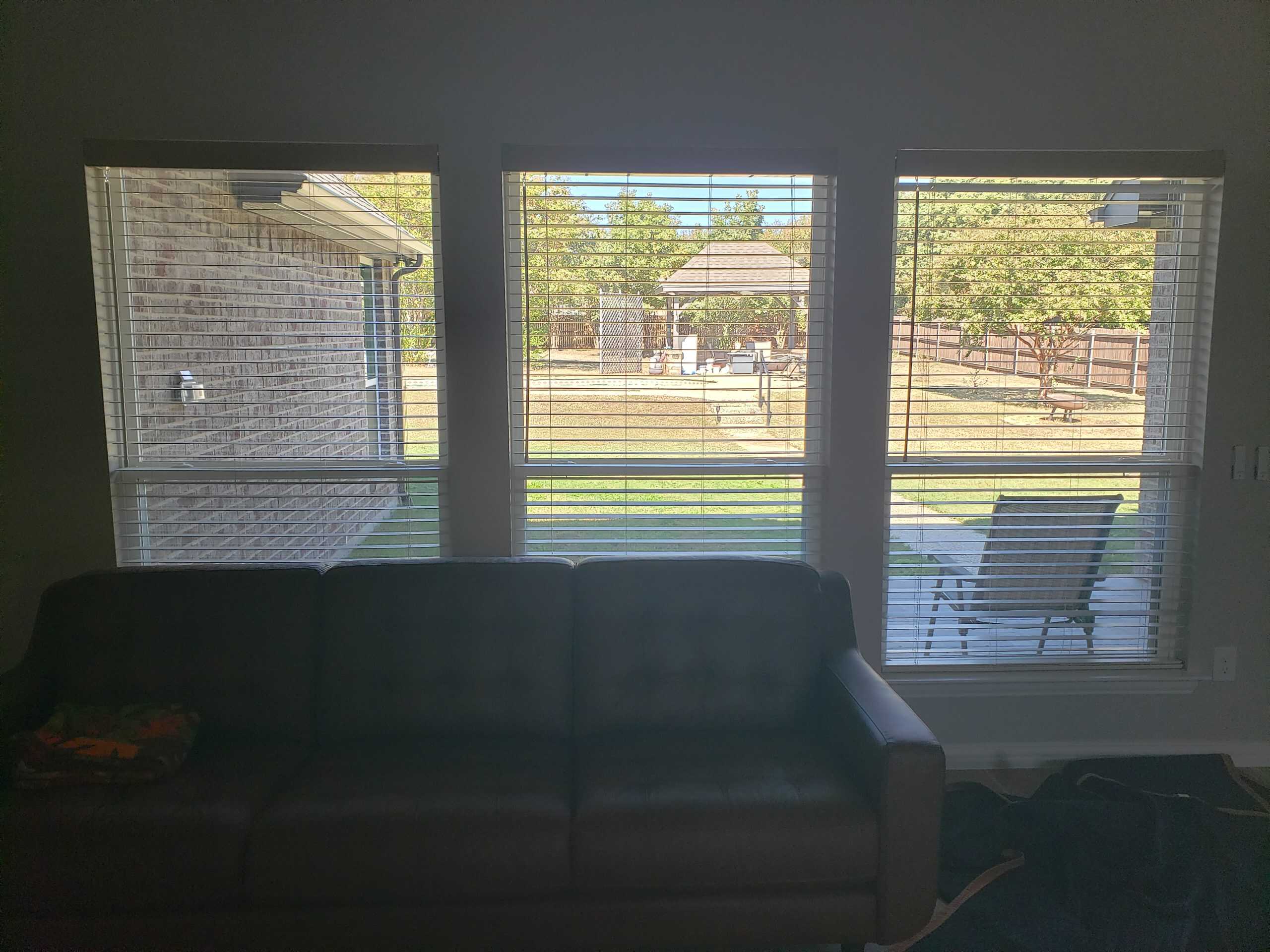
The upfront sticker price on plantation shutters stops a lot of people. But the upfront comparison — shutters at $300 to $800 per window versus blinds at $50 to $150 — isn’t the honest comparison. The honest comparison runs the math over a decade.
Standard blinds typically need replacing every five to seven years. Texas UV exposure accelerates that timeline, especially on south- and west-facing windows that take the brunt of the afternoon sun. A homeowner in North Richland Hills or Euless who puts blinds on ten windows, replaces them once or twice over fifteen years, and deals with the ongoing frustration of broken slats and faded finishes — that person often ends up spending more than they would have on shutters installed once and left alone for thirty years.
Quality composite plantation shutters are rated for 30-plus years with proper care. They don’t fade under UV exposure the way fabric shades do. They don’t warp the way wood blinds can in a humid Texas summer. And because they’re architectural — mounted to the window frame itself — they transfer with the home when you sell, which matters in a Tarrant County real estate market where well-appointed homes move faster and command stronger offers.
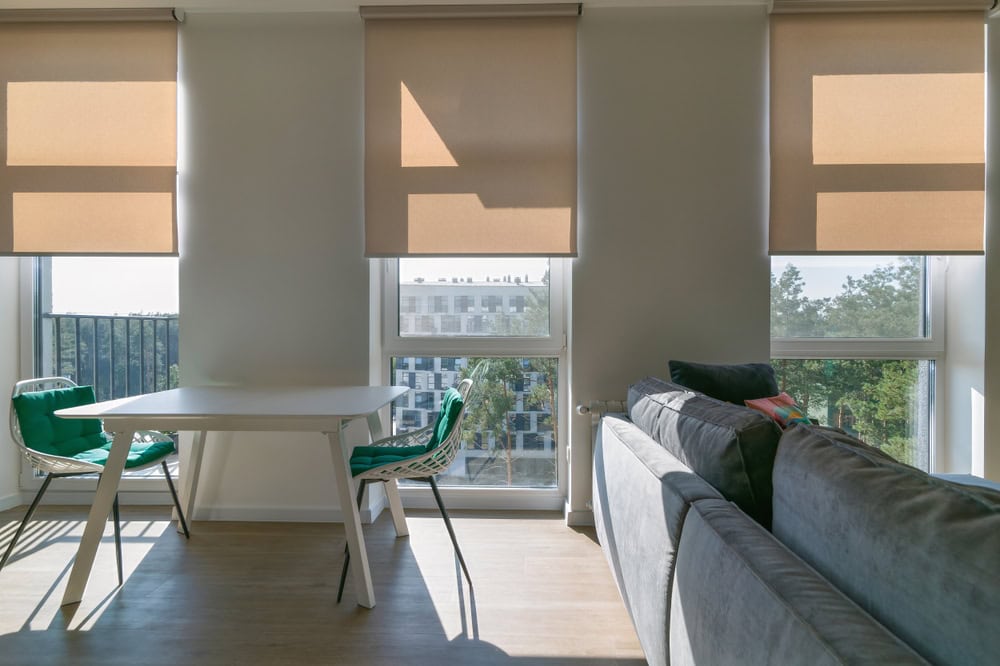
Roller shades sit in the middle of this conversation. Interior roller shades typically last five to ten years depending on UV exposure and how heavily they’re used. They’re a genuinely good option for certain rooms and certain budgets, and we offer both interior and exterior roller shades for homeowners who want heat-blocking performance without the full shutter investment. Exterior roller shades in particular are underused in DFW — they intercept heat before it even reaches the glass, which is a meaningful edge when your west-facing living room is turning into a sauna by 3pm.
The total cost of ownership is the right frame for this decision. Shutters cost more upfront. Over ten or twenty years, the math often flips.
Motorized window treatments have moved well past the “luxury tech” category. With roughly 69% of U.S. households now running at least one smart home device, the question of whether motorization is worth it has shifted — it’s now more about what it costs and whether it fits your setup.
For plantation shutters and roller shades, motorization typically adds $300 to $1,000 per window to the installed cost, depending on the motor type and smart home integration. Battery-powered motors run $250 to $500 per window and are the easier install — no electrician required. Hardwired motors, which run on mains power, cost $400 to $1,000 or more per window once you factor in the electrical work. Smart-enabled upgrades — app control, voice commands, scheduling — add roughly $50 to $300 on top of the motor cost.
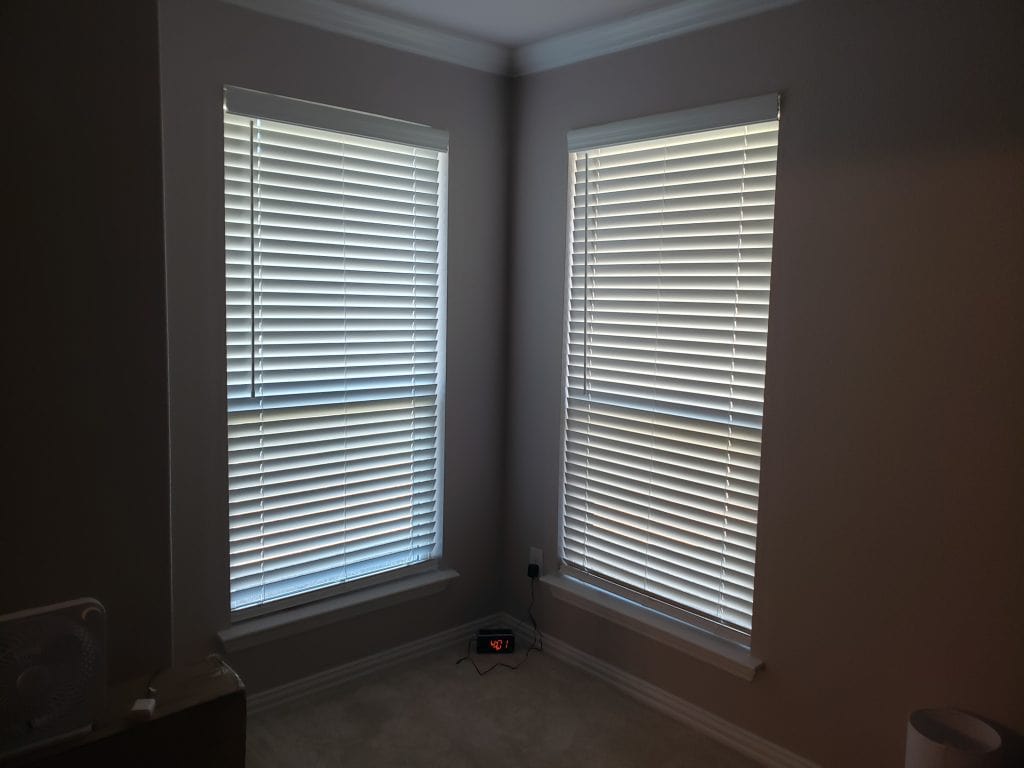
In Tarrant County’s climate, motorization has a practical case that goes beyond convenience. When you can schedule your shutters or shades to close automatically during peak afternoon heat hours — say, 1pm to 5pm on a west-facing wall — you’re reducing the cooling load on your AC system during the hours it works hardest. That’s not a small thing when your summer electricity bill is already pushing $300 to $400 a month.
Plantation shutters can reduce heat transfer through windows by up to 51%, which already outperforms standard blinds (22%) and curtains (14%) by a significant margin. When you combine that thermal performance with automated scheduling, you’re essentially running a passive energy management system. The shutters close on their own before the heat builds. Your AC doesn’t have to compensate for a room that’s already ten degrees warmer than it should be.
We offer PowerView motorization and full smart home integration — compatible with the systems most Tarrant County homeowners already have running. If you’re in a newer build in Mansfield or Keller with Alexa or Google Home already in place, motorized shutters or roller shades can slot into that ecosystem without much friction. The consultation is the right place to figure out whether battery-powered or hardwired makes more sense for your specific windows and layout — there’s no one-size answer.
The cost of motorization is real, and we won’t pretend otherwise. But for homeowners who are already investing in a whole-home shutter installation and who are serious about managing energy costs, it’s worth running the numbers before you decide it’s out of reach.
If you’ve already gotten a quote from a national chain or a big-box installation service, you may have noticed that the number arrived without much explanation. That’s not an accident. Lump-sum quotes are harder to compare, which makes it harder for you to push back or shop around. A fair quote should break down cost per window, identify the material and louver width being quoted, and distinguish between the product cost and the installation labor.
Labor for plantation shutter installation typically runs $50 to $150 per window. A competent installer can complete a standard window in about an hour. If a quote seems unusually low, it’s worth asking what material is being priced — a vinyl shutter and a composite shutter look similar in a quote but perform very differently over time in a Texas climate.
Red flags to watch for: a quote that won’t itemize per window, a timeline that assumes overseas-manufactured product (which can add weeks or months to your lead time), or an installer who can’t clearly explain what happens if a measurement is off. Custom shutters are built to your exact window dimensions. A quarter-inch error in measurement means a product that won’t fit correctly — and with custom work, there’s no simple return policy. That’s why professional measurement isn’t a formality; it’s the most important part of the job.
We come from a construction background — A Plus Shutters & Shades is a branch of A Plus Home Remodel, with over ten years of DFW construction experience. That matters for installation quality in ways that aren’t always obvious. Our installers read structural context: they understand how window frames are built, where mounting surfaces are solid, and how to account for the quirks of older Fort Worth bungalows versus newer construction in Mansfield. That knowledge closes the gap between a shutter that looks good on day one and one that still performs correctly in year ten.
Our products are also manufactured in Denton, TX — not shipped from overseas. That means lead times are realistic, quality control is local, and you’re not waiting on a container ship when you’d rather have your shutters installed before summer hits.
The window treatment cost conversation doesn’t have to be confusing. Once you understand what’s driving the price — material, window size, louver width, motorization — a quote stops feeling like a mystery and starts feeling like a decision you can actually make.
For most Tarrant County homeowners, plantation shutters land between $300 and $800 per window installed, with whole-home projects typically running $1,341 to $4,790 depending on scope and material. Blinds cost less upfront and more over time. Roller shades sit in the middle and serve specific rooms well. Motorization adds real cost and real value — especially in a DFW climate where managing afternoon heat has a direct impact on your energy bill.
If you’re ready to get a straight answer on what your specific windows would cost, A Plus Shutters & Shades offers free in-home consultations with no obligation. You’ll get a per-window breakdown, a clear explanation of your material options, and an honest conversation about what makes sense for your home and your budget.
Article details:
Share:
Continue learning: