Comparing sheer and zebra shades? In Tarrant County heat, you might be asking the wrong question. Here's what actually makes a difference in your home.
Share:

If you’ve been comparing sheer shades and zebra shades trying to figure out which one will actually help with the heat, you’re not alone — and you’re not wrong to be confused. Most of the content out there treats this like a curtain-shopping decision. Pick what looks nice, done. But in Fort Worth, Arlington, and across Tarrant County, where west-facing rooms can feel like a furnace by 3 PM and the AC runs nonstop from spring through fall, the stakes are a little higher than that. We’ll help you understand what each shade type actually does, where the real performance differences live, and when the sheer-vs-zebra question might not even be the right one to start with.
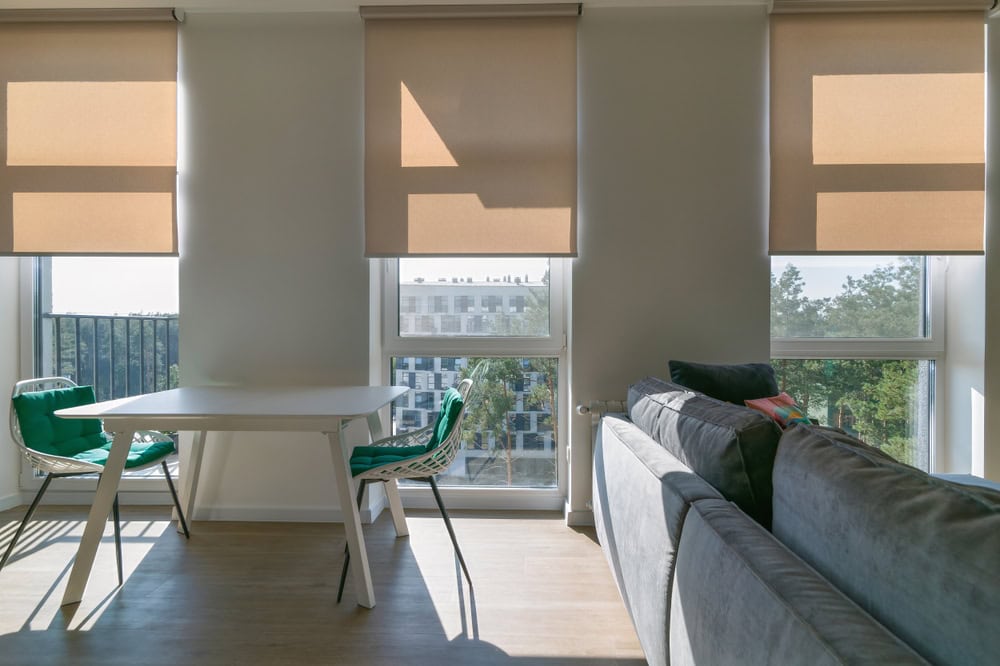
Roller shades and solar shades are often grouped together — and they do look similar hanging in a window. But the way they’re built and what they’re designed to do are meaningfully different.
A standard roller shade is measured by opacity: how much light it blocks. A solar shade is measured by openness factor: how much of the fabric is open weave versus solid material. That distinction changes everything about how you shop for one.
Solar shades are purpose-built to manage UV radiation and heat gain while still letting you see outside. A roller shade in a room-darkening fabric will block light, but it’s not doing the same job as a 3% openness solar shade blocking 97% of UV rays. If heat and glare are your primary problem — which they are for most Tarrant County homeowners — solar shades are the category worth understanding first.

The openness factor is a percentage that tells you how much of a solar shade’s fabric is open weave. A 1% openness fabric has very tight weave — it blocks 99% of UV radiation and creates a noticeably dimmer room. A 10% openness fabric is more loosely woven — you get a clearer view outside, but only 90% of UV is blocked and significantly more heat passes through.
For south- and west-facing windows in Fort Worth, Arlington, and throughout Tarrant County, we typically recommend 1% to 3% openness. Those exposures take the hardest afternoon sun, and a tighter weave pays for itself in cooling costs. For rooms where view preservation matters more — say, a living room with a backyard view that doesn’t face west — a 5% openness fabric is often a solid middle ground. It still blocks 95% of UV while keeping the room feeling open and bright.
Where homeowners tend to go wrong is choosing a higher openness percentage because it sounds like more is better. It isn’t, at least not for heat control. A 10% openness shade gives you a great view, but it’s letting in 10 times more solar heat than a 1% shade. For a Tarrant County home running the AC from April through October, that adds up fast.
One more thing worth knowing: solar shades don’t provide nighttime privacy. When it’s dark outside and lit inside, the fabric becomes essentially transparent. If privacy matters — especially for street-facing rooms — that’s a factor to plan for, either by pairing a solar shade with a blackout liner or by choosing a different product for that specific window.
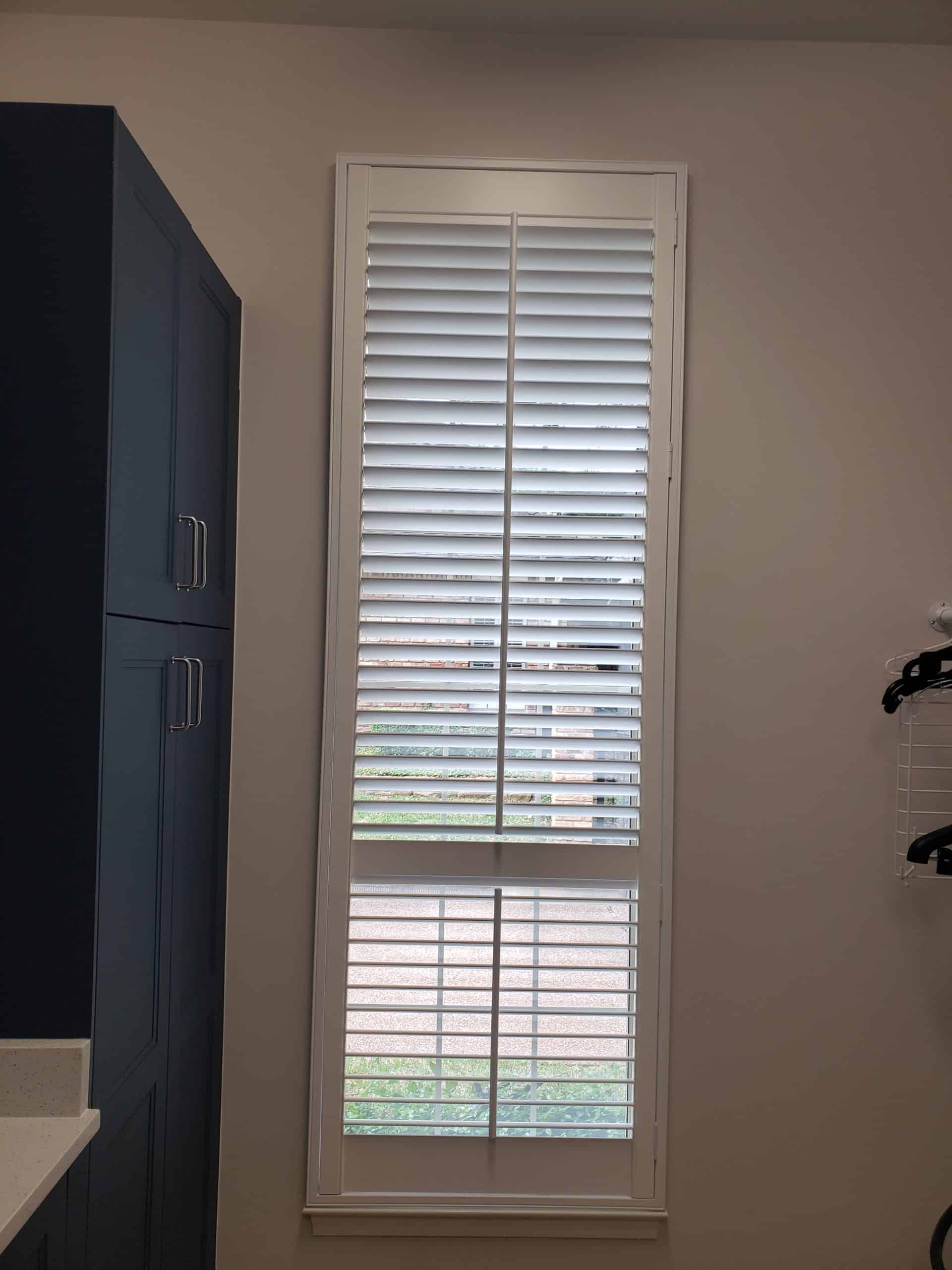
Sheer shades and zebra shades are both beautiful products. They’re also both primarily interior aesthetic and privacy solutions — not solar performance products. Understanding that distinction will save you from a purchase you’ll regret by June.
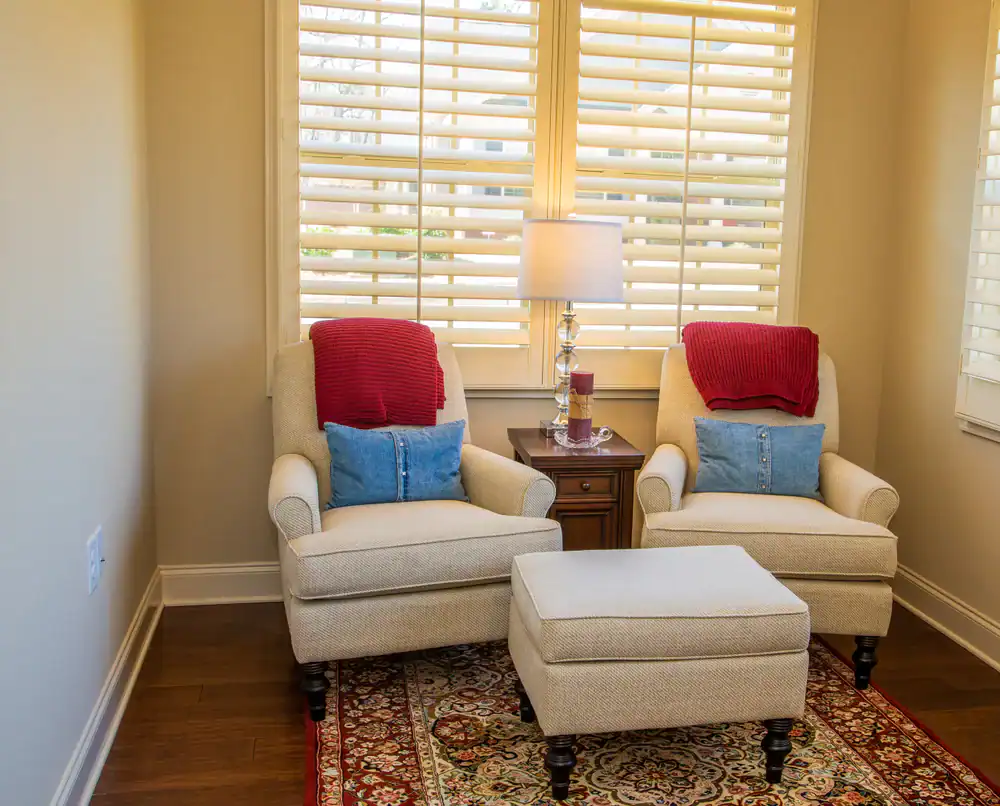
Sheer shades are constructed with fabric vanes suspended between two layers of sheer material. When the vanes are open, soft diffused light filters through the room. When they’re closed, you get a layered, more private look. They’re excellent in spaces where you want a warm, filtered glow — a dining room, a bedroom you use in the morning, an office that doesn’t face direct afternoon sun.
Zebra shades work differently. They use alternating horizontal bands of sheer and solid fabric that slide past each other. When the solid bands align with the open bands, you get a room-darkening effect. When the sheer bands align, light comes through softly. It’s a clever system that gives you more control than a standard sheer shade, and the look is clean and modern. That said, the alternating band design is notably harder to clean than a flat roller or solar shade — the bands collect dust in a way that takes more effort to address.
Here’s the honest answer for most Tarrant County homes: sheer and zebra shades work well in rooms where aesthetics and soft light control are the priority, and where the window isn’t fighting a significant heat gain problem. A north-facing bedroom, an entryway, a formal dining room — these are places where sheer or zebra shades shine. Put them on a south-facing great room with afternoon sun pouring in, and you’ll have a beautiful shade that doesn’t actually solve your heat problem. In that situation, a solar shade — or better yet, an exterior roller shade — is the right tool.
Once you’ve decided on the right shade type, the next decision is opacity — and the terminology here trips people up constantly. Light filtering, room darkening, and blackout are not interchangeable, and the difference matters more in a sun-intense market like Tarrant County than it does almost anywhere else.
Light filtering shades soften and diffuse sunlight. They provide daytime privacy and a pleasant, even glow in a room. They’re the right call for living spaces and rooms where you want natural light without direct glare. They are not a heat-blocking solution on their own, and they won’t dramatically reduce your cooling load.

Room darkening shades block approximately 95% to 98% of incoming light. In a normally lit room, this creates a noticeably dim environment — enough for most people to sleep comfortably, work without screen glare, or watch TV without washing out the picture. There’s typically a faint glow around the edges in direct sunlight, which most people find acceptable.
Blackout shades go further, blocking up to 99% of light through tightly woven or layered materials. The difference sounds small on paper, but in a south-facing master bedroom in Fort Worth that gets direct afternoon sun, it’s the difference between sleeping in and lying there squinting. For shift workers, light-sensitive sleepers, or any room where complete darkness is a genuine need, blackout is the right call.
For most bedrooms in Tarrant County, room darkening is sufficient. But if your bedroom faces south or west and takes direct afternoon sun, the upgrade to blackout fabric is worth it. The cost difference is relatively modest when spread across the life of the shade, and the daily quality-of-life difference is immediate. The same logic applies to home theater rooms and any space where screen visibility matters — room darkening may leave enough ambient light to create glare on a TV or monitor during peak sun hours.
One thing to be clear about: blackout and room darkening refer to the fabric’s light-blocking properties, not its heat-blocking properties. A blackout roller shade will keep a room dark, but it’s not the same as a solar shade managing UV and heat gain. For rooms where both are needed — a south-facing bedroom, for example — the right answer is often a solar shade layered with a blackout option, or an exterior roller shade doing the heavy lifting before heat ever reaches the glass.
Here’s the piece of this conversation that most shade guides skip entirely: interior shades of any kind — sheer, zebra, solar, room darkening, blackout — all share one fundamental limitation. By the time the shade is doing its job, solar heat has already passed through the glass and entered your home. Interior shades manage that heat after it arrives. Exterior roller shades stop it before it gets there.
For Tarrant County homes with significant south- or west-facing glass — large sliding doors, sunrooms, great rooms with walls of windows — exterior roller shades can lower indoor temperatures by 20 to 30 degrees compared to untreated windows. That’s not a minor improvement. That’s the difference between a room you use all summer and one you avoid until September.
Exterior roller shades are also the right answer for covered patios and pergolas in the DFW area. Fort Worth and Arlington homeowners invest heavily in outdoor living spaces, and an exterior shade turns a patio that’s unusable from noon to 7 PM into a space you can actually enjoy. We install motorized exterior shades that operate with remote controls, radio wall switches, and sun sensors — so the shade adjusts to the conditions without you having to think about it.
For commercial properties — storefronts, restaurants, office buildings with large glass facades along Tarrant County’s major corridors — exterior roller shades are often the most cost-effective way to manage heat gain at scale. The energy savings on a commercial space with significant south-facing glass are substantial, and the ROI calculation is easier to make when you’re looking at a building rather than a single window.
We can look at your specific home — the orientation of each window, the rooms you’re struggling with, the way the sun moves through your space — and recommend the right product for each one. For many Tarrant County homes, the best answer is exterior roller shades on the worst-facing windows and interior solar shades elsewhere. That layered approach addresses the heat problem at the source where it’s most severe, and handles the rest with the right interior product.
The sheer-vs-zebra question is a reasonable place to start, but for most homes in Fort Worth, Arlington, and across Tarrant County, it’s not the most important question. The more useful questions are: which windows are actually causing the heat problem, what openness factor makes sense for those exposures, and does the problem need to be solved before the heat enters the glass or after?
Sheer and zebra shades are the right answer in the right rooms. Solar shades with a 1% to 3% openness factor are the right answer for south- and west-facing windows where heat and UV are the primary concern. And exterior roller shades are the right answer when you need to stop heat at the source — on a sun-drenched patio, a sliding glass door facing west, or any room that’s been losing the battle with the Texas sun for years.
If you’d like to talk through what makes sense for your specific windows, A Plus Shutters & Shades offers free consultations. We’ll measure, we’ll walk through the options, and we’ll give you a straight answer — not a sales pitch.
Article details:
Share:
Continue learning: